The suitability of a given water source for irrigation warrants the diagnosis of potential salinity, sodicity and toxicity hazards. Region-specific irrigation water quality standards and guidelines formulated worldwide are too conservative. After a comprehensive assessment of newer insights from re-analysis of the available data and examination of the associated evidence covering diversified conditions of saline water use, existing guidelines are updated to adjust for site-specific conditions. The updated versions for rating both saline and alkali waters include the chemical composition of irrigation waters, soil type (texture, clay mineralogy), salt tolerance rating of crops and rainfall for broader adaptability. As modified by soil texture and rainfall, crop salt tolerance is the decisive factor for fixing upper salinity limits in hyper-arid, arid, semi-arid and semi-humid regions. The customized recommendations include conjunctive use, leaching/rainfall management, irrigation methods, ionic ratios, fertilizers and manures. Guidelines for sodic/alkali waters are based on both crop responses and sodicity-induced water infiltration problems. The amendment requirements stand defined. In view of the increasing water scarcity, the established guidelines are expected to promote saline and alkali water irrigation in arid and semi-arid regions while safeguarding the environment. L'aptitude d'une source d'eau donnee a l'irrigation justifie le diagnostic des risques potentiels de salinite, de sodicite et de toxicite. Les normes et directives de qualite de l'eau d'irrigation specifiques a la region, formulees dans le monde entier, sont trop conservatrices. Apres une evaluation complete des nouvelles connaissances issues de la reanalyse des donnees disponibles et de l'examen des preuves connexes couvrant des conditions diversifiees d'utilisation de l'eau saline, les lignes directrices existantes sont mises a jour pour tenir compte des conditions propres au site. Les versions mises a jour pour evaluer les eaux salines et alcalines comprennent la composition chimique des eaux d'irrigation, le type de sol (texture, mineralogie argileuse), la tolerance au sel des cultures et les precipitations pour une plus grande adaptabilite. Modifiee par la texture du sol et les precipitations, la tolerance au sel des cultures est le facteur decisif pour fixer les limites superieures de salinite dans les regions hyperarides, arides, semi-arides et semi-humides. Les recommandations personnalisees comprenaient l'utilisation conjonctive, la lixiviation/gestion des precipitations, les methodes d'irrigation, les rapports ioniques, les engrais et les fumiers. Les lignes directrices pour les eaux sodiques et alcalines sont fondees a la fois sur les reponses des cultures et sur les problemes d'infiltration d'eau induits par la sodicite. Les exigences de modification sont definies. Outre la penurie croissante d'eau, les directives etablies devraient promouvoir l'irrigation a l'eau saline et alcaline dans les regions arides et semi-arides tout en preservant l'environnement.
Background: Peninsular India, being completely under the influence of monsoonal climate, suffers crop yield variability due to rainfall distribution-induced soil moisture constraints. Timely and appropriate assessment of this rainfall and soil moisture-induced crop yield variability serves as a key for exemplary relief assistance. Per cent available soil moisture (PASM) is one among several drought declaration indices followed by stakeholders in India for declaration of drought, needs re-evaluation as the existing criteria in unable to capture the yield loss due to ineffective classification of PASM categories. This study attempts to revise the agricultural drought classes by PASM based on relationships established between yield of major rainfed crops of the study region and PASM.Methods: Analysis of yield variability due to PASM was carried out based on long term observations in experiments conducted at five dry farming locations (Akola, Parbhani, Kovilpatti, Ananthapuramu and Bengaluru) of peninsular India. The average yield for each category of PASM was calculated and tabulated for regression analysis. The PASM versus yield in each group was correlated and regression equations were developed if significant positive correlations were established.Results: The range of available soil moisture to obtain at least 50 percent of optimum yield in cereals (maize: 26 and finger millet: 52.9 PASM), pulses (pigeon pea: 37.2 PASM), oilseeds (soybean: 26.8 to 30.5, groundnut: 53.8 to 61.7 PASM) and commercial crops (cotton: 26.3 PASM) was 26–61 percent.Conclusion: The revised PASM-based drought classes (0–50 severe; 51–75 mild and 76–100 no drought) would help in drought declaration and precise identification of drought-hit areas for meaningful relief assistance. However, there is further investigation is needed to include a soil component for further fine-tuning of the criteria.
Rainfall induced hypoxia with transient waterlogging is a major constraint limiting the productivity and quality of monsoon season onion (Allium cepa L.). Therefore, the effects of water stagnation at different growth stages and possibilities of its alleviation with plant growth regulators (PGRs) namely; potassium nitrate (PN, 20 g L-1), thio-urea (TU, 600 mg L-1), salicylic acid (SA, 2.07 mg L-1), sodium benzoate (SB, 200 mg L-1) were evaluated during 2018-20. Bulb yield loss ranged between 7 and 60 per cent. Bulb initiation stage was the most sensitive (20 %) to waterlogging followed by vegetative growth (15 %) and bulb development (7 %). Effects became additive when imposed at vegetative growth and bulb initiation (44 %), vegetative growth and bulb development (40 %), bulb initiation and bulb development (35%) and all the three stages (60 %). Spraying PGRs improved marketable bulb yields by 10.4-23.3 %, water productivity from 4.0 to 4.4-4.9 kg m- 3 and helped to mitigate waterlogging stress through maintenance higher leaf water contents, greenness and plant vigour, lower canopy temperatures and modulating stomatal openings. Especially the crop was more receptive to PN and TU sprays at the most sensitive bulb initiation stage. Waterlogging also impacted the quality traits like bulb weight, geometric mean diameter, sphericity and firmness of bulbs but these got largely recovered with PGRs. PGRs exhibited considerably higher rehydration ratio (RR), pH, total soluble solids (TSS), protein contents, accumulation of total phenols and pyruvic acid. Thus, spraying PGRs like PN and TU emerged as a viable option to off-shoot the impacts of transient waterlogging.
Agricultural crops especially fruit trees are constrained by edaphic stresses in shallow soils with low water retention and poor fertility. Therefore, interventions of shifting to trench planting for better root anchorage and replacing the filling soil were evaluated for 8 years in dragon fruit (Hylocereus undatus) cultivated in Deccan Plateau of peninsular India. When averaged for last 5-years, 44 % higher fruit yield (18.2 +/- 1.0 Mg ha(-1)) was harvested from trees planted in trenches filled with 1:1 mixture (T-mixed) of native soil (loamy sand with 26.7 % stones (>2mm), field capacity, FC 0.20 cm(3) cm(-3); organic carbon, OC 0.17 %; Av-N 54.6 kg ha(-1)) and a black soil (clay 54.4 %; FC 0.42 cm(3) cm(-3); OC 0.70 %; Av-N 157.1 kg ha(-1)) than the recommended pit planting (12.4 +/- 1.2 Mg ha(-1)). Improvements in fruit yields with trenches filled with black (T-black) and native (T-native) soil were 32 and 13 %, respectively. Yield losses (total- marketable yield) were reduced by 40, 20 and 18 % over pit method with T-mixed, T-black and T-native soil, respectively. Marketable quality attributes like fruit weight, fruit size metrics and pulp/peel content were further improved under T-mixed soil. Accumulation of total soluble solids (TSS), sugar content, phenolic and flavonoid compounds were higher in fruits from T-native soil. During storage, fruits from T-native soil and pit planting exhibited minimum physiological weight loss and retained more firmness, TSS, sugars, titratable acidity, phenolic-flavonoids contents, FARP and DPPH activities. T-mixed soil provided better hydrozone and nutrients for resilience of fruit plants while protecting from aeration problems envisaged in poorly drained black soils. With B:C ratio (1.85) and lower payback period (4-years), T-mixed soil showed superior economic viability. Therefore, soil management module of planting in trenches filled-in with mixture of native and black soils can be recommended to boost productivity of fruits from shallow soils under water scarce degraded regions without penalising agro-ecosystem. (c) 2022 The Authors. Published by Elsevier B.V. on behalf of King Saud University. This is an open access article under the CC BY-NC-ND license (http://creativecommons.org/licenses/by-nc-nd/4.0/).
Sequestration of carbon (C) in arable cropping systems is considered one of the potential climate change mitigation strategies. In this context, assessing the potential of sugarcane cropping systems should be a priority, as it leaves substantial amounts of recyclable residues essential for maintaining soil organic carbon (SOC), improving soil health, and strengthening overall resources. We evaluated the impacts of residue retention and nutrient management practices on SOC and its pools, storage, soil biology, and yield in a multi-ratooning sugarcane system. A field experiment was conducted in the split-plot design with residue burning (RB) and residue retention (RR) as the main plot treatments and three nutrient management practices, that is, 25% of the recommended dose of fertilizers (RDF, i.e., 300:150:150 kg of N, P2O5, and K2O kg ha−1, respectively) as basal + 75% through fertigation (N1); 50% of RDF as basal + 50% through fertigation (N2); and 75% of RDF as basal + 25% through fertigation (N3) as subplot treatments in ratoon sugarcane. Soil samples were collected initially and after 6 years of multi-ratooning (one plant and four ratoon crops) from a soil depth of 0–30 cm. The results indicated that RR plots had 21% higher total SOC with 42, 47, 17, and 13% higher very labile, labile, less labile, and non-labile C pools, respectively, than RB plots (P < 0.05). RR also had a higher lability and recalcitrant index than RB. Of the total SOC stock, the contribution of passive pools was higher (72–75%) than active pools. Significantly higher dehydrogenase activity (DHA) (86%), alkaline phosphatase activity (APA) (16%), and ß-glucosidase activity (BGA) (22%) were observed in RR plots as compared to RB plots, whereas for nutrient management practices, it followed the order of N2 > N3> N1. Microbial counts also followed the same trend as that of enzyme activities. Residue retention practices reported higher C sequestration (0.68 Mg C ha−1 yr−1), carbon retention efficiency (37%), and yield (38%) with a potential to reduce GHG emissions by 2.72 Mg CO2 ha−1 yr−1 as compared to traditional practices. Residue retention and 50–75% RDF as basal is recommended for higher soil C retention and soil biology for sustained sugarcane productivity.
Water scarcity severely impacts agricultural productivity and quality in arid and semi-arid regions. Specific elicitors like plant growth regulators (PGRs) and bio-stimulants as well as deficit irrigation (DI) practices have been put forward to alleviate the effect of resultant water stress and enhance crop productivity. Hence, a field experiment was conducted for two years (2020-2022) to elucidate the effects of PGRs and bio-stimulants of organic and chemical origins under variable deficit irrigation levels on okra (Abelmoschus esculentus L.), a major crop grown in the semi-arid region of peninsular India. Treatments included combinations of the foliar sprays with PGRs i.e. irradiated chitosan (IC, 5 ml L-1), sea weed extracts (SWE, 5 ml L-1), thio-urea (TU, 600 ppm), salicylic acid (SA, 20 mu M), bacterial biopolymer (BP, 5 ml L-1) along with control (no PGR) and DI levels i.e. equalling 100 %, 75 %, 50 % and 25 % of the crop evapotranspiration (ETc). Irrigation levels were maintained using line source sprinkler (LSS) system. Reductions in pod yield (PY) and above ground biomass (AGB) ranged between 12 and 83 and 20-79 % with DI of 0.75-0.25 ETc. Exogenous foliar application of PGRs improved plant growth, physiological traits and thereby increased PY by 6.1-19.2 %. Beneficial role of PGRs for mitigating water stress was associated with cooler canopy temperatures, maintenance of higher leaf relative water content by modulating stomatal conductance, enhanced plant vigour and photosynthetically active surface. The lower values of yield response factors viz., KSWE <= 1 with SWE further indicated increased tolerance of okra to water stress. The maximum crop water productivity (CWP) was 3.43-3.79 kg m-3 with PGRs as compared with 3.32 kg m-3 without PGR. Especially PGRs of organic origin (SWE and IC) were more effective under medium to severe water stress conditions. The response to BP, bio-stimulant of bacterial origin was almost at par with SA. DI reduced physical quality attributes such as mean pod weight and pod length but firmness and seed/peel ratio got improved; the maximum being with 75 % ETc. Improved rehydration quality and higher accumulation of total soluble solids, dry matter, protein, total phenolics, and flavonoids that potentially affect enzymatic activity were monitored with PGRs. It is concluded that the exogenous foliar application of PGRs from organic origins such as SWE and IC in combination with low to moderate DI (50-75 % ETc) is optimal for improving production and post-harvest quality of okra grown in water-scarce areas of peninsular India.
Wastewater generated from urban agglomerations in India is estimated to be 26.4 km(3) annually and 28% of it is treated. This has a potential to irrigate about 2.1 million-ha agricultural land, contribute 4 million Mg of plant nutrients, generate 2.8 million person-days of employment and reduce green house gas (GI IG) emission by 73.7 million Mg CO2-e. Farmers in peri-urban areas depend largely on raw and partially treated wastewater for livelihood via raising high value crops such as vegetable, fodders and fruits. Both controlled and uncontrolled disposal of waste waters leads to progressive and irreversible contamination of soils, surface and ground waters with pathogens, heavy metals and organic micro-contaminants and consequently their bio-transfer through the chain: sewage-soil-vegetationanimal-humans. This has led to the development of a considerable assortment of regulatory measures and guidelines aimed at reducing or eliminating wastewater related health risks. Because conventional treatment technologies are cost prohibitive, alternate methods based on biological and land treatment systems are being advocated. Since soils are the most logical sinks for wastewater, efforts are to optimise rates and methods of water application, quantify the sink capacity of soils to immobilise contaminants and protect the quality of produce. Reuse of diluted or undiluted wastewaters improves crop productivity by 10-36% though production sustainability depends on soil type, climatic conditions, crop grown, irrigation techniques and socio-political factors. Disposal of wastewater in tree plantations and constructed wetlands with consequent removal of toxic metals/compounds using hyper-accumulators/accumulators plants provide for a possible alternative. Ignoring the associated risks, using pisciculture for sewage disposal is quite popular in high rainfall areas. With growing water scarcities, it is utmost important to recognise waste-waters as a valuable resource and formulate appropriate policy initiatives considering the health and livelihood issues of the per-urban farmers and consumers of food as well as risks to environment.
The present study is the first report of isolation and characterization of endophytic actinobacteria from cactus (Opuntia ficus-indica). A total of 179 morphologically distinct endophytic actinobacterial isolates were purified from the roots of two different genetic accessions of cactus. All these isolates were screened for their plant growth promotion traits, namely, growth on N-free medium, P-solubilization, siderophore production, ACC deaminase activity and auxin production. A majority of the endophytic actinobacterial isolates (85%) exhibited their potential for plant growth promotion under in vitro conditions. Ten among the isolates were selected based on their multi-PGP traits and were identified as Streptomyces sp. following the 16S rRNA gene sequencing and phylogenetic analysis. Plant growth promotion potential of these selected endophytic Streptomyces was studied in wheat seedlings. All these selected isolates significantly enhanced the growth parameters such as seedling length and rootlets number compared to the uninoculated control. The wheat seeds inoculated with Streptomyces tuirus VL-70-IX exhibited maximum number of rootlets (6.33) compared to uninoculated control (3.67). The inoculation of endophytic actinobacteria Streptomyces levis VL-70-XII caused maximum seedling length (20.53 cm) and root length (8.26 cm), while the inoculation of S. radiopugnans HV-VIII resulted in highest shoot length (12.33 cm). These endophytic actinobacteria isolated from the roots of cactus accessions showed potential PGP traits. This work lays foundation for characterization and selection of endophytic actinobacteria from the under-exploited, drought tolerant species such as cactus with potential cross-compatibility for the improvement of plant growth of field crops especially under abiotic stress conditions.
Soil sodification through irrigation with alkali groundwater is quite extensive in arid to semi-arid regions of the world. Therefore, the long-term effects of alkali and partially neutralized water irrigations were quantified on sandy loam soils. The experiment was conducted in semi-controlled concrete lysimeters of 2 × 2 × 2 m3 with drainage outlets at bottom and filled with sandy loam soils. These were irrigated with five types of irrigation water, i.e. good quality water (GQW), synthetic alkali water (SAW) having the residual sodium carbonate (RSC) ~ 5 me L−1 (SAW1), SAW of RSC ~ 10 me L−1 (SAW2), SAW2 partially neutralized up to RSC ~ 5 me L−1 with gypsum (SAW2 + GYP) and SAW2 partially neutralized up to RSC ~ 5 me L−1 with sulphuric acid (SAW2 + SA). Perpetual irrigation with residual alkalinity water deteriorated soil quality through increasing its soil pH, electrical conductivity and total inorganic carbon content and diminishing soil microbial activities, total organic carbon (TOC) and its active pools. Increased soil pH further induced negative effect on soil microbial activities and TOC as well as its active pool. Conversely, availability of phosphorous and potassium increased but nitrogen availability remained unaffected. Irrigation with increasing RSC water caused proportionate deterioration in soil quality. Partial neutralization of irrigation water RSC from ~ 10 to ~ 5 me L−1 with gypsum or sulphurous amendments did not suffice for sustaining long-term soil quality. It suggested substantial revision in existing recommendation of alkali water neutralization for irrigation to achieve the land degradation neutrality, food security and sustainability.
 Jagadish Rane合作论文数ICAR Res Complex, Natl Inst Abiot Stress Management21
 Rajender Kumar Yadav合作论文数Central Soil Salinity Research Institute20
 Manzoor Qadir合作论文数Institute for Water, Environment and Health, United Nations University17
 J. C. Dagar合作论文数Institute of Food and Agricultural Sciences, University of Florida15
 OS Tomar合作论文数15
 R.K. Gupta合作论文数Tata Institute of Fundamental Research Bombay14
 Santanu Kumar Bal合作论文数ICAR-National Institute of Abiotic Stress Management (NIASM), Malegaon, Baramati, Pune, Maharashtra, India.13
 Wakchaure Goraksha C合作论文数National Institute of Abiotic Stress Management13
 Ratnakumar Pasala合作论文数International Crop Research Institute for the Semi-Arid Tropics (ICRISAT), Patancheru, Andhra Pradesh, India.12C. P. S. Chauhan合作论文数10Venkadasamy Govindasamy合作论文数10
 Mahesh Kumar合作论文数10
 Kishore K. Krishnani合作论文数Central Institute of Brackishwater Aquaculture 7510R. K. Chaturvedi合作论文数9Raina Susheel Kumar合作论文数National Institute of Plant Genome Research;Aruna Asaf Ali Marg;New;National Institute of Plant Genome Research9
 Khajanchi Lal合作论文数Central Soil Salinity Research Institute9L.R. Choudhary合作论文数6
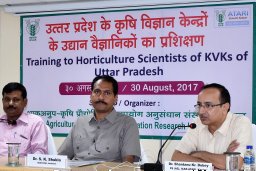 Shantanu Kumar Dubey合作论文数ICAR-Agricultural Technology Application Research Institute6
 Ambasankar Kondusamy合作论文数ICAR Cent Inst Brackishwater Aquaculture6
 Yogeshwar Singh合作论文数Inst Agr Sci, Banaras Hindu Univ6
 Fand Babasaheb B合作论文数ICAR-National Institute of Abiotic Stress Management (NIASM), Malegaon, Baramati, Pune, Maharashtra, India.6
 Kamlesh Kumar Meena合作论文数National Bureau of Agriculturally Important Microorganisms, Mau Nath Bhanjan, 275 101 UP India;National Institute of Abiotic Stress Management;National Bureau of Agriculturally Important Microorganisms, National Institute of Abiotic Stress Management6
 Ajay Kumar Singh合作论文数ICAR-National Institute of Abiotic Stress Management6
 Manjunatha Hebbara合作论文数6
 Manjunatha Munishamappa合作论文数Department of Agricultural Entomology, College of Agriculture5
 P. Suresh Kumar合作论文数Div Crop Prod & Postharvest Technol, ICAR Natl Res Ctr Banana5
 Kumar Neeraj合作论文数5Sul Nitin T合作论文数5
 Y. P. Singh合作论文数Department of Physics;Aligarh Muslim University;Department of Physics, Aligarh Muslim University5b k khosla合作论文数4D. R. Sharma合作论文数4
 Awtar Singh合作论文数4
 Shantagouda Patil合作论文数Tamil Nadu Agr Univ4
 Sorty Ajay M合作论文数PG Department of Microbiology, Yashwantrao Chavan College of Science4
 Luis Santos Pereira合作论文数Centro de Engenharia dos Biossistemas, University of Lisbon/International Commission of Agricultural and Biosystems Engineering, CIGR4
 Satish Kumar合作论文数George W. Woodruff School of Mechanical Engineering, Georgia Institute of Technology4George Priya合作论文数Microbiology Section, Central Plantation Crops Research Institute (ICAR),4Nikhil Raskar合作论文数3
 Khushboo Choudhary合作论文数3
 Lalitkumar Aher合作论文数3
 Utkarsh M. Bitla合作论文数ICAR, National Institute of Abiotic Stress Management3
 Aradhana Bali合作论文数ICAR‒Central Soil Salinity Research Institute3
 Kiran P. Bhagat合作论文数ICAR Directorate Floriculture Res3
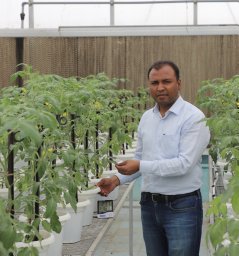 Pratapsingh Khapte合作论文数ICAR Natl Inst Abiot Stress Management Malegaon3
 Shashi Bhushan合作论文数School of Biological Sciences, College of Science, Nanyang Technological University3
 D.D. Nangare合作论文数Central Institute of Post harvest Engineering and Technology3Narendra Tyagi合作论文数Central Soil Salinity Research Institute3
 Alon Ben Gal合作论文数Gilat Research Center, Agricultural Research Organization3
 Rk Naresh合作论文数Environmental Medicine Laboratory, Indian Veterinary Research Institute3




