The purpose of this study is to numerically evaluate the performance of information entropy in electroencephalography (EEG) signal analysis. In particular, we use EEG data from an Alzheimer’s disease (AD) pilot study and apply several wavelet functions to determine the signals’ time and frequency characteristics. The wavelet entropy and wavelet sample entropy of the continuous wavelet transformed data are then determined at various scale ranges corresponding to major brain frequency bands. Non-parametric statistical analysis is then used to compare the entropy features of the EEG data obtained in trials with AD patients and age-matched healthy normal subjects under resting eyes-closed (EC) and eye-open (EO) conditions. The effectiveness and reliability of both choice of wavelet functions and the parameters used in wavelet sample entropy calculations are discussed and the ideal choices are identified. The result shows that, when applied to wavelet transformed filtered data, information entropy can be effective in determining EEG discriminant features, after selecting the best wavelet functions and window size of the sample entropy.
We have developed a novel approach to elucidate several discriminating EEG features of Alzheimer’s disease. The approach is based on the use of a variety of continuous wavelet transforms, pairwise statistical tests with multiple comparison correction, and several decision tree algorithms, in order to choose the most prominent EEG features from a single sensor. A pilot study was conducted to record EEG signals from Alzheimer’s disease (AD) patients and healthy age-matched control (CTL) subjects using a single dry electrode device during several eyes-closed (EC) and eyes-open (EO) resting conditions. We computed the power spectrum distribution properties and wavelet and sample entropy of the wavelet coefficients time series at scale ranges approximately corresponding to the major brain frequency bands. A predictive index was developed using the results from statistical tests and decision tree algorithms to identify the most reliable significant features of the AD patients when compared to healthy controls. The three most dominant features were identified as larger absolute mean power and larger standard deviation of the wavelet scales corresponding to 4–8 Hz (\(\theta\)) during EO and lower wavelet entropy of the wavelet scales corresponding to 8–12 Hz (\(\alpha\)) during EC, respectively. The fourth reliable set of distinguishing features of AD patients was lower relative power of the wavelet scales corresponding to 12–30 Hz (\(\beta\)) followed by lower skewness of the wavelet scales corresponding to 2–4 Hz (upper \(\delta\)), both during EO. In general, the results indicate slowing and lower complexity of EEG signal in AD patients using a very easy-to-use and convenient single dry electrode device.
In this article, the Electroencephalography (EEG) signal of the human brain is modeled as the output of stochastic non-linear coupled oscillator networks. It is shown that EEG signals recorded under different brain states in healthy as well as Alzheimer's disease (AD) patients may be understood as distinct, statistically significant realizations of the model. EEG signals recorded during resting eyes-open (EO) and eyes-closed (EC) resting conditions in a pilot study with AD patients and age-matched healthy control subjects (CTL) are employed. An optimization scheme is then utilized to match the output of the stochastic Duffing—van der Pol double oscillator network with EEG signals recorded during each condition for AD and CTL subjects by selecting the model physical parameters and noise intensity. The selected signal characteristics are power spectral densities in major brain frequency bands Shannon and sample entropies. These measures allow matching of linear time varying frequency content as well as non-linear signal information content and complexity. The main finding of the work is that statistically significant unique models represent the EC and EO conditions for both CTL and AD subjects. However, it is also shown that the inclusion of sample entropy in the optimization process, to match the complexity of the EEG signal, enhances the stochastic non-linear oscillator model performance.
Coupled nonlinear oscillator models of EEG signals during resting eyes-closed and eyes-open conditions are presented based on Duffing-van der Pol oscillator dynamics. The frequency and information entropy contents of the output of the nonlinear model and the actual EEG signal is matched through an optimization algorithm. The framework is used to model and compare EEG signals recorded from Alzheimer's disease (AD) patients and age-matched healthy controls (CTL) subjects. The results show that 1) the generated model signal can capture the frequency and information entropy contents of the EEG signal with very similar power spectral distribution and non-periodic time history; 2) the EEG and the generated signal from the eyes-closed model are α band dominant for CTL subjects and θ band dominant for AD patients; and 3) statistically distinct models represent the EEG signals from AD patients and CTL subject during resting eyes-closed condition.
OBJECTIVE: To assess a novel wireless single lead electroencephalography (EEG) system’s ability to detect diagnostic features of Alzheimer’s disease and early forms of cognitive impairment. BACKGROUND: Non-invasive biomarkers are emerging as essential tools for the development of effective drugs and as diagnostic aids to primary care physicians and neurologists. Static imaging (MRI/PET/SPECT) and fluid based (blood and CSF) biomarkers have the limitation that they don’t typically capture inherent brain physiology and dynamic processes. The present study evaluates a telemetric EEG device for the physiological assessment of brain health looking at multivariate classifiers DESIGN/METHODS: Recent advances in wireless EEG hardware have enabled Cerora to develop a novel activated EEG system (MindReader TM ) to focus the physiological assessment of brain health while activating various sensory circuits during cognitive tasks. We recently published our first pilot study on Alzheimer’s disease using Discrete Wavelet Transform methods (in N=14 Controls vs N=10 mild Alzheimer’s patients [Ghorbanian et al, Annals Biomed Eng 41(6): 1243-1257 (2013)”-To differentiate mild AD patient’s from age-matched controls”]. This abstract extends the results using Continuous Wavelet transforms with additional diagnostic power. RESULTS: Several independent features show good diagnostic accuracy when surveyed from over 150 published or proprietary EEG biomarkers for each of 16 tasks per subject. Clinical performance ranged from mediocre (60 % sensitivity, 60% specificity) to modest (75% / 72% respectively). CONCLUSIONS: : A physiologically focused battery of activated EEG tasks is able to probe elements of brain circuits not presently assessed with standard resting state (Eyes Open or Eyes Closed) quantitative EEG. The simplicity of the MindReader approach offers an alternative approach to rapidly, portably and non-invasively assess brain health. Multi-variate models can enhance diagnostic accuracy, although further work extending these preliminary results is required to develop the necessary activated EEG signatures to map the brain for its age-related, normal and abnormal signatures Study Supported by: Cerora Inc Disclosure: Dr. Bernstein has received research support from Merck & Co., Inc., Eli Lilly & Company, and Genentech/Roche Diagnostics Corporation. Dr. Hess has nothing to disclose. Dr. Ghorbanian has nothing to disclose. Dr. Ashrafiuon has nothing to disclose. Dr. Devilbiss has received personal compensation for activities with NexStepBiomarkers LLC, and Cerora Inc. as owner. Dr. Devilbiss has received royalty, or license fee, or contractual rights payments from NexStepBiomarkers LLC and Cerora, Inc. Dr. Devilbiss holds stock and/or stock options in NextStepBiomarkers LLC and Cerora, Inc., which sponsored research in which Dr. Devilbiss was involved as an investigator. Dr. Devilbiss has received research support from clients to NexStepBiomarkers LLC and clients of Cerora, Inc. Dr. Simon has received personal compensation for activities with Cerora Inc. as an employee. Dr. Simon holds stock and/or stock options in Cerora, Inc. which sponsored research in which Dr. Simon was involved as an investigator. Dr. Simon has received research support from Cerora, Inc.
The electroencephalography (EEG) reflects the averaged electrical activity of large numbers of cortical neurons associated with different neural information processing of brain regions. Because EEG recording process is non-invasive, safe, and can be easily administered by clinicians, EEG signal analysis is considered to be a potential tool that may aid in the diagnosis of brain abnormalities including Alzheimer’s disease (AD). In this dissertation, we explore a variety of approaches to EEG signal modeling and analysis in order to characterize different brain states and conditions. We introduce novel versions of two existing approaches to EEG signal analysis: linear time-frequency approach suitable for non-stationary signals and stochastic dynamical approach suitable for evaluation of signal’s nonlinear properties and noise interaction. The former approach is mainly based on continuous wavelet transform (CWT) and discrete wavelet transform (DWT), while the latter approach involves reproduction of the EEG signal using a stochastic nonlinear oscillator model. In the wavelet transform approach, several wavelet basis functions are used to exclude biases resulting from the choice of mother wavelets. A variety of frequency and information entropic based features are then derived using each wavelet basis function. This approach is applied to EEG recordings from a pilot study of AD patients versus age-matched healthy normal subjects. Initially, statistically significant EEG features of AD patients are determined. Then, three different decision tree algorithms are applied to identify the most distinctive discriminant features. Finally, a novel index based on statistical significance, decision tree results, and rate of false classification is introduced to isolate the most reliable distinguishing EEG features of AD patients. In the second approach, a novel and unique approach is introduced to model the EEG signal as the output of a stochastic nonlinear dynamical system. Using a global optimization procedure, coupled Duffing van der Pol oscillator models subject to random excitation are selected to produce signals matching the frequency content, self-exciting limit cycle properties, and information entropic features of the EEG signal under different brain states and conditions. It is shown that there exists distinct models for healthy normal subjects and AD patients. It is further shown through these models that the EEG recordings from different brain states and conditions exhibit unique nonlinear properties such as relaxation oscillations and information entropic features. Thus, the models can be used to explore the nonlinear and noise-related features associated with brain disorders and injuries. v
In this work, we propose a novel phenomenological model of the EEG signal based on the dynamics of a coupled Duffing-van der Pol oscillator network. An optimization scheme is adopted to match data generated from the model with clinically obtained EEG data from subjects under resting eyes-open (EO) and eyes-closed (EC) conditions. It is shown that a coupled system of two Duffing-van der Pol oscillators with optimized parameters yields signals with characteristics that match those of the EEG in both the EO and EC cases. The results, which are reinforced using statistical analysis, show that the EEG recordings under EC and EO resting conditions are clearly distinct realizations of the same underlying model occurring due to parameter variations with qualitatively different nonlinear dynamic characteristics. In addition, the interplay between noise and nonlinearity is addressed and it is shown that, for appropriately chosen values of noise intensity in the model, very good agreement exists between the model output and the EEG in terms of the power spectrum as well as Shannon entropy. In summary, the results establish that an appropriately tuned stochastic coupled nonlinear oscillator network such as the Duffing-van der Pol system could provide a useful framework for modeling and analysis of the EEG signal. In turn, design of algorithms based on the framework has the potential to positively impact the development of novel diagnostic strategies for brain injuries and disorders. (C) 2014 Elsevier Ltd. All rights reserved.
In this study, a stochastic Duffing - van der Pol coupled two oscillator system is designed to produce output matching the information content, complexity measure, and frequency content of actual electroencephalography (EEG) signals. This is achieved by deriving the oscillator model parameters and noise intensity using an optimization scheme whose objective is to minimize a weighed average of errors in sample entropy, Shannon entropy, and powers of the major brain frequency bands. The signals produced by the optimal model are then compared with the EEG signal using phase portrait reconstruction. The study shows that the model can effectively reproduce signals that match EEG recorded under different brain states with respect to multiple metrics.
In this work, we model electroencephalography (EEG) signals as the stochastic output of a double Duffing - van der Pol oscillator networks. We develop a novel optimization scheme to match data generated from the model with clinically obtained EEG data from subjects under resting eyes-open (EO) and eyes-closed (EC) conditions and derive models with outputs that show very good agreement with EEG signals in terms of both frequency and information contents. The results, reinforced by statistical analysis, shows that the EEG recordings under EC and EO resting conditions are distinct realizations of the same underlying model occurring due to parameter variations. Furthermore, the EC and EO EEG signals each exhibit distinct nonlinear dynamic characteristics. In summary, it is established that the stochastic coupled nonlinear oscillator network can provide a useful framework for modeling and analysis of EEG signals that are recorded under variety of conditions.
Alzheimer’s disease (AD) is associated with deficits in a number of cognitive processes and executive functions. Moreover, abnormalities in the electroencephalogram (EEG) power spectrum develop with the progression of AD. These features have been traditionally characterized with montage recordings and conventional spectral analysis during resting eyes-closed and resting eyes-open (EO) conditions. In this study, we introduce a single lead dry electrode EEG device which was employed on AD and control subjects during resting and activated battery of cognitive and sensory tasks such as Paced Auditory Serial Addition Test (PASAT) and auditory stimulations. EEG signals were recorded over the left prefrontal cortex (Fp1) from each subject. EEG signals were decomposed into sub-bands approximately corresponding to the major brain frequency bands using several different discrete wavelet transforms and developed statistical features for each band. Decision tree algorithms along with univariate and multivariate statistical analysis were used to identify the most predictive features across resting and active states, separately and collectively. During resting state recordings, we found that the AD patients exhibited elevated D4 (~4–8 Hz) mean power in EO state as their most distinctive feature. During the active states, however, the majority of AD patients exhibited larger minimum D3 (~8–12 Hz) values during auditory stimulation (18 Hz) combined with increased kurtosis of D5 (~2–4 Hz) during PASAT with 2 s interval. When analyzed using EEG recording data across all tasks, the most predictive AD patient features were a combination of the first two feature sets. However, the dominant discriminating feature for the majority of AD patients were still the same features as the active state analysis. The results from this small sample size pilot study indicate that although EEG recordings during resting conditions are able to differentiate AD from control subjects, EEG activity recorded during active engagement in cognitive and auditory tasks provide important distinct features, some of which may be among the most predictive discriminating features.
In this study, we applied the continuous wavelet transform (CWT) to determine electroencephalogram (EEG) discriminating features of Alzheimer's Disease (AD) patients compared to control subjects. The EEG was recorded from 24 subjects including 10 AD and 14 age-matched control during six sequential resting eyes-closed (EC) and eyes-open (EO) states followed by cognitive tasks and auditory stimulation. We computed the absolute and relative geometric mean powers of Morlet wavelet coefficients at different scale ranges corresponding to the major brain frequency bands. Kruskal-Wallis statistical testing method was then employed to determine the statistically significant features of the cohort geometric means. The results show that there are many discriminating features of AD patients at several different brain major frequency bands, particularly during the second and third EC and EO states. Since many features were identified, a decision tree algorithm was employed to classify the most significant one(s). The algorithm found the absolute power of 0 frequency band during the second EO state to be higher for all AD patients when compared to control subjects and identified it as the most significant discriminating feature.
The occurrence and risk of recurrence of brain related injuries and diseases are difficult to characterize due to various factors including inter-individual variability. A useful approach is to analyze the brain electroencephalogram (EEG) for differences in brain frequency bands in the signals obtained from potentially injured and healthy normal subjects. However, significant shortcomings include: (1) contrary to empirical evidence, current spectral signal analysis based methods often assume that the EEG signal is linear and stationary; (2) nonlinear time series analysis methods are mostly numerical and do not possess any predictive features. In this work, we develop models based on stochastic differential equations that can output signals with similar frequency and magnitude characteristics of the brain EEG. Initially, a coupled linear oscillator model with a large number of degrees of freedom is developed and shown to capture the characteristics of the EEG signal in the major brain frequency bands. Then, a nonlinear stochastic model based on the Duffing oscillator with far fewer degrees of freedom is developed and shown to produce outputs that can closely match the EEG signal. It is shown that such a compact nonlinear model can provide better insight into EEG dynamics through only few parameters, which is a step towards developing a framework with predictive capabilities for addressing brain injuries.
Non-invasive biomarkers are emerging as essential tools for the development of effective drugs and as aids to primary care physicians and neurologists. Static imaging (MRI/PET/SPECT) and fluid based (blood and CSF) biomarkers have the inherent limitation that they don't typically capture brain physiology and dynamic processes. Cerora is developing its MindReader™ platform as a non-invasive, accurate, accessible and affordable mobile solution to aid in the diagnosis of mTBI and Alzheimer's. The present study extends an activated EEG medical device for the physiological assessment of brain health looking at multivariate classifiers from both mild Traumatic Brain Injury (Concussion) as well as Alzheimer's disease. Recent advances in wireless electroencephalography (EEG) hardware have enabled the development of a novel activated EEG system (MindReader TM) to physiologically focus the assessment of brain health to various sensory circuits and cognitive tasks. The MindReader assesses brain function while actively stimulating the subject with various sensory and cognitive stimuli. At AAIC Vancouver, Cerora reported diagnostic signatures which discriminated AD from controls in a small pilot study which replicated and extended the published EEG diagnostic literature. This year, pilot diagnostic data were collected in concussed and healthy controls using a similar but different physiologically focused data acquisition paradigm. This presentation will provide an overview of the device along with the “cloud” based neuro diagnostics as a service IT infrastructure. Univariate and multivariate statistical models were built looking for meaningful predictors of concussion (mTBI). More advanced techniques like tree based methods, boosting, and neural nets were also assessed using the pilot concussion data. Comparison between Alzheimer's and concussion features will be highlighted. A physiologically focused battery of activated EEG tasks is able to probe elements of brain circuits not presently assessed with standard resting state (Eyes Open or Eyes Closed) quantitative EEG. The MindReader offers a novel alternative to rapidly, portably and non-invasively assess brain health and function. Multi-variate predictive models offer an opportunity to enhance classifier performance, although further work is required to develop the necessary activated EEG signatures to map the brain for its physiologic defects.
The objective of this study is to develop an algorithm to detect and classify six types of electrocardiogram (ECG) signal beats including normal beats (N), atrial pre‐mature beats (A), right bundle branch block beats (R), left bundle branch block beats (L), paced beats (P), and pre‐mature ventricular contraction beats (PVC or V) using a neural network classifier. In order to prepare an appropriate input vector for the neural classifier several pre‐processing stages have been applied. Initially, a signal filtering method is used to remove the ECG signal baseline wandering. Continuous wavelet transform is then applied in order to extract features of the ECG signal. Next, principal component analysis is used to reduce the size of the data. A well‐known neural network architecture called the multi‐layered perceptron neural network is then utilized as the final classifier to classify each ECG beat as one of six groups of signals under study. Finally, the MIT‐BIH database is used to evaluate the proposed algorithm, resulting in 99.5% sensitivity, 99.66% positive predictive accuracy and 99.17% total accuracy.
In this study, electroencephalogram (EEG) signals obtained by a single-electrode device from 24 subjects - 10 with Alzheimer's disease (AD) and 14 age-matched Controls (CN) - were analyzed using Discrete Wavelet Transform (DWT). The focus of the study is to determine the discriminating EEG features of AD patients while subjected to cognitive and auditory tasks, since AD is characterized by progressive impairments in cognition and memory. At each recording block, DWT extracts EEG features corresponding to major brain frequency bands. T-test and Kruskal-Wallis methods were used to determine the statistically significant features of EEG signals from AD patients compared to Controls. A decision tree algorithm was then used to identify the dominant features for AD patients. It was determined that the mean value of the low-δ (1 - 2 Hz) frequency band during the Paced Auditory Serial Addition Test with 2.0 (s) interval and the mean value of the δ frequency band (12 - 30 Hz) during 6 Hz auditory stimulation have higher mean values in AD patients than Controls. Due to artifacts, the less reliable low-δ features were removed and it was determined that the mean value of β frequency band during 6 Hz auditory stimulation followed by the standard deviation of θ (4 - 8 Hz) frequency band of one card learning cognitive task are higher for AD patients compared to Controls and thus the most dominant discriminating features of the disease.
SUMMARYA system is considered underactuated if the number of the actuator inputs is less than the number of degrees of freedom for the system. Sliding mode control for underactuated systems has been shown to be an effective way to achieve system stabilization. It involves exponentially stable sliding surfaces so that when the closed‐loop system trajectory reaches the surface, it moves along the surface while converging to the origin. In this paper, a general framework that provides sufficient conditions for asymptotic stabilization of underactuated nonlinear systems using sliding mode control in the presence of system uncertainties is presented. Specifically, it is shown that the closed‐loop system trajectories reach the sliding surface in finite time, and a constructive methodology to determine exponential stability of the closed‐loop system on the sliding surface is developed, which ensures asymptotic stability of the overall closed‐loop system. Furthermore, the aforementioned framework provides the basis to determine an estimate of the domain of attraction for the closed‐loop system with uncertainties. Finally, the results developed in the paper are experimentally validated using a linear inverted pendulum testbed to show a good match between the actual domain of attraction of the upward equilibrium state of the pendulum and its analytical estimate.Copyright © 2012 John Wiley & Sons, Ltd.
The purpose of this paper is to demonstrate the capabilities of continuous wavelet transform (CWT) in analyzing electroencephalogram (EEG) signals produced through a single-electrode recording device. Further, CWT is used to evaluate standard fast Fourier transform (FFT) analysis results. Sequential resting eyes-closed (EC) and eyes-open (EO) EEG signals, recorded from individuals during a one year period (N = 25), are analyzed. The absolute and relative geometric mean powers of the EEG δ, θ, α, and β-bands are calculated using FFT and CWT analysis. A sliding Blackman window based FFT analysis shows a statistically significant α and β-band dominant peaks for EC compared to EO recordings. These results confirm well-known results reported in the literature, which validates the EEG recording device. CWT analysis using Morlet mother function results are consistent with those of FFT analysis and revealed additional differences where a second range of statistically significant dominant scales are clearly observed in the δ-band for EO compared with EC, which has not been reported in the literature. However, the difference between EO and EC power spectra in the β range is less significant in the wavelet analysis.
Identification of patients requiring intensive care is a critical issue in clinical treatment. The objective of this study is to develop a novel methodology using hemodynamic features for distinguishing such patients requiring intensive care from a group of healthy subjects. In this study, based on the hemodynamic features, subjects are divided into three groups: healthy, risky and patient. For each of the healthy and patient subjects, the evaluated features are based on the analysis of existing differences between hemodynamic variables: Blood Pressure and Heart Rate. Further, four criteria from the hemodynamic variables are introduced: circle criterion, estimation error criterion, Poincare plot deviation, and autonomic response delay criterion. For each of these criteria, three fuzzy membership functions are defined to distinguish patients from healthy subjects. Furthermore, based on the evaluated criteria, a scoring method is developed. In this scoring method membership degree of each subject is evaluated for the three classifying groups. Then, for each subject, the cumulative sum of membership degree of all four criteria is calculated. Finally, a given subject is classified with the group which has the largest cumulative sum. In summary, the scoring method results in 86% sensitivity, 94.8% positive predictive accuracy and 82.2% total accuracy.
Objective: In this paper a new nonlinear system identification approach is developed for dynamical quantification of cardiovascular regulation. This approach is specifically focused on the identification of the heart rate (HR) baroreflex mechanism. The principal objective of this paper is to improve the model accuracy in the estimation of HR by proposing a modified nonlinear model. Methods and material: The proposed HR baroreflex model is based on inherent features of the autonomic nervous system for which we develop an adaptive neuro-fuzzy inference system (ANFIS) structure. This method allows incorporation of physiological understandings about the sympathetic and parasympathetic nerves through the selection of appropriate membership functions in the ANFIS structure. The required data for system modeling are collected from the publicly available PhysioNet database. Results: The results agree with the natural characteristics and physiological understanding of the cardiovascular regulatory system, such as delay in the parasympathetic function, durability in the function of sympathetic nerves and the correlation between the HR and the ABP signals. They also show significant improvements in HR prediction in terms of the normalized root mean square error (NRMSE) in comparison with other reported methods. We achieved to 0.191 in mean NRMSE in prediction of HR in this paper which is about 20% better than the best reported result in other researches. Conclusion: We have shown that for cardiovascular system regulation, our proposed nonlinear model is more accurate than other recently developed methods. Accurate HR baroreflex modeling enables clinicians to have more reliable information for their patients.
 Hashem Ashrafiuon合作论文数Department of Mechanical Engineering, College of Engineering, Villanova University;Heterogeneous Vehicles Lab, College of Engineering, Villanova University;Unmanned Surface and Underwater Vehicles Laboratory, College of Engineering, Villanova University19
 Ali Ghaffari合作论文数Department of Computer Engineering, Islamic Azad University8
 Adam Simon合作论文数8
 Subramanian Ramakrishnan合作论文数7
 David M Devilbiss合作论文数7
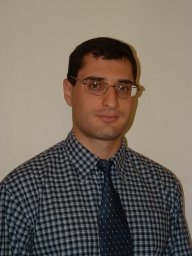 Sergey G. Nersesov合作论文数School of Aerospace Engineering, Georgia Institute of Technology5
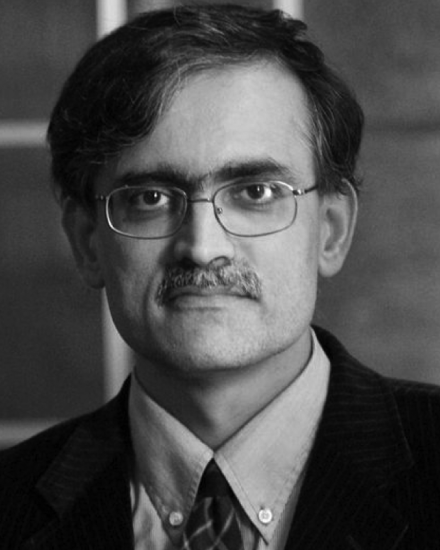 C. Nataraj合作论文数4H. Sadabadi合作论文数3Terry Hess合作论文数3Allan L. Bernstein合作论文数3
 Masood Ghasemi合作论文数CardioVascular Research Group (CVRG),, K. N. Toosi University of Technology3H. Golbayani合作论文数3
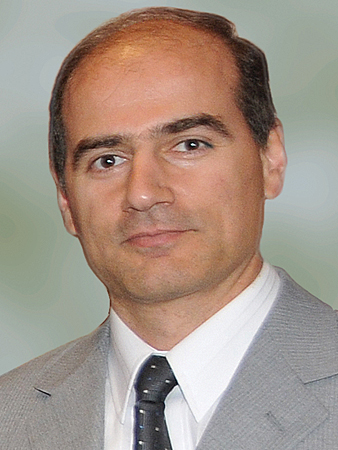 Amir G. Aghdam合作论文数Concordia Institute of Aerospace Design & Innovation, Gina Cody School of Engineering and Computer Science, Concordia University;Department of Electrical and Computer Engineering, Gina Cody School of Engineering and Computer Science, Concordia University2
 Ali Jalali合作论文数Turn Inc2
 Mohammad Atarod合作论文数CardioVascular Research Group2
 Alan M. Whitman合作论文数Department of Mechanical Engineering, Villanova University2Simon, A.J.合作论文数1Verma Ajay合作论文数1
 Thomas Hess合作论文数Department of Psychology, College of Humanities and Social Sciences, North Carolina State University1




