Joint work with Valentin Patilea, INSA-IRMAR and CREST-ENSAI, and Ingrid Van Keilegom, UCL). Consider a random vector (X 0 ;Y ) 0 , where X is d-dimensional and Y is one-dimensional. We assume that Y is subject to random right censoring. First we propose a new estimator of the joint distribution of (X 0 ;Y ) 0 based on the conditional Kaplan-Meier estimator, see Dabrowska (1). This estimator overcomes the common curse-of-dimensionality problem, by using a new dimension reduction technique. With at hand this new estimator, we use it to perform estimation in a single index regression model, that is we assume that the conditional expectation of Y given X only depends on an unknown linear combination of the covariates. Our estimation procedure extends the M estimation procedure proposed by Hardle, Hall, Ichimura (2). We obtain asymptotic properties for the estimator of the index parameter, and for the nal semiparametric estimator of the regression function.
Abstract Training the score follower, in the context of musical practice, is to adapt its parameters to improve performance for a certain score. To this aim, every parameter used in the system has to have direct physical interpretation or correlation with high-level desired parameters, in order to be trainable and controllable. This criteria has forced us to reconsider the design and approach in one of the main components of the score follower, the probability observation block. In order to this approach, we developed a criticism based on the notion of heuristics used in the design of the existing system at the beginning of this project with a look at empirical-synthetical sciences which score following research is a member. In his respect, we argue that the heuristics used in the design of the system has been considered in a late stage during the design and suggests an alternative approach in which heuristics will be used as the lowestlevel of information modeling and higher-level models used in the system would become an outcome of a series of derivation based on these heuristics modelings. A novel learning algorithm based on these views called automatic discriminative training was implemented which conforms to the practical criteria of a score following. The novelty of this system lies in the fact that this method, unlike classical methods for HMM training, is not concerned with modeling the
In this work the approach of the reduite is made in a simple and unied way. More precisely, we use the same probabilistic technique to study the optimal stopping problem associated with the reduite, to prove the expression of the Snell envelope in terms of the reduite under very general assumptions, and to show continuity properties of the reduite. We nally describe the example of diusion processes with jumps.
This paper focuses on recursive estimation of locally stationary au- toregressive processes. The stability of the model is revisited and uniform results are provided when the time-varying autoregression parameters belong to appropi- ate smoothness classes. An adequate normalization for the correction term used in the recursive estimation procedure allows for very mild assumptions on the innovations distributions. The rate of convergence of the pointwise estimates are shown to be minimax in -Lipschitz classes for 0 < 1. For 1 < 2, this property does no longer hold; a bias reduction method is proposed for recover- ing the minimax rate. Finally, an asymptotic expansion of the estimation error is given, allowing both for an explicit asymptotic expansion of the mean-square error and for a central limit theorem.
Le but de cet expose est de montrer comment les groupes quantiques peu- ventetre utilises pour decrire la monodromie de certaines systemes Fuchsiens d'´equations aux derivees partielles du premier ordre. Un resultat fondamen- tal dans cette direction est le theoreme de Kohno-Drinfeld qui peut s'´enoncer comme suit. Soit g une algebre de Lie complexe et simple et U~g le groupe quantique de Kohno-Drinfeld correspondant. U~g est une deformation de l'algebre enveloppante Ug de g en ce sens que c'est une algebre (de Hopf) sur l'anneau des series formelles C((~)) telle que U~g/~U~g �= Ug. La R-matrice universelle de U~g donne, pour chaque entier n 2 N, une repesentation du groupe de tressesa n brins Bn sur le nieme produit tensoriel V n de toute representation V de U~g de dimension finie. Le theoreme de Kohno- Drinfeld affirme que cette representation estequivalentea la monodromie desequations de Knizhnik-Zamolodchikov, qui sont une connexion plate sur l'espace de configuration de n points sur Ca valeurs dans V n. Lusztig, et independemment Kirillov-Reshetikhin et Soibelman ont montre que U~g donne aussi des representations d'un autre groupe de tresses, `a savoir le groupe de tresses generalise de type g. Si la representation par R- matrices est une deformation de l'action naturelle du groupe symetrique Sn sur V n, la representation de Lusztig, Kirillov-Reshetikhin and Soibelman (LKRS) est une deformation de l'action (d'une extension finie) du groupe de Weyl de g sur toute representation de dimension finie U de g. Je decrirai une nouvelle connexion plate sur l'espace deselements reguliers d'une algebre de Cartan h de ga valeurs dans U, decouverte en collaboration avec J. Millson (MTL) et montrerai que, pour g = sln, sa monodromie estequivalentea la representation de LKRS sur U (TL1, TL2). References
In this paper, we tackle the problem of image nonlinear approx- imation. During the last past years, many algorithms have been proposed to take advantage of the geometry of the image. We intend here to propose a new nonlinear approximation algorithm which would take into account the structures of the image, and which would be powerful even when the original image has some textured areas. To this end, we first split our image into two components, a first one containing the structures of the image, and a second one the oscillating patterns. We then perform the nonlinear approximation of each component separately. Our fi- nal approximated image is the sum of these two approximated components. This new nonlinear approximation algorithm out- performs the standard biorthogonal wavelets approximation.
Training the score follower, in the context of musical practice, is to adapt its parameters to improve performance for a certain score. To this aim, every parameter used in the system has to have direct physical interpretation or correlation with high-level desired parameters, in order to be trainable and controllable. This criteria has forced us to reconsider the design and approach in one of the main components of the score follower, the probability observation block. In order to this approach, we developed a criticism based on the notion of heuristics used in the design of the existing system at the beginning of this project with a look at empirical-synthetical sciences which score following research is a member. In his respect, we argue that the heuristics used in the design of the system has been considered in a late stage during the design and suggests an alternative approach in which heuristics will be used as the lowestlevel of information modeling and higher-level models used in the system would become an outcome of a series of derivation based on these heuristics modelings. A novel learning algorithm based on these views called automatic discriminative training was implemented which conforms to the practical criteria of a score following. The novelty of this system lies in the fact that this method, unlike classical methods for HMM training, is not concerned with modeling the music signal but with correctly choosing the sequence of music events that was performed. In this manner, using a discrimination process we attempt to model class boundaries rather than constructing an accurate model for each class. The discrimination knowledge is provided by an alternative algorithm, namely Yin developed by de Cheveigne and Kawahara (2002). Following the design of the training method, further experiments were undertaken to improve the response of system. For this purpose, every feature in the observation process of the system was studied and examined for correlation with high-level states and using the analysis results, modifications on the existing feature as well as a totally new feature were introduced to be used in the system. During evaluations, the system proved to be more stable and the results are improved compared to the previous system. Moreover, due to our design approach, the shortcomings of the current system have physical interpretations in the terms of current design and can be envisioned for further improvements, which was not the case with the previous system. Finally, the new concepts presented in this work, opens a new and more flexible view of score following for further research and improvements by arising an urgent need for a database of aligned sound and other research work which would lead the system towards better following.
 Universite Pierre合作论文数4marie curie合作论文数3
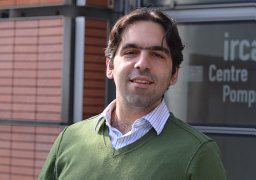 Arshia Cont合作论文数La kitchen, Paris, France2
 Reda Bendraou合作论文数UPMC Paris Universitas2mancel jeanfrancois合作论文数1universite denis合作论文数1upmc president合作论文数1matiere condensee合作论文数1modelisation de合作论文数1pascal demoulin合作论文数1
 Pascal Carrivain合作论文数1Michel Waldschmidt合作论文数1Ecole Doctorale合作论文数1Laurent Baulieu合作论文数1
 Marc Yor (马克·约尔)合作论文数Universite Paris VI1
 Jean-Louis Bougeret合作论文数Observatoire de Paris Meudon1
 Olivier Lopez合作论文数Laboratoire de Statistique1
 Eric Moulines合作论文数Telecom ParisTech;Applied Mathematics Center, Ecole Polytechnique1
 Michel Talagrand合作论文数CNRS;Institut de Mathématiques de Jussieu1
 Steven Ericsson-Zenith合作论文数1
 Laurent Champaney合作论文数LMT-Cachan, ENS Cachan/CNRS/UPMC/PRES UniverSud Paris) 611Valerio Toledano Laredo合作论文数1
 François Roueff合作论文数LTCI1Guillaume Jamet合作论文数Institut de Mathematiques, Univ. Paris 61Ecole Nationale合作论文数1
 Rolland Vida合作论文数Budapest University of Technology and Economics1
 Jean-Sébastien Roy合作论文数School of Rehabilitation Science, McMaster University1Cyrille Strugarek合作论文数1Ens De Cachan合作论文数1V. Toledano Laredo合作论文数1Paris Vii合作论文数1
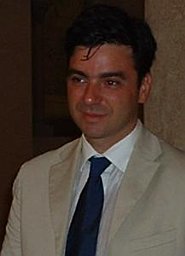 Nunziante Valoroso合作论文数Consiglio Nazionale delle Ricerche, Istituto per le Tecnologie della Costruzione viale Marx1Via G. Sansone合作论文数1L'Université Pierre合作论文数1
 Jean François Aujol合作论文数IMB, Universite Bordeaux1Consiglio Nazionale合作论文数1
 Basarab Matei合作论文数Laboratoire Jacques-Louis Lions, Université Pierre et Marie Curie1Docteur De L'Universit合作论文数1Kengy Barty合作论文数1




