Truth is a property of our statements and of our thoughts, but also what these aim at, and a norm for our thinking in general. But how to understand this normative tie between belief and truth? Norms by themselves seem unable to motivate or to guide us. These difficulties are stated, and the answer given is that the norm of belief is actually knowledge, which explains why we value it, and how it can also be a value.
Abstract French philosophy since 1800 has not been dominated by rationalism, but, instead, by various forms of rejection of reason inspired by spiritualism. Nonetheless, a small group of thinkers have defended various versions of what one may call intellectualist rationalism, promoting the primacy of concepts and scientific reason over that of life and emotion. This chapter describes this small and somewhat neglected tradition, starting from Cournot to Couturat, furthered by Nicod, Cavaillès, Granger, Vuillemin, and Bouveresse. Although these developments look to what later became analytic philosophy in the twentieth century, I explain that they constitute a distinctive brand of French rationalism.
On décrit ici les impasses du particularisme en sciences sociales (contextualisme, narrativisme, casuistique, pragmatisme, rejet de la distinction fait/valeur). Le causalisme et le généralisme ne sont pas dépassés.
 claudio ciancio合作论文数6paolo parrini合作论文数5
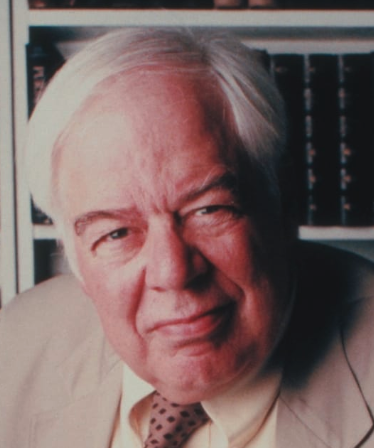 Richard Rorty合作论文数Stanford University3
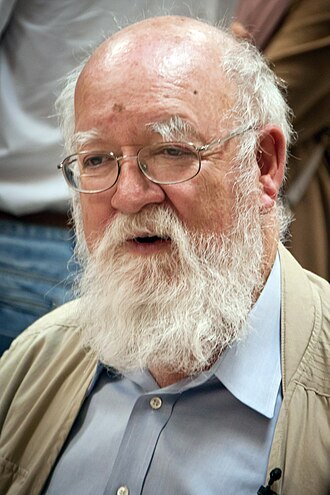 Daniel C. Dennett合作论文数Philosophy Dept, Tufts University2r morrissey合作论文数1Kim Davis合作论文数1mathieu mulcey合作论文数1
 Vincent F. Hendricks合作论文数University of Copenhagen1
 Michael P. Lynch合作论文数Humanities Inst, Univ Connecticut1
 Paolo Parrini合作论文数1Søren Holm合作论文数School of Social Sciences, Faculty of Humanities, The University of Manchester1
 Julien Dutant合作论文数Department of Philosophy, Faculty of Arts & Humanities, King’s College London1
 Bengt Hansson合作论文数Department of Biology, Lund University;CAnMove - Centrum för forskning om djurs spridning och flyttning, Lund University1
 Hans P. Van Ditmarsch合作论文数Department of Artificial Intelligence, Open University of the Netherlands1
 Pierre E. Jacob合作论文数Département des Systèmes d’Information, Sciences de la Décision et Statistiques, ESSEC Business School1Hans Rott合作论文数Universit??t Regensburg;Institut fur Philosophie1
 Jaegwon Kim合作论文数Department of Philosophy, Brown University1Kevin Mulligan合作论文数Département de Philosophie, Faculté des Lettres, Université de Genève1Akeel Bilgrami合作论文数1Université De Paris-Sorbonne合作论文数1
 Alain Policar合作论文数Sociologue;Faculté de droit et sciences;Université de Limoges1
 Anthonie Meijers合作论文数Section of Philosophy and Ethics of Technology, Eindhoven University of Technology1
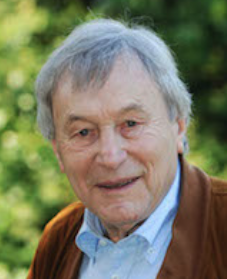 Karlheinz Stierle合作论文数Universität des Saarlandes;University of Konstanz1
 Henry S. Richardson合作论文数Department of Philosophy, Georgetown University1Universite De Geneve合作论文数1Marcelo Sánchez Sorondo合作论文数1
 Sven Ove Hansson合作论文数Department of Philosophy & History of Technology, School of Architecture & the Built Environment, Royal Institute of Technology1K. U. Leuven合作论文数1
 Pauline Jacobson合作论文数Department of Philosophy, Brown University1




