Microalgae and yeasts can establish a mutualistic relationship based on reciprocal oxygen/carbon dioxide exchange, offering a strategy to overcome productivity limits caused by the slow growth of microalgae. This study examines the physiological and biophysical responses of Parachlorella kessleri when co-cultured with Saccharomyces cerevisiae to enhance lipid productivity while maintaining cost-effectiveness for large-scale applications. A multi-scale analytical approach was used to clarify the mechanisms driving this interaction. Under co-culture conditions, biomass and lipid production increased 4-fold compared to microalgal monoculture grown in BBM + NO3 medium. Yeast sustained microalgal growth during the transition to phototrophy after glucose depletion (day 6) and promoted lipid accumulation through nutrient competition. Despite prolonged nutrient limitation (approximately 8 days), yeast viability remained above 68%, indicating possible metabolic support from microalgae via exopolysaccharides (EPS) - derived molecules. At the biophysical level, atomic force microscopy (AFM) analyses showed increased microalgal cell size, visible EPS production, and clear surface structural modifications in yeast cells, together with a significant reduction in yeast cell wall stiffness. Single-cell force spectroscopy using fluidic force microscopy (FluidFM) revealed stronger and longer microalgae-yeast interactions in co-culture, likely due to enhanced EPS production when cocultured. Overall, combining physiological and biophysical insights provides a deepened understanding of co-culture dynamics across scales, supporting the rational design and optimization of microalgae-yeast systems for sustainable and economically viable lipid production.
Plastic waste management in shopping malls presents significant environmental and operational challenges due to high waste generation, heterogeneous waste streams, and complex logistics. Although recycling initiatives have expanded, many existing approaches inadequately address trade-offs between environmental performance and economic feasibility. This study applies an integrated System Dynamics Modeling framework to evaluate circular economy (CE) strategies for plastic waste management in a large urban shopping mall. Environmental impacts are quantified using Life Cycle Assessment (LCA) across 18 ReCiPe midpoint categories, while economic and social performance is assessed using Social Return on Investment (SROI). Seven CE-oriented intervention scenarios are simulated, including behavioral interventions, tenant engagement, plastic waste compaction, shared-resource platforms, and an integrated strategy aligned with Extended Producer Responsibility. The results indicate that CE integration can increase recycling rates from 4.40
Colloidal phyllosilicates, commonly called clays, have physicochemical properties that induce strong adhesion to solid surfaces. The detachment of this type of adhesive colloid under foaming solution flow, as used in soil remediation and soil oil recovery, or washing processes is poorly understood. This study aims to understand the influence of a flow of interfaces on the detachment of these adhesive particles using a controlled foam flow. The particle deposits studied are made up of natural clays with a negative global surface charge and another type with a positive global surface charge modified by cationic surfactant adsorption. Anionic, non-ionic and cationic surfactants that are used to form stabilized foam interfaces flow are studied. A microfluidic chip is used to generate and control the bamboo foam flowing through a model millichannel, which represents a flow of successive interfaces. Detachment efficiencies are measured by image acquisition and image processing. For anionic Sodium Dodecyl Sulfate (SDS) flows, total particle detachment occurs for the monophasic foaming liquid and foam flows due to the repulsive electrostatic interactions. For non-ionic Glucopon and cationic TetradecylTrim & eacute;thylAmmonium Bromide (TTAB) flows, the interfacial forces exerted by the successive lamellae Air/Water Interfaces improve the removal of these adhesive particles by at least a factor of 2 (detachment efficiency > 75 %) compared to the corresponding foaming liquid flow. Foam flow, thanks to its interfaces, improves the detachment of adherent microparticles if they are partially immersed, and also allows savings in the volumes of products used. This is particularly interesting in the case of the green biodegradable non-ionic Glucopon surfactant, which can be used for environmental applications.
This study addresses the significant contribution of shopping malls to plastic waste management by assessing alternatives that balance environmental and economic impacts. Data were collected through a mixed-methods approach (in-depth interviews and questionnaires) and analyzed using the thematic analysis. The research highlights the pivotal role of policymakers in fostering collaborations essential for effective plastic waste management. A novel business model centered on resource recovery is proposed based on the analysis of the plastic waste landscape from both macro-factors and key stakeholders' perspectives. Due to the enhancement in plastic recycling rates, this model could reduce greenhouse gas emissions by up to 19.88 tCO2-eq per year and generate an annual revenue of USD 584. The findings advocate for collaborative efforts between mall stores and office spaces to increase the availability of recyclable plastics. The outcomes contribute to the formulation of evidence-based environmental policies tailored to shopping malls, promoting sustainable solutions aligned with circular economy principles and offering a framework that can be adopted by stakeholders across the plastic ecosystem.
Microalgae show great promise for producing valuable molecules like biofuels, but their large-scale production faces challenges, with harvesting being particularly expensive due to their low concentration in water, necessitating extensive treatment. While methods such as centrifugation and filtration have been proposed, their efficiency and cost-effectiveness are limited. Flotation, involving air-bubbles lifting microalgae to the surface, offers a viable alternative, yet the repulsive interaction between bubbles and cells can hinder its effectiveness. Previous research from our group proposed using an amphiphilic chitosan derivative, polyoctyl chitosan (PO-chitosan), to functionalize bubbles used in dissolved air flotation (DAF). Molecular-scale studies performed using atomic force microscopy (AFM) revealed that PO-chitosan's efficiency correlates with cell surface properties, particularly hydrophobic ones, raising the question of whether this molecule can in fact be used more generally to harvest different microalgae. Evaluating this, we used a different strain of Chlorella vulgaris and first characterized its surface properties using AFM. Results showed that cells were hydrophilic but could still interact with PO-chitosan on bubble surfaces through a different mechanism based on specific interactions. Although force levels were low, flotation resulted in 84% separation, which could be explained by the presence of AOM (algal organic matter) that also interacts with functionalized bubbles, enhancing the overall separation. Finally, flocculation was also shown to be efficient and pH-independent, demonstrating the potential of PO-chitosan for harvesting microalgae with different cell surface properties and thus for further sustainable large-scale applications.
Aggregation of diatoms is of global importance to understand settling of particulate organic carbon in aquatic systems. In this study, we investigate the aggregation of the marine diatom Cylindrotheca closterium during the exponential growth phase under hypo-saline conditions. The results of the flocculation/flotation experiments show that the aggregation of the diatom depends on the salinity. In favorable growth conditions for marine diatoms (salinity of 35), the highest aggregation is achieved. To explain these observations, we used a surface approach combining atomic force microscopy (AFM) and electrochemical methods to characterize both the cell surface properties and the structure of the extracellular polymeric substances (EPS) cell produce, and to quantify the amount of surface-active organic matter released. At a salinity of 35, the results showed that diatoms are soft, hydrophobic and release only small amounts of EPS organized into individual short fibrils. In contrast, diatoms adapt to a salinity of 5 by becoming much stiffer and more hydrophilic, producing larger amounts of EPS that structurally form an EPS network. Both adaptation responses of diatoms, the hydrophobic properties of diatoms and the release of EPS, appear to play an important role in diatom aggregation and explain the behavior observed at different salinities. This biophysical study provides important evidence allowing to get a deep insight into diatom interactions at the nanoscale, which may contribute to a better understanding of large-scale aggregation phenomena in aquatic systems.
Microalgae are a promising resource for biofuel production, although the lack of effective harvesting techniques limits their industrial use. In this context, flotation, and in particular dissolved air flotation (DAF), is an interesting separation technique that could drastically reduce harvesting costs and make biofuel-production systems more economically viable. But because of the repulsive interaction between cells and bubbles in water, the efficiency of this technique can be limited. To solve this problem, we propose here an original DAF process where bubbles are functionalized with a bio-sourced polymer able to specifically bind to the surface of cells, chitosan. In a first part, we modify chitosan by adding hydrophobic groups on its backbone to obtain an amphiphilic molecule, PO-chitosan, able to assemble at the surface of bubbles. Then, using a recently developed technique based on atomic force microscopy (AFM) combined with microfluidics, we probe the interactions between PO-chitosan coated bubbles and cells at the molecular scale; results show an enhanced adhesion of functionalized bubbles to cells (from 3.5 to 12.8 nN) that is pH-dependent. Separation efficiencies obtained in flotation experiments with functionalized bubbles are in line with AFM data, and a microalgae separation efficiency of approximately 60% could be reached in a single step. In addition, we also found that PO-chitosan could be used efficiently as a flocculant (nearly 100% of cells removed), and in this case AFM experiments revealed that the flocculation mechanism is based on hydrophobic interactions between cells and PO-chitosan. Altogether, this comprehensive study shows the interest of PO-chitosan to harvest cells in flotation or flocculation/flotation processes.
The microalgae cell wall represents its interface with its environment, and is a dynamic and complex structure that evolves depending on the growth phase or culture conditions. To apprehend this complexity, an experimental approach combining AFM, XPS, and chemical hydrolysis followed by HPAEC-PAD was developed to understand the cell wall of Chlorella vulgaris, a biotechnologically-relevant green microalgae species. Exponential and stationary growth stages were investigated, as well as saline stress condition inducing lipid production. Results showed that both the cell wall composition and architecture changes in stationary phase, with an increase of the lipidic fraction at the expense of the proteic fraction, changes in the polysaccharidic composition, and a significant increase of its rigidity. Under saline stress, cell wall architecture seems to be affected as importantly, its rigidity is reduced. Altogether, this study demonstrates the power of combining these three techniques to give new insights into C. vulgaris cell wall, in terms of composition and architecture, and of its dynamics in different conditions.
Plastic pollution has become a significant concern in aquatic ecosystems, where photosynthetic microorganisms such as microalgae represent a major point of entry in the food chain. For this reason an important challenge is to better understand the consequences of plastic pollution on microalgae and the mechanisms underlying the interaction between plastic particles and cell’s interfaces. In this study, to answer such questions, we developed an interdisciplinary approach to investigate the role of plastic microparticles in the aggregation of a freshwater microalgae species, Chlorella vulgaris. First, the biophysical characterization, using atomic force microscopy, of the synthetic plastic microparticles used showed that they have in fact similar properties than the ones found in the environment, with a rough, irregular and hydrophobic surface, thereby making them a relevant model. Then a combination of optical imaging and separation experiments showed that the presence of plastic particles in microalgae cultures induced the production of exopolysaccharides (EPS) by the cells, responsible for their aggregation. However, cells that were not cultured with plastic particles could also form aggregates when exposed to the particles after culture. To understand this, advanced single-cell force spectroscopy experiments were performed to probe the interactions between cells and plastic microparticles; the results showed that cells could directly interact with plastic particles through hydrophobic interactions. In conclusion, our experimental approach allowed highlighting the two mechanisms by which plastic microparticles trigger cell aggregation; by direct contact or by inducing the production of EPS by the cells. Because these microalgae aggregates containing plastic are then consumed by bigger animals, these results are important to understand the consequences of plastic pollution on a large scale.
Gas–liquid mass transfer from spherical bubbles is studied by DNS for various Reynolds numbers (1⩽Re⩽300), Schmidt numbers (1⩽Sc⩽500) and bubble surface contamination degrees (0°⩽θcap⩽180°). Computed separation angles, drag coefficients and average Sherwood numbers for both clean and fully contaminated bubbles are favorably compared to literature. For partially contaminated bubbles, a correlation giving the separation angle versus Re and θcap is proposed. Local Sherwood numbers along the bubble interface shows a transition between clean and contaminated zones closed to the separation angle. At low Re, for θcap<40°, mass transfer of the contaminated bubble can be estimated by correlations for spherical solid particles, meanwhile for θcap>160°, bubbles can be assimilated to clean bubbles. For intermediate contamination levels, a normalized Sherwood number Sh∗ from the drag Sadhal(1983) model can be used. For intermediate Re and high Sc,Sh∗ converges to a function well correlated to the normalized drag coefficient CD∗ byShlower∗=1-(1-(CD∗)2)0.5.
In the present study, molecular dynamics (MD) simulation was performed to study the effect of electric field on the adsorption characteristics of acetaminophen (APAP) on graphene oxide (GO) under alkaline conditions by calculating and analyzing the structural and energy parameters of a ternary system containing GO, APAP and water molecules. Our simulations result shows that when there is no electric field, the adsorption of APAP on the GO surface is mainly due to the Van de Waals interaction. When the external electric field exists, it can significantly weaken the interaction energy between GO and APAP, destroy the hydrogen bond, and reduce the hydration energy barrier during the escape of APAP from the GO surface, thereby making APAP can desorb from the GO surface more easily. In addition, the applied electric field can change the hydrophobicity on both sides of GO, which means the hydrophobicity and hydrophilicity of both sides of the GO can be switched by changing the direction and strength of the electric field. Our research results are expected to propose a novel GO regeneration method and provide a new perspective to explore the mechanism.
Understanding the molecular mechanisms underlying bubble-(bio)surfaces interactions is currently a challenge that if overcame, would allow to understand and control the various processes in which they are involved. Atomic force microscopy is a useful technique to measure such interactions, but it is limited by the large size and instability of the bubbles that it can use, attached either on cantilevers or on surfaces. We here present new developments where microsized and stable bubbles are produced using FluidFM technology, which combines AFM and microfluidics. The air bubbles produced were used to probe the interactions with hydrophobic samples, showing that bubbles in water behave like hydrophobic surfaces. They thus could be used to measure the hydrophobic properties of microorganisms' surfaces, but in this case the interactions are also influenced by electrostatic forces. Finally a strategy was developed to functionalize their surface, thereby modulating their interactions with microorganism interfaces. This new method provides a valuable tool to understand bubble-(bio)surfaces interactions but also to engineer them.
A framework model is proposed to evaluate the actual overall growth rate of microalgae in an outdoor tubular photobioreactor. A Monte Carlo-based radiative transfer modeling approach describes the local distribution of light energy inside the broth as a function of static (reactor geometry, location) and dynamic solar radiation parameters (angle of incidence, direct and diffuse solar contribution, incident radiation intensity). The light fields are coupled to a Lagrangian discrete random walk tracking of the cells to give the light variations experienced by each microalga for different broth flow rates. The cell light experiments are combined with a dynamic biological model to statistically calculate the actual overall growth rate. Using this model, 380 numerical experiments were performed for a wide range of geographic, light, biomass concentration, and broth flow turbulence conditions. Correlations for a normalized growth rate, Γ, relating the actual overall growth rate to its asymptotic behaviors (i.e., the instantaneous response and the full integration response), are proposed. The results clearly show that, for a fixed broth flowrate, Γ does not change with cell concentration variation. Under given light conditions, the level of turbulence linearly manages Γ, and thus the efficiency of sunlight utilization by the photobioreactor biomass can be tuned by the broth flow rate in the tubular photobioreactor. Γ also increases linearly with the diffuse fraction of solar radiation. A simple correlation is proposed for fast calculation of the actual overall growth rate.
Atomic force microscopy (AFM) has now become a major technology to study single cells in living conditions. It provides nanoscale resolution imaging capacities and is a sensitive force machine able to record piconewton-scale forces, thereby making it possible to gain insights into the nanomechanical properties and molecular interactions of cells. While an extensive number of studies on microorganisms have demonstrated the potential of AFM to understand complex phenomena at cell's interfaces, its use in microalgae studies remains limited. These recent years, microalgae have been the subject of a significant number of fundamental studies notably because of their capacity to convert light, water and inorganic nutrients into a biomass resource rich in value-added products. The existing literature reporting AFM use to understand microalgae cell morphology, their nanomechanical properties or their interactions with their environment give a large overview of the contribution AFM can bring into microalgae studies. In this review, we will first present the principles of AFM and the different possibilities it offers to characterize cells. Then in a second part, the contribution of AFM to understand the effects of environmental conditions and external stress on microalgae cells will be discussed. Finally, we will show how AFM can be used to probe the interactions of microalgae with their environment and how such fundamental studies can represent a basis to improve microalgae production systems. Overall, this review, the first on this topic, aims to highlight the opportunities that AFM technology can bring to this field of research.
In microalgae harvesting, flocculation is usually a compulsory preliminary step to further separation by sedimentation or flotation. For some microalgae species, and under certain growth conditions, flocculation can occur naturally. Natural flocculation presents many advantages as it does not require the addition of any flocculants to the culture medium and shows high efficiency rate. But because natural flocculation is so specific to the species and conditions, and thanks to the knowledge accumulated over the last years on flocculation mechanisms, researchers have developed strategies to induce this natural harvesting. In this review, we first decipher at the molecular scale the underlying mechanisms of natural flocculation and illustrate them by selected studies from the literature. Then we describe the developed strategies to induce natural flocculation that include the use of biopolymers, chemically modified or not, or involve mixed species cultures. But all these strategies need the addition of external compounds or microorganism which can present some issues. Thus alternative directions to completely eliminate the need for an external molecule, through genetic engineering of microalgae strains, are presented and discussed in the third part of this review.
Microalgae are a promising resource for biofuel production, although their industrial use is limited by the lack of effective harvesting techniques. Flocculation consists in the aggregation and adhesion of cells into flocs that can be more easily removed from water than individual cells. Although it is an efficient harvesting technique, contamination is a major issue as chemical flocculants are often used. An alternative is to use natural biopolymers flocculants such as chitosan. Chitosan is a biobased nontoxic polymer that has been effectively used to harvest Chlorella vulgaris cells at a pH lower than its pKa (6.5). While the reported flocculation mechanism is said to rely on electrostatic interactions between chitosan and the negative cell surface, no molecular evidence has yet confirmed this mechanism. In this study, we performed force spectroscopy atomic force microscopy (AFM) experiments to probe the interactions between C. vulgaris cells and chitosan at the molecular scale to decipher its flocculation mechanism. Our results showed that at pH 6, chitosan interacts with C. vulgaris cell wall through biological interactions rather than electrostatic interactions. These observations were confirmed by comparing the data with cationically modified cellulose nanocrystals, for which the flocculation mechanism, relying on an electrostatic patch mechanism, has already been described for C. vulgaris. Further AFM experiments also showed that a different mechanism was at play at higher pH, based on chitosan precipitation. Thus, this AFM-based approach highlights the complexity of chitosan-induced flocculation mechanisms for C. vulgaris.
Arthrospira platensis, or spirulina, is a cyanobacterial species mainly exploited for its nutritional qualities and able to produce exopolysaccharides (EPS) under specific conditions. In this work we identify that the bicarbonate concentration is a key parameter that induces EPS production by the cells. Using flocculation/flotation harvesting experiments, in addition to atomic force microscopy to characterize the biophysical properties of EPS, we show that EPS produced by A. platensis cells form a soft, adhesive gel in the medium that forms aggregates in which cells are entrapped and thus bioflocculated. This results in the creation of microalgae flocs in which ascending microbubbles produced in the flotation process get trapped, thus enhancing the efficiency of the microalgae separation from water. This interdisciplinary study provides new insights into culture conditions that positively influence the EPS production, while allowing both a high final biomass concentration and a harvesting efficiency superior to 90% to be reached.
 Cécile Formosa-Dague合作论文数Université catholique de Louvain, Institute of Life Sciences, Croix du Sud 4-5, bte L7.07.06, B-1348 Louvain-la-Neuve, Belgium16
 Legendre Dominique合作论文数Institut de Mécanique des Fluides de Toulouse16
 Arnaud Cockx合作论文数LIPE, INSA-DGPI13
 İrem Demir合作论文数CNRS, Université de Toulouse12
 Olivier Masbernat合作论文数CNRS, Fédération de recherche FERMAT8
 Damien Colombet合作论文数Lab Ecoulements Geophys & Ind, Univ Grenoble Alpes7
 Catherine Gourdon合作论文数Institut des NanoSciences de Paris, Universités Pierre et Marie Curie et Denis Diderot7
 Jerome Morchain合作论文数6Joël Bertrand合作论文数6Sophie Galinat合作论文数5
 Frédéric Risso合作论文数UMR 5502 CNRS-INP-UPS, Institut de Mécanique des Fluides de Toulouse5claude daniel合作论文数4
 Christine Dalmazzone合作论文数Institut Français du Pétrole4Christine Noïk合作论文数4
 Mallorie Tourbin合作论文数4Vincent Sarrot合作论文数4
 Gilles Hebrard合作论文数Laboratoire d'Ingénierie des Procédés de l'Environnement;Institut National des Sciences Appliquées;Laboratoire d'Ingénierie des Procédés de l'Environnement, Institut National des Sciences Appliquées4
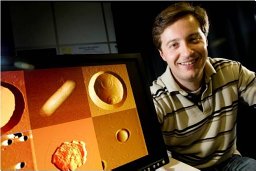 Etienne Dague合作论文数Unité de Chimie des Interfaces, Université Catholique de Louvain4
 Frederic Augier合作论文数Centre de Recherche de Saint Fons, Rhodia4
 Ligia Tiruta-Barna合作论文数3
 Nattawin Chawaloesphonsiya合作论文数Ind Liaison Program ILP, Chulalongkorn Univ3
 Liu Y合作论文数UPS, Université de Toulouse3
 George Angelov合作论文数3
 Henri Delmas合作论文数Laboratory of Chemical Engineering, CNRS/INPT3
 Pisut Painmanakul合作论文数Laboratoire d'Ingénierie des Procédés de l'Environnement;Institut National des Sciences Appliquées;Laboratoire d'Ingénierie des Procédés de l'Environnement, Institut National des Sciences Appliquées3Annemarie Wilhelm合作论文数3
 Charles Ghommidh合作论文数3S. Lachaize合作论文数2v gernigon合作论文数2Malak Souad Ftouhi合作论文数2C. Laguérie合作论文数2Claude Lemen合作论文数2Jonas Blockx合作论文数2Ines Lüchtefeld合作论文数Lab Biosensors & Bioelect, Swiss Fed Inst Technol2
 Lucia Rueda合作论文数2
 Ming Zhang (张铭)合作论文数College of Life Sciences, Zhejiang University2Angelique Delafosse合作论文数F.R.S.-FNRS2Sebastien Cazin合作论文数2Sebastien Lachaize合作论文数2Tomaso Zambelli合作论文数2Beatrice Biscans合作论文数Laboratoire de Génie Chimique URA CNRS 192, ENSIGC—Chemin de la Loge2Adil Dani合作论文数INRA, INSA2
 N.A. Tsochatzidis合作论文数Chemical Process Engineering Research Institute and Department of Chemical Engineering, Aristotle University of Thessaloniki2
 Alain Line合作论文数Laboratoire d'Ingénierie des Procédés de l'Environnement – EA833, INSA Toulouse2A.M. Duquenne合作论文数2
 Koenraad Muylaert合作论文数Laboratory of Protistology and Aquatic Ecology, Ghent University2
 Laurent Prat合作论文数2N. Bardin-Monnier合作论文数2
 Wim Thielemans合作论文数School of Chemistry and Process and Environmental Research Division – Faculty of Engineering, University of Nottingham2




