The reaction dynamics of the 14N + 15N15N isotopic exchange reaction are investigated using time-dependent wave packet propagation within the centrifugal-sudden approximation together with a fully coupled treatment that explicitly includes Coriolis coupling interactions. Complementary quasi-classical trajectory simulations are also performed on the ground electronic N3(4A″) potential energy surface. Both para-15N15N (j = 0) and ortho-15N15N (j = 1) initial states are considered, with emphasis on transient complex formation, reaction thresholds, and the dependence of reaction probabilities and integral cross sections on collision energy. The influence of total angular momentum and vibrational excitation of the diatomic reactant on the reactivity is also examined for both ortho and para configurations.
We report full quantum-computed average microcanonical, initial state-specific, and canonical cumulative time-delays associated with the O + O2 scattering, presented as a function of total energy (in relation to an idealized molecular beam experiment) or temperature (for the properties of the gas phase in bulk conditions). We show that these quantities are well-defined and computable, with a temperature-dependent (canonical) time-delay presenting a smooth, monotonic decreasing behavior with temperature, despite an energy-dependent (microcanonical) time-delay of apparent chaotic character. We discuss differences in behavior when considering isotopic variations, 18O + 16O16O and 16O + 16O18O, with respect to the reference process 16O + 16O16O and reveal a greater magnitude of the cumulative time-delay when genuinely reactive events can take place, in the presence of 18O. These results constitute an addition to more conventional fashions (like cross sections and rate constants) of displaying information related to collisions in various experimental contexts.
In this study, we conduct quantum dynamical calculations at relatively high energies on the exchange reaction 15 N + 14 N 14 N -> 15 N 14 N + 14 N on its ground electronic N 3 ( 4 A '' ) potential energy surface (PES) utilizing the time-dependent wave packet (TDWP) propagation method. Our primary focus is on analyzing the reaction mechanism for 15 N + ortho- 14 N 14 N ( j = 0) and para- 14 N 14 N ( j = 1) cases. We also explore the influence of varying J (up to 120) of the three-body system and the initial vibrational level (v = 1, 5, 10) of the diatom on the reaction probability (RP) for ortho and para configurations.
We give a formula that relates internal and external angles of polyhedra with some geometric applications, and apply it for a new proof of the celebrated Cauchy's rigidity theorem.
We report full quantum reaction probabilities, computed within the framework of time-independent quantum mechanics using hyperspherical coordinates, for the 15N + 14N14N inelastic and reactive collision processes, restricted to total angular momentum J = 0, for kinetic energies up to 4.5 eV. We take advantage of the nonzero (i = 1) nuclear spin of 14N, leading to the existence of two nuclear spin isomers of 14N14N, namely, ortho- and para-14N14N, to restrict the study to the ortho molecular nitrogen species, with even rotational quantum number j = 0, 2, ... states. Specifically, we start with diatomic reagents ortho-14N14N in the initial rotational state j = 0. A comparison with similar works previously published by other groups using time-dependent wave packet and quasi-classical trajectory methods for the 14N + 14N14N fully symmetric collision is given. We find that reactive processes 15N + 14N14N involving atom exchange do not happen for collision energies less than 2.2 eV. Collisions at energies of around 2.0 eV are most effective for populating reactants' rovibrational states, that is, for inelastic scattering, whereas those at energies close to 5.0 eV yield a newly formed 14N15N isotopologue in a wide variety of excited vibrational levels.
We report full quantum dynamical calculations for lifetimes of scattering resonances, among which are true metastable states, of the intermediate heavy ozone complex 50O3 * of the 18O + 16O16O reaction, for any value of the total angular momentum quantum number J. We show that computations for nonzero values of J are mandatory in order to properly analyze resonances and time delays, with a view to establish a somewhat comprehensive eigenlife spectrum of the complex O3 *. Calculations have been performed in a given low to moderate energy range, including the interval between zero-point energies (ZPEs) of reagents and product species. Quasi-bound states tend to be more numerous, and eigenlifetimes themselves are seen to increase with J, reaching unusually large values for J = 30. A very dense forest of O3 * species is pictured already for J greater than 20, especially at the highest energies considered, leading to a quasi-continuum of metastable states. On the contrary, they appear as rather sparse and isolated at J = 0 and lower energies, including the domain between 18O16O and 16O16O ZPEs, embedded among many overlapping resonances that turn out to be not long-lived enough to be associated with genuine metastable states.
We define an equivalence on the set of all degree sequences of a triangulated polyhedron with a fixed number of vertices and compute them and their cardinal via an algorithm. We also prove that each class is realizable as a convex polyhedron.
We report the rotational-state resolved integral cross sections and differential cross sections for 18O + 16O16O (v = 0, j = 1) -> 18O16O (v ' = 0, j ') + 16O and 16O + 18O18O (v = 0, j = 1) -> 18O16O (v ' = 0, j ') + 18O reactions obtained using time-independent quantum mechanical method on an ab initio potential energy surface of ozone [Dawes et al. J. Chem. Phys.135, 081102(2011)]. The results for both the reactions in the collision energy range of 0.001-0.1 eV are presented and discussed the isotopic effects found. The present results are compared with the earlier experimental and theoretical results reported in the literature.
We report full quantum scattering cross sections for the peculiar O-17+(OO)-O-17-O-17 system, at relatively low collision energies. We consider different types of collision-induced transitions, as the indistinguishability of the three nuclei allows for the mixing of reactive, inelastic, and elastic processes. Furthermore, due to the nonzero nuclear spin of O-17 and the existence of nuclear spin isomers ortho- and para-O-2, we pay particular attention to transitions between these two species, that is, the ortho-para conversion process. We find that the corresponding cross section has a magnitude comparable to that of the H+ + H-2 counterpart.
Scattering computations, particularly within the realm of molecular physics, have seen an increase in study since the development of powerful quantum methods. These dynamical processes can be analyzed via (among other quantities) the duration of the collision process and the lifetime of the intermediate complex. We use the Smith matrix Q = -iℏS†dS/dE calculated from the scattering matrix S and its derivative with respect to the total energy. Its real part contains the state-to-state time delays, and its eigenvalues give the lifetimes of the metastable states [ Smith Phys. Rev. 1960 , 118 , 349 - 356 ]. We propose an extension of the Launay HYP3D code [ Launay and Le Dourneuf Chem. Phys. Lett. 1989 , 163 , 178 - 188 ] for molecular reactive scattering and give the full details of the mathematical elements needed to compute the Q matrix from the wave function without numerical differentiation of S. The log-derivative of the wave function and its energy derivative are propagated asymptotically with an extended Johnson-Manolopoulos integration [ Manolopoulos J. Chem. Phys. 1986 , 85 , 6425 - 6429 ], from which the Q matrix is calculated. As a first test of our new code, lifetimes of the metastable intermediate ozone complex O3* have been calculated for the oxygen exchange reaction 18O + 16O16O → 50O3* → 16O18O + 16O, related to the mass-independent fractionation problem of stratospheric ozone. These preliminary results reproduce previously published works limited to zero total angular momentum as benchmark.
We use the time-independent quantum-mechanical formulation of reactive collisions in order to investigate the state-to-state H+ + HD -> D+ + H-2 chemical reaction. We compute cross-sections for collision energies up to 1.8eV and rate coefficients for temperatures up to 10000K. We consider HD in the lowest vibrational level v= 0 and rotational levels j= 0-6, and H-2 in vibrational levels v '= 0-3 and rotational levels j '= 0-9. For temperatures below 4000K, the rate coefficients strongly vary with the initial rotational level j, depending on whether the reaction is endothermic (j <= 2) or exothermic (j >= 3). The reaction is also found less and less probable as the final vibrational quantum number v ' increases. Our results illustrate the importance of studying state-to-state reactions, in the context of the chemistry of the primordial universe.
Let C = (d(0), ..., d(n)) be an admissible degree sequence for a triangulated polyhedron P-n with n + 1 vertices. We give necessary and sufficient conditions on its Euclidean parameters (angles, lenghts, ...) for beeing realized in the usual 3D-space.
L’étude théorique des collisions entre atomes et molécules permet, grâce à la résolution d’état à état des simulations numériques basées sur la physique quantique, une description détaillée des mécanismes mis en jeu et contribue grandement à améliorer les modèles atmosphériques et astrophysiques. Dans cet article, après avoir présenté les méthodes de dynamique actuelles, nous donnons des exemples clés d’intérêt pour le milieu interstellaire, l’atmosphère terrestre et les milieux (ultra)froids, et présentons les défis majeurs à relever.
We show, by performing exact time-independent quantum molecular scattering calculations, that the quality of the ground electronic state global potential energy surface appears to be of utmost importance in accurately obtaining even as strongly averaged quantities as kinetic rate constants. The oxygen isotope exchange reaction, 18O + 32O2, motivated by the understanding of a complex long-standing problem of isotopic ozone anomalies in the stratosphere and laboratory experiments, is explored in this context. The thermal rate constant for this key reaction is now in quantitative agreement with all experimental data available to date. A significant recent progress at the frontier of three research domains, advanced electronic structure calculations, ultrasensitive spectroscopy, and quantum scattering calculations, has therefore permitted a breakthrough in the theoretical modeling of this crucial collision process from first principles.
The isotopic exchange reaction, 16O + 18O18O → 16O18O + 18O, involving excited ozone, O3*, as intermediate complex, was investigated by means of a time independent quantum mechanical approach using the TKTHS potential energy surface (PES) [V. G. Tyuterev et al., J. Chem. Phys. 139, 134307 (2013)] of ozone. State-to-state integral cross sections were calculated for collision energies lower than 0.4 eV. Then specific and thermal rate constants were computed between 10 K and 350 K using these cross sections. The full quantum thermal rate constant is found to be in better agreement with the most recent experimental data than with previous studies where other O3 PESs were employed, confirming therefore the higher accuracy of the TKTHS PES. However, the present theoretical thermal rate constant still remains below the measured rate, maybe due to the neglect of non-adiabtic couplings.
State-to-state dynamics of the C(3P) + OH(X2Π, v = 0–2, j = 0) → CO (a3Π) + H (2S), reaction on the first (12A″) and second (14A″) excited states is studied by the real wave packet method of Gray and Balint-Kurti [S.K. Gray et al., J. Chem. Phys. 108, 950 (1998)]. Product state-resolved (both vibrational and rotational) and total reaction probabilities are calculated for the total angular momentum, J = 0. Product vibrational and rotational distributions are also examined at five different collision energies to elucidate the reaction mechanism. Reagent vibrational excitation is found to decrease the reactivity on the 12A″ state and enhance the same on the 14A″ state. While the excess reagent vibrational energy releases mainly as product translation on the 12A″ state, the same releases as product vibration and rotation on the 14A″ state. The product rotational distribution is relatively cold on the 14A″ state. Despite same mass combination and same exoergicity, the drastic differences of the dynamics of the reaction on the two excited states are related to the microscopic topology of the underlying reaction path. The late barrier present on the 14A″ state plays crucial role on the reaction dynamics at the state-to-state level. The results of the present study are compared with the available literature data.
We give an algorithm for computing the different combinatorics of a triangulated polyhedron with a fixed number of vertices.
We report a quantum stereodynamical study;of the O-18 + (OO)-O-16-O-16(v = 0, j = 1) -> (OO)-O-18-O-16(v' = 0, j') + O-16 oxygen exchange reaction at four different collision energies. We calculated the polarisation moments nts and generated stereodynamical portraits related to the key vectors involved in this collision process. Ozone approaches of reactants are then deduced. The results indicate that different approaches are possible but strongly depend on the collision energy and other, parameters of the collision. We also conclude that the reaction globally tends to favour a perpendicular approach with increasing energy. [GRAPHICS] .
 Beatrice Bussery-Honvault合作论文数44Jorfi Mohamed合作论文数Institut UTINAM, University of Franche-Comte34
 T. González-Lezana合作论文数Instituto de Matemáticas y Física Fundamental, Consejo Superior de Investigaciones Científicas25Jean-Michel Launay合作论文数24J-M Launay合作论文数23Guillon Grégoire合作论文数22
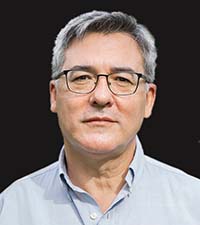 Luis Bañares Morcillo合作论文数Departamento de Química Física, Facultad de Ciencias Químicas, Universidad Complutense Madrid20
 Francisco Javier Aoiz Moleres合作论文数Departamento de Quimica Fisica, Facultad de Ciencias Quimicas, Universidad Complutense de Madrid17Alexandre Zanchet合作论文数Inst Fis Fundamental, CSIC15Philippe Halvick合作论文数15
 H. Guo合作论文数Department of Chemistry and Chemical Biology, The University of New Mexico14Shiying Lin (林世鹰)合作论文数School of Physics, Shandong University13
 T. Rajagopala Rao合作论文数School of Chemistry, University of Hyderabad11Alexandre Faure合作论文数10
 Daiqian Xie (谢代前)合作论文数School of Chemistry, Nanjing University;Key Laboratory of Mesoscopic Chemistry, Ministry of Education, Institute of Theoretical and Computational Chemistry, Nanjing University10
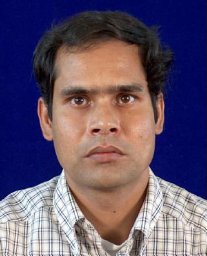 Susanta Mahapatra合作论文数Department of Chemistry, Indian Institute of Technology10
 Niyazi Bulut合作论文数Faculty of Sciences and Arts, Firat University8
 Yohann Scribano合作论文数Laboratoire Interdisciplinaire Carnot de Bourgogne-UMR 5209, CNRS-Université de Bourgogne8L. Pagani合作论文数8
 Thierry Stoecklin合作论文数Institut des Sciences7Pavel Soldán合作论文数7
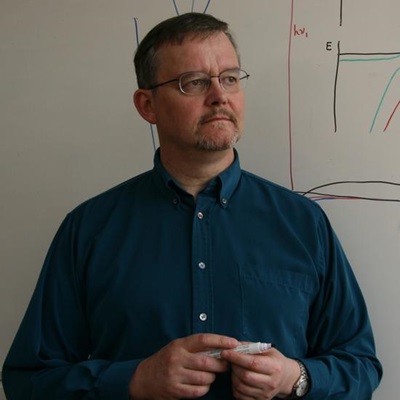 Jeremy M. Hutson合作论文数Department of Chemistry, Durham University7
 Nadia Balucani合作论文数Department of Chemistry, Biology and Biotechnology, Università degli Studi di Perugia6
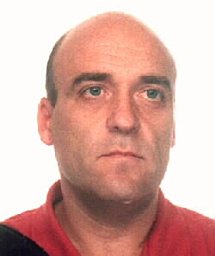 Octavio Roncero合作论文数Instituto de Matemáticas y Física Fundamental, CSIC6
 Carlo Petrongolo合作论文数Laboratorio di Chimica Quantistica ed Energetica Molecolare del C.N.R.6Paolo Defazio合作论文数6Goulven Quéméner合作论文数5
 Piergiorgio Casavecchia合作论文数Dipartimento di Chimica dell'Università, 06100 Perugia, Italy5
 Maxence Lepers合作论文数5G. Quéméner合作论文数4Erwan Privat合作论文数Lab Interdisciplinaire Carnot Bourgogne, Univ Bourgogne Franche Comte4
 Goswami Sugata合作论文数School of Chemistry, University of Hyderabad4Marko T. Cvitas合作论文数Department of Chemistry, University of Cambridge4Chuanxiu Xu合作论文数4
 Marie-Christine Bacchus-Montabonel合作论文数4Pierre Lesaffre合作论文数4
 Giovanni Capozza合作论文数4
 Pablo Gamallo合作论文数3
 Pascal Larregaray合作论文数3Le Picard Sébastien D合作论文数3Ronald Mccarroll合作论文数3
 Miguel A. González-Cardenete合作论文数Instituto de Tecnologia Quimica, UPV-CSIC3D. Ben Abdallah合作论文数3
 Jesus M Fdez Castillo合作论文数Departamento de Quimica Fisica;Facultad de Quimica;Universidad Complutense;Facultad de Quimica, Universidad Complutense3Nejm-Eddine Jaïdane合作论文数Department of Physics, Tunis El Manar University3
 Sinan Akpinar合作论文数Department of Physics, Firat University3
 Laura Cartechini合作论文数CNR, Università degli Studi di Perugia3
 François Lique合作论文数Institut de Physique de Rennes, CNRS-Université de Rennes;Institut Universitaire de France3Astrid Bergeat合作论文数Laboratoire de Physico-Chimie Moléculaire, Université Bordeaux I3




