The European Union (EU) regulation for fruit flies (Diptera: Tephritidae) was modified in 2022, and the broad ‘non-European Tephritidae’ group was replaced by a list of 75 regulated taxa (66 species and nine genera). The National Reference Laboratories in the EU must now be able to identify all of them, whatever the development stage, in order to carry out official surveillance. To help laboratories, the European Union Reference Laboratory for Insects and Mites developed an interactive and multi-entry online key called Q-Tephrikey. The key is now freely available on the XPer3 website. It covers a total of 113 tephritid taxa, encompassing the regulated ones, 12 species listed as non-regulated exceptions and the species that have been intercepted in Europe. The taxa are encoded in two morphological matrices for adults and for larvae. This latter one is less extensive because only 38 species among the 113 taxa are described at the larval stage. To help the diagnosticians, the morphological matrices are accompanied by a pathway matrix encoded for the distributions and host ranges of each taxon. We present here the detailed content and functioning of Q-Tephrikey, and discuss its strengths and weaknesses in terms of its objectives. The key is available at https://q-tephrikey.identificationkey.org/mkey.html .
Agrilus planipennis, the emerald ash borer, is a species native to East Asia that was accidentally introduced to North America and Eastern Europe. In North America, it is responsible for tremendous damage. In Europe, its range has quickly expanded from the east where it was introduced in 2003, and it threatens the species of the genus Fraxinus. We developed an ensemble modelling approach to model the potential range of A. planipennis according to current climate conditions and four scenarios of climate change: SSP1-2.6, SSP2-4.5, SSP3-7.0 SSP5-8.5 in the period 2041-2060. We used three algorithms; random forest, boosted regression trees and Bayesian additive regression trees with occurrence data from both native and invaded ranges. The results indicate that most of the European continent is climatically suitable for A. planipennis. In Western Europe, the northern limit of the range is located in the British Isles and southern Scandinavia. The projection of the models according to estimates of future climate conditions shows that climate suitability would mostly remain unchanged in 2041-2060. During that period, the potential range is expected to slightly shrink in the south, around the Mediterranean Basin, and expand at its northern limit. Our results confirm that A. planipennis is, and will remain, a major threat to forest and ornamental ash tree health across Europe.
Plants acting as ecosystem engineers create habitats and facilitate biodiversity maintenance within plant communities. Furthermore, biodiversity research has demonstrated that plant diversity enhances the productivity and functioning of ecosystems. However, these two fields of research developed in parallel and independent from one another, with the consequence that little is known about the role of ecosystem engineers in the relationship between biodiversity and ecosystem functioning across trophic levels. Here, we present an experimental framework to study this relationship. We combine facilitation by plants acting as ecosystem engineers with plant-insect interaction analysis and variance partitioning of biodiversity effects. We present a case-study experiment in which facilitation by a cushion-plant species and a dwarf-shrub species as ecosystem engineers increases positive effects of plant functional diversity (ecosystem engineers and associated plants) on ecosystem functioning (flower visitation rate). The experiment, conducted in the field during a single alpine flowering season, included the following treatments: (1) removal of plant species associated with ecosystem engineers, (2) exclusion (covering) of ecosystem engineer flowers, and (3) control, i.e., natural patches of ecosystem engineers and associated plant species. We found both positive and negative associational effects between plants depending on ecosystem engineer identity, indicating both pollination facilitation and interference. In both cases, patches supported by ecosystem engineers increased phylogenetic and functional diversity of flower visitors. Furthermore, complementarity effects between engineers and associated plants were positive for flower visitation rates. Our study reveals that plant facilitation can enhance the strength of biodiversity-ecosystem functioning relationships, with complementarity between plants for attracting more and diverse flower visitors being the likely driver. A potential mechanism is that synergy and complementarity between engineers and associated plants increase attractiveness for shared visitors and widen pollination niches. In synthesis, facilitation among plants can scale up to a full network, supporting ecosystem functioning both directly via microhabitat amelioration and indirectly via diversity effects.
Plants grow in communities where they interact with other plants and with other living organisms such as pollinators. On the one hand, studies of plant-plant interactions rarely consider how plants interact with other trophic levels such as pollinators. On the other, studies of plant-animal interactions rarely deal with interactions within trophic levels such as plant-plant competition and facilitation. Thus, to what degree plant interactions affect biodiversity and ecological networks across trophic levels is poorly understood. We manipulated plant communities driven by foundation species facilitation and sampled plant-pollinator networks at fine spatial scale in a field experiment in Sierra Nevada, Spain. We found that plant-plant facilitation shaped pollinator diversity and structured pollination networks. Nonadditive effects of plant interactions on pollinator diversity and interaction diversity were synergistic in one foundation species networks while they were additive in another foundation species. Nonadditive effects of plant interactions were due to rewiring of pollination interactions. In addition, plant facilitation had negative effects on the structure of pollination networks likely due to increase in plant competition for pollination. Our results empirically demonstrate how different network types are coupled, revealing pervasive consequences of interaction chains in diverse communities.
Although it is known that plant–plant and plant–pollinator interactions can strongly influence biodiversity and its effects on ecosystem functioning, the details of how competition and facili-tation among plants scale up to mutualistic interactions with pollinators and thus affect pollina-tion networks are poorly understood. We introduce a simple experimental system in which we control local plant interactions, measure pollinator responses and characterize plant–pollinator networks. We find that facilitation among plants produces synergistic and antagonistic effects on the pollinator community affecting the architecture and robustness of plant–pollinator net-works. Our results provide evidence for bottom-up non-additive effects of plant interactions on pollination networks and have implications for the way we study and manage ecosystems.
 Rainer Neumeyer合作论文数4Jürg Schmid合作论文数4Christoph Germann合作论文数4
 Jean-Paul Haenni合作论文数4
 Christian Schöb合作论文数Department of Biology Geology Physics and Inorganic Chemistry, Universidad Rey Juan Carlos4
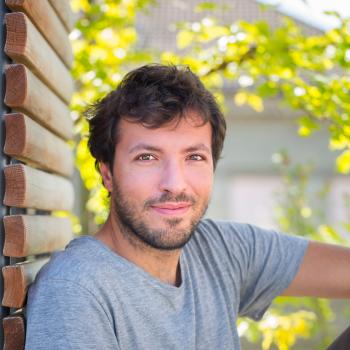 Gianalberto Losapio合作论文数Department of Biosciences, University of Milan4
 Jordi Bascompte合作论文数Department of Evolutionary Biology and Environmental Studies, University of Zurich4
 Bernhard Schmid合作论文数Department of Geography, University of Zurich4
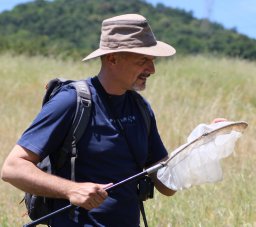 Pierfilippo Cerretti合作论文数Dipartimento Biol & Biotecnol Charles Darwin, Sapienza Univ Roma4
 Richard Michalet合作论文数Environnements et Paleoenvironnements Oceaniques et Continentaux4
 Daniele Sommaggio合作论文数4
 Adrian Pont合作论文数3RaphaËlle Mouttet合作论文数2
 Philippe Reynaud合作论文数2
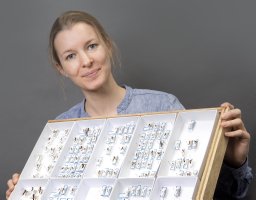 Klopfstein Seraina合作论文数Swedish Museum of Natural History2Castro Leopoldo合作论文数2
 Miguel A. Fortuna合作论文数Integrative Ecology Group;Estacion Biologica de Donana;Integrative Ecology Group, Estacion Biologica de Donana2Richard A. Gottsberger合作论文数1Sylvia Bluemel合作论文数AGES, Inst Sustainable Plant Prod1Nicolas Borowiec合作论文数1Christa Lethmayer合作论文数1Jean-Pierre Rossi合作论文数UMR CBGP (INRA/IRD/Cirad/Montpellier SupAgro), Montferrier-sur-Lez, France.1Francisco Javier Ortiz Sánchez合作论文数Universidad de Almería1
 Jean-Claude Streito合作论文数1Helga Reisenzein合作论文数1




