Self-attention is essential to Transformer architectures, yet how information is embedded in the self-attention matrices and how different objective functions impact this process remains unclear. We present a mathematical framework to analyze self-attention matrices by deriving the structures governing their weight updates. Using this framework, we demonstrate that bidirectional training induces symmetry in the weight matrices, while autoregressive training results in directionality and column dominance. Our theoretical findings are validated across multiple Transformer models — including ModernBERT, GPT, LLaMA3, and Mistral — and input modalities like text, vision, and audio. Finally, we apply these insights by showing that symmetric initialization improves the performance of encoder-only models on language tasks. This mathematical analysis offers a novel theoretical perspective on how information is embedded through self-attention, thereby improving the interpretability of Transformer models.
At least since the introduction of ChatGPT, the abilities of generative large language models (LLMs), sometimes called GPTs, are at the center of the attention of AI researchers, entrepreneurs, and others. However, for many applications, it is not possible to call an existing LLM service via an API due to data protection concerns or when no task-appropriate LLM exists. On the other hand, deploying or training a private LLM is often prohibitively computationally expensive. In this paper, we give an overview of the most important recent methodologies that help reduce the computational footprint of LLMs. We further present extensive benchmarks for seven methods from two of the most important areas of recent progress: model quantization and low-rank adapters, showcasing how it is possible to leverage state-of-the-art LLMs with limited resources. Our benchmarks include resource consumption metrics (e.g. GPU memory usage), a state-of-the-art quantitative performance evaluation as well as a qualitative performance study conducted by eight individual human raters. Our evaluations show that quantization has a profound effect on GPU memory requirements. However, we also show that these quantization methods, contrary to how they are advertised, cause a noticeable loss in text quality. We further show that low-rank adapters allow effective model fine-tuning with moderate compute resources. For methods that require less than 16 GB of GPU memory, we provide easy-to-use Jupyter notebooks that allow anyone to deploy and fine-tune state-of-the-art LLMs on the Google Colab free tier within minutes without any prior experience or infrastructure.
We present solutions to two of the most pressing issues in contemporary optical music recognition (OMR). We improve recognition accuracy on low-quality, real-world (i.e. containing ageing, lighting, or dirt artefacts among others) input data and provide confidence-rated model outputs to enable efficient human post-processing. Specifically, we present (i) a sophisticated input augmentation scheme that can reduce the gap between sanitised benchmarks and realistic tasks through combination of synthetic data and noisy perturbations of real-world documents; (ii) an adversarial discriminative domain adaptation method that can be employed to improve the performance of OMR systems on low-quality data; (iii) a combination of model ensembles and prediction fusion, which generates trustworthy confidence ratings for each prediction. We evaluate our contributions on a newly created test set consisting of manually annotated pages of varying real-world quality, sourced from the International Music Score Library Project (IMSLP)/Petrucci Music Library. With the presented data augmentation scheme, we achieve a doubling in detection performance from 36.0% to 73.3% on noisy real-world data compared to state-ofthe-art training. This result is then combined with robust confidence ratings paving the way for OMR to be deployed in the real world. Additionally, we show the merits of unsupervised adversarial domain adaptation for OMR raising the 36.0% baseline to 48.9%.
A variety of medical computer vision applications analyze 2D slices of computed tomography (CT) scans, whereas axial slices from the body trunk region are usually identified based on their relative position to the spine. A limitation of such systems is that either the correct slices must be extracted manually or labels of the vertebrae are required for each CT scan to develop an automated extraction system. In this paper, we propose an unsupervised domain adaptation (UDA) approach for vertebrae detection and identification based on a novel Domain Sanity Loss (DSL) function. With UDA the model's knowledge learned on a publicly available (source) data set can be transferred to the target domain without using target labels, where the target domain is defined by the specific setup (CT modality, study protocols, applied pre- and processing) at the point of use (e.g., a specific clinic with its specific CT study protocols). With our approach, a model is trained on the source and target data set in parallel. The model optimizes a supervised loss for labeled samples from the source domain and the DSL loss function based on domain-specific "sanity checks" for samples from the unlabeled target domain. Without using labels from the target domain, we are able to identify vertebra centroids with an accuracy of 72.8%. By adding only ten target labels during training the accuracy increases to 89.2%, which is on par with the current state-of-the-art for full supervised learning, while using about 20 times less labels. Thus, our model can be used to extract 2D slices from 3D CT scans on arbitrary data sets fully automatically without requiring an extensive labeling effort, contributing to the clinical adoption of medical imaging by hospitals.
When applying deep learning methods in an industrial vision application, they often fall short of the performance shown in a clean and controlled lab environment due to data quality issues. Few would consider the actual labels as a driving factor, yet inaccurate label data can impair model performance significantly. However, being able to mitigate inaccurate or incomplete labels might also be a cost-saver for real-world projects. Here, we survey state-of-the-art deep learning approaches to resolve such missing labels, noisy labels, and partially labeled data in the prospect of an industrial vision application. We systematically present un-, weakly, and semi-supervised approaches from 'A' like anomaly detection to 'Z' like zero-shot classification to resolve these challenges by embracing them.
Current research in the area of speech data analysis with deep learning focuses mainly on speech recognition, speech segmentation, speaker recognition, speech classification and speech synthesis. The prediction of frames of speech is a less studied area. In this thesis, a neural network based on Gated Recurrent Units (GRUs) is proposed to predict the subsequent frames of given Mel-spectrograms. The model is trained on the TIMIT dataset to predict sequences up to one word in length. It is found that an input length of approximately 2.5 words performs best for the proposed network. Analyzing the mean absolute error shows that frames closer in time to the given sequence require less input data than frames that are further away. Moreover, it is observed that certain phoneme types such as closures, pauses, fricatives and affricates are predicted worse than other phonemes. The main issue of regressive models to predict frames of speech is that they tend to predict ranges where the formants might lie instead of specific positions. As a result, the predicted Mel-spectograms look blurry and have missing details. Various well-known distance metrics such as mean absolute error, mean squared error, or soft dynamic time warping could not alleviate this problem. However, it is observed that the system exhibits different characteristics depending on the metric used as loss function. Based on the gained experience, different measures such as learning a proper distance metric or alternative architectures are proposed to improve the overall prediction quality.
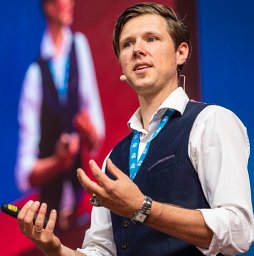 Thilo Stadelmann合作论文数University of Marburg6
 Lukas Tuggener合作论文数ZHAW Datalab, Winterthur, Switzerland2
 Benjamin Grewe合作论文数Department of Information Technology and Electrical Engineering, Eidgenössische Technische Hochschule Zürich2Benjamin F. Grewe合作论文数1Pau Vilimelis Aceituno合作论文数1
 Matteo Saponati合作论文数Institute of Neuroinformatics, ETH Zurich1Felice Burn合作论文数1Philipp Andermatt合作论文数1Yvan Putra Satyawan合作论文数1
 M. Rosenthal合作论文数Electronics Laboratory, Swiss Federal Institute of Technology (ETH),1
 Christoph Von Der Malsburg合作论文数Institute of Neuroinformatics, Universität Zürich1
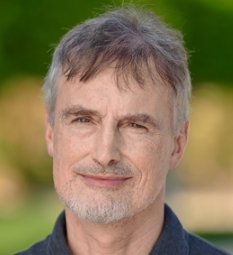 Jürgen Schmidhuber合作论文数NNAISENSE;Istituto Dalle Molle di Studi sull'Intelligenza Artificiale;Computer, Electrical and Mathematical Science and Engineering Division, King Abdullah University of Science and Technology;Faculty of Computer Science, University of Lugano1
 Javier A. Montoya-Zegarra合作论文数San Pablo Catholic University, State University of Campinas1Frankpeter Schilling合作论文数Institut für Experimentelle Kernphysik, Karlsruhe, Germany1
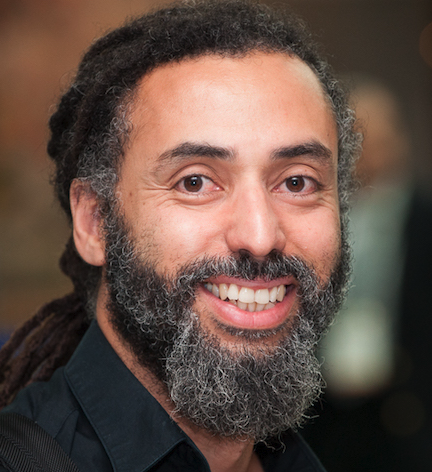 Ricardo Chavarriaga合作论文数CAI Centre for Artificial Intelligence, School of Engineering, Zurich University of Applied Sciences;CLAIRE Office Switzerland;Geneva Centre for Security Policy1




