We study a generalized Ornstein-Uhlenbeck process driven by a superposition of K independent dichotomous noises with arbitrary fixed amplitudes and switching rates. Unlike the classical Ornstein-Uhlenbeck process driven by equilibrium Gaussian white noise, the present system is governed by bounded nonequilibrium fluctuations with finite correlation times. We obtain exact expressions for the stationary position distribution and all cumulants, and show that the stationary state possesses an unexpectedly rich structure, including compact support, algebraic branch-point singularities, edge divergences, and multiple extrema. We establish a mapping onto a heterogeneous random-flight process with bounded jumps, yielding a transparent probabilistic interpretation of the stationary measure. We further analyze several limiting regimes, including the crossover to Gaussian statistics for large numbers of noise sources. For ensembles with exponentially-distributed quenched amplitudes, we derive exact disorder-averaged stationary distributions and show that disorder fundamentally alters the stationary state, producing exponential tails decorated by algebraic prefactors with non-trivial exponents.
We consider the stochastic dynamics of a particle on a plane in the presence of two noises and a confining parabolic potential-an analog of the experimentally relevant Brownian gyrator (BG) model. In contrast to the standard BG model, we suppose here that the time evolution of the position components is driven not by Gaussian white noise, but by two statistically independent dichotomous noises. We calculate analytically the position variances and cross-correlations, as well as the mean angular momentum, which permits us to establish the conditions in which a spontaneous rotational motion of the particle around the origin takes place. We also present a numerical analysis of the mean angular velocity. Finally, we analytically calculate some marginal position probability density functions, revealing a remarkably rich behavior that emerges in such a system of two coupled linear stochastic differential equations. We show that, depending on the values of the parameters characterizing the noise, these distributions approach the steady-state forms defined on a finite support, having very unusual shapes, possessing multiple maxima and minima, plateaus, and exhibiting a discontinuous behavior.
We study Langevin dynamics with stochastic diffusivity arising from fluctuations of the surrounding medium. The diffusivity is modeled as Ornstein-Uhlenbeck process driven by symmetric dichotomous noise, which confines it to a finite interval. We derive analytical expressions for the short-time probability density function (PDF) of the particle displacement and analyse its asymptotic behaviour. While the PDF retains the characteristic logarithmic divergence at the origin, its tails differ from the Gaussian white-noise case: exponential tails are replaced by Gaussian ones modulated by a power-law with a switching-rate-dependent exponent. At long times, the dynamics converges to ordinary Gaussian diffusion. We determine the variance and covariance of the time-averaged stochastic diffusivity and show that it is self-averaging. The model provides a minimal analytically tractable framework for stochastic transport in environments with bounded or switching fluctuations.
The adoption of agroecological practices will be crucial to address the challenges of climate change and biodiversity loss. Such practices favor the cultivation of plants in complex mixtures with layouts differing from the monoculture approach of conventional agriculture. Inspired by random sequential adsorption processes, we propose a one-dimensional model in which the plants are represented as line segments that start as points and grow at a constant rate until they reach length sigma after a time interval tau. The planting positions and times are randomly chosen with the constraint that plant overlap is forbidden. We apply an exact, event-driven simulation to investigate the resulting spatiotemporal patterns and yields in both mono- and duocultures. After a transient period, with oscillations in the density and coverage, the field reaches a steady state in which the mean age of plants is one half of the time to maturity. The structure of the active plants is characterized by correlation functions between the fluctuation of the age of a plant and its kth neighbour. Nearest neighbours are negatively correlated, while next nearest neighbours tend to have similar ages. The steady state yield increases with the planting rate and approaches a maximum value of 4/3 plants per unit length per unit time. For two species with the same size at maturity but different growth rates, the more slowly growing species is enriched in the harvest compared to the seed mix composition. If two species have the same time to maturity but different sizes, the smaller one is enriched in the harvest and, at a sufficiently high planting rate, the larger species may be completely absent. For two species with the same ratio of sigma/tau the selectivity is insensitive to the planting rate. This model and the algorithms describing the planting strategies may be extended to higher dimensions, more species and other planting strategies that may assist in the design of novel microfarms.
Quenched disorder can destroy magnetic order, for example, when a random field is applied in a two-dimensional Ising model. Even when an order exists in the presence of quenched disorder, it is usually only the survival of the order of the clean model. We present here a surprising phenomenon where an order emerges, driven by quenched disorder. This order has nothing in common with the order present in the clean model. This type of order by disorder differs from the usual thermal or quantum one. The classical J_{1}-J_{3} Heisenberg model on the kagome lattice is studied by parallel tempering Monte Carlo simulations, with site dilution. After analyzing the effect of a few vacancies on the ground state, favoring noncoplanar configurations, we show the emergence of a low-temperature chiral phase and the progressive destruction of the collinear q=4 Potts order, the only order present in the absence of vacancies.
In random sequential covering (RSC), identical objects are deposited randomly, irreversibly, and sequentially; only attempts that increase coverage are accepted. The process continues indefinitely on an infinite substrate, and we analyze the dynamics of RSC of Z using k-mers. We introduce a method that provides a comprehensive solution to the dynamics of this process. We derive explicit solutions for trimers, tetramers, and pentamers; we study numerically RSC by longer polymers (k > 5).
We study the stochastic dynamics of a two-dimensional particle whose coordinates are described by two coupled one-dimensional random-acceleration processes, that evolve in a confining parabolic potential and are subject to independent Gaussian white noises with different amplitudes (temperatures). We first determine standard characteristics: the mixed moments of positions and velocities, as well as the position-velocity probability density function (PDF) and those of its kinetic and potential energies. Going then beyond these standard characteristics, we consider the emerging rotational motion of the particle around the origin: We show that if the amplitudes of the noises are not equal, the particle experiences a non-zero (on average) torque, such that the angular momentum L and the angular velocity W have non-zero mean values which both are (irregularly) oscillating with time t. We evaluate the PDF-s of L and W and show that the former has exponential tails for any fixed t, and hence, all moments. In the large-time limit this PDF converges to a uniform distribution with a diverging variance. The PDF of W possesses heavy power-law tails such that the mean W is the only existing moment. However, this PDF converges to a well-defined large-time limit manifesting the possibility of stabilizing phenomenon even in frictionless driven systems. Surprisingly, the limit is independent of the amplitudes of noises.
The Brownian gyrator (BG) is often called a minimal model of a nano-engine performing a rotational motion, judging solely upon the fact that in non-equilibrium conditions its torque, specific angular momentum and specific angular velocity have non-zero mean values. For a time-discretised (with time-step δt) model we calculate here the previously unknown probability density functions (PDFs) of and . We show that for finite δt, the PDF of has exponential tails and all moments are therefore well-defined. At the same time, this PDF appears to be effectively broad - the noise-to-signal ratio is generically bigger than unity meaning that is strongly not self-averaging. Concurrently, the PDF of exhibits heavy power-law tails and its mean is the only existing moment. The BG is therefore not an engine in the common sense: it does not exhibit regular rotations on each run and its fluctuations are not only a minor nuisance - on contrary, their effect is completely destructive for the performance. Our theoretical predictions are confirmed by numerical simulations and experimental data. We discuss some plausible improvements of the model which may result in a more systematic rotational motion.
On microfarms, diversified crops are typically cultivated as densely as possible, and their heterogeneous growth dynamics require complex design and management of crop rotations. Models in computational agroecology may assist farmers in the maintenance of such farms. We use a phenomenological model in which the plants are represented as disks with a growing radius. We show how it can account for the variability observed in the fields and help visualize the spatiotemporal patterns involved in a microfarm cultivated according to the French intensive method. In the last part of the paper, we consider monoculture and a mixture of two vegetables with different maximum radii and growth rates. In the planning strategy, the planting positions and times are randomly chosen, taking inspiration from models of random sequential adsorption. We describe two different event-driven algorithms (1D and 2D) to simulate the dynamics of this system. The steady state of the field consists of disordered configurations of the plants. We study the evolution of the effective planting rate as a function of the nominal planting rate. When the model plants both vegetables with equal probability, simulations show that the proportion of big plants starts decreasing above a given threshold. This model and the algorithms describing the planting strategies may be extended to more species and other planting strategies to suggest original farm designs.
We present a theoretical analysis of a non-equilibrium dynamics in a model system consisting of two particles which move randomly on a plane. The two particles interact via a harmonic potential, experience their own (independent from each other) noises characterized by two different temperatures T_1 T1 and T_2 T2 , and each particle is being held by its own optical tweezer. Such a system with two particles coupled by hydrodynamic interactions was previously realised experimentally in Bérut et al. [EPL 107, 60004 (2014)], and the difference between two temperatures has been achieved by exerting an additional noise on either of the tweezers. Framing the dynamics in terms of two coupled over-damped Langevin equations, we show that the system reaches a non-equilibrium steady-state with non-zero (for T_1 \neq T_2 T1≠T2 ) probability currents that possess non-zero curls. As a consequence, in this system the particles are continuously spinning around their centers of mass in a completely synchronized way - the curls of currents at the instantaneous positions of two particles have the same magnitude and sign. Moreover, we demonstrate that the components of currents of two particles are strongly correlated and undergo a rotational motion along closed elliptic orbits.
We investigate simple models of a monodisperse system of soft, frictionless disks flowing through a two-dimensional microchannel in the presence of a single or a double constriction using Brownian dynamics simulation. After a transient time, a stationary state is observed with an increase in particle density before the constriction and a depletion after it. For a constriction width to particle diameter ratio of less than 3, the mean particle velocity is reduced compared to the unimpeded flow and it falls to zero for ratios of less than 1. At low temperatures, the particle mean velocity may vary nonmonotonically with the constriction width. The associated intermittent behavior is due to the formation of small arches of particles with a finite lifetime. The distribution of the interparticle exit times rises rapidly at short times followed by an exponential decay with a large characteristic time, while the cascade size distribution displays prominent peaks for specific cluster sizes. Although the dependence of the mean velocity on the separation of two constrictions is not simple, the mean flow velocity of a system with a single constriction provides an upper envelope for the system with two constrictions. We also examine the orientation of the leading pair of particles in front of the constriction(s). With a single constriction in the intermittent regime, there is a strong preference for the leading pair to be orientated perpendicular to the flow. When two constrictions are present, orientations parallel to the flow are much more likely at the second constriction.
We study the two-dimensional Langevin dynamics of a mixture of two types of particles that live respectively at two different temperatures. Dynamics is constrained by an optical trap and the dissimilar species interact via a quadratic potential. We realize that the system evolves toward a peculiar non-equilibrium steady-state with a non-zero probability current possessing a non-zero curl. This implies that if the particles were to have a finite-size and therefore a rotational degree of freedom, they would experience a torque generated by the non-zero local curl and spin around their geometric centers, like ‘spinning top’ toys. Our analysis shows that the spinning motion is correlated and also reveals an emerging cooperative behavior of the spatial components of the probability currents of dissimilar species.
When a physical system evolves in a thermal bath kept at a constant temperature, it eventually reaches an equilibrium state which properties are independent of the kinetic parameters and of the precise evolution scenario. This is generically not the case for a system driven out of equilibrium which, on the contrary, reaches a steady-state with properties that depend on the full details of the dynamics such as the driving noise and the energy dissipation. How the steady state depends on such parameters is in general a non-trivial question. Here, we approach this broad problem using a minimal model of a two-dimensional nano-machine, the Brownian gyrator, that consists of a trapped particle driven by fractional Gaussian noises-a family of noises with long-ranged correlations in time and characterized by an anomalous diffusion exponent alpha. When the noise is different in the different spatial directions, our fractional Brownian gyrator persistently rotates. Even if the noise is non-trivial, with long-ranged time correlations, thanks to its Gaussian nature we are able to characterize analytically the resulting nonequilibrium steady state by computing the probability density function, the probability current, its curl and the angular velocity and complement our study by numerical results.
In two dimensions, a system of self-gravitating particles collapses and forms a singularity in finite time below a critical temperature $T_c$. We investigate experimentally a quasi two-dimensional cloud of cold neutral atoms in interaction with two pairs of perpendicular counter-propagating quasi-resonant laser beams, in order to look for a signature of this ideal phase transition: indeed, the radiation pressure forces exerted by the laser beams can be viewed as an anisotropic, and non-potential, generalization of two-dimensional self-gravity. We first show that our experiment operates in a parameter range which should be suitable to observe the collapse transition. However, the experiment unveils only a moderate compression instead of a phase transition between the two phases. A three-dimensional numerical simulation shows that both the finite small thickness of the cloud, which induces a competition between the effective gravity force and the repulsive force due to multiple scattering, and the atomic losses due to heating in the third dimension, contribute to smearing the transition.
Motivated by the physical properties of Vesignieite BaCu$_3$V$_2$O$_8$(OH)$_2$, we study the $J_1-J_3$ Heisenberg model on the kagome lattice, that is proposed to describe this compound for $J_1 \frac{1+\sqrt{5}}4|J_1|$, the ground states are not all related by an Hamiltonian symmetry. Order appears at low temperature via the order by disorder mechanism, favoring colinear configurations and leading to an emergent $q=4$ Potts parameter. This gives rise to a finite temperature phase transition. Effect of quantum fluctuations are studied through linear spin wave approximation and high temperature expansions of the $S=1/2$ model. For $J_3$ between $\frac14|J_1|$ and $\frac{1+\sqrt{5}}4|J_1|$, the ground state goes through a succession of semi-spiral states, possibly giving rise to multiple phase transitions at low temperatures.
We model a particulate flow of constant velocity through confined geometries, ranging from a single channel to a bundle of N_{c} identical coupled channels, under conditions of reversible blockage. Quantities of interest include the exiting particle flux (or throughput) and the probability that the bundle is open. For a constant entering flux, the bundle evolves through a transient regime to a steady state. We present analytic solutions for the stationary properties of a single channel with capacity N≤3 and for a bundle of channels each of capacity N=1. For larger values of N and N_{c}, the system's steady state behavior is explored by numerical simulation. Depending on the deblocking time, the exiting flux either increases monotonically with intensity or displays a maximum at a finite intensity. For large N we observe an abrupt change from a state with few blockages to one in which the bundle is permanently blocked and the exiting flux is due entirely to the release of blocked particles. We also compare the relative efficiency of coupled and uncoupled bundles. For N=1 the coupled system is always more efficient, but for N>1 the behavior is more complex.
We report results of numerical experiments which show that a family of simple one dimensional particle systems with long-range interactions, when subjected to a certain class of inelastic interaction, evolve towards states which are highly ordered in phase space, displaying particle motions which are periodic and synchronized in relative phase. For the case of a self-gravitating system, the resulting states show a remarkable stability when the inelastic interactions are turned off, with the phase space order persisting on the longest times we simulate, and much longer than the time-scale expected for relaxation of non-equilibrium states of this long-range system to thermal equilibrium. This appears to provide a novel example of ergodicity breaking in long-range systems. We propose some simple heuristic arguments which predict reasonably well properties of the synchronized states. We enlarge our study to a broader class of long-range interacting systems, where the phenomenon of synchronisation is still present, but only for systems less than a critical size. We conclude with a discussion of avenues for further investigation.
We study by molecular dynamics simulation a dense one-component system of particles confined on a spherical substrate. We more specifically investigate the evolution of the structural and dynamical properties of the system when changing the control parameters, the temperature and the curvature of the substrate. We find that the dynamics become glassy at low temperature, with a strong slowdown of the relaxation and the emergence of dynamical heterogeneity. The prevalent local 6-fold order is frustrated by curvature and we analyze in detail the role of the topological defects in the statics and the dynamics of the particle assembly.
Particle conveying channels may be bundled together. The limited carrying capacity of the constituent channels may cause the bundle to be subject to blockages. If coupled, the blockage of one channel causes an increase in the flux entering the others, leading to a cascade of failures. Once all the channels are blocked, no additional particles may enter the system. If the blockages are of finite duration, the system reaches a steady state with an exiting flux that is reduced compared to the incoming one. We propose a stochastic model consisting of N c channels, each with a blocking threshold of N particles. Particles enter the system's open channels according to a Poisson process, with an equally distributed input flux of intensity Λ. In an open channel the leading particle exits at a rate μ and a blocked channel unblocks at a rate [Formula: see text], where [Formula: see text]. We present and explain the methodology of an analytical description of the behavior of bundled channels. This leads to exact expressions for the steady-state output flux, for [Formula: see text], which promises to extend to arbitrary N c and N. The results are applied to compare the efficiency of conveying a particulate stream of intensity Λ using a single, high capacity (HC) channel with multiple channels of a proportionately reduced low capacity (LC). The HC channel is more efficient at low input intensities, while the multiple LC channels have a higher throughput at high intensities. We also compare [Formula: see text] coupled channels, each of capacity N = 2 with the corresponding number of independent channels of the same capacity. For [Formula: see text], if [Formula: see text], the coupled channels are always more efficient. Otherwise the independent channels are more efficient for sufficiently large Λ.
 Julian Talbot合作论文数Department of Chemistry and Biochemistry;Duquesne University;Department of Chemistry and Biochemistry, Duquesne University14
 Alexis Burdeau合作论文数11
 Gleb Oshanin合作论文数8
 Gilles Tarjus合作论文数Laboratoire de Physique Theorique de la Matiere Condensee, Sorbonne Universite6
 Michael Joyce合作论文数Department of Physics, Sorbonne Universite6Chloé Barré合作论文数4
 Jules Morand合作论文数CNRS IN2P3, UPMC Univ Paris 064
 Laura Messio合作论文数Univ Paris-Sud;Univ Pierre et Marie Curie, CNRS;Univ Pierre et Marie Curie, Univ Paris-Sud4
 Vincent Mancois合作论文数3
 Gregory Page合作论文数3julienpiera vest合作论文数3
 David Wilkowski合作论文数Division of Physics and Applied Physics, School of Physical and Mathematical Sciences, College of Science, Nanyang Technological University3
 Victor Dotsenko合作论文数Laboratoire de Physique Theorique des Liquides;Universite Paris;Laboratoire de Physique Theorique des Liquides, Universite Paris3Alberto Imparato合作论文数3François Sausset合作论文数3Vincent Grison合作论文数2
 L. A. Pastur合作论文数Physico-Technical Institute of Low Temperatures, UkrSSR Academy of Sciences2David Colliaux合作论文数Lab. for Dynamics of Emergent Intelligence, RIKEN-BSI2Bruno Marcos合作论文数2
 Andrea Gabrielli合作论文数Physics Department;University of Bologna;Physics Department, University of Bologna2vincent desfontaine合作论文数1Jean Diebolt合作论文数1gaelle doubrebaboeuf合作论文数1Gilles Descloux合作论文数1Laurent Pierre合作论文数1
 Aykut Argun合作论文数Department of Physics, University of Gothenburg1
 Jawad Badreddine合作论文数1
 Solon Alexandre P合作论文数MSC, Université Paris Diderot1
 Squarcini Alessio合作论文数SISSA-International School for Advanced Studies, INFN-Istituto Nazionale di Fisica Nucleare1
 Matthieu Micoulaut合作论文数Laboratoire de Physique Théorique de la Matière Condensée, Sorbonne Université1
 P. L. Krapivsky合作论文数Center for Polymer Studies and Department of Physics|Boston University1
 Claire Lhuillier合作论文数, Université Pierre et Marie Curie1
 Sebastien Remy合作论文数Charles Delaunay Institute, Troyes University of Technology1
 Peter Hanappe合作论文数Sony Computer Science Laboratory, Paris, France1
 Giovanni Volpe合作论文数Physics Department, University of Gothenburg1
 Emmanuel Ravalet合作论文数Laboratoire d'Économie des Transports1
 Julien Barre合作论文数Advanced Isotopic Analysis1
 Manuel Francois合作论文数Université de technologie de Troyes ICD-CNRS FRE 2848 LASMIS, 12 rue Marie Curie B.P. 2060, 10010 Troyes Cedex France1
 Bernard Bernu合作论文数1
 Jaroslaw Piasecki合作论文数Institute of Theoretical Physics, University of Warsaw1
 Pietro Gravino合作论文数1
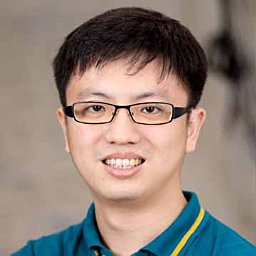 Chang Chi Kwong合作论文数Department of Physics;National University of Singapore;Department of Physics, National University of Singapore1
 Christophe Pouzat合作论文数Laboratoire de Physiologie1Jeffrey Stuart Olafsen合作论文数1Matthieu Delescluse合作论文数1Jean-Christophe Domenge合作论文数1Alain Olivetti合作论文数1
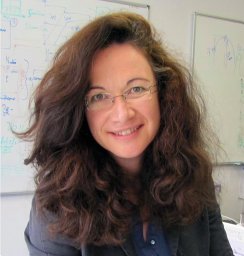 Emmanuelle Rouhaud合作论文数Charles Delaunay Institute, University of Technology of Troyes1




