The demand for high-throughput electron tomography is rapidly increasing in biological and material sciences. However, this 3D imaging technique is computationally bottlenecked by alignment and reconstruction which runs from hours to days. We demonstrate real-time tomography with dynamic 3D tomographic visualization to enable rapid interpretation of specimen structure immediately as data is collected on an electron microscope. Using geometrically complex chiral nanoparticles, we show volumetric interpretation can begin in less than 10 minutes and a high-quality tomogram is available within 30 minutes. Real-time tomography is integrated into tomviz, an open-source and cross-platform 3D data analysis tool that contains intuitive graphical user interfaces (GUI), to enable any scientist to characterize biological and material structure in 3D.
An abstract is not available for this content so a preview has been provided. As you have access to this content, a full PDF is available via the ‘Save PDF’ action button.
Quantum chemistry must evolve if it wants to fully leverage the benefits of the internet age, where the world wide web offers a vast tapestry of tools that enable users to communicate and interact with complex data at the speed and convenience of a button press. The Open Chemistry project has developed an open source framework that offers an end-to-end solution for producing, sharing, and visualizing quantum chemical data interactively on the web using an array of modern tools and approaches. These tools build on some of the best open source community projects such as Jupyter for interactive online notebooks, coupled with 3D accelerated visualization, state-of-the-art computational chemistry codes including NWChem and Psi4 and emerging machine learning and data mining tools such as ChemML and ANI. They offer flexible formats to import and export data, along with approaches to compare computational and experimental data.
Significant progress has been made in the field of a priori crystal structure prediction, with a number of recent remarkable success stories. Herein, we briefly outline the methods that have been developed for finding the global minimum structure and interesting local minima without the need for experimental information. Focus is placed on describing the XtalOpt evolutionary algorithm (EA) developed in our group toward this end. XtalOpt is published under well-known open-source licenses, and the EA searches can be analyzed via the Avogadro chemical editor and visualizer. We describe new algorithmic developments that have made it possible to predict the structures of ever-more complex crystalline lattices. Benchmark tests, which clearly illustrate how the new developments improve the success rate and accelerate the discovery of the global minimum structure, are performed. Finally, we describe how XtalOpt has been employed to predict novel ternary hydrides that have the propensity for high-temperature superconductivity under pressure.
Author(s): Ercius, Peter; Johnson, Ian; Brown, Hamish; Pelz, Philipp; Hsu, Shang-Lin; Draney, Brent; Fong, Erin; Goldschmidt, Azriel; Joseph, John; Lee, Jason; Ciston, Jim; Ophus, Colin; Scott, Mary; Selvarajan, Ashwin; Paul, David; Skinner, David; Hanwell, Marcus; Harris, Chris; Avery, Patrick; Stezelberger, Thorsten; Tindall, Craig; Ramesh, Ramamoorthy; Minor, Andrew; Denes, Peter
Good agreement was found between experimental Vickers hardnesses, $H_\text{v}$, of a wide range of materials and those calculated by three macroscopic hardness models that employ the shear and/or bulk moduli obtained from: (i) first principles via AFLOW-AEL (AFLOW Automatic Elastic Library), and (ii) a machine learning (ML) model trained on materials within the AFLOW repository. Because $H_\text{v}^\text{ML} $ values can be quickly estimated, they can be used in conjunction with an evolutionary search to predict stable, superhard materials. This methodology is implemented in the XtalOpt evolutionary algorithm. Each crystal is minimized to the nearest local minimum, and its Vickers hardness is computed via a linear relationship with the shear modulus discovered by Teter. Both the energy/enthalpy and $H_\text{v, Teter}^{\text{ML}}$ are employed to determine a structure's fitness. This implementation is applied towards the carbon system, and 43 new superhard phases are found. A topological analysis reveals that phases estimated to be slightly harder than diamond contain a substantial fraction of diamond and/or lonsdaleite.
Version 12 of XtalOpt, an evolutionary algorithm for crystal structure prediction, is now available for download from the CPC program library or the XtalOpt website, http://xtalopt.github.io. The new version includes: a method for calculating hardness using a machine learning algorithm within AFLOW-ML (Automatic FLOW for Materials Discovery — Machine Learning), the ability to predict hard materials, a generic optimizer (which allows the user to employ many optimizers that were previously not supported), and the ability to generate simulated XRD (X-ray diffraction) patterns.New version program summaryProgram Title: XtalOptProgram Files doi: http://dx.doi.org/10.17632/jt5pvnnm39.3Licensing provisions: 3-Clause BSD [1]Programming language: C++External routines/libraries: Qt [2], Qwt [3], Avogadro2 [4], [5] (optional), libssh [6], Open Babel [7], [8] (separate executable), ObjCryst++ [9], [10] (separate executable), AFLOW-ML [11], [12] (through network), and an external program for optimizing the geometries of extended systems.Subprograms used: pugixml [13], Spglib [14], XtalComp [15], RandSpg [16].Nature of problem: Computationally predicting stable and/or hard crystal structures given only their stoichiometry.Solution method: Evolutionary algorithms (EAs), which use ideas from biological evolution, are optimization algorithms whose goal is to find the optimal solution for a problem that has many degrees of freedom. For a priori crystal structure prediction (CSP), EAs search to find the lattice parameters and atomic coordinates that, for example, minimize the energy/enthalpy or maximize the hardness. The XtalOpt EA for crystal structure prediction is published under the 3-Clause BSD License, which is an open source license that is officially recognized by the Open Source Initiative [17]. More information is available in the following publications: XtalOpt’s original implementation [18], previous version announcements [19], [20], [21], [22], manuscripts detailing the subprograms XtalOpt employs: XtalComp [23] and RandSpg [24], and the XtalOpt website [25].Reasons for new version: Since the release of XtalOpt version r11 in January 2018, the following changes have been made: •Added a hardness calculation via AFLOW-ML (Automatic FLOW for Materials Discovery — Machine Learning).•Added a hardness fitness function, which allows for the prediction of hard structures.•Added a generic optimizer, which allows the user to employ many previously unsupported optimizers for minimizing the geometry of an extended system.•Added the ability to generate a simulated XRD (X-ray Diffraction) pattern.•Added the ability to use different optimizers and queuing interfaces for each optimization step.•Implemented various bug fixes.Summary of revisions: The theoretical hardness of a crystal can now be automatically calculated during an XtalOpt run. The hardness is calculated through a linear relationship with the shear modulus (originally discovered by Teter [26]) as reported by Chen [27]. The shear modulus is obtained via AFLOW-ML [11], [12], which employs a machine learning model trained with the AFLOW Automatic Elasticity Library (AEL) [28], [29]. As a result, the EA can employ a new fitness function, which attempts to minimize the enthalpy and maximize the hardness of the predicted structures. This facilitates the search for crystals that are both stable and hard. Additionally, a new generic optimizer was added that allows the user to employ optimizers that were previously not supported (ADF BAND [30] and ADF DFTB [31] are examples that we have thoroughly tested). The only caveat is that the rules for the generic optimizer, which are provided in the online tutorial, must be followed. Open Babel [7], [8] is used to read the output of the generic optimizer. Because of the addition of an executable that uses ObjCryst++ [9], [10], a simulated XRD pattern of a crystal can now also be generated during a structure search. Finally, different optimizers and different queuing interfaces can now be used for each optimization step.
Version 12 of XtalOpt, an evolutionary algorithm for crystal structure prediction, is now available for download from the CPC program library or the XtalOpt website, http://xtalopt.github.io. The new version includes: a method for calculating hardness using a machine learning algorithm within AFLOW-ML (Automatic FLOW for Materials Discovery Machine Learning), the ability to predict hard materials, a generic optimizer (which allows the user to employ many optimizers that were previously not supported), and the ability to generate simulated XRD (X-ray diffraction) patterns.
 Eva Zurek合作论文数Department of Chemistry, College of Arts and Sciences, University at Buffalo14
 Cormac Toher合作论文数Duke University6
 Marcus D. Hanwell合作论文数Physics and Astronomy Hicks building, The University of Sheffield6
 Stefano Curtarolo合作论文数Thomas Lord Department of Mechanical Engineering and Materials Science, Pratt School of Engineering, Duke University;Center for Extreme Materials, Pratt School of Engineering, Duke University6
 Chris Harris合作论文数5Alessandro Genova合作论文数5matt swain合作论文数4patrick fuller合作论文数4Julien Finet合作论文数4
 Erik Ziegler合作论文数4
 Falls Zackary合作论文数4
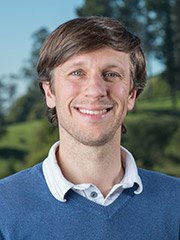 Peter Ercius合作论文数Lawrence Berkeley National Laboratory4
 Maciej Wojcikowski合作论文数4Sebastien Jourdain合作论文数Kitware, Inc.4riccardo vianello合作论文数3jan holst jensen合作论文数3samo turk合作论文数3Brianna Major合作论文数3
 Axel Pahl合作论文数3david hall合作论文数3Gianluca Sforna合作论文数3
 Michał Nowotka合作论文数3Gregory A. Landrum合作论文数Novartis Institutes for BioMedical Research3jan domanski合作论文数2Xiaoyu Wang合作论文数2Jacob Pietryga合作论文数2Herbert D. Ludowieg合作论文数Dept Chem, Univ Buffalo State Univ New York2Sankhesh Jhaveri合作论文数Kitware Inc, Clifton Pk, NY 12065 USA2Corey Oses合作论文数2
 Ken Martin合作论文数Kitware, Inc.2Jonathan Schwartz合作论文数Department of Materials Science and Engineering, University of Michigan2
 Robert Hovden合作论文数Department of Materials Science & Engineering, College of Engineering, University of Michigan2
 Davide M. Proserpio合作论文数Dipartimento di Chimica, Universita degli Studi di Milano;Samara Center for Theoretical Materials Science2
 Hanfei Yan合作论文数2
 McCormick Matthew M合作论文数Department of Medical Physics, University of Wisconsin-Madison2
 Patrick O'Leary合作论文数2
 Jochen Autschbach合作论文数Department of Chemistry, College of Arts and Sciences, University at Buffalo2
 Alain C. Vaucher合作论文数Google2
 Nianhua Dan (但年华)合作论文数College of Biomass Science and Engineering, Sichuan University2
 Klaus Mueller合作论文数Department of Computer Science, Stony Brook University;12bit AI;Akai Kaeru2
 Xiaojing Huang合作论文数Brookhaven Natl Lab2Utkarsh Ayachit合作论文数Kitware Inc.2
 Berk Geveci合作论文数Polytechnic Institute, New York University2
 Ayush Kumar合作论文数Department of Microbiology, Immunology and Pathology, Colorado State University2Yu-chen Karen Chen-Wiegart合作论文数1Yi Jiang合作论文数1Brent Draney合作论文数1Cory Quammen合作论文数1Jonathan L. Rowell合作论文数1




