Quantum process learning is emerging as an important tool to study quantum systems. While studied extensively in coherent frameworks, where the target and model system can share quantum information, less attention has been paid to whether the dynamics of quantum systems can be learned without the system and target directly interacting. Such incoherent frameworks are practically appealing since they open up methods of transpiling quantum processes between the different physical platforms without the need for technically challenging hybrid entanglement schemes. Here we provide bounds on the sample complexity of learning unitary processes incoherently by analyzing the number of measurements that are required to emulate well-established coherent learning strategies. We prove that if arbitrary measurements are allowed, then any efficiently representable unitary can be efficiently learned within the incoherent framework; however, when restricted to shallow-depth measurements only low-entangling unitaries can be learned. We demonstrate our incoherent learning algorithm for low entangling unitaries by successfully learning a 16-qubit unitary on \texttt{ibmq\_kolkata}, and further demonstrate the scalabilty of our proposed algorithm through extensive numerical experiments.
Stochastic-gradient MCMC methods enable scalable Bayesian posterior sampling but often suffer from sensitivity to minibatch size and gradient noise. To address this, we propose Stochastic Gradient Lattice Random Walk (SGLRW), an extension of the Lattice Random Walk discretization. Unlike conventional Stochastic Gradient Langevin Dynamics (SGLD), SGLRW introduces stochastic noise only through the off-diagonal elements of the update covariance; this yields greater robustness to minibatch size while retaining asymptotic correctness. Furthermore, as comparison we analyze a natural analogue of SGLD utilizing gradient clipping. Experimental validation on Bayesian regression and classification demonstrates that SGLRW remains stable in regimes where SGLD fails, including in the presence of heavy-tailed gradient noise, and matches or improves predictive performance.
We introduce a lattice random walk discretisation scheme for stochastic differential equations (SDEs) that samples binary or ternary increments at each step, suppressing complex drift and diffusion computations to simple 1 or 2 bit random values. This approach is a significant departure from traditional floating point discretisations and offers several advantages; including compatibility with stochastic computing architectures that avoid floating-point arithmetic in place of directly manipulating the underlying probability distribution of a bitstream, elimination of Gaussian sampling requirements, robustness to quantisation errors, and handling of non-Lipschitz drifts. We prove weak convergence and demonstrate the advantages through experiments on various SDEs, including state-of-the-art diffusion models.
Second-order training methods have better convergence properties than gradient descent but are rarely used in practice for large-scale training due to their computational overhead. This can be viewed as a hardware limitation (imposed by digital computers). Here we show that natural gradient descent (NGD), a second-order method, can have a similar computational complexity per iteration to a first-order method, when employing appropriate hardware. We present a new hybrid digital-analog algorithm for training neural networks that is equivalent to NGD in a certain parameter regime but avoids prohibitively costly linear system solves. Our algorithm exploits the thermodynamic properties of an analog system at equilibrium, and hence requires an analog thermodynamic computer. The training occurs in a hybrid digital-analog loop, where the gradient and Fisher information matrix (or any other positive semi-definite curvature matrix) are calculated at given time intervals while the analog dynamics take place. We numerically demonstrate the superiority of this approach over state-of-the-art digital first- and second-order training methods on classification tasks and language model fine-tuning tasks.
Variational quantum computing offers a flexible computational approach with a broad range of applications. However, a key obstacle to realizing their potential is the barren plateau (BP) phenomenon. When a model exhibits a BP, its parameter optimization landscape becomes exponentially flat and featureless as the problem size increases. Importantly, all the moving pieces of an algorithm — choices of ansatz, initial state, observable, loss function and hardware noise — can lead to BPs if they are ill-suited. As BPs strongly impact on trainability, researchers have dedicated considerable effort to develop theoretical and heuristic methods to understand and mitigate their effects. As a result, the study of BPs has become a thriving area of research, influencing and exchanging ideas with other fields such as quantum optimal control, tensor networks and learning theory. This article provides a review of the current understanding of the BP phenomenon. Barren plateaus are widely considered as one of the main limitations for variational quantum algorithms. This Review summarizes the latest understandings of barren plateaus, indicating its causes, architecture that will suffer from this phenomenon, and discusses strategies that can — and cannot — avoid it.
Escalating artificial intelligence (AI) demands expose a critical "compute crisis" characterized by unsustainable energy consumption, prohibitive training costs, and the approaching limits of conventional CMOS scaling. Physics-based Application-Specific Integrated Circuits (ASICs) present a transformative paradigm by directly harnessing intrinsic physical dynamics for computation rather than expending resources to enforce idealized digital abstractions. By relaxing the constraints needed for traditional ASICs, like enforced statelessness, unidirectionality, determinism, and synchronization, these devices aim to operate as exact realizations of physical processes, offering substantial gains in energy efficiency and computational throughput. This approach enables novel co-design strategies, aligning algorithmic requirements with the inherent computational primitives of physical systems. Physics-based ASICs could accelerate critical AI applications like diffusion models, sampling, optimization, and neural network inference as well as traditional computational workloads like scientific simulation of materials and molecules. Ultimately, this vision points towards a future of heterogeneous, highly-specialized computing platforms capable of overcoming current scaling bottlenecks and unlocking new frontiers in computational power and efficiency.
Recent breakthroughs in artificial intelligence (AI) algorithms have highlighted the need for alternative computing hardware in order to truly unlock the potential for AI. Physics-based hardware, such as thermodynamic computing, has the potential to provide a fast, low-power means to accelerate AI primitives, especially generative AI and probabilistic AI. In this work, we present a small-scale thermodynamic computer, which we call the stochastic processing unit. This device is composed of RLC circuits, as unit cells, on a printed circuit board, with 8 unit cells that are all-to-all coupled via switched capacitances. It can be used for either sampling or linear algebra primitives, and we demonstrate Gaussian sampling and matrix inversion on our hardware. The latter represents a thermodynamic linear algebra experiment. We envision that this hardware, when scaled up in size, will have significant impact on accelerating various probabilistic AI applications.
Thermodynamic computing exploits fluctuations and dissipation in physical systems to efficiently solve various mathematical problems. For example, it was recently shown that certain linear algebra problems can be solved thermodynamically, leading to an asymptotic speedup scaling with the matrix dimension. The origin of this "thermodynamic advantage" has not yet been fully explained, and it is not clear what other problems might benefit from it. Here we provide a new thermodynamic algorithm for exponentiating a real matrix, with applications in simulating linear dynamical systems. We describe a simple electrical circuit involving coupled oscillators, whose thermal equilibration can implement our algorithm. We also show that this algorithm also provides an asymptotic speedup that is linear in the dimension. Finally, we introduce the concept of thermodynamic parallelism to explain this speedup, stating that thermodynamic noise provides a resource leading to effective parallelization of computations, and we hypothesize this as a mechanism to explain thermodynamic advantage more generally.
Many hardware proposals have aimed to accelerate inference in AI workloads. Less attention has been paid to hardware acceleration of training, despite the enormous societal impact of rapid training of AI models. Physics-based computers, such as thermodynamic computers, offer an efficient means to solve key primitives in AI training algorithms. Optimizers that normally would be computationally out-of-reach (e.g., due to expensive matrix inversions) on digital hardware could be unlocked with physics-based hardware. In this work, we propose a scalable algorithm for employing thermodynamic computers to accelerate a popular second-order optimizer called Kronecker-factored approximate curvature (K-FAC). Our asymptotic complexity analysis predicts increasing advantage with our algorithm as n, the number of neurons per layer, increases. Numerical experiments show that even under significant quantization noise, the benefits of second-order optimization can be preserved. Finally, we predict substantial speedups for large-scale vision and graph problems based on realistic hardware characteristics.
The Quantum Approximate Optimization Algorithm (QAOA) has been proposed as a method to obtain approximate solutions for combinatorial optimization tasks. In this work, we study the underlying algebraic properties of three QAOA ansätze for the maximum-cut (maxcut) problem on connected graphs, while focusing on the generated Lie algebras as well as their invariant subspaces. Specifically, we analyze the standard QAOA ansatz as well as the orbit and the multi-angle ansätze. We are able to fully characterize the Lie algebras of the multi-angle ansatz for arbitrary connected graphs, finding that they only fall into one of just six families. Besides the cycle and the path graphs, dimensions of every graph are exponentially large in the system size, meaning that multi-angle ansätze are extremely prone to exhibiting barren plateaus. Then, a similar quasi-graph-independent Lie-algebraic characterization beyond the multi-angle ansatz is impeded as the circuit exhibits additional "hidden" symmetries besides those naturally arising from a certain parity-superselection operator and all automorphisms of the considered graph. Disregarding the "hidden" symmetries, we can upper bound the dimensions of the orbit and the standard Lie algebras, and the dimensions of the associated invariant subspaces are determined via explicit character formulas. To finish, we conjecture that (for most graphs) the standard Lie algebras have only components that are either exponential or that grow, at most, polynomially with the system size. This would imply that the QAOA is either prone to barren plateaus, or classically simulable.
We study the problem of learning the parameters for the Hamiltonian of a quantum many-body system, given limited access to the system. In this work, we build upon recent approaches to Hamiltonian learning via derivative estimation. We propose a protocol that improves the scaling dependence of prior works, particularly with respect to parameters relating to the structure of the Hamiltonian (e.g., its locality k ). Furthermore, by deriving exact bounds on the performance of our protocol, we are able to provide a precise numerical prescription for theoretically optimal settings of hyperparameters in our learning protocol, such as the maximum evolution time (when learning with unitary dynamics) or minimum temperature (when learning with Gibbs states). Thanks to these improvements, our protocol has practical scaling for large problems: we demonstrate this with a numerical simulation of our protocol on an 80-qubit system.
Much attention has been paid to dynamical simulation and quantum machine learning (QML) independently as applications for quantum advantage, while the possibility of using QML to enhance dynamical simulations has not been thoroughly investigated. Here we develop a framework for using QML methods to simulate quantum dynamics on near-term quantum hardware. We use generalization bounds, which bound the error a machine learning model makes on unseen data, to rigorously analyze the training data requirements of an algorithm within this framework. This provides a guarantee that our algorithm is resource-efficient, both in terms of qubit and data requirements. Our numerics exhibit efficient scaling with problem size, and we simulate 20 times longer than Trotterization on IBMQ-Bogota.
A semidefinite program (SDP) is a particular kind of convex optimization problem with applications in operations research, combinatorial optimization, quantum information science, and beyond. In this work, we propose variational quantum algorithms for approximately solving SDPs. For one class of SDPs, we provide a rigorous analysis of their convergence to approximate locally optimal solutions, under the assumption that they are weakly constrained (i.e., $N\gg M$, where $N$ is the dimension of the input matrices and $M$ is the number of constraints). We also provide algorithms for a more general class of SDPs that requires fewer assumptions. Finally, we numerically simulate our quantum algorithms for applications such as MaxCut, and the results of these simulations provide evidence that convergence still occurs in noisy settings.
Variational Quantum Algorithms (VQAs) are often viewed as the best hope for near-term quantum advantage. However, recent studies have shown that noise can severely limit the trainability of VQAs, e.g., by exponentially flattening the cost landscape and suppressing the magnitudes of cost gradients. Error Mitigation (EM) shows promise in reducing the impact of noise on near-term devices. Thus, it is natural to ask whether EM can improve the trainability of VQAs. In this work, we first show that, for a broad class of EM strategies, exponential cost concentration cannot be resolved without committing exponential resources elsewhere. This class of strategies includes as special cases Zero Noise Extrapolation, Virtual Distillation, Probabilistic Error Cancellation, and Clifford Data Regression. Second, we perform analytical and numerical analysis of these EM protocols, and we find that some of them (e.g., Virtual Distillation) can make it harder to resolve cost function values compared to running no EM at all. As a positive result, we do find numerical evidence that Clifford Data Regression (CDR) can aid the training process in certain settings where cost concentration is not too severe. Our results show that care should be taken in applying EM protocols as they can either worsen or not improve trainability. On the other hand, our positive results for CDR highlight the possibility of engineering error mitigation methods to improve trainability.
While physics-based computing can offer speed and energy efficiency compared to digital computing, it also is subject to errors that must be mitigated. For example, many error mitigation methods have been proposed for quantum computing. However this error mitigation framework has yet to be applied to other physics-based computing paradigms. In this work, we consider thermodynamic computing, which has recently captured attention due to its relevance to artificial intelligence (AI) applications, such as probabilistic AI and generative AI. A key source of errors in this paradigm is the imprecision of the analog hardware components. Here, we introduce a method that reduces the overall error from a linear to a quadratic dependence (from ϵ to ϵ^2) on the imprecision ϵ, for Gaussian sampling and linear algebra applications. The method involves sampling from an ensemble of imprecise distributions associated with various rounding events and then merging these samples. We numerically demonstrate the scalability of this method for dimensions greater than 1000. Finally, we implement this method on an actual thermodynamic computer and show 20% error reduction for matrix inversion; the first thermodynamic error mitigation experiment.
Quantum neural network architectures that have little-to-no inductive biases are known to face trainability and generalization issues. Inspired by a similar problem, recent breakthroughs in machine learning address this challenge by creating models encoding the symmetries of the learning task. This is materialized through the usage of equivariant neural networks whose action commutes with that of the symmetry. In this work, we import these ideas to the quantum realm by presenting a comprehensive theoretical framework to design equivariant quantum neural networks (EQNN) for essentially any relevant symmetry group. We develop multiple methods to construct equivariant layers for EQNNs and analyze their advantages and drawbacks. Our methods can find unitary or general equivariant quantum channels efficiently even when the symmetry group is exponentially large or continuous. As a special implementation, we show how standard quantum convolutional neural networks (QCNN) can be generalized to group-equivariant QCNNs where both the convolution and pooling layers are equivariant to the symmetry group. We then numerically demonstrate the effectiveness of a SU(2)-equivariant QCNN over symmetry-agnostic QCNN on a classification task of phases of matter in the bond-alternating Heisenberg model. Our framework can be readily applied to virtually all areas of quantum machine learning. Lastly, we discuss about how symmetry-informed models such as EQNNs provide hopes to alleviate central challenges such as barren plateaus, poor local minima, and sample complexity.
Linear algebraic primitives are at the core of many modern algorithms in engineering, science, and machine learning. Hence, accelerating these primitives with novel computing hardware would have tremendous economic impact. Quantum computing has been proposed for this purpose, although the resource requirements are far beyond current technological capabilities, so this approach remains long-term in timescale. Here we consider an alternative physics-based computing paradigm based on classical thermodynamics, to provide a near-term approach to accelerating linear algebra. At first sight, thermodynamics and linear algebra seem to be unrelated fields. In this work, we connect solving linear algebra problems to sampling from the thermodynamic equilibrium distribution of a system of coupled harmonic oscillators. We present simple thermodynamic algorithms for (1) solving linear systems of equations, (2) computing matrix inverses, (3) computing matrix determinants, and (4) solving Lyapunov equations. Under reasonable assumptions, we rigorously establish asymptotic speedups for our algorithms, relative to digital methods, that scale linearly in matrix dimension. Our algorithms exploit thermodynamic principles like ergodicity, entropy, and equilibration, highlighting the deep connection between these two seemingly distinct fields, and opening up algebraic applications for thermodynamic computing hardware.
Practical success of quantum learning models hinges on having a suitable structure for the parameterized quantum circuit. Such structure is defined both by the types of gates employed and by the correlations of their parameters. While much research has been devoted to devising adequate gate-sets, typically respecting some symmetries of the problem, very little is known about how their parameters should be structured. In this work, we show that an ideal parameter structure naturally emerges when carefully considering spatial symmetries (i.e., the symmetries that are permutations of parts of the system under study). Namely, we consider the automorphism group of the problem Hamiltonian, leading us to develop a circuit construction that is equivariant under this symmetry group. The benefits of our novel circuit structure, called ORB, are numerically probed in several ground-state problems. We find a consistent improvement (in terms of circuit depth, number of parameters required, and gradient magnitudes) compared to literature circuit constructions.
Thermodynamic computing has emerged as a promising paradigm for accelerating computation by harnessing the thermalization properties of physical systems. This work introduces a novel approach to solving quadratic programming problems using thermodynamic hardware. By incorporating a thermodynamic subroutine for solving linear systems into the interior-point method, we present a hybrid digital-analog algorithm that outperforms traditional digital algorithms in terms of speed. Notably, we achieve a polynomial asymptotic speedup compared to conventional digital approaches. Additionally, we simulate the algorithm for a support vector machine and predict substantial practical speedups with only minimal degradation in solution quality. Finally, we detail how our method can be applied to portfolio optimization and the simulation of nonlinear resistive networks.
 Lukasz Cincio合作论文数Theoretical Division, Los Alamos National Laboratory48
 Marco Cerezo合作论文数Los Alamos National Laboratory44
 Andrew Arrasmith合作论文数LANL, Div Theory, T-4,MS B213, Los Alamos, NM 87545 USA23
 Andrew Sornborger合作论文数Quantum Science Center, Los Alamos National Laboratory21
 Zoë Holmes合作论文数École Polytechnique Fédérale de Lausanne17
 Akira Sone合作论文数Los Alamos Natl Lab, Div Theoret, Los Alamos, NM 87545 USA11Kunal Sharma合作论文数10
 Norbert Lutkenhaus合作论文数Institute for Quantum Computing, University of Waterloo;Department of Physics & Astronomy, University of Waterloo;evolutionQ10
 Max Hunter Gordon合作论文数Theoret Div, Los Alamos Natl Lab9Piotr Czarnik合作论文数Theoret Div, Los Alamos Natl Lab9Maxwell Aifer合作论文数8
 Martin Larocca合作论文数Univ Buenos Aires8Gavin E. Crooks合作论文数Normal Computing;Berkeley Institute for the Theoretical Sciences8Denis Melanson合作论文数7
 Kaelan Donatella合作论文数Lab Mat & Phenomenes Quant, Univ Paris7Joe Gibbs合作论文数6Frederic Sauvage合作论文数Theoret Div, Alamos Natl Lab6
 Samson Wang合作论文数Los Alamos National Laboratory6
 Hsin-Yuan Huang (Robert) (黃信元)合作论文数Google Quantum AI6
 S.D.C. Wehner合作论文数Quantum & Computer Engineering Department, Faculty of Electrical Engineering, Mathematics and Computer Science, Delft University of Technology;Delft Networks6
 Guillaume Verdon合作论文数Dept Appl Math, Univ Waterloo5
 Samuel Duffield合作论文数Department of Engineering, University of Cambridge5
 Jacob L. Beckey合作论文数JILA, NIST5
 Matthias C. Caro合作论文数Munich Ctr Quantum Sci & Technol MCQST5
 T.J. Volkoff合作论文数Berkeley Quantum Information and Computation Center, UC Berkeley5Thomas Ahle合作论文数4Li Yu (梨雨)合作论文数4
 Jeff Reimer合作论文数Department of Chemical and Biomolecular Engineering, College of Chemistry, University of California, Berkeley;Graduate School, University of California, Berkeley;Ernest O. Lawrence Berkeley National Laboratory4
 Jeffrey Allen Reimer合作论文数Dept of Chemical and Biomolecular Engineering, College of Chemistry, University of California, Berkeley4Martinez Antonio合作论文数4
 Subaşı Y合作论文数Joint Quantum Institute and Maryland Center for Fundamental Physics, University of Maryland4Petr M. Anisimov合作论文数4
 Pavel A. Dub合作论文数A. N. Nesmeyanov Institute of Organoelement Compounds, Russian Academy of Sciences4
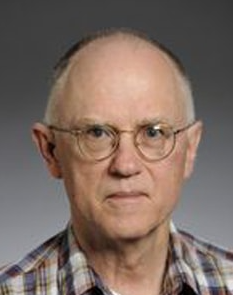 Robert B. Griffiths合作论文数Department of Physics, Carnegie Mellon University4Nicholas Ezzell合作论文数3
 Benjamin Commeau合作论文数3
 Ryan LaRose合作论文数Dept Computat Math Sci & Engn, Michigan State Univ3
 Louis Schatzki合作论文数Department of Physics & Astronomy, Vanderbilt University;Department of Physics & Astronomy, Vanderbilt University3
 Faris M. Sbahi合作论文数X, Mountain View, CA 94043 USA3Adam Winick合作论文数Inst Quantum Comp, Univ Waterloo3M Thibonnier合作论文数3
 Andi Gu合作论文数Harvard University3
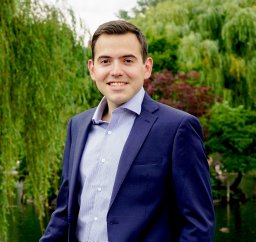 Eric M. Metodiev合作论文数Ctr Theoret Phys, MIT3
 Yu Zhang合作论文数3
 Sergei Tretiak合作论文数Theoretical Division, Los Alamos National Laboratory;Center for Integrated Nanotechnologies, Los Alamos National Laboratory;University of California, Santa Barbara;Skolkovo Institute of Science & Technology3
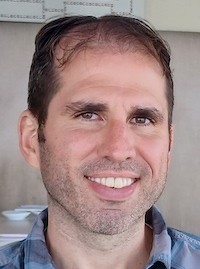 Mark M. Wilde合作论文数School of Electrical and Computer Engineering, Cornell University3
 Fabian Furrer合作论文数Institut für Theoretische Physik, Leibniz Universität Hannover3
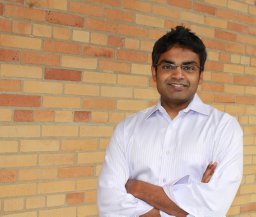 Mohan Sarovar合作论文数Centre for Quantum Computer Technology;School of Physical Sciences;University of Queensland;School of Physical Sciences, University of Queensland3
 Menachem Shoham合作论文数Department of Biochemistry Cleveland, Case Western Reserve University School of Medicine3




