While code injection attacks have been virtually eliminated on modern systems, programs today remain vulnerable to code reuse attacks. Particularly pernicious are Just-In-Time ROP (JIT-ROP) techniques, where an attacker uses a memory disclosure vulnerability to discover code gadgets at runtime. We designed a code-reuse defense, called Shuffler, which continuously re-randomizes code locations on the order of milliseconds, introducing a real-time deadline on the attacker. This deadline makes it extremely difficult to form a complete exploit, particularly against server programs that often sit tens of milliseconds away from attacker machines.Shuffler focuses on being fast, self-hosting, and non intrusive to the end user. Specifically, for speed, Shuffler randomizes code asynchronously in a separate thread and atomically switches from one code copy to the next. For security, Shuffler adopts an "egalitarian" principle and randomizes itself the same way it does the target. Lastly, to deploy Shuffler, no source, kernel, compiler, or hardware modifications are necessary.Evaluation shows that Shuffler defends against all known forms of code reuse, including ROP, direct JIT-ROP, indirect JIT-ROP, and Blind ROP. We observed 14.9% overhead on SPEC CPU when shuffling every 50 ms, and ran Shuffler on real-world applications such as Nginx. We showed that the shuffled Nginx scales up to 24 worker processes on 12 cores.
Smartphones and tablets are easily lost or stolen. This makes them susceptible to an inexpensive class of memory attacks, such as cold-boot attacks, using a bus monitor to observe the memory bus, and DMA attacks. This paper describes Sentry, a system that allows applications and OS components to store their code and data on the System-on-Chip (SoC) rather than in DRAM. We use ARM-specific mechanisms originally designed for embedded systems, but still present in today's mobile devices, to protect applications and OS subsystems from memory attacks.
Users' trust in cloud systems is undermined by the lack of transparency in existing security policies.
Cloud computing uses virtualization to lease small slices of large-scale datacenter facilities to individual paying customers. These multi-tenant environments, on which numerous large and popular web-based applications run today, are founded on the belief that the virtualization platform is sufficiently secure to prevent breaches of isolation between different users who are co-located on the same host. Hypervisors are believed to be trustworthy in this role because of their small size and narrow interfaces.We observe that despite the modest footprint of the hypervisor itself, these platforms have a large aggregate trusted computing base (TCB) that includes a monolithic control VM with numerous interfaces exposed to VMs. We present Xoar, a modified version of Xen that retrofits the modularity and isolation principles used in microkernels onto a mature virtualization platform. Xoar breaks the control VM into single-purpose components called service VMs. We show that this componentized abstraction brings a number of benefits: sharing of service components by guests is configurable and auditable, making exposure to risk explicit, and access to the hypervisor is restricted to the least privilege required for each component. Microrebooting components at configurable frequencies reduces the temporal attack surface of individual components. Our approach incurs little performance overhead, and does not require functionality to be sacrificed or components to be rewritten from scratch.
 Bill Aiello合作论文数University of British Columbia, Vancouver4
 Andrew Warfield合作论文数Department of Computer Science, Faculty of Science, The University of British Columbia3
 Mihir Nanavati合作论文数University of British Columbia3
 Alec Wolman合作论文数Microsoft Research2
 Peter Loscocco合作论文数National Security Agency2George Coker合作论文数2Tim Deegan合作论文数2
 Himanshu Raj合作论文数Microsoft2
 Stefan Saroiu合作论文数Office of the CTO, Azure for Operators, Microsoft2Jun Zhu合作论文数1Wenjia Zhang合作论文数1Michelle Zheng合作论文数Columbia Univ, New York, NY 10027 USA1James P. Blake合作论文数Columbia Univ, New York, NY 10027 USA1
 Graham Gobieski合作论文数EfficientAI1
 James Gleeson合作论文数Univ Toronto1Kent Williams-King合作论文数Univ British Columbia, Vancouver, BC, Canada1
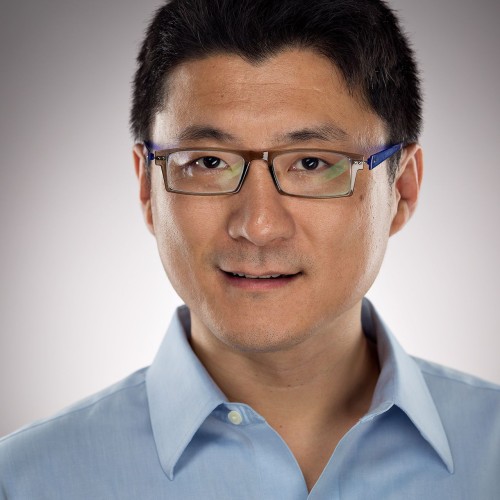 Junfeng Yang (杨俊锋)合作论文数Software Systems Lab, Department of Computer Science, Columbia University1
 Eyal de Lara合作论文数Department of Computer Science, Faculty of Arts and Science, University of Toronto1
 Vasileios P. Kemerlis合作论文数Department of Computer Science, Brown University1
 Sahil Suneja合作论文数University of Toronto1
 David Williams-King合作论文数Mila1Xinhao Yuan (袁新浩)合作论文数1




