The Earth’s magnetospheric cusp, a region with an off-equatorial magnetic field minimum, is an important place which directly transports plasma and energy from the solar wind into the magnetosphere and ionosphere. Its magnetic topology and charged particles therein are known to respond to the solar wind and the interplanetary magnetic field. However, its dynamics in response to the interplanetary (IP) shock are still unknown, due to lack of direct spacecraft observations. This study first reports the observations of the cusp’s motion under the drive of an IP shock and both strong electric fields and outflowing energetic ions in the moving cusp. After an IP shock arrival on 7 September 2017, triple cusps were observed by Cluster C4 when it was crossing the high-altitude northern polar region to the sub-solar magnetosphere. The multiple cusps had a one-to-one correspondence with the dayside magnetosphere compression and relaxation detected by THEMIS E, indicating that one cusp moved back and forth three times due to the IP shock’s impact. In the moving cusp, there were strong impulsive electric fields with a peak of up to ∼40 mV/m and an ionospheric source population of upward propagating ions (O+, He+ and H+) with energies extending to MeV. However, the outflowing ions outside the cusp had energies of no more than 1 keV. An enhancement of energetic O+ appeared inside the cusp with the flux ratio of O+/H+ increasing from 10 keV to ∼ MeV, which implies the efficient acceleration of O+. These observations are shown to be consistent with the prompt acceleration by the impulsive electric fields, which is mass-dependent. This finding suggests a new acceleration mechanism for cusp energetic ions, especially for O+.
On 28th of August 2018 at 5:30 UT, MMS and Cluster were located in the magnetotail at about 16 earth radii (RE). They both suddenly crossed plasma interfaces. Located near the post midnight sector, Cluster transitioned from a cold plasma sheet to a hot plasma sheet associated with a quasi-parallel earthward flow 800 km/s whereas MMS, located at 4 RE duskward of Cluster, transitioned from a similar cold plasma sheet to the lobe region via a very short period in a hot plasma sheet associated with a vortex-like signature. At 05:50 UT MMS returned to a hot plasma sheet and also detected a quasi-parallel earthward flow ~ 400 km/s and increased energetic ion and electron fluxes. We use measurements from both missions during this conjunction to describe the possible large scale dynamics of the magnetotail as well as some associated kinetic processes. Energetic particle (>50keV) measurements from the two missions are compared. Furthermore, at ion scales, we investigate the possible role of ion fire-hose instability in the plasma flow reduction. At electron scales, we analyze fast and slow non linear electrostatic waves propagating tailward which are detected in the so called electron boundary layer as well as in the hot plasma sheet. We discuss their possible generation mechanisms and link with the large scale dynamics of the magnetotail.
We study acceleration of energetic electrons in an earthward plasma jet due to magnetic reconnection in the Earth magnetotail for one case observed by Cluster. The case has been selected based on the presence of high fluxes of energetic electrons, Cluster being in the burst mode and Cluster separation being around 1,000 km that is optimal for studies of ion scale physics. We show that two characteristic acceleration mechanisms are operating during this event. First, significant acceleration is achieved inside the magnetic flux pile‐up of the jet, the acceleration mechanism being consistent with betatron acceleration. Second, strong energetic electron acceleration occurs in magnetic flux rope like structure forming in front of the magnetic flux pile‐up region. Energetic electrons inside the magnetic flux rope are accelerated predominantly in the field‐aligned direction and the acceleration can be due to Fermi acceleration in a contracting flux rope.
In this work, we review the results of observations by the Cluster/Research with Adaptive Particle Imaging Detectors (RAPID) energetic charged particle detector ( ∼> 40 keV– ∼ 1 MeV). The origin of energetic ions in the region upstream of the Earth's bow shock is compared under different solar wind conditions. We give a brief overview of the acceleration mechanisms of charged particles in the plasma sheet. Effective acceleration is associated with (multiple) interaction(s) of charged particles with multiscale magnetic structures and/or electromagnetic fluctuations, which are the consequences of reconnection or other plasma instabilities. The necessity of such acceleration mechanisms to reproduce the distributions of energetic particles on closed magnetic field lines is discussed. We review empirical models describing the distributions of charged particles. Several aspects of the dynamics of energetic particles during substorms and their influence on the dynamics of magnetic storms are shown. We advise to consider including the energetic particles at > 40 keV in calculations of the plasma temperature and pressure during these dynamic processes.
Using measurements from Cluster‐II space mission, we compared the characteristics of the fluctuations of the magnetic field magnitude and the Bz component in the current disruption (CD) regions. We used fast Fourier transform, statistical, and wavelet analysis, and wave surveyor technique on the multispacecraft measurements. Among the obtained results one can note the presence of spectral breaks in both the magnetic field magnitude and the Bz component at frequencies smaller or equal to the proton gyrofrequency. The numerical values of the spectral index for the magnetic field magnitude and for the Bz component are similar, and the nature of the turbulent processes is close to that of the homogeneous magnetohydrodynamic (MHD) (the spectral index varies from −2.00 to −1.31) on the large time scale and resembles Hall‐MHD (the spectral index varies from −2.33 to −2.99) on the smaller time scales. The kurtosis results are consistent with those of the spectral analysis. From wavelet technique, we detected powerful Pc4 and Pi1 pulsations, along with cascade features both for the magnetic field magnitude and for its z‐component. The dispersion ratios also indicate the presence of nonlinear energy cascade processes in CD regions. We have found that the pulsations observed for magnetic pressure are also present in thermal proton and electron pressures although their powers differ considerably. For the dynamic helium and oxygen pressures, and also for the thermal pressures of these components, only pulsations in the high‐frequency region are revealed.
Metallic and silicate ions carry essential information about the evolution of the Earth and near-Earth small bodies. Despite this, there has so far been very little focus on ions with atomic masses higher than oxygen in the terrestrial magnetosphere. In this presentation, we report on abundances and properties of energetic ions with masses corresponding to that of silicon (Si) and iron (Fe) in Earth's geospace. The results are based on a newly derived data product from the Research with Adaptive Particle Imaging Detectors (RAPID) on Cluster. We find traces of both Si and Fe in all of the regions covered by the spacecraft, with the highest occurrence rates and highest intensities in the inner magnetosphere. We also find that the Fe and Si abundances are modulated by solar activity. During solar maximum, the probability of observing Fe and Si in geospace increases significantly. On the other hand, we find little or no direct correlation between geomagnetic activity and Si and Fe abundance in the magnetosphere. Both Si and Fe in the Earth's magnetosphere are inferred to be primarily of solar wind origin, as indicated by correlations with heavy ion observations from the ACE spacecraft at L1. Sputtering off the Moon is another possible source of the observed heavy ions.
The Cluster mission has produced a large data set of electron flux measurements in the Earth's magnetosphere since its launch in late 2000. Electron fluxes are measured using Research with Adaptive Particle Imaging Detector (RAPID)/Imaging Electron Spectrometer (IES) detector as a function of energy, pitch angle, spacecraft position, and time. However, no adiabatic invariants have been calculated for Cluster so far. In this paper we present a step-by-step guide to calculations of adiabatic invariants and conversion of the electron flux to phase space density (PSD) in these coordinates. The electron flux is measured in two RAPID/IES energy channels providing pitch angle distribution at energies 39.2-50.5 and 68.1-94.5 keV in nominal mode since 2004. A fitting method allows to expand the conversion of the differential fluxes to the range from 40 to 150 keV. Best data coverage for phase space density in adiabatic invariant coordinates can be obtained for values of second adiabatic invariant, K, similar to 10(2), and values of the first adiabatic invariant mu in the range approximate to 5-20 MeV/G. Furthermore, we describe the production of a new data product "LSTAR," equivalent to the third adiabatic invariant, available through the Cluster Science Archive for years 2001-2018 with 1-min resolution. The produced data set adds to the availability of observations in Earth's radiation belts region and can be used for long-term statistical purposes.
Baryonic matter in geospace is almost exclusively in a plasma state, with protons (H ) and to some extent ionized helium (He) and oxygen (O) being the dominant ion species. But also other heavier ion species and even molecular ions are present in geospace. The Research with Adaptive Particle Imaging Detectors (RAPID) on board the Cluster satellites can identify and characterize some of these ions by utilizing their measured time of flight and energy. Usually, the measurements are then assigned into three discrete species channels; protons (H ), helium (He), and a common channel for carbon, nitrogen, and oxygen (CNO), each with flux, energy, and angular information. But RAPID also has a Direct Event (DE) diagnostic mode in which the full time of flight and energy information for a limited number of incident particles are stored. With knowledge about energy losses in the various detector parts, it is then possible to derive the atomic mass of the incident particle. In this paper we report on results from a study of Cluster DE events during the years 2001–2018, with a particular emphasis of iron (Fe) ions. We show that suprathermal Fe ions can be found all over geospace covered by Cluster, and that the time variation is consistent with modulation by geomagnetic disturbances and solar activity. We do not find any clear correlations between detection of suprathermal Fe and meteor showers or sputtering off the moon.
Usually, for the plasma pressure estimation in the plasma sheet ion observations in the energy range up to ~40 keV are used. However, the thermal part of the distribution function can pass beyond the high energy threshold of an instrument during active events like dipolarizations. In such cases the entire ion population is not measured and the ion pressure can be underestimated. We study this problem by using Cluster mission observations provided by two instruments: thermal plasma instrument CODIF (up to 38 keV) and suprathermal instrument RAPID (from 40 up to 1500 keV). We analyzed 11 dipolarization events and showed that in all events the maximum of ion energy flux was shifted to high energy threshold of CODIF instrument. Simultaneously, the energy flux increase in suprathermal energy range was observed by RAPID. For H + and O + ion components we calculate the pressure of suprathermal population and showed that the total pressure estimated by using both CODIF and RAPID instruments at some intervals exceeds the pressure estimated only from CODIF data up to 5 times. The superposed epoch analysis applied to 11 dipolarization events from our data base showed that the total pressure of H + and O + ion components can be in 2-5 times underestimated in the course of dipolarization.
The Cluster mission, launched in 2000, has produced a large database of electron flux intensity measurements in the Earth's magnetosphere by the Research with Adaptive Particle Imaging Detector (RAPID)/Imaging Electron Spectrometer (IES) instrument. However, due to background contamination of the data with high-energy electrons (>400 keV) and inner zone protons (230-630 keV) in the radiation belts and ring current, the data have been rarely used for inner-magnetospheric science. The current paper presents two algorithms for background correction. The first algorithm is based on the empirical contamination percentages by both protons and electrons. The second algorithm uses simultaneous proton observations. The efficiencies of these algorithms are demonstrated by comparison of the corrected Cluster/RAPID/IES data with Van Allen Probes/Magnetic Electron Ion Spectrometer measurements for 2012-2015. Both techniques improved the IES electron data in the radiation belts and ring current, as the yearly averaged flux intensities of the two missions show the ratio of measurements close to 1. We demonstrate a scientific application of the corrected IES electron data analyzing its evolution during solar cycle. Spin-averaged yearly mean IES electron intensities in the outer belt for energies 40-400 keV at L-shells between 4 and 6 showed high positive correlation with auroral electrojet index and solar wind dynamic pressure during 2001-2016. The relationship between solar wind dynamic pressure and IES electron measurements in the outer radiation belt was derived as a uniform linear-logarithmic equation. Plain Language Summary Radiation belts of the Earth, which are the zones of charged energetic particles trapped by the geomagnetic field, comprise enormous and dynamic systems. While the inner radiation belt, composed mainly of high-energy protons, is relatively stable, the outer belt, filled with energetic electrons, is highly variable and depends substantially on solar activity. Hence, extended reliable observations and the improved models of the electron intensities in the outer belt depending on solar wind parameters are necessary for prediction of their dynamics. The Cluster mission has been measuring electron flux intensities in the radiation belts since its launch in 2000, thus providing a huge dataset that can be used for radiation belts analysis. Using 16 years of electron measurements by the Cluster mission corrected for background contamination, we derived a uniform linear-logarithmic dependence of electron fluxes in the outer belt on the solar wind dynamic pressure.
This work is devoted to the investigation of particle acceleration during magnetospheric dipolarizations. A numerical model is presented taking into account the four scenarios of plasma acceleration that can be realized: (A) total dipolarization with characteristic time scales of ≈3 min; (B) single peak value of the normal magnetic component Bz occurring on the time scale of less than 1 min; (C) a sequence of rapid jumps of Bz interpreted as the passage of a chain of multiple dipolarization fronts (DFs); and (D) the simultaneous action of mechanism (C) followed by the consequent enhancement of electric and magnetic fluctuations with the small characteristic time scale ≤1 s. In a frame of the model, we have obtained and analyzed the energy spectra of four plasma populations: electrons e−, protons H+, helium He+, and oxygen O+ ions, accelerated by the above-mentioned processes (A)–(D). It is shown that O+ ions can be accelerated mainly due to the mechanism (A); H+ and He+ ions (and to some extent electrons) can be more effectively accelerated due to the mechanism (C) than the single dipolarization (B). It is found that high-frequency electric and magnetic fluctuations accompanying multiple DFs (D) can strongly accelerate electrons e− and really weakly influence other populations of plasma. The results of modeling demonstrated clearly the distinguishable spatial and temporal resonance character of particle acceleration processes. The maximum particle energies depending on the scale of the magnetic acceleration region and the value of the magnetic field are estimated. The shapes of energy spectra are discussed.
In this work we present an analysis of the dynamics of suprathermal ions of different masses (H+, He+, O+) during prolonged dipolarizations in the near-Earth magnetotail (X>-17RE) according to Cluster/RAPID observations in 2001–2005. All dipolarizations from our database were associated with fast flow braking and consisted of multiple dipolarization fronts (DFs). We found statistically that fluxes of suprathermal ions started to increase ∼1 min before the dipolarization onset and continued to grow for ∼1 min after the onset. The start of flux growth coincided with the beginning of a decrease in the spectral index γ. The decrease in γ was observed for protons for ∼1 min after the dipolarization onset, and for He+ and O+ ions for ∼3 and ∼5 min after the onset respectively. The negative variations of γ for O+ ions were ∼2.5 times larger than for light ions. This demonstrates more efficient acceleration for heavy ions. The strong negative variations of γ were observed in finite energy ranges for all ion components. This indicates the possibility of nonadiabatic resonant acceleration of ions in the course of their interaction with multiple DFs during dipolarizations. Our analysis showed that some fraction of light ions can be accelerated up to energies ≥600 keV and some fraction of oxygen ions can be accelerated up to ∼1.2 MeV. Such strong energy gains cannot be explained by acceleration at a single propagating DF and suggest the possibility of multistage ion acceleration in the course of their interaction with multiple DFs during the prolonged dipolarizations.
 Elena Kronberg合作论文数Department of Earth and Environmental Sciences, Munich University82
 H. Reme合作论文数46
 Qiugang Zong (宗秋刚)合作论文数School of Earth and Space Sciences, Peking University46Andre Balogh合作论文数Department of Physics, Faculty of Natural Sciences, Imperial College London37
 R. H. W. Friedel合作论文数Space Science and Applications, Los Alamos National Laboratory37
 Malcolm Wray Dunlop合作论文数School of Space and Environmet, Beihang University;School of Astronautics, Beihang University33
 A. Korth合作论文数Max-Planck-Institut für Sonnensystemforschung33K.-P. Wenzel合作论文数29
 Andrew Fazakerley合作论文数Department of Space and Climate Physics, Faculty of Mathematical & Physical Sciences, University College London29Elena E. Grigorenko合作论文数Skobeltsyn Institute of Nuclear Physics, Moscow State University29I. Dandouras合作论文数27
 C. H. Perry合作论文数24Theodore a Fritz合作论文数24
 Theodore A. Fritz合作论文数23T. R. Sanderson合作论文数23
 Daniel N. Baker合作论文数Laboratory for Atmospheric and Space Physics, College of Engineering and Applied Science, University of Colorado Boulder21E. Kirsch合作论文数21TA Fritz合作论文数19
 M. Grande合作论文数Aberystwyth Univ18
 Geoff Reeves合作论文数Los Alamos National Laboratory;Space Sciences Division, The New Mexico Consortium18
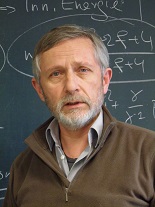 Karl-Heinz Glaßmeier合作论文数Institut fur Geophysik und Extraterrestrische Physik, Fakultat fur Elektrotechnik, Informationstechnik, Physik, Technische Universitat Braunschweig18
 Joseph F. Fennell合作论文数17
 Stein Haaland合作论文数University Centre in Svalbard;Department of Arctic Geophysics, University of Bergen17
 J. B. Blake合作论文数16
 Matt Taylor合作论文数European Space Agency16Z. Y. Pu合作论文数15
 Suiyan Fu (傅绥燕)合作论文数School of Earth and Space Sciences, Peking University15
 Rumi Nakamura合作论文数Institut für Weltraumforschung, ÖAW;Institute of Physics, University of Graz15
 Philippe Escoubet合作论文数European Space Agency14
 Wolfgang Baumjohann合作论文数Space Research Institute, Austrian Academy of Sciences;Division of Mathematics and Natural Sciences, Austrian Academy of Sciences;Technische Universität Graz14
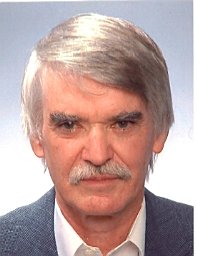 B. Klecker合作论文数Max-Planck-Institut für extraterrestrische Physik14R.J. Hynds合作论文数13
 Lynn Kistler合作论文数College of Engineering and Physical Sciences, University of New Hampshire;Physics and Space Science Center, University of New Hampshire13s mckennalawlor合作论文数12
 Hui Zhang (张慧)合作论文数School of Space Science and Technology, Shandong University12
 J.-A. Sauvaud合作论文数Centre d’Etude Spatiale des Rayonnements12Benoit Lavraud合作论文数Laboratoire d'Astrophysique de Bordeaux12J. A. Davies合作论文数11
 Esa Vilenius合作论文数11B. Nikutowski合作论文数11M. Carter合作论文数10
 Ian Giles Richardson合作论文数Goddard Space Flight Center, National Aeronautics and Space Administration;University of Maryland10
 Mats Andre合作论文数Swedish Institute of Space Physics10Arnaud Masson合作论文数Science Operations Department, ESA/ESTEC10
 James L Roeder合作论文数10Elizabeth a Lucek合作论文数9
 Andris Vaivads合作论文数Division of Space and Plasma Physics, Department of Electrical Engineering, School of Electrical Engineering and Computer Science, KTH Royal Institute of Technology9u mall合作论文数8A. Thompson合作论文数8




