Irreversible covalent inhibitors have garnered significant attention in recent years. Despite encouraging progress, the vast majority contain electrophiles that target the least abundant amino acid, cysteine, substantially limiting target inhibitor design for therapeutic intervention. Here, we generalize 2-ethynylbenzaldehyde as a proximity-induced electrophile for generating irreversible covalent peptide and protein inhibitors that specifically target native lysine residues. Leveraging this warhead, we designed a covalent de novo peptide that potently engages MCL1 to block its interaction with Bak. We show it is faster, more site-selective, and increases potency by 61-fold for MCL1 relative to a sulfonyl fluoride warhead. Additionally, with the guide of a computational script to predict "reactive hotspots" at the protein level, we developed a minibinder that labels PD-L1 in vitro and in live cells, displays a slower off-rate, and potently blocks the native PD-1 and PD-L1. These results establish isoquinolinium capture as a promising strategy to inhibit protein-protein interactions and for the development of novel covalent peptide and protein therapeutics.
The rise of multidrug-resistant bacterial infections necessitates the discovery of novel antimicrobial strategies. Here, we show that protein design provides a generalizable means of generating new antimicrobials by neutralizing the function of bacterial adhesins, which are virulence factors critical in host-pathogen interactions. We de novo designed high-affinity miniprotein binders to FimH and Abp chaperone usher pili adhesins from uropathogenic Escherichia coli and Acinetobacter baumannii, respectively, which are implicated in mediating both uncomplicated and catheter-associated urinary tract infections (UTI) responsible for significant morbidity worldwide. The designed antagonists have high specificity and stability, disrupt bacterial recognition of host receptors, block biofilm formation, and are effective in treating and preventing murine models of uncomplicated and catheter-associated UTIs in vivo.
Chemical protein synthesis enables access to proteins that would otherwise be difficult or impossible to obtain with traditional means such as recombinant expression. Chemoselective ligations provide the ability to join peptide segments prepared by solid-phase peptide synthesis. While native chemical ligation (NCL) is widely used, it is limited by the need for C-terminal thioesters with suitable reaction kinetics, properly placed native Cys or thiolated derivatives, and peptide segment solubility at low mM concentrations. Moreover, repetitive purifications to isolate ligated products are often yield-sapping, hampering efficiency and progress. In this work, we demonstrate the use of Controlled Activation of Peptides for Templated NCL (CAPTN). This traceless multi-segment templated NCL approach permits the one-pot synthesis of proteins by harnessing selective thioester activation and orthogonal conjugation chemistries to favor formation of the full-length ligated product while minimizing side reactions. Importantly, CAPTN provides kinetic enhancements allowing ligations at sterically hindered junctions and low peptide concentrations. Additionally, this one-pot approach removes the need for intermediate purification. We report the synthesis of two E. coli ribosomal subunits S16 and S17 enabled by the chemical tools described herein. We anticipate that CAPTN will expedite the synthesis of valuable proteins and expand on templated approaches for chemical protein synthesis.
Peptide and protein bioconjugation technologies have revolutionized our ability to site-specifically or chemoselectively install a variety of functional groups for applications in chemical biology and medicine, including the enhancement of bioavailability. Here, we introduce a site-specific bioconjugation strategy inspired by chemical ligation at serine that relies on a noncanonical amino acid containing a 1-amino-2-hydroxy functional group and a salicylaldehyde ester. More specifically, we harness this technology to generate analogues of glucagon-like peptide-1 that resemble Semaglutide, a long-lasting blockbuster drug currently used in the clinic to regulate glucose levels in the blood. We identify peptides that are more potent than unmodified peptide and equipotent to Semaglutide in a cell-based activation assay, improve the stability in human serum, and increase glucose disposal efficiency in vivo. This approach demonstrates the potential of "serine ligation" for various applications in chemical biology, with a particular focus on generating stabilized peptide therapeutics.
Chemoselective ligation reactions, such as native chemical ligation (NCL), enable the assembly of synthetic peptides into proteins. However, the scope of proteins accessible to total chemical synthesis is limited by ligation efficiency. Sterically hindered thioesters and poorly soluble peptides can undergo incomplete ligations, leading to challenging purifications with low yields. This work describes a new method, ClickAssisted NCL (CAN), which overcomes these barriers. In CAN, peptides are modified with traceless “helping hand” lysine linkers that enable addition of dibenzocyclooctyne (DBCO) and azide handles for strain-promoted alkyne-azide cycloaddition (SPAAC) reactions. This cycloaddition templates the peptides to increase their effective concentration and greatly accelerate ligation kinetics. After ligation, mild hydroxylamine treatment tracelessly removes the linkers to afford the native ligated peptide. Although DBCO is incompatible with standard Fmoc solid-phase peptide synthesis (SPPS) due to an acid-mediated rearrangement that occurs during peptide cleavage, we demonstrate that copper(I) protects DBCO from this side reaction, enabling direct production of DBCO-containing synthetic peptides. Excitingly, low concentrations of triazole-linked model peptides reacted ~1,200-fold faster than predicted for non-templated control ligations, which also accumulated many side products due to the long reaction time. Using the E. coli ribosomal subunit L32 as a model protein, we further demonstrate that the SPAAC, ligation, desulfurization, and linker cleavage steps can be performed in a one-pot fashion. CAN will be useful for overcoming ligation challenges to expand the reach of chemical protein synthesis.
Native chemical ligation has enabled the chemical synthesis of proteins for a wide variety of applications (e.g., mirror-image proteins). However, inefficiencies of this chemoselective ligation in the context of large or otherwise challenging protein targets can limit the practical scope of chemical protein synthesis. In this review, we focus on recent developments aimed at enhancing and expanding native chemical ligation for challenging protein syntheses. Chemical auxiliaries, use of selenium chemistry, and templating all enable ligations at otherwise suboptimal junctions. The continuing development of these tools is making the chemical synthesis of large proteins increasingly accessible.
The scope of chemical protein synthesis (CPS) continues to expand, driven primarily by advances in chemical ligation tools (e.g., reversible solubilizing groups and novel ligation chemistries). However, the design of an optimal synthesis route can be an arduous and fickle task due to the large number of theoretically possible, and in many cases problematic, synthetic strategies. In this perspective, we highlight recent CPS tool advances and then introduce a new and easy-to-use program, Aligator (Automated Ligator), for analyzing and designing the most efficient strategies for constructing large targets using CPS. As a model set, we selected the E. coli ribosomal proteins and associated factors for computational analysis. Aligator systematically scores and ranks all feasible synthetic strategies for a particular CPS target. The Aligator script methodically evaluates potential peptide segments for a target using a scoring function that includes solubility, ligation site quality, segment lengths, and number of ligations to provide a ranked list of potential synthetic strategies. We demonstrate the utility of Aligator by analyzing three recent CPS projects from our lab: TNFα (157 aa), GroES (97 aa), and DapA (312 aa). As the limits of CPS are extended, we expect that computational tools will play an increasingly important role in the efficient execution of ambitious CPS projects such as production of a mirror-image ribosome.
Sequence of human AGO2 small hairpin RNA (shRNA). Table S2. Proteins detected by tandem mass spectrometry analyses. Table S3. The miRNA up- or down-regulated by AGO2 shRNA. Table S4. The miRNA up- or down-regulated by lenalidomide treatment. (DOCX 159Â kb)
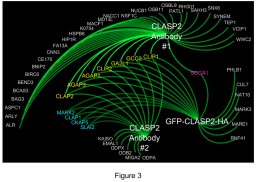
BACKGROUND:Immunomodulatory drugs (IMiDs), such as lenalidomide, are therapeutically active compounds that bind and modulate the E3 ubiquitin ligase substrate recruiter cereblon, thereby affect steady-state levels of cereblon and cereblon binding partners, such as ikaros and aiolos, and induce many cellular responses, including cytotoxicity to multiple myeloma (MM) cells. Nevertheless, it takes many days for MM cells to die after IMiD induced depletion of ikaros and aiolos and thus we searched for other cereblon binding partners that participate in IMiD cytotoxicity.METHODS:Cereblon binding partners were identified from a MM cell line expressing histidine-tagged cereblon by pulling down cereblon and its binding partners and verified by co-immunoprecipitation. IMiD effects were determined by western blot analysis, cell viability assay, microRNA array and apoptosis analysis.RESULTS:We identified argonaute 2 (AGO2) as a cereblon binding partner and found that the steady-state levels of AGO2 were regulated by cereblon. Upon treatment of IMiD-sensitive MM cells with lenalidomide, the steady-state levels of cereblon were significantly increased, whereas levels of AGO2 were significantly decreased. It has been reported that AGO2 plays a pivotal role in microRNA maturation and function. Interestingly, upon treatment of MM cells with lenalidomide, the steady-state levels of microRNAs were significantly altered. In addition, silencing of AGO2 in MM cells, regardless of sensitivity to IMiDs, significantly decreased the levels of AGO2 and microRNAs and massively induced cell death.CONCLUSION:These results support the notion that the cereblon binding partner AGO2 plays an important role in regulating MM cell growth and survival and AGO2 could be considered as a novel drug target for overcoming IMiD resistance in MM cells.
Immunomodulatory drugs (IMiDs) are therapeutically active compounds that bind to the E3 ubiquitin ligase substrate recruiter cereblon (CRBN) and induce many cellular responses, including cytotoxicity. We had found that the expression of CRBN in multiple myeloma (MM) cells provided the basis for their responses to IMiDs. In this report, we have identified argonaute 2 (AGO2) as a new member of CRBN-downstream binding protein and found that: 1) the steady-state levels of CRBN in IMiD-sensitive cells are significantly higher than in IMiD-resistant cells; 2) the steady-state levels of AGO2 in IMiD-sensitive cells are significantly less compared to IMiD-resistant cells, suggesting that CRBN plays a role in regulating AGO2. AGO2 is a component of microRNA (miRNA)-induced silencing complexes and plays an important role in miRNA maturation and function. The matured miRNAs are considered as key regulators of almost all cellular pathways. Treatment of IMiD-sensitive MM cells with lenalidomide, an IMiD, significantly increased CRBN, decreased both AGO2 and miRNAs and inhibited cell growth. In contrast, although treatment of IMiD-resistant MM cells with lenalidomide moderately increased CRBN and decreased both AGO2 and miRNAs, this treatment did not significantly inhibit cell growth. However, silencing of AGO2 with small hairpin RNA significantly decreased both AGO2 and miRNAs and inhibited cell growth regardless of whether the cells are sensitive or resistant to IMiDs. Therefore, AGO2 could be considered as a new drug target for overcoming IMiDs resistance in MM cells. Citation Format: Qinqin Xu, Yuexian Hou, Paul Langlais, Patrick Erickson, James Zhu, Changxin Shi, Moulun Luo, Yuanxiao Zhu, Lawrence Mandarino, Keith Stewart, Xiu-Bao Chang. Expression of CRBN binding protein AGO2 plays important roles for myeloma cell growth. [abstract]. In: Proceedings of the 106th Annual Meeting of the American Association for Cancer Research; 2015 Apr 18-22; Philadelphia, PA. Philadelphia (PA): AACR; Cancer Res 2015;75(15 Suppl):Abstract nr 3625. doi:10.1158/1538-7445.AM2015-3625
 Michael S. Kay合作论文数Department of Biochemistry, University of Utah School of Medicine4
 moulun luo (罗谋伦)合作论文数3Yue-Xian Hou合作论文数3
 Qinqin Xu (许勤勤)合作论文数3
 A. Keith Stewart合作论文数Princess Margaret Cancer Centre;University Health Network3Shi Chang-Xin合作论文数3James J Zhu合作论文数3
 Paul Langlais合作论文数ASU/Mayo Center for Metabolic and Vascular Biology, Arizona State University3Xiu-Bao Chang合作论文数3
 Lawrence J. Mandarino合作论文数Department of Medicine, College of Medicine, University of Arizona;Division of Endocrinology, College of Medicine, University of Arizona;Basic Translational Laboratories, Center for Disparities in Diabetes, Obesity and Metabolism, The University of Arizona3Yuan Xiao Zhu合作论文数3Riley J Giesler合作论文数2Paul Spaltenstein合作论文数2
 David Baker合作论文数Institute for Protein Design, University of Washington;Department of Biochemistry, University of Washington2
 Ye Xu (徐晔)合作论文数Beijing Cancer Hospital2Gregory H. Bird合作论文数1Andrew C. Hunt合作论文数1Cassandra Ogohara合作论文数1Andyna Vernet合作论文数1Mila Lamb合作论文数1Maggie Ahlrichs合作论文数1Meerit Said合作论文数1
 Patrick J Salveson合作论文数Institute for Protein Design, University of Washington1
 Aaron T Balana合作论文数Dept Chem, Univ Southern Calif1
 Veronika Tchesnokova合作论文数1Michael T. Jacobsen合作论文数1Michael Murphy合作论文数1Alex Kang合作论文数1Asim K Bera合作论文数Univ Washington, Dept Biochem, Seattle, WA 98195 USA1Xinting Li合作论文数Univ Windsor, Dept Elect & Comp Engn, 401 Sunset Ave, Windsor, ON N9B 3P4, Canada1Hvorecny Kelli L合作论文数Department of Genetics, Albert Einstein College of Medicine1Marina Godes合作论文数1
 Scott Hultgren合作论文数Department of Molecular Microbiology, School of Medicine, Washington University in St.Louis1Levine Paul M合作论文数1
 Fulcher James M合作论文数Department of Physical Sciences, Nicholls State University1
 Tim Craven合作论文数Wake Forest University1
 Matthew R. Pratt合作论文数Department of Chemistry, Dana and David Dornsife College of Letters, Arts and Sciences, University of Southern California1
 Evgeni V. Sokurenko合作论文数Department of Microbiology, University of Washington1
 Loren D. Walensky合作论文数Department of Pediatric Oncology, Dana-Farber/Boston Children's Cancer and Blood Disorders Center;Harvard Medical School1
 Jerome Pinkner合作论文数1
 Rachel Klevit合作论文数Department of Biochemistry, University of Washington1Karen W. Dodson合作论文数1




