As individuals and communities interact in and with an environment that is increasingly virtual they are often vulnerable to the commodification of their digital exhaust. Concepts and behavior that are ambiguous in nature are captured in this environment, quantified, and used to categorize, sort, recommend, or make decisions about people's lives. While many organizations seek to utilize this information in a responsible manner, biases remain endemic across technology processes and can lead to harmful impacts regardless of intent. These harmful outcomes, even if inadvertent, create significant challenges for cultivating public trust in artificial intelligence (AI). SP 1270 is a NIST Artificial Intelligence publication and should be read in conjunction with all publications in the NIST AI Series, which was established in January 2023.
The use of machine learning (ML) has become more widespread in many areas of consumer financial services, including credit underwriting and pricing of loans. ML’s ability to automatically learn nonlinearities and interactions in training data is perceived to facilitate faster and more accurate credit decisions, and ML is now a viable challenger to traditional credit modeling methodologies. In this mini review, we further the discussion of ML in consumer finance by proposing uniform definitions of key ML and legal concepts related to discrimination and interpretability. We use the United States legal and regulatory environment as a foundation to add critical context to the broader discussion of relevant, substantial, and novel ML methodologies in credit underwriting, and we review numerous strategies to mitigate the many potential adverse implications of ML in consumer finance.
This manuscript outlines a viable approach for training and evaluating machine learning systems for high-stakes, human-centered, or regulated applications using common Python programming tools. The accuracy and intrinsic interpretability of two types of constrained models, monotonic gradient boosting machines and explainable neural networks, a deep learning architecture well-suited for structured data, are assessed on simulated data and publicly available mortgage data. For maximum transparency and the potential generation of personalized adverse action notices, the constrained models are analyzed using post-hoc explanation techniques including plots of partial dependence and individual conditional expectation and with global and local Shapley feature importance. The constrained model predictions are also tested for disparate impact and other types of discrimination using measures with long-standing legal precedents, adverse impact ratio, marginal effect, and standardized mean difference, along with straightforward group fairness measures. By combining interpretable models, post-hoc explanations, and discrimination testing with accessible software tools, this text aims to provide a template workflow for machine learning applications that require high accuracy and interpretability and that mitigate risks of discrimination.
Explainable machine learning (ML) enables human learning from ML, human appeal of automated model decisions, regulatory compliance, and security audits of ML models. Explainable ML (i.e. explainable artificial intelligence or XAI) has been implemented in numerous open source and commercial packages and explainable ML is also an important, mandatory, or embedded aspect of commercial predictive modeling in industries like financial services. However, like many technologies, explainable ML can be misused, particularly as a faulty safeguard for harmful black-boxes, e.g. fairwashing or scaffolding, and for other malevolent purposes like stealing models and sensitive training data. To promote best-practice discussions for this already in-flight technology, this short text presents internal definitions and a few examples before covering the proposed guidelines. This text concludes with a seemingly natural argument for the use of interpretable models and explanatory, debugging, and disparate impact testing methods in life- or mission-critical ML systems.
This text discusses several popular explanatory methods that go beyond the error measurements and plots traditionally used to assess machine learning models. Some of the explanatory methods are accepted tools of the trade while others are rigorously derived and backed by long-standing theory. The methods, decision tree surrogate models, individual conditional expectation (ICE) plots, local interpretable model-agnostic explanations (LIME), partial dependence plots, and Shapley explanations, vary in terms of scope, fidelity, and suitable application domain. Along with descriptions of these methods, this text presents real-world usage recommendations supported by a use case and public, in-depth software examples for reproducibility.
The black-box Correctional Offender Management Profiling for Alternative Sanctions (COMPAS) criminal risk assessment instrument (RAI) is analyzed for confounding racial bias and a novel procedure is proposed for remediating bias from individual criminal risk predictions. A repeatable global versus local analysis motif is introduced in which global and local model behavior are compared to debug and diagnose unwanted bias in a black-box prediction system using tools such as surrogate models, gradient boosting machine feature importance, leave-onecovariate-out (LOCO) feature importance, partial dependence plots, and individual conditional expectation (ICE) plots. LOCO-derived feature importance is also used to remove prediction contributions from bias-inducing input features. The proposed global versus local approach and remediation strategy can be applied to many blackbox and machine learning (ML) decision-making systems.
This paper presents supervised and unsupervised pattern recognition techniques that use Base SAS® and SAS® Enterprise MinerTM software. A simple preprocessing technique creates many small image patches from larger images. These patches encourage the learned patterns to have local scale, which follows well-known statistical properties of natural images. In addition, these patches reduce the number of features that are required to represent an image and can decrease the training time that algorithms need in order to learn from the images. If a training label is available, a classifier is trained to identify patches of interest. In the unsupervised case, a stacked autoencoder network is used to generate a dictionary of representative patches, which can be used to locate areas of interest in new images. This technique can be applied to pattern recognition problems in general, and this paper presents examples from the oil and gas industry and from a solar power forecasting application.
“As far as the laws of mathematics refer to reality, they are not certain, and as far as they are certain, they do not refer to reality.” A. Einstein (1879-1955) Reservoir characterization is the process of calibrating or mapping reservoir thickness, net-to-gross ratio, porosity, permeability and water saturation. Well logs have habitually provided the source of the data to generate the maps, but piecemeal seismic attributes have gained popularity when calibrated with extant well control. The seismic data can be used to interpolate and extrapolate between and beyond sparse well control that provides only localized knowledge. This paper presents supervised and unsupervised pattern recognition techniques using a suite of data-driven analytical workflows that lend credence and support reservoir characterization by adopting advanced analytical methodologies on seismic profiles. We shall define workflows integrating seismic images and derived attributes as input space for a Deep Learning (DL) solution. A simple preprocessing technique creates many small image patches from larger images. These patches reduce the number of features required to represent an image and can decrease the training time needed by algorithms to learn from the images. If a training label is available, a classifier is trained to identify patches of interest. In the unsupervised case, a stacked autoencoder network is used to generate a dictionary of representative patches which can be used to locate areas of interest in new images. While this technique can be applied to pattern recognition problems in general, this paper will present a specific example in upstream oil and gas exploration extracting important hidden patterns in seismic profiles. Thus, marrying traditional seismic interpretation with a suite of DL workflows, we surface meaningful patterns to identify Direct Hydrocarbon Indicators efficiently across 3D seismic datasets.
Building representative machine learning models that generalize well on future data requires careful consideration both of the data at hand and of assumptions about the various available training algorithms. Data are rarely in an ideal form that enables algorithms to train effectively. Some algorithms are designed to account for important considerations such as variable selection and handling of missing values, whereas other algorithms require additional preprocessing of the data or appropriate tweaking of the algorithm options. Ultimate evaluation of a model ’ s quality requires appropriate selection and interpretation of an assessment criterion that is meaningful for the given problem. This paper discusses many of the most common issues faced by machine learning practitioners and provides guidance for using these powerful algorithms to build effective models
Large sets of objects with spectroscopic redshift measurements will be needed for imaging dark energy experiments to achieve their full potential, serving two goals:_training_, i.e., the use of objects with known redshift to develop and optimize photometric redshift algorithms; and_calibration_, i.e., the characterization of moments of redshift (or photo-z error) distributions. Better training makes cosmological constraints from a given experiment stronger, while highly-accurate calibration is needed for photo-z systematics not to dominate errors. In this white paper, we investigate the required scope of spectroscopic datasets which can serve both these purposes for ongoing and next-generation dark energy experiments, as well as the time required to obtain such data with instruments available in the next decade. Large time allocations on kilo-object spectrographs will be necessary, ideally augmented by infrared spectroscopy from space. Alternatively, precision calibrations could be obtained by measuring cross-correlation statistics using samples of bright objects from a large baryon acoustic oscillation experiment such as DESI. We also summarize the additional work on photometric redshift methods needed to prepare for ongoing and future dark energy experiments.
ADVERTISEMENT RETURN TO ISSUEPREVArticleNEXTUndergraduate Introductory Quantitative Chemistry Laboratory Course: Interdisciplinary Group Projects in PhytoremediationDebra L. Van Engelen , Steven W. Suljak , J. Patrick Hall , and Bert E. Holmes View Author Information Department of Chemistry, University of Redlands, Redlands, CA 92373 Department of Chemistry, Santa Clara University, Santa Clara, CA 95053 Department of Chemistry, University of North Carolina at Asheville, Asheville, NC 28804Cite this: J. Chem. Educ. 2007, 84, 1, 128Publication Date (Web):January 1, 2007Publication History Received3 August 2009Published online1 January 2007Published inissue 1 January 2007https://pubs.acs.org/doi/10.1021/ed084p128https://doi.org/10.1021/ed084p128research-articleACS PublicationsRequest reuse permissionsArticle Views801Altmetric-Citations13LEARN ABOUT THESE METRICSArticle Views are the COUNTER-compliant sum of full text article downloads since November 2008 (both PDF and HTML) across all institutions and individuals. These metrics are regularly updated to reflect usage leading up to the last few days.Citations are the number of other articles citing this article, calculated by Crossref and updated daily. Find more information about Crossref citation counts.The Altmetric Attention Score is a quantitative measure of the attention that a research article has received online. Clicking on the donut icon will load a page at altmetric.com with additional details about the score and the social media presence for the given article. Find more information on the Altmetric Attention Score and how the score is calculated. Share Add toView InAdd Full Text with ReferenceAdd Description ExportRISCitationCitation and abstractCitation and referencesMore Options Share onFacebookTwitterWechatLinked InRedditEmail Other access optionsGet e-Alertsclose SUBJECTS:Ion chromatography,Peptides and proteins,Plants,Soils,Students Get e-Alerts
We screened a library of 117 bisphosphonates for antibacterial activity against Escherichia coli. The most potent growth inhibitors where N-[methyl(4-phenylalkyl)]-3-aminopropyl-1-hydroxy-1,1-bisphosphonates, known potent bone resorption inhibitors, and there was a generally good correlation between cell growth inhibition and E. coli farnesyl diphosphate synthase (FPPS) inhibition. However, some potent FPPS inhibitors had no activity in cell growth inhibition, and based on the result of Catalyst pharmacophore modeling, this could be attributed to the requirement of a large hydrophobic feature for cellular activity (due most likely to transport). The activity of the most potent compound, N-[methyl(4-phenylbutyl)]-3-aminopropyl-1-hydroxy-1,1-bisphosphonate (13), was strongly potentiated by the drug fosmidomycin. The transcription profiles for 13 or fosmidomycin alone were different from those found with carbenicillin or ciprofloxacin alone, but there were many similarities between the combination (13-fosmidomycin) and carbenicillin or ciprofloxacin, reflecting the more potent bactericidal activity of the drug combination on bacterial growth.
 Navdeep Gill合作论文数H20ai, Mountain View, CA 94043 USA3
 Nicholas Schmidt合作论文数Solas Ai, Philadelphia, PA USA3
 Jorge M. Silva合作论文数Department of Electrical Engineering, University of Chile3
 Ilknur Kaynar Kabul合作论文数The University of North Carolina at Chapel Hill2A. Hagen合作论文数1W. Barkhouse合作论文数1Debra L. Van Engelen合作论文数1A. Slozar合作论文数1K. Grady合作论文数1I. Dell'Antonio合作论文数1E. Chisari合作论文数1RAGHU KULKARNI合作论文数1Arjun Ravi Kannan合作论文数1Michael Wood-Vasey合作论文数1C. Cunha合作论文数1S. Bailey合作论文数1R. Ansari合作论文数1R. Miquel合作论文数Inst Fis dAltes Energ IFAE, Barcelona Inst Sci & Technol1J. Kruk合作论文数1J. Rhodes合作论文数1Benjamin Cox合作论文数Keevil Institute of Mining Engineering, University of British Columbia1J. S. Marshall合作论文数1
 Dragan Huterer合作论文数Department of Physics, College of Literature, Science, and the Arts, University of Michigan1
 Brice Ménard合作论文数William H. Miller III Department of Physics & Astronomy, Krieger School of Arts & Sciences, Johns Hopkins University;Bloomberg Center for Physics and Astronomy, Johns Hopkins University;Santa Fe Institute;Kavli Institute for the Physics and Mathematics of the Universe, University of Tokyo1
 Jean-Paul Kneib合作论文数Laboratory of Astrophysics, EPFL1
 Kia Joo Puan合作论文数Biopolis, Agency for Science, Technology and Research;Biopolis, Agency for Science, Technology and Research1
 H Warren Moos合作论文数1
 Jean Coupon合作论文数Institute of Astrophysics and Astronomy, Acad. Sin. Inst. Astron./Astrophys.1
 Casey Papovich合作论文数Department of Physics and Astronomy, College of Arts and Sciences, Texas A&M University1
 Matias Carrasco Kind合作论文数Department of Finance, Gies College of Business, University of Illinois at Urbana-Champaign1
 Elliott Cheu合作论文数College of Science, University of Arizona1
 Ofer Lahav合作论文数Department of Physics and Astronomy, University College London;Centre for Doctoral Training in Data Intensive Science, University College London1Zeljko Ivezic合作论文数1
 Shirley Ho合作论文数Flatiron Institute, Center for Computational Astrophysics, Simons Foundation;Department of Astrophysical Sciences, Princeton University;Faculty of Center for Data Science, New York University1
 Klaus Honscheid合作论文数Department of Physics, College of Arts and Sciences, The Ohio State University1Christopher M. Hirata合作论文数1
 Steven Allen合作论文数LSST Science Department, SLAC National Accelerator Laboratory, Stanford University;Department of Physics, Stanford University1Timothy C Beers合作论文数1
 Neil Gehrels合作论文数Astroparticle Physics Laboratory, Goddard Space Flight Center, NASA1
 Eric Oldfield合作论文数Department of Chemistry, College of Liberal Arts & Sciences, University of Illinois at Urbana-Champaign1
 Matthew Colless合作论文数Research School of Astronomy and Astrophysics, College of Science and Medicine, Australian National University1Marc Moniez合作论文数1
 John Peacock合作论文数Institute for Astronomy, University of Edinburgh1
 Brett Wujek合作论文数SAS Institute Inc1
 Michael Blanton合作论文数Center for Cosmology and Particle Physics, College of Arts and Science, New York University;Department of Physics, College of Arts and Science, New York University1
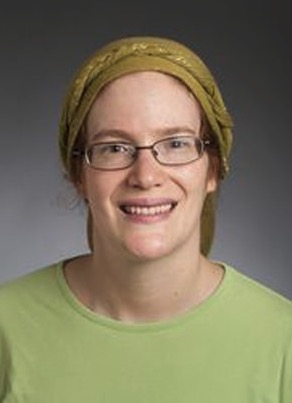 Rachel Mandelbaum合作论文数Department of Physics, Mellon College of Science, Carnegie Mellon University1
 Apostol T. Vassilev合作论文数The working groups where he or she is active appear to be (none)1
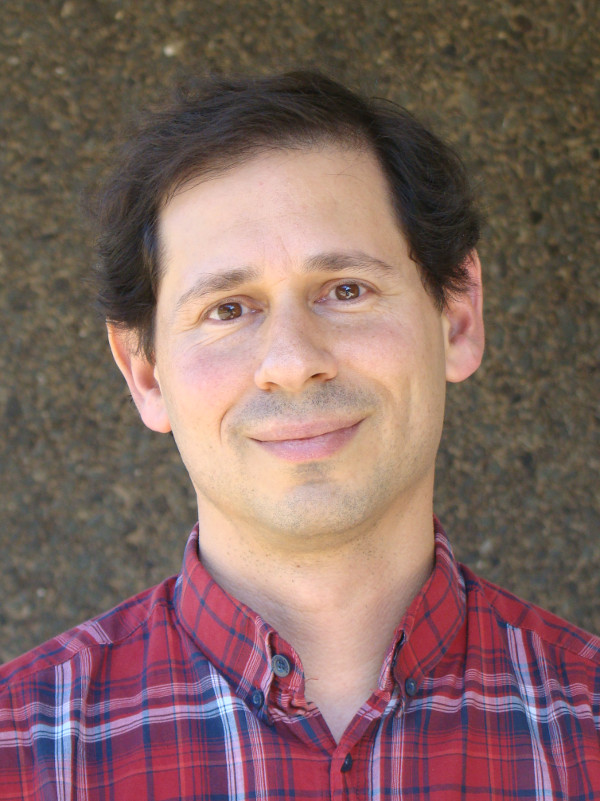 Eric Gawiser合作论文数Department of Physics and Astronomy, School of Arts and Sciences, Rutgers University1Annette Leon合作论文数1




