Mass influxes of pelagic Sargassum spp. in the Wider Caribbean region, since their inception in 2011, continue to present authorities with unprecedented management challenges relating to clean up, disposal and development of possible uses. To address these challenges, there have been many initiatives aimed at enhancing national capacity for the management of sargassum inundations and improving adaptation to influx events, and numerous technical and academic papers published on this topic. However, literature with specific relevance to the Eastern Caribbean Small Island Developing States (EC SIDS) is limited and somewhat fragmented. In this narrative review of the Eastern Caribbean sargassum management literature, together with our own knowledge and experience in this area, we examine the timeline of sargassum management, the current status of management, and highlight research and policy gaps that need to be addressed to improve management. In so doing we document how small island countries within the Eastern Caribbean have transitioned from simply reacting to sargassum influx events as a hazard, towards long-term adaptation and offer our perspectives on future management of sargassum in these SIDS. Throughout the years, the EC SIDS have excelled in knowledge dissemination, networking, research and securing some financial support, however, progress with implementation of management plans and improving institutional capacity has been comparatively slow. Advancing sustainable sargassum management in this region will require stronger governance, improved coordination, and sustained investment from both national governments and regional intergovernmental bodies. The key lessons from this review are likely to be highly relevant to other SIDS across the globe that are facing macroalgal blooms with similar resource and governance constraints.
Governance generally, and appropriate operational institutions specifically, are said to be crucial to increasing human adaptive capacity amidst environmental change. But existing conceptualizations tend to assume a universal model of governance will work for states of all sizes. This article questions this orthodoxy which disregards the lack of clarity on size-relevant institutional design and functioning. We do so by focusing on the role of governance in the adaptive capacity of small island developing states (SIDS) facing a new marine social-ecological threat. We draw on a unique dataset of capacity self-assessments undertaken by thirty-eight key agencies involved in the management of sargassum seaweed influx events in the Eastern Caribbean. We found support for the findings of public administration scholars who show that country size is a contextual factor affecting adaptive capacity beyond the control of managers. The implication is that the ability of SIDS to adapt to new or emergent environmental change is crucially inhibited by size-related governance constraints while solutions that mitigate these effects - informal networks and regional organizations - are not well captured by existing metrics. To ensure assessments of adaptive capacity are contextually appropriate we need a more nuanced appreciation of the impacts of state size on governance outcomes.
Small-scale fisheries (SSF) are prominent features of Caribbean small island developing states. Caribbean fisherfolk leaders and their organisations have long been engaged in crafting and implementing the 2014 Voluntary Guidelines for Securing Sustainable Small-Scale fisheries in the Context of Food Security and Poverty Alleviation (SSF Guidelines). They struggled to similarly engage the Caribbean Community Common Fisheries Policy (CCCFP), also endorsed in 2014. Due to this timing, the CCCFP did not incorporate the SSF Guidelines. This deficiency was addressed from 2017 to 2018 in a regional collaborative policy process to add the SSF Guidelines via a protocol to the CCCFP. The process was led by a regional partnership comprising academic, inter-governmental, non-governmental and fisherfolk organisations. Their efforts resulted in the 2018 Protocol on Securing Sustainable Small-Scale Fisheries for Caribbean Community Fisherfolk and Societies (SSF Protocol) that immediately entered into force. However, since then, there has been little implementation of the SSF Protocol by national fisheries authorities or fisherfolk organisations. The SSF Protocol has not become the call to action that was intended. Using a change management perspective, we consider what could have been done differently to improve engagement for follow-up implementation of the SSF Protocol. We find in this Caribbean case, and argue that globally, there must be active change management in fisheries policy processes to support implementation of the SSF Guidelines. It is necessary, but not sufficient, to provide a roadmap. Without skilled driving all along the way, it is easy for policy change to be mismanaged.
Small Island Developing StatesSmall Island Developing States (SIDS) in the CaribbeanCaribbean contribute minimally to the global emissions of greenhouse gases that are driving climate changeClimate Change. However, CaribbeanCaribbean SIDS are disproportionately affected by climate changeClimate Change, as well as impacts from other natural hazards such as volcanic eruptions and tsunamis. Historically, programs and investments in the CaribbeanCaribbean that respond to natural disasters have focused on reactive solutions that are limited in scope and under-resourced. This article reviews the opportunities to build resilience for CaribbeanCaribbean SIDS to not only “bounce back” from disruptions but also “bounce forward” to make long-lasting improvements to infrastructure and the economy, as well as the wellbeing of island citizens. This chapter critically examines current gaps and barriers to building resilience in Caribbean SIDS, including the need to develop a “resilience culture” among institutions and reduce reliance on external donors for funding. This chapter can assist policymakers in CaribbeanCaribbean SIDS to transition to programs for building resilience that deliver long-term benefits for the economy, social welfare, and environmental stewardship.
Although the Caribbean's Small Island Developing States (SIDS) minimally contribute to global greenhouse gas emissions, they face disproportionate climate risks and are particularly susceptible to systemic economic threats posed by climate change and subsequent increases in climate variability. Historically, strategic programs and investments have sought to develop more robust and adaptive engineered systems to absorb climate threats. However, such initiatives are limited and under-resourced in the SIDS’ context. This article reviews existing climate strategies in the Caribbean and then critically examines current gaps and barriers relating to climate impact knowledge, needs, and implementation. This examination can assist Caribbean SIDS leadership to identify opportunities to transition from a vulnerability-reducing mindset to one of resilience and transformative adaptation to improve long-term economic outlooks, social welfare, and environmental stewardship despite recurring and escalating climate risks.
Organizational leadership is one of the most important roles for both women and men in the fishing industry. Empowerment of fisherfolk organization and strengthening or development of their capacity, especially in relation to leadership, is important to the successful implementation of the 2014 Voluntary Guidelines for Securing Sustainable Small-Scale Fisheries in the Context of Food Security and Poverty Eradication (SSF Guidelines) and the realization of sustainable fisheries and stewardship. Leadership is a challenging and relatively recent fisheries research topic, and gender is poorly documented in Caribbean fisheries. The deficiency of knowledge on leadership and gender was addressed through fisherfolk organization leader assessments to assist in understanding capacities and gaps in Caribbean fisherfolk organization leadership for informing gender and other aspects of overall SSF Guidelines implementation. Our work contributes to a baseline of knowledge on fisher organization leaders in the region. It confirms some already known information on fisherfolk organizations, documenting this and new information. Dimensions such as decision-making, gender, participation, governance, education and assets relevant to fisherfolk leadership are covered in the leadership profile developed. We discuss the implications of this preliminary and exploratory applied research for Caribbean fisheries in the context of the SSF Guidelines, and a way forward.
The notion of a Blue Economy has quickly become globalised. However, its successful implementation will largely require national level ocean governance with sectoral integration across the public sector, the private sector and civil society as the basis for engaging with regional and global levels of governance. The Caribbean region has become increasingly familiar with visualising multi-level marine governance as occurring through polycentric vertical and horizontal networks with linked policy cycles. Regional and sub-regional initiatives are geared towards operationalising these concepts. National intersectoral coordination mechanisms are at the heart of many of these governance arrangements, but currently more in theory than in practice. A Blue Economy approach to environment and development has the potential to be truly transformative in these circumstances. It can tip the levels of interest and effort towards more sustainable governance structures with functions that are well aligned to enabling policies and good practices. Developing both good and effective governance at the national level is fundamental to progress given the mosaic of adjacent maritime jurisdictions in the Caribbean with high mobility of both living marine resources and human stakeholders across boundaries.
Small Island Developing States (SIDS) are considered to be highly vulnerable to climate change. Our ability to identify where adaptation is most needed is constrained by the outputs of vulnerability assessments to date, which typically produce single aggregate rankings, providing limited information on the underlying factors of vulnerability. SIDS have often been banded together to address common sustainability challenges. However, despite their similarities they are not homogenous and differences between the three SIDS groups (Caribbean, Pacific and Atlantic, Indian Ocean, Mediterranean and South China Sea (AIMS)) can be expected. Using a diverse range of relevant indicators and a well-established conceptual framework, we compare the vulnerability of the national fisheries sectors of Caribbean, Pacific, and AIMS SIDS at three levels of decreasing data aggregation: (1) overall vulnerability, (2) across the three components making up overall vulnerability, i.e. exposure, sensitivity, and adaptive capacity, and (3) across groups of correlated indicators making up each of the aforementioned components. The underlying components and subcomponents show distinct differences between the country groups. The vulnerability of the fisheries sector in Pacific SIDS is associated with high sensitivity and low adaptive capacity whereas, in contrast, the vulnerability of Caribbean SIDS is driven by high exposure. Our results highlight that what drives overall vulnerability differs fundamentally among SIDS and that the use of a single aggregate score to assess overall vulnerability masks much of the information on specific underlying factors that is needed to guide adequate adaptation strategies to climate change in SIDS.
The Wider Caribbean is dominated by small-scale fisheries that are critical for supporting coastal community livelihoods and food security. Fisheries for high-value species, such as tuna, conch, lobster and shrimp, also contribute significantly to trade and foreign exchange earnings, and have important links with tourism. The harvest and post-harvest sectors employ hundreds of thousands of people across the region and are especially important as a social safety net in Caribbean SIDS where national economies are particularly vulnerable to external shocks. However, fisheries across the region are poorly recognised for their substantial contributions to social and economic growth and are generally inadequately managed for sustainability, with the result that many fishery stocks are damaged by over-fishing and producing yields below their potential. Furthermore, critical fish habitats are also under threat from multiple stressors including marine pollution, coastal and marine construction and climate change. The prospects for fisheries being an important component of a Blue Economy are good, but only if properly valued, sustainably managed and able to attract new investments in developing the value chain.
The Caribbean is a geopolitically diverse region. It is also ecologically diverse with wide productive continental shelves, coastal lagoons and mangrove forests, coral reefs and associated seagrass beds, and areas of open ocean. As a consequence, most of the industries that are important to the region, such as tourism fisheries, energy, oil and gas and marine transportation, have relevance to the Blue Economy. This chapter provides an overview of the sectoral diversity, as well as the challenges and opportunities that lie ahead as countries of the region seek to take advantage of their considerable ocean space and resources. Blue Economies seems to be an appropriate expression of Caribbean sustainable development given the high ratio of sea space to land in this area. Yet, significant institutional, policy and practical obstacles must be overcome.
For over two decades, the countries, subregional and regional level intergovernmental organizations in the Wider Caribbean Region (WCR) have been engaged in an initiative to implement a regional governance approach for managing the shared living marine resources of the Caribbean Sea and adjacent regions. Given the inherent socio-economic and geopolitical complexity of the region, this approach has been recognized as essential to address the challenges associated with the interconnected nature of shared ecosystem goods and services upon which countries in the region depend. This paper uses a retrospective lens to shed light on the challenges confronting the region and its efforts to overcome them. It is based on the Large Marine Ecosystem Governance Framework developed specifically for the WCR in 2006 and characterized as “learning by doing.” Data were obtained for this study through desktop review of published literature documenting progress over the period 2001–2021 and insights requested from 15 key individual and institutional contributors involved in the initiative. While the lack of financial resources was an underpinning and cross-cutting issue, key constraints identified were categorized as institutional, capacity building, awareness raising, leadership, legal, political, social capital, or socio-cultural. They include national capacity to engage with regional level processes due to a variety of factors including funding, political, and institutional challenges of developing a regional coordination mechanism, engaging the broader ocean community to create the critical mass needed, the difficulty of mainstreaming ocean affairs into high level political and decision-making fora and the scarcity of local, national and regional technical and political champions. This paper advances understanding of the barriers to be overcome in highly complex socio-politically developing regions if regional ocean governance initiatives are to play the essential role identified in the 2030 Sustainable Development Agenda, reaping the sustainable benefits of a blue economy.
In 2011 unprecedented massive influxes of pelagic sargassum seaweed took the Caribbean completely by surprise. The floating sargassum disrupted fishing operations, impacted fish catches, and caused significant hardship to fisherfolk. Stranded sargassum covered beaches and the rotting weed produced pungent smells threatening tourism and invoking difficult and expensive coastal cleanups. Several years later the Caribbean is still struggling to come to terms with how to manage this new and continuing threat, which is also potentially a huge source of raw material for innovation and entrepreneurship opportunities. Communication has been a key element in this struggle to respond and adapt to sargassum. Exchanging information among a broad range of government, civil society, private sector, academic and other stakeholders has been an ongoing challenge. Mobilising knowledge has been key from the start, and science communication remains a cross-cutting and very transdisciplinary process. We examine some of the lessons learned from the communication associated with sargassum influxes since 2011. There is no clear science-policy interface for decision-making on sargassum. Uncertainties surrounding sargassum ecology, oceanography, biochemistry, economics, medical and social science all test the status and communication of science among Caribbean stakeholders. The drivers of information sharing, the credibility of both popular and scientific sources, their reach to diverse audiences through networks, and several other factors combine to determine information flows.
Collective action and the diversity of forms it may take in fisherfolk organizing is complex. Efforts to implement the 2014 Voluntary Guidelines for Securing Sustainable Small-Scale Fisheries in the Context of Food Security and Poverty Eradication (SSF Guidelines) have resulted in increasing global to local attention on fisherfolk organizations, their strengthening and governance. These include women’s roles and participation in them, both as members and as leaders. There is limited literature on women in fisherfolk organizations in Barbados. Women in the flyingfish postharvest sector are conspicuous, but how some work through their fisherfolk organization is undocumented. The Central Fish Processors Association (CFPA) formed to address challenges small fish processors were experiencing in their livelihoods. Through group interviews and document analysis, benefits to the women from participation in this all-woman organization, and the challenges they face, were explored by examining the links between collective action, organization and gender. We document the collective action of these women in preparing to make practical interventions for improvements to their working and domestic lives. It is the first research focused on organized women in the Barbados flyingfish fishery, deviating from the typical focus on men in its harvest sector.
Globally, changes in the intensity, severity and frequency of storms threaten potentially catastrophic impacts on fisheries. These threats present a significant challenge to Small Island Developing States because of the important contribution of fisheries to multiple aspects of coastal communities’ wellbeing, including food security, coastal economies, and social and cultural identities. Supporting the adaptive response of fisheries to storm events is therefore a priority, yet efforts to enhance adaptive capacity are limited by knowledge gaps relating to fishing communities’ needs and behavior. Tropical Storm Erika (2015) and Hurricane Maria (2017) were the most destructive disasters in Dominica since Hurricane David in 1979. We present findings of a scoping visit to Dominica which examined the impacts of these extreme weather events in coastal communities. Using a framework outlining five key domains of adaptive capacity we identify insights related to the diverse experiences of fishing communities, and the individual, household and institutional capacities that have implications for resilience to future shocks. Understanding the experience of Dominica can inform the development of targeted adaptive capacity-building strategies nationally and in other contexts.
This chapter concludes the book by revisiting and summarising some key messages in the hope that readers will be encouraged to explore them further and be guided by them in future thinking and practice. The development of Blue Economies will require recognising the value of all marine ecosystem services and appreciation of the current health of critical marine habitats and fishery resources. It will also need to incorporate the projections of continued climate change and variability. Political decision-makers must guide urgently needed improvements in ocean policy, planning and the coherence of institutional arrangements for more adaptive implementation of the Blue Economy agenda, whilst ensuring equitability and social justice are paramount.
Obtaining reliable socioeconomic information on small-scale fisheries for use in decision-making at multiple levels of governance remains a challenge for conventional approaches to data gathering, analysis, and interpretation on a global scale. Fisheries information is most often derived from biophysical data rather than human or socioeconomic sources. Even where socioeconomic data are used, the complexity of small-scale fisheries as adaptive social-ecological systems (SES) presents further challenges to aligning information, interventions, and objectives. This chapter presents the Global Socioeconomic Monitoring Initiative for Coastal Management (SocMon) methodology for assessing the social-ecological dynamics of small-scale fisheries. It uses case studies from the Caribbean region, where SocMon has been applied for over 10 years, and from Brazil, which recently implemented the methodology. The cases examine how three features of Soc-Moncomprehensive socioeconomic data gathering linked to biophysical parameters, participatory methods that include stakeholders in data collecting and management, and integrated information and knowledge mobilization for decision-making-contribute to better understanding of small-scale fisheries dynamics. The cases outline challenges to implementing SocMon from a fisheries adaptive co-management perspective. The SocMon participatory methodology for monitoring socioeconomic dimensions and dynamics was found suitable for informing adaptive co-management and developing adaptive capacity in small-scale fisheries.
Humans have harvested fish and other marine resources for millennia. So why be concerned today about stewardship and sustainable practices? The answers are not simple; they are changing over time, as climate changes, and perspectives vary. In this chapter, we examine the diverse facets and factors associated with stewardship and sustainable practices in small-scale fisheries, from a transdisciplinary perspective. We look at sustainability and stewardship through different lenses and examine some of the most prominent and promising initiatives applied on different scales, at multiple levels of governance, with diverse stakeholders. It is a tour that includes ecology, socioeconomics, and governance in combination rather than from one viewpoint. Critically important instruments include the Code of Conduct for Responsible Fisheries and the Small-scale Fisheries Guidelines. Topics touch on fishing gear and methods; marine protected areas; livelihoods; illegal, unreported, and unregulated fishing; postharvest and trade; organizations ranging from fisher cooperatives to the Marine Stewardship Council; and the sustainable practices associated with each. Our approach is one of agency in keeping with the central theme of enhancing stewardship to make a difference.
 Robin Mahon合作论文数39Lucia Fanning合作论文数Centre for Resource Management and Environmental Studies (CERMES),, University of the West Indies19
 Robert Stephen Pomeroy (Robert S. Pomeroy)合作论文数Department of Agricultural & Resource Economics, College of Agriculture, Health and Natural Resources, University of Connecticut11
 Shelly-Ann Cox合作论文数9
 Hazel A. Oxenford合作论文数University of the West Indies7Bertha Simmons合作论文数7
 Rodrigo Pereira Medeiros合作论文数7k parsaram合作论文数5
 Terrence Phillips合作论文数5
 Maria Pena合作论文数5Milton Haughton合作论文数4
 Jonas Geldmann合作论文数Globe Institute, Faculty of Health and Medical Sciences, University of Copenhagen4
 Olaf Jensen合作论文数Department of Integrative Biology, College of Letters & Science, University of Wisconsin-Madison4
 John Parks合作论文数USAID Oceans and Fisheries Partnership4
 Xavier Basurto合作论文数Marine Science & Conservation, Nicholas School of the Environment, Duke University4
 Arun Agrawal合作论文数School for Environment and Sustainability, University of Michigan4
 Mateja Nenadovic合作论文数Duke University Marine Laboratory, Duke University;Duke University Marine Laboratory, Duke University4
 Peter Mumby合作论文数School of Biological Sciences, Faculty of Science, The University of Queensland;Centre for Biodiversity and Conservation Science, Faculty of Science, The University of Queensland4
 Ahmadia Gabby N合作论文数Conservation Science Program, World Wildlife Fund-US4
 Louise Glew合作论文数4
 Iris Monnereau合作论文数4
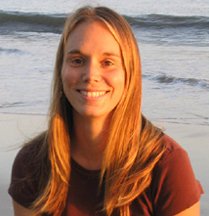 Sarah E. Lester合作论文数Marine Science Institute, University of California4
 Michael B Mascia合作论文数World Wildlife Fund4
 Ian D. Craigie合作论文数4
 Alan T. White合作论文数4
 Helen E. Fox合作论文数Conservation Science Program, World Wildlife Fund-US4
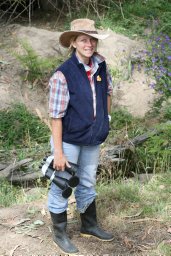 Megan Diane Barnes合作论文数School of Natural Resources and Environmental Management, University of Hawaii at Manoa4
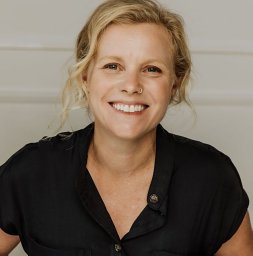 Emily S. Darling合作论文数Department of Biological Sciences;Simon Fraser University;Department of Biological Sciences, Simon Fraser University4neetha selliah合作论文数3Vernel Nicholls合作论文数3Kemraj Parsram合作论文数3Sanya Compton合作论文数3Leonard Nurse合作论文数3
 Rachel A. Turner合作论文数Environment and Sustainability Institute, University of Exeter3
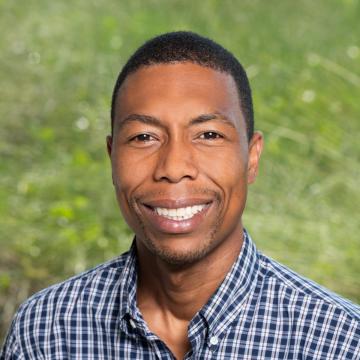 David Antonio Gill合作论文数Division of Marine Science and Conservation, Nicholas School of the Environment, Duke University3Sharon Almerigi合作论文数3
 Anthony Charles合作论文数Sobey School of Business, Sobey University;Department of Environmental Science, School of the Environment, Saint Mary's University3Christopher Corbin合作论文数2travis sinckler合作论文数2katherine blackman合作论文数2
 Stephanie Galaitsi合作论文数2Sherry Heileman合作论文数2
 Christopher L. Cummings合作论文数2
 Jesse M. Keenan合作论文数School of Architecture, Tulane University2
 Trump Benjamin D合作论文数2
 Fikret Berkes合作论文数Natural Resources Institute, Clayton H. Riddell Faculty of Environment, Earth, and Resources, University of Manitoba2Jake C. Rice合作论文数2
 Henri Valles合作论文数Department of Biology;McGill University;Department of Biology, McGill University2
 Peter Clegg合作论文数School of Social Sciences, University of the West of England2




