African migrants living in High-Income Countries are more vulnerable to socio-economic insecurity, as well as higher morbidity and mortality. In their cultural background, these populations, especially the Bamiléké ethnic group from Cameroon, tend to socially value stoutness as a symbol of health and prosperity, potentially obesogenic in urban areas. However, recent studies showed that urbanisation has led to an acculturation process toward the promotion of thinness in young African adults, exposing them to emerging eating disorders. From this perspective, we conducted an original mixed-methods anthropological study, through a repeated qualitative cross-sectional study (two time points in 2011 and 2021) and a quantitative survey (in 2012), in young Cameroonian Bamiléké [18–39 y] migrating to urban Cameroon and France to innovatively explore obesity- and eating disorder-related body weight perceptions. We observed that the qualitative rural–urban tendencies were similar between 2011 and 2021. While rural people tended to value stoutness as a symbol of prosperity, wellbeing and peacefulness, urban people, especially in Paris, tended to value thinness, even extreme thinness, as a symbol of beauty and health and reported a pronounced weight stigma. Quantitatively, we found that Parisian Bamiléké had a desired and ideal body size (DBS and IBS) in the normal-weight category with standard deviations reaching or close to the underweight category, whereas the rural and urban ones had DBS and IBS means between normal-weight and overweight categories. Moreover, we observed a high prevalence of overweight and obesity in both urban groups while the Parisian one tended to underestimate one’s weight and expected to lose it. Public health policies should consider body image as a persisting risk factor for obesity and also a risk factor for emerging eating disorders in young Cameroonian migrants experiencing this dual burden within the urban transition.
Introduction:The African Great Lakes region is experiencing rapid urbanization, which is leading to a nutritional transition and its related chronic diseases. Similar to other Great Lakes countries, the nutritional transition in the Democratic Republic of Congo (DRC) is reflected by increased non-communicable diseases, including morbid obesity. The 2014 Demographic Health Survey (DHS) revealed a rising incidence of overweight among women, ranging from 10% in 2001 to 16% in 2014. Furthermore, over 20% of individuals in several provinces of the DRC are classified as overweight-obese. This study aimed to investigate the prevalence as well as the main biocultural determinants of overweight-obesity among adult women in the DRC. Methods:In a cross-sectional survey, including a representative sample of adult Congolese women living in the South Kivu province, participants were randomly recruited using a two-stage cluster sampling technique after an initial urban-rural stratification. The estimation of the was based on previous results from DHS. Thus, a total of 495 individuals were selected, including 325 urban and 170 rural subjects. Data were collected from households by dietitians who were specifically trained for this survey. Results:In this study population, the prevalence of overweight-obesity was 33.6%, with 7.1% classified as obese. The prevalence of obesity was significantly higher among urban people, while all subjects with obesity were from the older age group (>35 years). Using binomial logistic regressions, it was observed that overweight-obesity had a significant positive correlation with the duration of urban residence, namely, Migrants' status: "New residents" 4.6 [1.9-11.7] p < 0.003, "Long term residents" 8.7 [3.5-21.5] p < 0.001; Socio-economic status (SES): "High" 2.4 [1.1-5.3] p < 0.03, and Stoutness valorization: "Yes" 6.1 [3.4-10.9] p < 0.001. In a pathway analysis conducted based on a structural equation model (SEM), we discovered that urban residence and SES were associated with an increase in overweight-obesity, with a positive correlation with processed food consumption and a negative correlation with physical activity. Age was associated with an increase in overweight-obesity through a negative association with physical activity, whereas stoutness valorization directly increased overweight-obesity. Discussion:In order to properly guide public health policies, public authorities in the DRC should consider the main findings of this original study, which identify how socio-demographic and socio-ecological factors contribute jointly to the rising prevalence of overweight-obesity in the country.
In the context of rapid nutritional transitions in Africa, few studies have analyzed the etiology of obesity by considering the driver pathways that predict body mass index (BMI). The aim of this study is to innovatively identify these driver pathways, including the main sociodemographic and socioecological drivers of BMI. We conducted a rural–urban quantitative study in Cameroon (n = 1106; balanced sex ratio) to explore this issue. We recruited participants and reported several sociodemographic characteristics (e.g., marital status, socioeconomic status (SES), and ethnicity). We then assessed three main socioecological drivers of BMI (body weight perception, dietary intake, and physical activity) and conducted bioanthropometric measurements. We identified several driver pathways predicting BMI. In Cameroon, Bamiléké ethnicity, higher SES, being married, and older age had positive effects on BMI through overweight valorization and/or dietary intake. Accordingly, we found that being Bamiléké, married, and middle-aged, as well as having a higher SES, were factors that constituted at-risk subgroups overexposed to drivers of obesity. As such, this study highlights the necessity of investigating the complex driver pathways that lead to obesity. Therefore, better identification of the subgroups at risk for obesity will help in developing more targeted population health policies in countries where this burden is a major public health issue.
AbstractCentral Africa is experiencing rapid urbanisation, and this situation comes along with changes in food habits and an increased prevalence of obesity and associated health risks. Factors influencing dietary intake among the diverse African populations are not well understood. Our objective was to characterise the dietary intake and their determinants in the two main ethnic groups experiencing nutrition transition in Cameroon, the Bamiléké and the Béti. We sampled Bamiléké (381) and Béti (347) adults living in both rural and urban, collected socio-demographic variables, assessed dietary patterns by using a food portion photographs book to administrate a FFQ and a 24-h dietary recall technique and derived their BMI from measured weight and height. The dietary patterns of Bamiléké people were composed of more energy-dense foods than the Béti people, regardless of the living area. The energy intake (13·8 (sd 4·6)–15·4 (sd 4·8) MJ v. 9·7 (sd 3·5)–11·2 (sd 3·9 MJ) and the obesity (15–29 % v. 5–8 %) were therefore higher in Bamiléké than in Béti, respectively. Multivariable linear regression analyses showed strong associations of both ethnicities (4·02 MJ; P < 0·001), living area (0·21 MJ; P < 0·001) and education (0·59 MJ; P < 0·048) with energy intake, independently of each other and other socio-demographic factors. The ethnicity factor has been characterised as the more important determinant of diet. Our findings provide new insights and perspectives highlighting the importance of anthropological factors when building prevention campaigns against obesity in Central Africa.
Notre collègue Georgius Johannes Adrianus Koppert (fig.1), né à Zoetermeer (Pays-Bas) le 16 avril 1950, vient de disparaître des suites d’une leucémie foudroyante à l’âge de 69 ans. Membre de la Société d’anthropologie de Paris qui lui doit un tribut tout particulier car il s’est longtemps occupé de l’édition de nos Bulletins, il était un des plus brillants spécialistes de l’anthropologie de l’alimentation, au sein de l’équipe fondée par le regretté Igor de Garine. Titulaire d’un doctorat en anthropologie de l’université d’Aix-en-Provence (1988) et d’un doctorat en nutrition humaine et statistiques appliquées de l’université agronomique de Wageningen (Pays Bas, 1980), ainsi que d’une licence en mathématiques appliquées aux sciences sociales de l’université de Pau (1980), il avait développé une expertise toute particulière dans les enquêtes quantitatives de consommation alimentaire, pour lesquelles il avait tout à la fois réalisé un travail de terrain considérable et proposé des méthodes informatiques innovantes. Chercheur contractuel mobile, il avait occupé divers postes en accueil au Centre national de la recherche scientifique, à l’Office de la recherche scientifique et technique outre-mer (actuel Institut de recherche pour le développement), au Cameroun, où il était resté 8 ans, puis au Muséum national d’Histoire naturelle à Brunoy, où il s’était établi. Se lançant dans la consultance internationale à la suite de ses études d’impact de l’oléoduc Tchad-Cameroun, il avait fait de nombreuses missions de par le monde, dans le domaine socioéconomique et agricole, et dans la sphère du développement participatif. Polyglotte et enthousiaste, il laisse le souvenir d’un chercheur créatif, exigeant et atypique, à l’intelligence vive. Ses enquêtes sont probablement les meilleures et les plus précises jamais pratiquées au niveau international. A son épouse Naomi et à ses cinq enfants, nous présentons nos condoléances attristées.
Abstract Background As a consequence of ‘Western’ acculturation, eating disorders and body image disturbances, such as fatness phobia and body dysmorphic disorders towards musculature and body shape, are emerging in Africa, with young people the most affected. It is therefore important to accurately assess perceptions of body shape. However, the existing body image assessment scales lack sufficient accuracy and validity testing to compare body shape perception across different African populations. The purpose of this study was to develop and validate the Body Shape Scale (BOSHAS) to evaluate body shape perceptions related body image disorders in African populations. Methods To develop the BOSHAS, anthropometric measures of 80 Cameroonians and 81 Senegalese (both sexes included; 40.1% females overall) were taken for three body shape criteria: somatotype components, body mass index (BMI) and waist-to-hip ratio. Subjects were selected to cover a wide variability in body shape and were photographed in full face and profile positions. To validate the BOSHAS, the scale was administered twice (2 weeks apart) to 106 participants (aged 31.2 ± 12.6 years) to assess its reliability. In addition, a questionnaire measuring different aspects of body shape (e.g. musculature) was also administered (n = 597; aged 36.7 ± 15.6 years) to assess its convergent validity. Results The BOSHAS includes two sex-specific subscales of 10 photographs each. Most participants were able to repeat their BOSHAS preference order. Test-retest reliability was also consistent in estimating Current Body Shape (CBS), Desired Body Shape and Ideal Body Shape for participants and their partners. CBS was correlated with BMI, and different BOSHAS indices were consistent with declarations obtained by questionnaire. Conclusions The BOSHAS is the first sex-specific scale of real African models photographed in face and profile, including large body shape variability. The validation protocol showed good validity and reliability for evaluating body shape perceptions and dissatisfaction of Africans.
OBJECTIVES:Our purpose was to explore the levels of cardiorespiratory fitness (CRF) and the relationship between CRF, physical activity, and other physical traits in traditional and nontraditional Tarahumara, and Mestizo adolescents from Sierra Tarahumara, Mexico.METHODS:A sample of 87 adolescents aged 16.9 ± 1.2 years (mean ± SD) performed the Margaria step test to quantify CRF. Physical activity was estimated using the International Physical Activity Questionnaire. Blood pressure (BP) and anthropometric measures were taken to estimate body composition and other physical characteristics.RESULTS:Traditional Tarahumara showed higher levels of CRF than nontraditional Tarahumara and Mestizo adolescents (F = 5.5, p = .006). The time allotted to sedentary activities was higher in the Mestizo and nontraditional Tarahumara (χ2 = 10.17, p = .006). In nontraditional Tarahumara, adiposity was associated with CRF reduction (r2 = -.63, p = .00), while vigorous physical activities were positively associated with CRF (r2 = .43, p = .03) and negatively associated with the z-score of body fat (r2 = -.42 p = .03). Finally, CRF was negatively associated with fat percentage (r2 = -.27, p = .00) and systolic blood pressure (r2 = -.09, p = .04) in the Mestizo. In this group, walking activities (r2 = -.25, p = .003) and total physical activity score (r2 = -.11, p = .03) had a positive association with the CRF, while moderate activities had a negative association with the body mass index (r2 = .09, p = .04), and vigorous activities were negatively associated with body weight (r2 = .11, p = .03).CONCLUSIONS:In the sampled nontraditional Tarahumara and Mestizo adolescents, moderate and vigorous physical activities were important factors in determining levels in CRF, fat percentage, and other health parameters.
Like most African countries, Senegal is experiencing a nutritional transition. Global drivers of sedentary behavior and high-calorie dietary intake, together with local anthropological drivers of large body size as a socially valued characteristic could be exposing the population to obesity. This study therefore set out to assess the impact of this sociocultural factor on the nutritional status of Senegalese adults. We set up 14 focus groups (n=84 participants) and a crosssectional quantitative survey (n=313 women; n=284 men) of adults in three different socio-ecological areas in Senegal (rural: n=204; suburban: n=206; urban: n=187). We also assessed perceptions of body weight (Body Size Scale) and weight status (anthropometric measures). Middle-aged and older Senegalese people value excess weight more than younger Senegalese in all the areas studied. Being female, older, living in urban/suburban areas and valuing excess weight/obesity were independently associated with being overweight/obese. A higher socio-economic status was also associated with being overweight/obese. A nutritional transition is under way in Senegal in urban/suburban areas, particularly affecting older urban women, with specific cultural factors contributing to this phenomenon. This suggests a need for local measures targeting women and is accounted for by specific anthropological characteristics in the Senegalese population.
Senegal is experiencing a rising obesity epidemic, due to the nutrition transition occurring in most African countries, and driven by sedentary behaviour and high-calorie dietary intake. In addition, the anthropological local drivers of the social valorization of processed high-calorie food and large body sizes could expose the population to obesity risk. This study aimed to determine the impact of these biocultural factors on the nutritional status of Senegalese adults. A mixed methods approach was used, including qualitative and quantitative studies. Between 2011 and 2013, fourteen focus group discussions ( n =84) and a cross-sectional quantitative survey ( n =313 women; n =284 men) of adults in three different socio-ecological areas of Senegal (rural: n =204; suburban: n =206; urban: n =187) were conducted. Dietary intake (Dietary Diversity Scores), physical activity (International Physical Activity Questionnaire), body weight norms (Body Size Scale), weight and health statuses (anthropometric measures and blood pressure) were measured. Middle-aged and older Senegalese women were found to value overweight/obesity more than younger Senegalese in all regions. In addition, young urban/suburban adults had a tendency for daily snacking whilst urban/suburban adults tended to be less physically active and had higher anthropometric means. A binary logistic regression model showed that being female, older, living in urban/suburban areas and valuing larger body size were independently associated with being overweight/obese, but not high-calorie diet. Univariate analyses showed that lower physical activity and higher socioeconomic status were associated with being overweight/obese. Finally, overweight/obesity, which is low in men, is associated with hypertension in the total sample. The nutrition transition is currently underway in Senegal’s urban/suburban areas, with older women being more affected. Since several specific biocultural factors jointly contribute to this phenomenon, the study’s findings suggest the need for local public health interventions that target women and which account for the anthropological specificities of the Senegalese population.
Native of rural West Cameroon, the Bamiléké population is traditionally predisposed to obesity. Bamiléké who migrated to urban areas additionally experience the nutrition transition. We investigated the biocultural determinants of obesity in Bamiléké who migrated to urban Cameroon (Yaoundé), or urban France (Paris). We conducted qualitative interviews (n = 36; 18 men) and a quantitative survey (n = 627; 266 men) of adults using two-stage sampling strategy, to determine the association of dietary intake, physical activity and body weight norms with obesity of Bamiléké populations in these three socio-ecological areas (rural Cameroon: n = 258; urban Cameroon: n = 319; urban France: n = 50). The Bamiléké valued overweight and traditional energy-dense diets in rural and urban Cameroon. Physical activity levels were lower, consumption of processed energy-dense food was frequent and obesity levels higher in new migrants living in urban Cameroon and France. Female sex, age, duration of residence in urban areas, lower physical activity and valorisation of overweight were independently associated with obesity status. This work argues in favour of local and global health policies that account for the origin and the migration trajectories to prevent obesity in migrants.
Humans and other large-brained hominins have been proposed to increase energy turnover during their evolutionary history. Such increased energy turnover is plausible, given the evolution of energy-rich diets, but requires empirical confirmation. Framing human energetics in a phylogenetic context, our meta-analysis of 17 wild non-human primate species shows that daily metabolizable energy input follows an allometric relationship with body mass where the allometric exponent for mass is 0.75 ± 0.04, close to that reported for daily energy expenditure measured with doubly labelled water in primates. Human populations at subsistence level (n = 6) largely fall within the variation of primate species in the scaling of energy intake and therefore do not consume significantly more energy than predicted for a non-human primate of equivalent mass. By contrast, humans ingest a conspicuously lower mass of food (−64 ± 6%) compared with primates and maintain their energy intake relatively more constantly across the year. We conclude that our hominin hunter–gatherer ancestors did not increase their energy turnover beyond the allometric relationship characterizing all primate species. The reduction in digestive costs due to consumption of a lower mass of high-quality food, as well as stabilization of energy supply, may have been important evolutionary steps enabling encephalization in the absence of significantly raised energy intakes.
Abstract Owing to nutritional transition in Cameroon, one in two adults is overweight and one in five is obese, and 8·1 % of children are overweight and 2·1 % are obese. Given this phenomenon, dietary intake assessment is needed to establish appropriate preventive nutrition-sensitive strategies. Our aim was to develop and test the validity of two food portion photograph books (FPPB) to be used as visual aids for adults and children taking part in a 24-h dietary recall. To design FPPB, interviews and focus group discussions were undertaken with women to obtain consensus on the local categorisation of foods. For each cooked and weighed food, three photographs of the average small, medium and large serving portion sizes were taken, and four intermediary portion sizes were calculated. To validate the FPPB, a sample of adults (361) and children (224) were asked, at meal times, to self-serve a food portion prepared in the household and the portion sizes were weighed; 24 h after the measurement, the same subjects were shown the appropriate FPPB and were asked to indicate the food and the portion they consumed. In adults, of the 821 portions tested, 77 % were accurately estimated, whereas in children 74 % of the 556 portions tested were accurately estimated. For both groups, the small- and medium-sized portions were frequently selected and accurately estimated (>70 %). Our findings suggest that the adult and children’s FPPB can be used in Cameroon to estimate food portion sizes, and thus nutritional intake in the frame of the 24-h dietary recall.
BACKGROUND:Body size scales are a common method for diagnosing body image disturbances and assessing the cultural valorisation of stoutness, a phenomenon that plays a role in the development of overweight, especially among African populations. Traditionally, body size scales present a front view. In this study, we evaluated a complementary model of representing body shape: the side view of body outlines. In particular, we examined the association between the side-view and a set of bio-anthropometric indices in men and women.METHODS:To cover the inter-ethnic variability in the Niger-Congo area, we selected a balanced sex-ratio sample of 80 Cameroonians and 81 Senegalese. Individuals wearing close-fitting clothes were photographed from the front-and side-view, and measured following a bio-anthropometric protocol synthesizing body shape variation: Body Mass Index, percentage body fat, somatotype profile, waist circumference, waist-to-hip ratio, mean blood pressure and glycaemia. The shape of each front and side body outline was extracted and characterised by Normalized Elliptic Fourier Descriptors (NEFD). Finally, we assessed associations between NEFD and bio-anthropometric indices.RESULTS:Variation in the shape of both front and side body outlines was associated with all bio-anthropometrics for at least one sex-population combination. Overall, the side view best captured body shape variation related to changes in almost all bio-anthropometrics in both sexes and populations, with the exceptions of female mesomorphy, male blood pressure and glycaemia (in both sexes). We found that the details of the relationship between bio-anthropometrics and body shape differed between the two male populations, a finding that was reflected in side-views for all criteria, but not front-views.CONCLUSIONS:Variation in body shape assessed by several bio-anthropometrics related to health and nutritional status was larger for side than front body outlines. Integrating side views in body size scales would improve the accuracy of body size assessment and thus, the assessment of behaviours leading to overweight, as well as symptoms of body image disturbances, in Africa and potentially in other populations.
Summary table of the models testing the relationship between bio-anthropometrics and side-views of men body shapes. See Table 1 in main text. (XLSX 6 kb)
 Bruno Simmen合作论文数25
 Marcel Hladik合作论文数24
 EMMANUEL COHEN合作论文数21
 Gilles Boetsch合作论文数CNRS11
 Said-Mohamed Rihlat合作论文数Centre National de la Recherche Scientifique, Paris Diderot University10Marie-Odile Monneuse合作论文数10
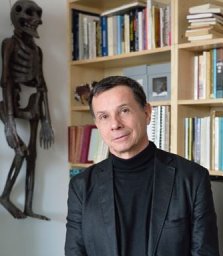 Alain Froment合作论文数Institut de Recherche pour le Développement, Musée de l'Homme10c m hladik合作论文数8Lamine Gueye合作论文数8
 Bernard Jonathan Y合作论文数Centre for Research in Epidemiology and Population Health (CESP),, INSERM8Amadou Ndao合作论文数7André Marez合作论文数7Norbert Amougou合作论文数Sorbonne Paris Cite, Univ Paris Diderot7
 Michelle Holdsworth合作论文数School of Biological Sciences, University of Nottingham Sutton Bonington Campus6Georgius J.A. Koppert合作论文数5Marian Apfelbaum合作论文数5
 Natalie Rigal合作论文数Université de Paris-Ouest-Nanterre-La-Défense (EA 4431)5Amandine Ponty合作论文数4Edmond Dounias合作论文数4
 Ségurel Laure合作论文数Ecoanthropol & Ethnobiol Unit, Univ Paris Diderot4
 Marie-Laure Frelut合作论文数4
 Evelyne Heyer合作论文数4Hélène Pagezy合作论文数3Claude-Marcel Hladik合作论文数3Philippe Gradidge合作论文数3D BARD合作论文数3Priscilla Duboz合作论文数3Chapuis-Lucciani N合作论文数3Françoise Bayart合作论文数3
 Serge Bahuchet合作论文数3Pierre Darlu合作论文数Unité de recherche en Génétique Épidémiologique et structure des populations humaines, INSERM U535, Villejuif, France3
 Enguerran Macia合作论文数Université Cheikh Anta Diop, Université Cheikh Anta Diop UMI3Igor De Garine合作论文数3Renaud Vitalis合作论文数Centre National de la Recherche Scientifique, Institut National pour la Recherche Agronomique3J Fricker合作论文数2
 Olivier Bernard合作论文数2Joëlle Robert-Lamblin合作论文数2
 Serge Cogels合作论文数2Boris Chichlo合作论文数2Hanta Rasamimanana合作论文数2
 Laurent Tarnaud合作论文数2Nicole Chapuis-Lucciani合作论文数2Ml Frelut合作论文数2Ronan Boudigou合作论文数2Frédéric Austerlitz合作论文数University of Paris-Sud2Makamto Sobgui合作论文数2Alexandre Zahariev合作论文数Institut Pluridisciplinaire Hubert Curien, Université Louis Pasteur2
 Almaz Aldashev合作论文数National Academy of Sciences of the Republic of Kyrgyzstan2Tatyana Hegay合作论文数2




