Temporal difference (TD) learning represents a fascinating paradox: It is the prime example of a divergent algorithm that has not vanished after its instability was proven. On the contrary, TD continues to thrive in reinforcement learning (RL), suggesting that it provides significant compensatory benefits. Empirical evidence supports this, as many RL tasks require substantial computational resources, and TD delivers a crucial speed advantage that makes these tasks solvable. However, it is limited to cases where the divergence issues are absent or negligible for unknown reasons. So far, the theoretical foundations behind the speed-up are also unclear. In our work, we address these shortcomings of TD by employing techniques for analyzing iterative schemes developed over the past century. Our analysis reveals that TD possesses a mechanism that enables efficient mapping into the smallest eigenspace—an operation previously thought to necessitate costly matrix inversion. Notably, this effect is independent of the conditioning of the problem, making it particularly well-suited for RL tasks characterized by rapidly increasing condition numbers, e.g. through delayed rewards. Our novel theoretical understanding allows us to develop a scalable algorithm that integrates TD’s speed with the reliable convergence of gradient descent (GD). We additionally validate these improvements through a rigorous mathematical proof in two dimensions, as well as experiments on problems where TD and GD falter, providing valuable insights into the future of optimization techniques in artificial intelligence
Of all the vector fields surrounding the minima of recurrent learning setups, the gradient field with its exploding and vanishing updates appears a poor choice for optimization, offering little beyond efficient computability. We seek to improve this suboptimal practice in the context of physics simulations, where backpropagating feedback through many unrolled time steps is considered crucial to acquiring temporally coherent behavior. The alternative vector field we propose follows from two principles: physics simulators, unlike neural networks, have a balanced gradient flow, and certain modifications to the backpropagation pass leave the positions of the original minima unchanged. As any modification of backpropagation decouples forward and backward pass, the rotation-free character of the gradient field is lost. Therefore, we discuss the negative implications of using such a rotational vector field for optimization and how to counteract them. Our final procedure is easily implementable via a sequence of gradient stopping and component-wise comparison operations, which do not negatively affect scalability. Our experiments on three control problems show that especially as we increase the complexity of each task, the unbalanced updates from the gradient can no longer provide the precise control signals necessary while our method still solves the tasks. Our code can be found at https://github.com/tum-pbs/StableBPTT.
Recent works in deep learning have shown that integrating differentiable physics simulators into the training process can greatly improve the quality of results. Although this combination represents a more complex optimization task than supervised neural network training, the same gradient-based optimizers are typically employed to minimize the loss function. However, the integrated physics solvers have a profound effect on the gradient flow as manipulating scales in magnitude and direction is an inherent property of many physical processes. Consequently, the gradient flow is often highly unbalanced and creates an environment in which existing gradient-based optimizers perform poorly. In this work, we analyze the characteristics of both physical and neural network optimizations to derive a new method that does not suffer from this phenomenon. Our method is based on a half-inversion of the Jacobian and combines principles of both classical network and physics optimizers to solve the combined optimization task. Compared to state-of-the-art neural network optimizers, our method converges more quickly and yields better solutions, which we demonstrate on three complex learning problems involving nonlinear oscillators, the Schroedinger equation and the Poisson problem.
This digital book contains a practical and comprehensive introduction of everything related to deep learning in the context of physical simulations. As much as possible, all topics come with hands-on code examples in the form of Jupyter notebooks to quickly get started. Beyond standard supervised learning from data, we'll look at physical loss constraints, more tightly coupled learning algorithms with differentiable simulations, as well as reinforcement learning and uncertainty modeling. We live in exciting times: these methods have a huge potential to fundamentally change what computer simulations can achieve.
BACKGROUND & AIMS:We studied the reliability of the previously described Ulcerative Colitis Endoscopic Index of Severity (UCEIS) and validated it with an independent cohort of investigators.METHODS:We created a new library of 57 videos of flexible sigmoidoscopy and stratified them based on disease severity. Twenty-five investigators were each randomly assigned to assess 28 videos (which included 4 duplicates to assess intraobserver reliability). Investigators were blinded to clinical details except for 2 of 4 duplicated videos (to assess the impact of knowledge of symptoms on assessment). Three descriptors ("vascular pattern", "bleeding", and "erosions and ulcers") comprising the UCEIS were scored with a visual analogue scale (VAS) to assess overall severity. Intrainvestigator and interinvestigator agreement was characterized by κ statistical analysis; reliability ratios were used to compare VAS and UCEIS scores.RESULTS:There was a high level of correlation between UCEIS scores and overall assessment of severity (correlation coefficient, 0.93). Internal consistency (Cronbach α analysis) was 0.86. Intrainvestigator and interinvestigator reliability ratios for UCEIS scores were 0.96 and 0.88, respectively. Intrainvestigator agreement in determination of the UCEIS score was good (κ = 0.72), with individual descriptors ranging from a κ of 0.47 (for bleeding) to 0.87 (for vascular pattern). Interinvestigator agreement in determination of UCEIS scores was moderate (κ = 0.50), with descriptors ranging from a κ of 0.48 (for bleeding) to 0.54 (for vascular pattern). Intrainvestigator variability in determining UCEIS scores did not change appreciably when a video was presented with clinical details.CONCLUSIONS:The UCEIS and its components show satisfactory intrainvestigator and interinvestigator reliability. Among investigators, the UCEIS accounted for a median of 86% of the variability in evaluation of overall severity on the VAS when assessing the endoscopic severity of UC and was unaffected by knowledge of clinical details.
 Nils Thuerey合作论文数School of Computation, Information and Technology, Technische Universitat Munchen4
 Philipp Holl合作论文数School of Computation, Information and Technology, Technical University of Munich2
 Luca Guastoni合作论文数1Piotr Krzeski合作论文数1Felix Trost合作论文数1
 Stephen B Hanauer合作论文数Division of Gastroenterology and Hepatology, Department of Medicine, Feinberg School of Medicine, Northwestern University1
 Jean-Frederic Colombel合作论文数Icahn School of Medicine at Mount Sinai1
 Brian Feagan合作论文数Division of Gastroenterology, Schulich School of Medicine & Dentistry, Western University;Robarts Research Institute, Western University;Alimentiv Inc;London Health Sciences Centre1
 Gary R. Lichtenstein合作论文数Department of Medicine, Perelman School of Medicine, University of Pennsylvania;Hospital of the University of Pennsylvania1Bernhardt Christian A合作论文数1Schnell Dan合作论文数1
 Simon Travis合作论文数Nuffield Department of Medicine, University of Oxford;Linacre College, University of Oxford1
 Maria Abreu合作论文数Department of Medicine, Miller School of Medicine, University of Miami1
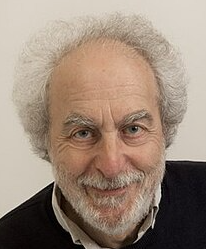 Douglas G Altman合作论文数Centre for Statistics in Medicine, University of Oxford1
 Walter Reinisch合作论文数Medical University of Vienna1
 Philippe Marteau合作论文数Gastroenterology Department Lariboisiere Hospital1
 William Sandborn合作论文数Mirador Therapeutics1
 Bruce E Sands合作论文数Feinstein IBD Clinical Center, Icahn School of Medicine at Mount Sinai;The Mount Sinai Hospital, Icahn School of Medicine at Mount Sinai1
 Bruce Yacyshyn合作论文数Department of Medicine, University of Alberta1Jean-Yves Mary合作论文数1




