We present a novel system for real-time tracking of facial expressions using egocentric views captured from a set of infrared cameras embedded in a virtual reality (VR) headset. Our technology facilitates any user to accurately drive the facial expressions of virtual characters in a non-intrusive manner and without the need of a lengthy calibration step. At the core of our system is a distillation based approach to train a machine learning model on heterogeneous data and labels coming form multiple sources, e.g. synthetic and real images. As part of our dataset, we collected 18k diverse subjects using a lightweight capture setup consisting of a mobile phone and a custom VR headset with extra cameras. To process this data, we developed a robust differentiable rendering pipeline enabling us to automatically extract facial expression labels. Our system opens up new avenues for communication and expression in virtual environments, with applications in video conferencing, gaming, entertainment, and remote collaboration.
Today's Mixed Reality head-mounted displays track the user's head pose in world space as well as the user's hands for interaction in both Augmented Reality and Virtual Reality scenarios. While this is adequate to support user input, it unfortunately limits users' virtual representations to just their upper bodies. Current systems thus resort to floating avatars, whose limitation is particularly evident in collaborative settings. To estimate full-body poses from the sparse input sources, prior work has incorporated additional trackers and sensors at the pelvis or lower body, which increases setup complexity and limits practical application in mobile settings. In this paper, we present AvatarPoser, the first learning-based method that predicts full-body poses in world coordinates using only motion input from the user's head and hands. Our method builds on a Transformer encoder to extract deep features from the input signals and decouples global motion from the learned local joint orientations to guide pose estimation. To obtain accurate full-body motions that resemble motion capture animations, we refine the arm joints' positions using an optimization routine with inverse kinematics to match the original tracking input. In our evaluation, AvatarPoser achieved new state-of-the-art results in evaluations on large motion capture datasets (AMASS). At the same time, our method's inference speed supports real-time operation, providing a practical interface to support holistic avatar control and representation for Metaverse applications.
Recently, technologies such as face detection, facial landmark localisation and face recognition and verification have matured enough to provide effective and efficient solutions for imagery captured under arbitrary conditions (referred to as "in-the-wild"). This is partially attributed to the fact that comprehensive "in-the-wild" benchmarks have been developed for face detection, landmark localisation and recognition/verification. A very important technology that has not been thoroughly evaluated yet is deformable face tracking "in-the-wild". Until now, the performance has mainly been assessed qualitatively by visually assessing the result of a deformable face tracking technology on short videos. In this paper, we perform the first, to the best of our knowledge, thorough evaluation of state-of-the-art deformable face tracking pipelines using the recently introduced 300 VW benchmark. We evaluate many different architectures focusing mainly on the task of on-line deformable face tracking. In particular, we compare the following general strategies: (a) generic face detection plus generic facial landmark localisation, (b) generic model free tracking plus generic facial landmark localisation, as well as (c) hybrid approaches using state-of-the-art face detection, model free tracking and facial landmark localisation technologies. Our evaluation reveals future avenues for further research on the topic.
In this work we pursue a data-driven approach to the problem of estimating surface normals from a single intensity image, focusing in particular on human faces. We introduce new methods to exploit the currently available facial databases for dataset construction and tailor a deep convolutional neural network to the task of estimating facial surface normals in-the-wild. We train a fully convolutional network that can accurately recover facial normals from images including a challenging variety of expressions and facial poses. We compare against state-of-the-art face Shape-from-Shading and 3D reconstruction techniques and show that the proposed network can recover substantially more accurate and realistic normals. Furthermore, in contrast to other existing face-specific surface recovery methods, we do not require the solving of an explicit alignment step due to the fully convolutional nature of our network.
Statistical methods are of paramount importance in discovering the modes of variation in visual data. The Principal Component Analysis (PCA) is probably the most prominent method for extracting a single mode of variation in the data. However, in practice, several factors contribute to the appearance of visual objects including pose, illumination, and deformation, to mention a few. To extract these modes of variations from visual data, several supervised methods, such as the TensorFaces relying on multilinear (tensor) decomposition have been developed. The main drawbacks of such methods is that they require both labels regarding the modes of variations and the same number of samples under all modes of variations (e.g., the same face under different expressions, poses etc.). Therefore, their applicability is limited to well-organised data, usually captured in well-controlled conditions. In this paper, we propose a novel general multilinear matrix decomposition method that discovers the multilinear structure of possibly incomplete sets of visual data in unsupervised setting (i.e., without the presence of labels). We also propose extensions of the method with sparsity and low-rank constraints in order to handle noisy data, captured in unconstrained conditions. Besides that, a graph-regularised variant of the method is also developed in order to exploit available geometric or label information for some modes of variations. We demonstrate the applicability of the proposed method in several computer vision tasks, including Shape from Shading (SfS) (in the wild and with occlusion removal), expression transfer, and estimation of surface normals from images captured in the wild.
In this paper we propose to learn a mapping from image pixels into a dense template grid through a fully convolutional network. We formulate this task as a regression problem and train our network by leveraging upon manually annotated facial landmarks "in-the-wild". We use such landmarks to establish a dense correspondence field between a three-dimensional object template and the input image, which then serves as the ground-truth for training our regression system. We show that we can combine ideas from semantic segmentation with regression networks, yielding a highly-accurate quantized regression architecture. Our system, called DenseReg, allows us to estimate dense image-to-template correspondences in a fully convolutional manner. As such our network can provide useful correspondence information as a stand-alone system, while when used as an initialization for Statistical Deformable Models we obtain landmark localization results that largely outperform the current state-of-the-art on the challenging 300W benchmark. We thoroughly evaluate our method on a host of facial analysis tasks, and demonstrate its use for other correspondence estimation tasks, such as the human body and the human ear. DenseReg code is made available at http://alpguler.com/DenseReg.html along with supplementary materials.
Statistical decomposition methods are of paramount importance in discovering the modes of variations of visual data. Probably the most prominent linear decomposition method is the Principal Component Analysis (PCA), which discovers a single mode of variation in the data. However, in practice, visual data exhibit several modes of variations. For instance, the appearance of faces varies in identity, expression, pose etc. To extract these modes of variations from visual data, several supervised methods, such as the TensorFaces, that rely on multilinear (tensor) decomposition (e.g., Higher Order SVD) have been developed. The main drawbacks of such methods is that they require both labels regarding the modes of variations and the same number of samples under all modes of variations (e.g., the same face under different expressions, poses etc.). Therefore, their applicability is limited to well-organised data, usually captured in well-controlled conditions. In this paper, we propose the first general multilinear method, to the best of our knowledge, that discovers the multilinear structure of visual data in unsupervised setting. That is, without the presence of labels. We demonstrate the applicability of the proposed method in two applications, namely Shape from Shading (SfS) and expression transfer.
The Menpo Project [1] is a BSD-licensed set of tools and software designed to provide an end-to-end pipeline for collection and annotation of image and 3D mesh data. In particular, the Menpo Project provides tools for annotating images and meshes with a sparse set of fiducial markers that we refer to as landmarks. For example, Figure 1 shows an example of a face image that has been annotated with 68 2D landmarks. These landmarks are useful in a variety of areas in Computer Vision and Machine Learning including object detection, deformable modelling and tracking. The Menpo Project aims to enable researchers, practitioners and students to easily annotate new data sources and to investigate existing datasets. Of most interest to the Computer Vision is the fact that The Menpo Project contains completely open source implementations of a number of state-of-the-art algorithms for face detection and deformable model building. In the Menpo Project, we are actively developing and contributing to the state-of-the-art in deformable modelling [2], [3], [4], [5]. Characteristic examples of widely used state-of-the-art deformable model algorithms are Active Appearance Models [6],[7], Constrained Local Models [8], [9] and Supervised Descent Method [10]. However, there is still a noteworthy lack of high quality open source software in this area. Most existing packages are encrypted, compiled, non-maintained, partly documented, badly structured or difficult to modify. This makes them unsuitable for adoption in cutting edge scientific research. Consequently, research becomes even more difficult since performing a fair comparison between existing methods is, in most cases, infeasible. For this reason, we believe the Menpo Project represents an important contribution towards open science in the area of deformable modelling. We also believe it is important for deformable modelling to move beyond the established area of facial annotations and to extend to a wide variety of deformable object classes. We hope Menpo can accelerate this progress by providing all of our tools completely free and permissively licensed.
The two predominant families of deformable models for the task of face alignment are: (i) discriminative cascaded regression models, and (ii) generative models optimised with Gauss-Newton. Although these approaches have been found to work well in practise, they each suffer from convergence issues. Cascaded regression has no theoretical guarantee of convergence to a local minimum and thus may fail to recover the fine details of the object. Gauss-Newton optimisation is not robust to initialisations that are far from the optimal solution. In this paper, we propose the first, to the best of our knowledge, attempt to combine the best of these two worlds under a unified model and report state-of-the-art performance on the most recent facial benchmark challenge.
Image registration under challenging realistic conditions is a very important area of research. In this paper, we focus on algorithms that seek to densely align two volumetric images according to a global similarity measure. Despite intensive research in this area, there is still a need for similarity measures that are robust to outliers common to many different types of images. For example, medical image data is often corrupted by intensity inhomogeneities and may contain outliers in the form of pathologies. In this paper we propose a global similarity measure that is robust to both intensity inhomogeneities and outliers without requiring prior knowledge of the type of outliers. We combine the normalised gradients of images with the cosine function and show that it is theoretically robust against a very general class of outliers. Experimentally, we verify the robustness of our measures within two distinct algorithms. Firstly, we embed our similarity measures within a proof-of-concept extension of the Lucas–Kanade algorithm for volumetric data. Finally, we embed our measures within a popular non-rigid alignment framework based on free-form deformations and show it to be robust against both simulated tumours and intensity inhomogeneities.
Cascaded regression has recently become the method of choice for solving non-linear least squares problems such as deformable image alignment. Given a sizeable training set, cascaded regression learns a set of generic rules that are sequentially applied to minimise the least squares problem. Despite the success of cascaded regression for problems such as face alignment and head pose estimation, there are several shortcomings arising in the strategies proposed thus far. Specifically, (a) the regressors are learnt independently, (b) the descent directions may cancel one another out and (c) handcrafted features (e.g., HoGs, SIFT etc.) are mainly used to drive the cascade, which may be sub-optimal for the task at hand. In this paper, we propose a combined and jointly trained convolutional recurrent neural network architecture that allows the training of an end-to-end to system that attempts to alleviate the aforementioned drawbacks. The recurrent module facilitates the joint optimisation of the regressors by assuming the cascades form a nonlinear dynamical system, in effect fully utilising the information between all cascade levels by introducing a memory unit that shares information across all levels. The convolutional module allows the network to extract features that are specialised for the task at hand and are experimentally shown to outperform hand-crafted features. We show that the application of the proposed architecture for the problem of face alignment results in a strong improvement over the current state-of-the-art.
In this paper we propose a method to automatically recover a class specific low dimensional spherical harmonic basis from a set of in-the-wild facial images. We combine existing techniques for uncalibrated photometric stereo and low rank matrix decompositions in order to robustly recover a combined model of shape and identity. We build this basis without aid from a 3D model and show how it can be combined with recent efficient sparse facial feature localisation techniques to recover dense 3D facial shape. Unlike previous works in the area, our method is very efficient and is an order of magnitude faster to train, taking only a few minutes to build a model with over 2000 images. Furthermore, it can be used for real-time recovery of facial shape.
In this paper, we propose a method for the robust and efficient computation of multi-frame optical flow in an expressive sequence of facial images. We formulate a novel energy minimisation problem for establishing dense correspondences between a neutral template and every frame of a sequence. We exploit the highly correlated nature of human expressions by representing dense facial motion using a deformation basis. Furthermore, we exploit the even higher correlation between deformations in a given input sequence by imposing a low-rank prior on the coefficients of the deformation basis, yielding temporally consistent optical flow. Our proposed model-based formulation, in conjunction with the inverse compositional strategy and low-rank matrix optimisation that we adopt, leads to a highly efficient algorithm for calculating facial flow. As experimental evaluation, we show quantitative experiments on a challenging novel benchmark of face sequences, with dense ground truth optical flow provided by motion capture data. We also provide qualitative results on a real sequence displaying fast motion and occlusions. Extensive quantitative and qualitative comparisons demonstrate that the proposed method outperforms state-of-the-art optical flow and dense non-rigid registration techniques, whilst running an order of magnitude faster.
Generic face detection and facial landmark localization in static imagery are among the most mature and well-studied problems in machine learning and computer vision. Currently, the top performing face detectors achieve a true positive rate of around 75-80% whilst maintaining low false positive rates. Furthermore, the top performing facial landmark localization algorithms obtain low point-to-point errors for more than 70% of commonly benchmarked images captured under unconstrained conditions. The task of facial landmark tracking in videos, however, has attracted much less attention. Generally, a tracking-by-detection framework is applied, where face detection and landmark localization are employed in every frame in order to avoid drifting. Thus, this solution is equivalent to landmark detection in static imagery. Empirically, a straightforward application of such a framework cannot achieve higher performance, on average, than the one reported for static imagery. In this paper, we show for the first time, to the best of our knowledge, that the results of generic face detection and landmark localization can be used to recursively train powerful and accurate person-specific face detectors and landmark localization methods for offline deformable tracking. The proposed pipeline can track landmarks in very challenging long-term sequences captured under arbitrary conditions. The pipeline was used as a semi-automatic tool to annotate the majority of the videos of the 300-VW Challenge.
The Menpo Project, hosted at http://www.menpo.io, is a BSD-licensed software platform providing a complete and comprehensive solution for annotating, building, fitting and evaluating deformable visual models from image data. Menpo is a powerful and flexible cross-platform framework written in Python that works on Linux, OS X and Windows. Menpo has been designed to allow for easy adaptation of Lucas-Kanade (LK) parametric image alignment techniques, and goes a step further in providing all the necessary tools for building and fitting state-of-the-art deformable models such as Active Appearance Models (AAMs), Constrained Local Models (CLMs) and regression-based methods (such as the Supervised Descent Method (SDM)). These methods are extensively used for facial point localisation although they can be applied to many other deformable objects. Menpo makes it easy to understand and evaluate these complex algorithms, providing tools for visualisation, analysis, and performance assessment. A key challenge in building deformable models is data annotation; Menpo expedites this process by providing a simple web-based annotation tool hosted at http://www.landmarker.io. The Menpo Project is thoroughly documented and provides extensive examples for all of its features. We believe the project is ideal for researchers, practitioners and students alike.
We propose a kernel-based framework for computing components from a set of surface normals. This framework allows us to easily demonstrate that component analysis can be performed directly upon normals. We link previously proposed mapping functions, the azimuthal equidistant projection (AEP) and principal geodesic analysis (PGA), to our kernel-based framework. We also propose a new mapping function based upon the cosine distance between normals. We demonstrate the robustness of our proposed kernel when trained with noisy training sets. We also compare our kernels within an existing shape-from-shading (SFS) algorithm. Our spherical representation of normals, when combined with the robust properties of cosine kernel, produces a very robust subspace analysis technique. In particular, our results within SFS show a substantial qualitative and quantitative improvement over existing techniques.
 Stefanos Zafeiriou合作论文数Department of Computing, Faculty of Engineering, Imperial College London14
 Epameinondas Antonakos合作论文数Amazon7
 George Trigeorgis合作论文数Citadel LLC4
 Yannis Panagakis合作论文数National & Kapodistrian University of Athens4
 Larissa Laich合作论文数2
 James Booth合作论文数Dept Comp, Univ London Imperial2
 Grigorios Chrysos合作论文数Department of Electrical and Computer Engineering, College of Engineering, University of Wisconsin-Madison2
 Mengjiao Wang合作论文数Tsinghua Univ, Tsinghua Univ.2
 Joan Alabort I Medina合作论文数2
 Iasonas Kokkinos合作论文数Department of Computer Science, Engineering Faculty, University College London;Snap Inc.2Julio Delgado Mangas合作论文数1Jaebong Lee合作论文数1Ajinkya Deogade合作论文数1Alexander Sjoholm合作论文数1Steven Song合作论文数1Kunpeng Li合作论文数1Luming Ma合作论文数1Winnie Lin合作论文数1Wenjing Zhang合作论文数1Haroun Habeeb合作论文数1Matthew Cioffi合作论文数1Huajian Qiu合作论文数1
 Paul Streli合作论文数Department of Computer Science, Eidgenössische Technische Hochschule Zürich1
 Andreas Fender合作论文数Sensing, Interaction and Perception Lab, ETH Zurich1Pavel Pidlypenskyi合作论文数Google Inc, Mountain View, CA 94043 USA1Martin Prazák合作论文数1
 Tong Xiao合作论文数Yutori1
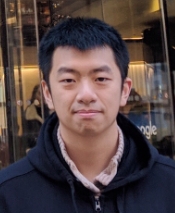 Yuxiang Zhou合作论文数Google DeepMind1
 Jiaxi Jiang (蒋佳熹)合作论文数Sensing, Interaction & Perception Lab, Department of Computer Science, ETH Zurich1
 Rıza Alp Güler合作论文数Snap Inc1
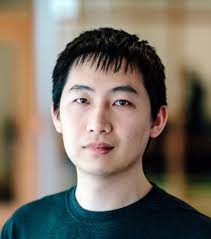 Peizhao Zhang (张培钊)合作论文数Meta Reality Labs, Facebook1
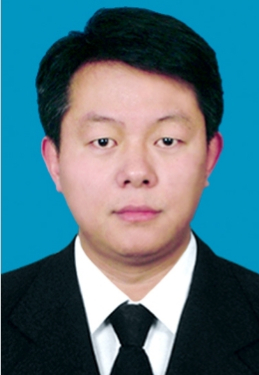 Qiang Zhang (张强)合作论文数School of Computer Science and Technology, Dalian University of Technology1
 Daniel Rueckert合作论文数Department of Computing, Imperial College London;Centre for Cardiac Engineering, Imperial College London;School of Computation, Information and Technology, Technical University of Munich;School of Medicine and Health, Technical University of Munich1
 Christian Ledig合作论文数Fakultät Wirtschaftsinformatik und Angewandte Informatik, Universität Bamberg1
 Sofien Bouaziz合作论文数Meta1
 Christian Holz合作论文数Department of Computer Science, Eidgenössische Technische Hochschule Zürich;Sensing, Interaction & Perception Lab, Eidgenössische Technische Hochschule Zürich1
 Akshay Asthana合作论文数College of Engineering, Computing and Cybernetics, The Australian National University;Seeing Machines Inc.1
 Georgios (Yorgos) Tzimiropoulos合作论文数Queen Mary University of London;Samsung AI Center1
 Chengjiang Long (龙成江)合作论文数Meta Reality Labs1
 Mihalis A. Nicolaou合作论文数Computation-Based Science and Technology Research Center, The Cyprus Institute;Department of Computing, Imperial College London1Amaury Aubel合作论文数1
 Anastasios (Tassos) Roussos合作论文数Computational Vision & Robotics Laboratory, Institute of Computer Science, Foundation for Research and Technology - Hellas1
 Stefan Pszczolkowski合作论文数Pontificia Universidad Catolica de Chile1




