Background:Decreased readmission rates are largely seen as an indicator of effective care and improved resource management. The case management team at St. Petersburg General Hospital in St. Petersburg, Florida identified chronic obstructive pulmonary disease (COPD) exacerbation, pneumonia, and sepsis as 3 of the leading diagnoses on index admission that later led to 30-day readmissions. By examining patients with these 3 diagnoses on index admission, we decided to investigate potential readmission risk factors including patient age, sex, race, body mass index (BMI), length of stay during the index admission, insurance type during index admission, discharge placement after index admission, coronary artery disease, heart failure, and type 2 diabetes.Methods:We conducted a retrospective study with data from 4180 patients at St. Petersburg General Hospital from 2016 through 2019 with index admission diagnoses of COPD exacerbation, pneumonia, and sepsis. A univariate analysis was conducted on patient sex, race, BMI, length of stay during the index admission, health insurance type during the index admission, discharge placement after the index admission, presence of coronary artery disease, presence of heart failure, and presence of type 2 diabetes. Subsequently, a bivariate analysis was run on these variables in relation to 30-day readmissions. Then a multivariable analysis was completed using binary logistic regression and pairwise analysis to determine the significance between variables within the categories of discharge disposition and insurance type.Results:Of the 4180 patients included in this study, 926 (22.2%) were readmitted within 30 days of discharge. In the bivariate analysis race, BMI, mean length of stay during the index admission, coronary artery disease, heart failure, and type 2 diabetes were not significantly associated with readmission. The bivariate analysis revealed that patients discharged to skilled nursing facilities had the highest readmission rates (28%), followed by home care (26%) (P = .001). Medicaid patients (24%) and Medicare patients (23%) demonstrated higher read-mission rates than those with private insurance (17%) (P = .001). Readmitted patients were slightly younger (62.14 vs. 63.69 years; P = .02) in the bivariate analysis. However, in the multi-variable analysis, only patients with type 2 diabetes and patients with non-private insurance were associated with increased readmission rates. Pairwise analysis of the variables within insurance and discharge disposition categories demonstrates decreased readmission for individuals with Private/Other when compared to other insurance subtypes and decreased readmission for Other when compared to discharge disposition subtypes.Conclusion:Our data demonstrate that hospital readmissions are associated with a diagnosis of type 2 diabetes and having a non-private insurance status. Our findings lead us to suggest further investigation into changes in hospital policies and procedures for these groups that will aim to decrease readmission rates in the future.
Using the GAMBIT global fitting framework, we constrain the MSSM with an eV-scale gravitino as the lightest supersymmetric particle, and the six electroweakinos (neutralinos and charginos) as the only other light new states. We combine 15 ATLAS and 12 CMS searches at 13 TeV, along with a large collection of ATLAS and CMS measurements of Standard Model signatures. This model, which we refer to as the G̃-EWMSSM, exhibits quite varied collider phenomenology due to its many permitted electroweakino production processes and decay modes. Characteristic G̃-EWMSSM signal events have two or more Standard Model bosons and missing energy due to the escaping gravitinos. While much of the G̃-EWMSSM parameter space is excluded, we find several viable parameter regions that predict phenomenologically rich scenarios with multiple neutralinos and charginos within the kinematic reach of the LHC during Run 3, or the High Luminosity LHC. In particular, we identify scenarios with Higgsino-dominated electroweakinos as light as 140 GeV that are consistent with our combined set of collider searches and measurements. The full set of G̃-EWMSSM parameter samples and GAMBIT input files generated for this work is available via Zenodo.
Physical theories that depend on many parameters or are tested against data from many different experiments pose unique challenges to statistical inference. Many models in particle physics, astrophysics and cosmology fall into one or both of these categories. These issues are often sidestepped with statistically unsound ad hoc methods, involving intersection of parameter intervals estimated by multiple experiments, and random or grid sampling of model parameters. Whilst these methods are easy to apply, they exhibit pathologies even in low-dimensional parameter spaces, and quickly become problematic to use and interpret in higher dimensions. In this article we give clear guidance for going beyond these procedures, suggesting where possible simple methods for performing statistically sound inference, and recommendations of readily-available software tools and standards that can assist in doing so. Our aim is to provide any physicists lacking comprehensive statistical training with recommendations for reaching correct scientific conclusions, with only a modest increase in analysis burden. Our examples can be reproduced with the code publicly available at Zenodo.
Supplementary Data Cosmological constraints on decaying axion-like particles: a global analysis This record contains the supplemetary data for the GAMBIT article, "Cosmological constraints on decaying axion-like particles: a global analysis".
We determine the upper limit on the mass of the lightest neutrino from the most robust recent cosmological and terrestrial data. Marginalizing over possible effective relativistic degrees of freedom at early times ($N_\mathrm{eff}$) and assuming normal mass ordering, the mass of the lightest neutrino is less than 0.037 eV at 95% confidence; with inverted ordering, the bound is 0.042 eV. These results improve upon the strength and robustness of other recent limits and constrain the mass of the lightest neutrino to be barely larger than the largest mass splitting. We show the impacts of realistic mass models, and different sources of $N_\mathrm{eff}$.
We assess the status of a wide class of WIMP dark matter (DM) models in light of the latest experimental results using the global fitting framework GAMBIT. We perform a global analysis of effective field theory (EFT) operators describing the interactions between a gauge-singlet Dirac fermion and the Standard Model quarks, the gluons and the photon. In this bottom-up approach, we simultaneously vary the coefficients of 14 such operators up to dimension 7, along with the DM mass, the scale of new physics and several nuisance parameters. Our likelihood functions include the latest data from Planck , direct and indirect detection experiments, and the LHC. For DM masses below 100 GeV, we find that it is impossible to satisfy all constraints simultaneously while maintaining EFT validity at LHC energies. For new physics scales around 1 TeV, our results are influenced by several small excesses in the LHC data and depend on the prescription that we adopt to ensure EFT validity. Furthermore, we find large regions of viable parameter space where the EFT is valid and the relic density can be reproduced, implying that WIMPs can still account for the DM of the universe while being consistent with the latest data.
We introduce CosmoBit, a module within the open-source GAMBIT software framework for exploring connections between cosmology and particle physics with joint global fits. CosmoBit provides a flexible framework for studying various scenarios beyond ΛCDM, such as models of inflation, modifications of the effective number of relativistic degrees of freedom, exotic energy injection from annihilating or decaying dark matter, and variations of the properties of elementary particles such as neutrino masses and the lifetime of the neutron. Many observables and likelihoods in CosmoBit are computed via interfaces to AlterBBN, CLASS, DarkAges, MontePython, MultiModeCode, and plc. This makes it possible to apply a wide range of constraints from large-scale structure, Type Ia supernovae, Big Bang Nucleosynthesis and the cosmic microwave background. Parameter scans can be performed using the many different statistical sampling algorithms available within the GAMBIT framework, and results can be combined with calculations from other GAMBIT modules focused on particle physics and dark matter. We include extensive validation plots and a first application to scenarios with non-standard relativistic degrees of freedom and neutrino temperature, showing that the corresponding constraint on the sum of neutrino masses is much weaker than in the standard scenario.
We devise a new user-friendly tool interfaced with the Boltzmann code CLASS to deal with any kind of exotic electromagnetic energy injection in the universe and its impact on anisotropies of the Cosmic Microwave Background. It makes use of the results from standard electromagnetic cascade calculations develop in the context of WIMP annihilation, generalized to incorporate any injection history. We first validate it on a specific WIMP scenario, the Higgs Portal model, confirming that the standard effective on-the-spot treatment is accurate enough. We then analyze the more involved example of evaporating Primordial Black Holes (PBHs) with masses in the range [3×10^13,5×10^16]g, for which the standard approximations break down. We derive robust CMB bounds on the relic density of evaporating PBHs, ruling out the possibility for PBHs with a monochromatic distribution of masses in the range [3×10^13,2.5×10^16]g to represent all of the Dark Matter in our Universe. Remarkably, we confirm with an accurate study that the CMB bounds are several orders of magnitude stronger than those from the galactic gamma-ray background in the range [3×10^13,3×10^14]g. A future CMB experiment like CORE+, or an experiment attempting at measuring the 21 cm signal from the Dark Ages could greatly improve the sensitivity to these models.
We study the cosmological evolution and phenomenological properties of scalar bosons in the keV to MeV range that have a tiny mixing with the Standard Model Higgs boson. The mixing determines both the abundance of light scalars produced via the freeze-in mechanism and their lifetime. Intriguingly, the parameters required for such scalars to account for all of the dark matter in the present Universe generically predict lifetimes comparable to the sensitivity of present and future indirect detection experiments. In order to accurately determine the relic abundance of light scalars, we calculate freeze-in yields including effects from finite temperatures and quantum statistics and develop a new approach for solving the Boltzmann equation for number-changing processes in the dark sector. We find that light scalars can potentially explain the anomalous x-ray emission at 3.5 keV, while evading constraints from structure formation and predicting potentially observable self-interaction cross sections.
 Csaba Balazs合作论文数School of Physics & Astronomy, Faculty of Science, Monash University6
 Felix Kahlhoefer合作论文数6
 W. Handley合作论文数Kavli Inst Cosmol Cambridge, Univ Cambridge5
 Tomas E. Gonzalo合作论文数Dept Phys, Nanjing Normal Univ5
 Pat Scott合作论文数Stockholm U.5Sanjay Bloor合作论文数4Janina Renk合作论文数4
 Martin White合作论文数Department of Physics, University of California, Berkeley;Department of Astronomy, University of California, Berkeley;Physics Division, Lawrence Berkeley National Laboratory4
 Torsten Bringmann合作论文数Department of Physics, The Faculty of Mathematics and Natural Sciences, University of Oslo4Andrew Fowlie合作论文数3
 Selim C. Hotinli合作论文数Blackett Lab, Imperial Coll London3
 Ankit Beniwal合作论文数Ctr Cosmol Particle Phys & Phenomenol CP3, Catholic Univ Louvain3
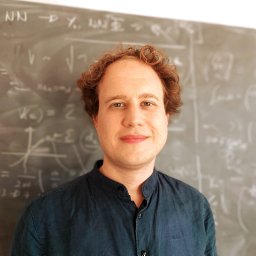 Sebastian Hoof合作论文数Inst Theoret Teilchenphys TTP, KIT3
 Anders Kvellestad合作论文数Dept Phys, Univ Oslo3A. R. Raklev合作论文数3
 Aaron C. Vincent合作论文数Department of Physics;Rutherford Physics Building;Rue University;Department of Physics, Rue University3Christopher Chang合作论文数2Jeriek Van den Abeele合作论文数2Ben Farmer合作论文数Blackett Laboratory, Imperial College London2
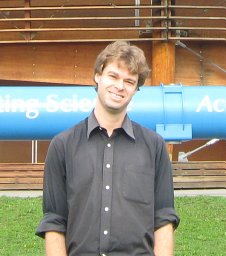 Jonathan M. Cornell合作论文数Dept Phys, Weber State Univ2
 Cullan Howlett合作论文数School of Mathematics and Physics, Faculty of Science, The University of Queensland2Farvah Mahmoudi合作论文数Université Claude Bernard Lyon2Markus Prim合作论文数2
 Gregory Martinez合作论文数Department of Physics and Astronomy, University of California, Los Angeles2A. G. Buckley合作论文数SUPA-School of Physics and Astronomy, University of Edinburgh2
 Matthias Danninger合作论文数Department of Physics, Simon Fraser University2Yue-Lin Sming Tsai合作论文数1Miriam Lucio Martinez合作论文数1Christopher Rogan合作论文数1Philip Grace合作论文数1Markus Tobias Prim合作论文数1
 Wei Su (苏伟)合作论文数School of Science, Sun Yat-Sen University1Viktor Ananyev合作论文数1
 Fruzsina Agocs合作论文数Cavendish Lab, Univ Cambridge1Sean Quinonez合作论文数1
 Philip Bechtle合作论文数Physikalisches Institut, Universität Bonn;Faculty of Mathematics and Natural Sciences, Universität Bonn1
 Klaus Desch合作论文数Physikalisches Institut, Universität Bonn;Faculty of Mathematics and Natural Sciences, Universität Bonn1Saniya Heeba合作论文数1
 Marco Fedele合作论文数1
 Jose Eliel Camargo Molina合作论文数Dept Phys & Astron, Uppsala Univ1
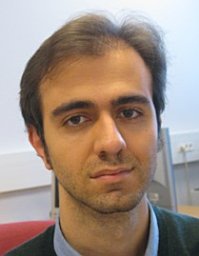 Emanuele Angelo Bagnaschi合作论文数Paul Scherrer Inst1
 Mauro Valli合作论文数C. N. Yang Institute for Theoretical Physics, Stony Brook University1Anja Butter合作论文数Inst Theoret Phys, Heidelberg Univ1Andre Scaffidi合作论文数1sebastian wild合作论文数1Kamila Kowalska合作论文数1Jorge de Blas合作论文数Inst Particle Phys Phenomenol, Univ Durham1
 Matthew Dolan合作论文数School of Physics, Faculty of Science, The University of Melbourne1




