There is a substantial curricular overlap between calculus and physics, yet introductory physics students often struggle to connect the two. We introduce a quantity-based framing of the Fundamental Theorem of Calculus (FTC) to help unify learning across both disciplines. We propose a consistent approach to teaching definite integrals, including shared vocabulary and symbolism, to help students recognize how concepts like change, rate, and accumulation show up in both calculus and physics. We argue that the typical interpretation of the FTC in calculus, focusing on antiderivatives in closed form, doesn't align well with how physicists use or conceptualize integration. We advocate for an additional focus on Riemann sums and the underlying ideas of change, rate, products, and accumulation, which are fundamental in both fields. This approach can help students build a deeper, more coherent understanding of both mathematics and physics quantity. By aligning learning objectives across the disciplines, we argue that students can develop a stronger understanding of foundational mathematical principles.
Our purpose in this chapter is to clarify the role of imagery in students' mathematical learning and reasoning. In pursuit of this goal, we address interdependencies among imagery, reflection, scheme, and meaning as theoretical constructs and illustrate their interdependence by examples. Our motive for this expanded charge is that while the notion of schemes and scheme development is sometimes discussed in studies of students' mathematical learning, the role of imagery in that process is often neglected, yet it is central to the development of productive mathematical meanings. We build on Glasersfeld's (Radical constructivism: A way of knowing and learning. Falmer Press, 1995) notion of re-presentation to define images as recalled experience and explain the distinction between figurative imagery and operative imagery as resting on an image's degree of necessity to the subject's in-the-moment reasoning. Examples are drawn from a seventh-grader's construction of a scheme to play a generalized game of Nim and a mathematics educator's projection of his reasoning to a level of operative schemes to resolve a confusion arising from his assimilation a problem at a figural level. In all, we highlight three arguments: (1) imagery, as re-presentations of experience, includes far more than visualization; (2) a main function of imagery in students' mathematical learning is that students form images of having reasoned; and (3) imagery, as a construct, does not stand alone. It is useful only to the extent that it allows us to focus on the contexts of students' schemes and meanings and to employ reflective abstraction as a construct for explaining and investigating students' mathematical learning.
Existing literature reviews of calculus learning made an important contribution to our understanding of the development of mathematics education research in this area, particularly their documentation of how research transitioned from studying students’ misconceptions to investigating students’ understanding and ways of thinking per se. This paper has three main goals relative to this contribution. The first goal is to offer a conceptual analysis of how students’ difficulties surveyed in three major literature review publications originate in the mathematical meanings and ways of thinking students develop in elementary, middle and early high school. The second goal is to highlight a contribution to an important aspect that the articles in this issue make but was overshadowed by other aspects addressed in existing literature reviews: the nature of the mathematics students experience under the name “calculus” in various nations or regions around the world, and the relation of this mathematics to ways ideas foundational to it are developed over the grades. The third goal is to outline research questions entailed from these articles for future research regarding each of them.
Researchers have been interested in students’ transition to calculus since the early 1900s. One line of inquiry highlights students’ understandings of high school mathematics as impeding or supporting their successful transition to university mathematics. This paper addresses an underlying question in this line of inquiry: does school mathematics provide opportunities for students to develop productive meanings for calculus? This article reports on U.S. calculus students’ responses to items that assessed students’ variational reasoning, meanings for average rate of change, and representational use of notation—ideas ostensibly addressed in school mathematics. To make sense of students’ difficulty on these items we sought to understand the opportunities students had to reason with these ideas prior to calculus. We use two data sources to understand the likelihood that students have opportunities to construct productive meanings for function notation, variation, and average rate of change in their secondary mathematics education: meanings for these ideas supported by precalculus textbooks and meanings secondary teachers demonstrated. Our analysis revealed a disconnect between meanings productive for learning calculus and the meanings conveyed by textbooks and held by U.S. high school teachers. We include a comparison of meanings held by U.S. and Korean teachers to highlight that these meanings are culturally embedded in the U.S. educational system.
This study investigates what teachers in U.S. reveal about their meanings for function notation in their written responses to the Mathematical Meanings for Teaching secondary mathematics (MMTsm) items, with particular attention to how productive those meanings would be if conveyed to students in a classroom setting. We then report South Korean teachers' responses to see whether the meanings U.S. teachers demonstrated are shared with South Korean teachers. The results show that many U.S. teachers use function notation to name rules instead of to represent relationships. The data from South Korean teachers indicates that the problematic meanings in U.S. teachers' responses are shared with a minority of South Korean teachers. The results suggest a need for attention to ideas regarding function notation in teacher education for pre-service teachers and professional development programs for in-service teachers.
"Mathematics, Education, and Other Endangered Species: From Intuition to Inhibition." Mathematical Thinking and Learning, 23(4), pp. 344–345
Teachers’ thinking about the concept of function is well researched. However, most research focused on their understanding of function definitions and properties. This paper addresses a more nuanced examination of teachers’ meanings and ways of thinking that are affiliated with what might come to mind as teachers deal with functions in day-to-day interactions with students, such as “What does f mean in f(x)?”. We report results from using theMathematical Meanings for Teaching secondary mathematics (MMTsm) instrument (Thompson in Handbook of international research in mathematics education. Taylor & Francis, NewYork, pp. 435–461, 2016) with 366 South Korean middle and high school teachers and 253 U.S. high school mathematics teachers. South Korean middle and high school teachers consistently performed at a higher level than U.S. high school teachers, including U.S. teachers who taught calculus.
This chapter describes a conceptual orientation toward what is going on in complex quantitative situations, and shows how teachers can help students make mathematical sense of those situations. It argues for better curricular balance between teaching and learning about number/operation and quantity/quantitative reasoning. Algebraic reasoning is characterized by its generality and by the role that symbolic expressions play in stating general relationships, comparing and manipulating them, and facilitating many numerical evaluations. The basic idea is to move out of the situation and its constituent quantities and into the world of symbolic expressions and equations. Algebraic notation and methods are powerful tools for stating, analyzing, and manipulating general relationships, but without ideas of substantial generality to express, students will find little sense in and little use for algebra. An emphasis on the quantitative aspects of situations reorients students' mathematical focus in some important ways, affecting both the development of their arithmetic reasoning and their future prospects in algebra.
In beginning this chapter we immediately faced a dilemma. There is nothing that can be called “the concept of function.” The phrase “concept of function,” regardless of its meaning, immediately calls into question whom we envision having it. Is it a mathematician, a teacher, a student, or a researcher in mathematics education? A student’s conception of function will not be as developed as that held by a mathematician, and a mathematician’s conception of function may not include detailed information that a math education researcher has about how students’ function understanding develops. Another dilemma in writing this chapter is that different researchers in mathematics education have had different conceptions of function and therefore held different norms for “students’ understanding of function.” Because there are many meanings and ways of thinking that various individuals and groups hold that could fit under the heading concept of function, we avoid speaking as if there is a standard, generally accepted meaning of function against which others should be compared. Instead, we specify the meanings and ways of thinking that we envision a person having a concept of function holds. We organized this chapter into six parts to capture the broad swath of issues surrounding the idea of covariation as a foundation for function in mathematics; the ways that covariation can be conceived among students, teachers, and researchers; and implications of various forms of reasoning covariationally. Specifically, we (1) provide a brief overview of how conceptions of function evolved historically and the central role that covariation played; (2) clarify what we mean by variational and covariational reasoning and where these meanings came from; (3) examine research on students’ and teachers’ variational and covariational reasoning in selected areas; (4) comment briefly, with a covariational lens, on past research on students’ and teachers’ conceptions of function; (5) discuss curricular treatments of function, again with a covariational lens; and (6) outline possible directions for future research.
This article reports an investigation of 251 high school mathematics teachers' meanings for slope, measurement, and rate of change. The data was collected with a validated written instrument designed to diagnose teachers' mathematical meanings. Most teachers conveyed primarily additive and formulaic meanings for slope and rate of change on written items. Few teachers conveyed that a rate of change compares the relative sizes of changes in two quantities. Teachers' weak measurement schemes were associated with limited meanings for rate of change. Overall, the data suggests that rate of change should be a topic of targeted professional development.
We investigated covariational reasoning among 487 secondary mathematics teachers in the United States and South Korea. We presented an animation showing values of two varying magnitudes (v and u) on axes in a Cartesian plane along with a request that they sketch a graph of the value of u in relation to the value of v. We classified teachers' sketches on two independent criteria: (1) where they placed their initial point, and (2) their graph's overall shape irrespective of initial point. There are distinct differences on both criteria between U.S. and South Korean teachers, suggesting that covariational reasoning is more prominent among South Korean secondary teachers than among U.S. secondary teachers. The results also suggest strongly that forming a multiplicative object that unites quantities' values is necessary to express covariation graphically.
33 The idea of fractal dimension is based on the idea of Euclidean dimension. But understanding this connection is harder than you might think. Children often think of areas and volumes in a way that we would describe as “one-dimensional objects” (see Figures 1 and 2). What is, for example, one-dimensional area? It is a conception of a measurement of a region as being “how many squares do you need to lay down to fill a region,” where the squares are, in the child’s conception, no more than, say, pieces of paper with sharp corners. That is, they do not conceive of the unit as a dimensioned object. It is simply an object.
The topic of undergraduate mathematics is of considerable concern for mathematicians in universities, but also for those teaching mathematics as part of undergraduate studies other than mathematics, for employers seeking to employ a mathematically skilled workforce, and for teacher education. Different countries have made and continue to make massive efforts to improve the quality of mathematics education across all age ranges, with most of the research undertaken particularly at the school level. A growing number of mathematicians and mathematics educators now see the need for undertaking interdisciplinary research and collaborative reflections around issues at the tertiary level. The conference aimed to share research results and experiences as a background to establishing a scientific community of mathematicians and mathematics educators whose concern is the theoretical reflection, the research-based empirical investigation, and the exchange of best-practice examples of mathematics education at the tertiary level. The focus of the conference was mathematics education for mathematics, engineering and economy majors and for future mathematics teachers.
This paper explores the usefulness of understanding quotients as measures of relative size in mathematics. The paper characterizes the types of thinking displayed by high school mathematics teachers on two novel tasks designed to reveal teachers’ meanings in contexts where making comparisons of relative size is productive.
This paper presents a conceptual analysis for students’ images of graphs and their extension to graphs of two-variable functions. We use the conceptual analysis, based on quantitative and covariational reasoning, to construct a hypothetical learning trajectory (HLT) for how students might generalize their understanding of graphs of one-variable functions to graphs of two-variable functions. To evaluate the viability of this learning trajectory, we use data from two teaching experiments based on tasks intended to support development of the schemes in the HLT. We focus on the schemes that two students developed in these teaching experiments and discuss their relationship to the original HLT. We close by considering the role of covariational reasoning in generalization, consider other ways in which students might come to conceptualize graphs of two-variable functions, and discuss implications for instruction.
 Luis Saldanha合作论文数14Alba Gonzalez Thompson合作论文数11
 Cameron Byerley合作论文数Department of Mathematics, Science, and Social Studies Education, University of Georgia10
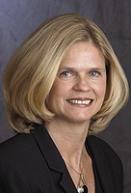 Marilyn Carlson合作论文数Arizona State University7
 Neil Hatfield合作论文数5
 Yan Liu合作论文数5
 Tommy Dreyfus合作论文数Tel Aviv University4
 Jason Silverman合作论文数4Leslie P. Steffe合作论文数4Guershon Harel合作论文数3eric weber合作论文数3
 Alan H. Schoenfeld合作论文数Graduate School of Education, University of California,Berkeley3AG THOMPSON合作论文数2Traci Higgins合作论文数2Hyunkyoung Yoon合作论文数Arizona State University2
 Michael Tallman合作论文数2
 Ingram Olkin合作论文数Graduate School of Education, Stanford University;Meta Research Innovation Center, Stanford University2
 Brian W. Junker合作论文数Department of Statistics&Data Science, Dietrich College of Humanities and Social Sciences, Carnegie Mellon University2James J. Kaput合作论文数2
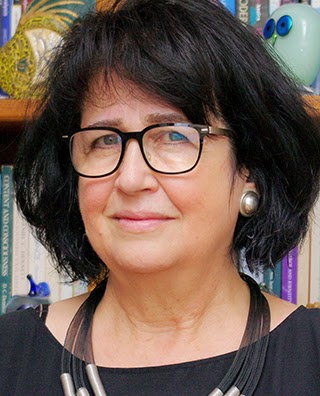 Anna Sfard合作论文数Department of Mathematics Education, Faculty of Education, University of Haifa2
 Randolph A Philipp合作论文数San Diego State University2
 Jeremy Kilpatrick合作论文数2Joan Garfield合作论文数2
 Richard Lehrer合作论文数Department of Teaching and Learning, Peabody College, Vanderbilt University2J FERRINIMUNDY合作论文数1sharon dugdale合作论文数1Kristin Frank合作论文数1Paul Christmas合作论文数1John W. McConnell合作论文数1Wayne Harvey合作论文数1John Richards合作论文数1richard scheaffer合作论文数1Dafna Elias合作论文数1Surani Joshua合作论文数1adalira saenzludlow ludlow合作论文数1ed dubinsky合作论文数1
 Reinhard Hochmuth合作论文数1Anatoli Kouropatov合作论文数1
 Hitt Fernando合作论文数Univ Quebec Montreal1
 Marie Diener-West合作论文数Department of Otolaryngology-Head and Neck Surgery, School of Medicine, Johns Hopkins University1
 Dennis Keith Pearl合作论文数Department of Statistics, The Ohio State University1
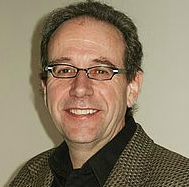 Paul Anthony Cobb合作论文数Dept. of Teaching and Learning, Vanderbilt University1Sterling C. Hilton合作论文数1
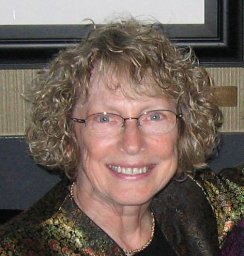 Carolyn Kieran合作论文数Portland State University1Bert K. Waits合作论文数1
 Stacy Musgrave合作论文数1
 Susan Haag合作论文数1
 Edward A. Silver合作论文数Department Operations and Supply Chain Management, Haskayne School of Business, University of Calgary1




