Adsorption of aqueous uranyl species in pore spaces of clay minerals plays a key role in post-closure safety assessments for geological disposal of radioactive waste. Molecular Dynamics Simulations (MDS) were performed to study the adsorption of uranyl (UO22+) to the clay mineral smectite from its aqueous solution in the presence of carbonate (CO32-) and Na+ counter ions. The modelled system consisted of water-saturated clay layers and a 0.162 M aqueous uranyl carbonate solution. The large system size (up to 25,560 atoms) and long simulation times (over 200 ns) allowed investigating the effect of the electrical double layer on uranyl adsorption to smectite for different pore sizes (8.37, 25.1, and 33.5 nm). This study identified various polynuclear uranyl carbonate complexes on clay surfaces (e.g., [Na(UO2)(3)(CO3)(3)](+)) and in aqueous solution (e.g., [Na-2(UO2)(5)(CO3)(6)](0)) which were not seen in other MDS studies due to statistical limitations caused by the small number of uranyl and carbonate ions in their super cell and/or insufficient simulation time. Uranyl complexes represented the majority of adsorbed species relative to uncomplexed uranyl, with different complexes for different pore sizes. The sorption parameter KD for uranyl ranged from 59 to 151 mL/g and was dependent on pore size (smaller KD for larger pore size). Electrostatic factors controlled the formation and locations of uranyl complexes. MDS-based KD values were in agreement with experimentally derived values for similar experimental conditions. MDS provides an efficient tool to derive sorption parameters for safety assessments, especially in the early stages of site selection and characterisation when access to cores from deep rocks may be limited.
Water management has become critical for thermoelectric power generation in the US. Increasing demand for scarce water resources for domestic, agricultural, and industrial use affects water availability for power plants. In particular, the population in the Southwestern part of the US is growing and water resources are over-stressed. The engineering and management teams at the Palo Verde Generating Station (PV) in the Sonoran Desert have long understood this problem and began a partnership with Sandia National Laboratories in 2017 to develop a long-term water strategy for PV. As part of this program, Sandia and Palo Verde staff have developed a comprehensive software tool that models all aspects of the PV (plant cooling) water cycle. The software tool - the Palo Verde Water Cycle Model (PVWCM) - tracks water operations from influent to the plant through evaporation in one of the nine cooling towers or one of the eight evaporation ponds. The PVWCM has been developed using a process called System Dynamics. The PVWCM is developed to allow scenario comparison for various plant operating strategies.
The use of modified salinity and modified composition brines (MSMC), referred to as smart water, to alter carbonate surface wettability at different temperatures has gained enormous popularity. However, an effective way to quantify the geochemical, thermodynamic and electrostatic factors responsible for wettability alteration have still not been fully developed. In this work, a surface complexation model (SCM) based on geochemical and thermodynamic interactions at calcite and oil surfaces was used to investigate the effect of temperature, pH, and sulfate on electrostatic interactions. SCM’s for calcite and oil surfaces were validated against zeta potential data at high temperatures and used to interpret improved oil recovery data from spontaneous imbibition experiments. The SCM was correlated to calcite wettability through the calculation of the bond product sum (BPS); a measure of the strength of the electrostatic bond linkages between calcite and oil surfaces. Increasing temperature increased the zeta potential towards more positive values for positive polarities and towards more negative values for negative polarity at both the calcite and oil surfaces. BPS decreased with increasing temperature due to the weakening of [>CO3–][‒NH+] electrostatic bonds, indicating an increase in water-wetness, consistent with the existing literature. Increasing the sulfate ion concentration in seawater brine reduced the BPS, indicating an increase in water wetness. This was attributed to the reduction in [>CaOH2+][‒COO–] associated bonds as sulfate concentration increased. Spontaneous imbibition experiments confirmed the BPS analysis, whereby oil recovery increased as sulfate concentration and temperature increased.
Sandia National Laboratories (SNL) is developing a cooling technology concept- the Sandia National Laboratories Natural Circulation Cooler (SNLNCC) - that has potential to greatly improve the economic viability of hybrid cooling for power plants. The SNLNCC is a patented technology that holds promise for improved dry heat rejection capabilities when compared to currently available technologies. The cooler itself is a dry heat rejection device, but is conceptualized here as a heat exchanger used in conjunction with a wet cooling tower, creating a hybrid cooling system for a thermoelectric power plant. The SNLNCC seeks to improve on currently available technologies by replacing the two-phase refrigerant currently used with either a supercritical fluid - such as supercritical CO2(sCO(2)) - or a zeotropic mixture of refrigerants. In both cases, the heat being rejected by the water to the SNLNCC would be transferred over a range of temperatures, instead of at a single temperature as it is in a thermosyphon. This has the potential to improve the economics of dry heat rejection performance in three ways: decreasing the minimum temperature to which the water can be cooled, increasing the temperature to which air can be heated, and increasing the fraction of the year during which dry cooling is economically viable. This paper describes the experimental basis and the current state of the SNLNCC.
This report represents completion of milestone deliverable M2SF-21SN010309012 “Annual Status Update for OWL and Waste Form Characteristics” that provides an annual update on status of fiscal year (FY 2020) activities for the work package SF-20SN01030901 and is due on January 29, 2021. The Online Waste Library (OWL) has been designed to contain information regarding United States (U.S.) Department of Energy (DOE)-managed (as) high-level waste (DHLW), spent nuclear fuel (SNF), and other wastes that are likely candidates for deep geologic disposal, with links to the current supporting documents for the data (when possible; note that no classified or official-use-only (OUO) data are planned to be included in OWL). There may be up to several hundred different DOE-managed wastes that are likely to require deep geologic disposal. This draft report contains versions of the OWL model architecture for vessel information (Appendix A) and an excerpt from the OWL User’s Guide (Appendix B and SNL 2020), which are for the current OWL Version 2.0 on the Sandia External Collaboration Network (ECN).
our national energy demands. Incendium Technologies, LLC has been developing high-efficiency, cost-effective and environmentally friendly supramolecular assembly solutions for enhanced oil and gas production. These solutions can be used as additives to replace polymeric gelling agents in injection fluids for enhanced recovery. They possess outstanding features including adjustable and reversible viscosity, high salt and temperature tolerance, and self-repairment. With increased efficiency in hydrocarbon recovery and eco-friendly nature, these novel solutions have huge commercial and societal benefits.
Despite recent efforts to understand the wettability alteration process in limestone rocks during low salinity waterflooding, the findings related to wettability alteration due to changes in salinity and in the presence of a thin water film are still inconclusive. In this work, the effect of ions, temperature and solution pH on the rock and oil surface charges were explored by measuring zeta potential and predicting it using double layer surface complexation modelling (SCM).SCM fitted the trends of the measured zeta potential for both rock-brine and oil-brine interfaces by varying the surface equilibrium constants, particularly the equilibrium constant for the Ca2+ binding site. The SCM was used to predict 32 zeta potential values either measured experimentally or extracted from the literature.Zeta potential and isoelectric potential of rock-brine interface is dependent on brine salinity, sulfate concentrations and solution pH. The isoelectric point (IEP) for rock-brine interface decreased from pH of 8.5 for formation water to 7.8 for low salinity brine. Increasing the sulfate concentration in the seawater brine resulted in shifting the IEP to a lower pH value, indicating that sulfate ion shifts the zeta potential of rock-brine interface to negative over a wide pH range, due to the increased site density of >CaSO4− and the simultaneous reduction in the site densities of both CaOH2+ and CO3− as sulfate concentration increases.Bond product sum (BPS), together with total disjoining pressure calculations were used to predict wettability trends, supported by contact angle measurement, where the total BPS was observed to be the lowest and repulsive disjoining pressure generated at the COBR for LSW brines. This was observed to be significantly influenced by [COOCa+][CO3−] and [COOMg+][CO3−] bond linkages at low pH (below 8) whiles the bond linkages of [COOCa+][CaCO3−] and [COOMg+][CaCO3−] dominated the COBR interface at higher pH (above 8).
Sandia National Laboratories has built and successfully tested a dynamic simulation technoeconomic model of the Palo Verde Generating Station that is now being updated to help other US power plants improve operations. Palo Verde, located west of Phoenix, Arizona, is the largest electricity generator in the US at 4 GW. Palo Verde uses — 60 million gallons per day of treated wastewater from Phoenix to cool reactors, and disposes of blowdown in evaporation ponds. The model built for Palo Verde numerically evaluates the economic impact of changing, for example, alternative cooling technologies, water usage and treatment, and influent water chemistry, and is based on detailed accounting of mass, energy, and cash flows.
Engineering the permanent storage of CO2 in earth-abundant Ca- and Mg-bearing silicate and alumino-silicate rocks and minerals as carbonates requires a fundamental understanding of the extents of carbonate conversion that can be achieved at conditions relevant to geologic formations. While many studies have reported the reaction rates and the carbonation extents of specific minerals, the data is limited in terms of reaction conditions and the mineral samples were relatively pure to start with. Thus, understanding of the effect of the chemical and mineralogical heterogeneity on the carbon mineralization behaviors of various minerals and rocks in geologic conditions is lacking. Therefore, this study investigated the reactivities of a selection of minerals and rocks such as (a) Mg-rich olivine (Mg1.74Fe0.26SiO4) as previously reported by Gadikota and co-workers (2014), [1] labradorite (plagioclase feldspar with Ca0.53Na0.47Al1.53Si O-8), (b) anorthosite (a mixture of plagioclase (Ca0.98Na0.02Al1.98Si2.02O8), olivine (Mg1.32Fe0.68SiO4) and magnetite (Fe3O4)), and (c) basalt (a fine-grained volcanic rock containing a mixture of plagioclase (Ca0.6Na0.4Al1.6Si2.4O8), calcic pyroxene (similar to Mg0.48Fe0.52CaSi2O6) and low Ca pyroxene (similar to Mg0.48Fe0.52SiO3)), that are relevant to CO2 storage. The reaction conditions were also selected to mimic the conditions relevant to geologic CO2 storage sites (T-max = 185 degrees C, P-max = 164 bar, 0-1 M NaHCO3, 0-1 M NaCl, 1.0 M NaCl + 0.64 M NaHCO3). Our studies show that the extents of carbonation of olivine, labradorite, anorthosite, and basalt are 85, 35, 19 and 9%, respectively, when reacted for three hours at 185 degrees C, P-CO2 of 139 atm in 1.0 M NaCl + 0.64 M NaHCO3 with 15 wt% solid reactant and a stirring rate of 800 rpm. Further, our results indicate that increasing the reaction temperature over the range of 90 to 185 degrees C, and increasing the concentration of NaHCO3 over the range of 0 to 1 M, both enhance the extent of carbon mineralization. On the other hand, increasing the partial pressure of CO2 from 64 atm to 169 atm and raising the concentration of NaCl to 1.0 M have no significant effects within the time-scale of these experimental studies. Comparison of our results with previous studies suggests that the reactivity of Ca- and Mg-bearing alumino-silicates is lower compared to Ca- and Mg-bearing silicates.
This Special Issue of the Energies Journal on Deep Borehole Disposal of Nuclear Waste has delivered a timely update on the science and technology of borehole disposal and the types of radioactive wastes it could potentially accommodate. The Special Issue papers discuss (i) circumstances under which a national waste management programme might wish to consider deep borehole disposal; (ii) a status report of deep borehole disposal options in Germany; (iii) the analysis of corrosion performance of engineered barrier systems; (iv) a review of the potential cementing systems suitable for deep borehole disposal; (v) the thermal evolution around heat-generating waste for a wide range of material properties and disposal configurations; (vi) a geochemical analysis of deep brines focussed on fluid-rock interactions; (vii) post-closure performance assessment calculations for deep borehole disposal of Cs/Sr capsules and an example safety case for (viii) horizontal and (ix) vertical deep borehole disposal of nuclear wastes.
The objectives of this chapter are twofold: outline the observed link between mineral surface chemistry and macroscopic rates of growth and dissolution and examine the probable microscopic reactions which explain this link. The connection between mineral surface chemistry and mineral growth rates is far less clear than is the link between surface chemistry and mineral dissolution. As a result, the treatment in this chapter will lean heavily on dissolution rates. Because rates are generally assumed to be proportional to the amount of mineral exposed to solution, the method for determining the surface area of the dissolving mineral is important. Surface-controlled mineral dissolution, far from equilibrium, is generally described by a rate law of the form. The correlation between dissolution rate and water exchange from a hydrated cation is not surprising as the two processes are mechanistically similar.
This review analyses the fundamental thermodynamic theory of the crude oil-brine-rock (COBR) interface and the underlying rock-brine and oil-brine interactions. The available data are then reviewed to outline potential mechanisms responsible for increased oil recovery from low salinity waterflooding (LSWF). We propose an approach to studying LSWF and identify the key missing links that are needed to explain observations at multiple length scales. The synergistic effect of LSWF on other chemical enhanced oil recovery methods such as surfactant, alkaline, nanoparticle and polymer flooding are also outlined. We specifically highlight key uncertainties that must be overcome to fully implement the technique in the field.
 James L. Krumhansl合作论文数20
 Tina M. Nenoff合作论文数Material, Chemical and Physical Sciences Division, Sandia National Laboratories, National Technology and Engineering Solutions of Sandia, LLC.;National Nuclear Security Administration18David C. Sassani合作论文数16
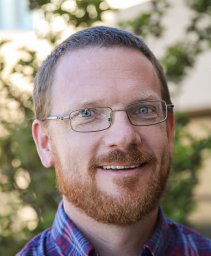 Kristopher L. Kuhlman合作论文数Department of Hydrology and Water Resources, University of Arizona13
 David M. Teter合作论文数12
 Randall T. Cygan (Randall Cygan)合作论文数Texas A&M University12Geoffrey Freeze合作论文数11Ernest L. Hardin合作论文数11bill walter arnold合作论文数11Pengchu Zhang合作论文数11
 Hasan Alsaedi合作论文数10
 Ralph E. Flori合作论文数University of Missouri-Rolla10Michael V. Brady合作论文数9JL Krumhansl合作论文数9Charles Bryan合作论文数9
 N. Khandaker合作论文数Dept. of Comput. Sci. & Eng., Univ. of Nebraska-Lincoln9Curtis D. Mowry合作论文数8Kathryn L. Nagy合作论文数Department of Earth and Environmental Sciences, University of Illinois at Chicago8David James Borns合作论文数8Robert J. MacKinnon合作论文数7Anderson H L合作论文数7Susan J. Altman合作论文数7Koroush Sasan合作论文数Department of Chemistry;Shahid Beheshti University;Department of Chemistry, Shahid Beheshti University7
 Terry J. Garino合作论文数7
 John C. Hewson合作论文数Sandia National Laboratories, Albuquerque, NM 87185-1135, USA7
 Matthew J Eick合作论文数7Geoff A. Freeze合作论文数6
 Mark Rigali合作论文数Laboratory of Organic Geochemistry, The University of Arizona6Robert Rechard合作论文数5Carlos Jove-Colon合作论文数5Laura Price合作论文数5
 Ali Saeedi合作论文数Dept Petr Engn, Curtin Univ5Pohl Phillip I合作论文数5Wyatt Nicholas B合作论文数5
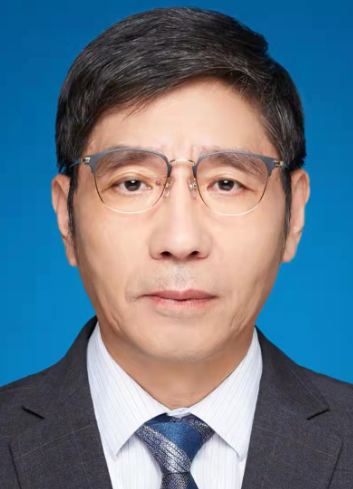 Xie Quan (全燮)合作论文数School of Environmental Science and Technology, Dalian University of Technology5
 S.D. Balsley合作论文数Geochemistry Research, Sandia National Laboratories5Henry R. Westrich合作论文数Geochemistry Division, Sandia National Laboratories5
 Peter N. Swift合作论文数5Robert J. Mackinnon合作论文数5Thomas A. Dewers合作论文数5
 Geoffrey D. Thyne合作论文数Department of Physics and Geology, California State University at Bakersfield5
 John V. Walther (John Walther)合作论文数Department of Geological Sciences, Southern Methodist University5Courtney Herrick合作论文数4
 Reza Barati合作论文数4
 Joel Tetteh合作论文数Chemical and Petroleum Engineering Department, University of Kansas4
 Anne M. Grillet合作论文数4
 Dirk Mallants合作论文数Belgian Nuclear Research Centre (SCK•CEN), Institute for Environment, Health, and Safety, Boeretang 200, B-2400 Mol, Belgium4
 Stephen Bauer合作论文数Underground Storage Technology Department 6113, Sandia National Laboratories4Fred Gelbard合作论文数3




