Corporate foresight involves strategically exploring multiple potential futures and serves as a tool to guide organizational decision-making processes. Despite its significance, a predominant focus on immediate, short-term issues often characterizes the operational mindset of many companies. As a result, companies frequently encounter challenges in achieving organizational ambidexterity-the ability to balance and leverage both the exploitation of current capabilities and the exploration of new opportunities in the future. In this paper, we propose a theoretical investigation of corporate foresight. We develop a conceptual framework that delineates different relationships between corporate foresight and organizational ambidexterity, providing a structured approach to understand how these concepts interact and influence each other. Our framework proposes three ways corporate foresight can significantly enhance ambidexterity within organizations. First, corporate foresight can be pivotal in identifying and analyzing future trends and disruptions, which can inform strategic decision-making. Secondly, corporate foresight can better align an organization's long-term strategic goals and short-term operational objectives, thus enhancing ambidexterity. Finally, corporate foresight can bridge different organizational units, promoting collaboration and knowledge sharing, aiding in developing a holistic approach to strategic planning that encompasses daily operational excellence and future-oriented strategic posture.
The Dutch government has a large and diverse range of advisory councils and planning agencies that produce studies of the future as an input to the development of strategic government policy. The work of these organisations is important and relevant, as well as very diverse in terms of their approach to the future, the methodologies they use, and the topics on which they focus. In particular, they serve different users, who all use these studies for their own purposes. As a result, there is no ‘one-size-fits-all’ approach to designing a futures study. To deal with this variety, we use a contingency approach with which we set up a framework presenting different ‘futures studies journeys’ that relate different user goals to different approaches to the future, to different phases in policy-processes in which the futures study is used, and to different methods to be employed.
The management of technology is increasingly fuelled by societal challenges and user problems. For effective technology development and implementation, it is important that both are relevant not only in the present, but also in the future. Technological development and implementation take time which means that a technology originally meant to address a particular societal challenge, may be no longer relevant at the time it is implemented because the challenge or problem may no longer exist. We call this ‘future technology myopia’. This myopia implies that while analysing the possible future development of a technology, sufficient vigilance should be given to the persistence of i). the technical challenge and ii). the development of the societal problem, and of alternative ways to deal with both. In view of the increasing interdependence between technology and society, broadening the technology management and analysis is therefore relevant for the effective development of technology to address future societal and user problems and for developing relevant strategic technology policies. In this paper we develop a Technology Management Ailment Matrix that identifies imbalances that might arise during the technology development process. It enables firms to identify and compare different technology management ailments collectively; it also identifies a further new ailment: future technology myopia.
Spatial planning is an inherently future-oriented practice charged with future expectations. Strikingly, the productive role of these expectations has received little scholarly attention. We adopted a grounded theory approach to study the participatory planning process for Seelig Park in Breda, the Netherlands. We observed that expectations are flexible, dynamic and diverse and they can be tuned to fit and justify actions and decisions while keeping the planning process in motion. We conclude that expectations become productive as a means for 'recalibration,' reflecting the continuous quest for equilibrium between action and legitimacy in the politically negotiated context of spatial planning.
The stage-gate method was initially developed as a description of the new product development practices within high-performing firms. At its heart the concept is simple: and the flow of activity of a stage-gate includes project action, information generation, analysis and decision. Research has shown that the stage-gate method has been extremely successful in many contexts. The question of whether the approach is suitable for all projects in all situations is a principal faultline within the literature. Proponents argue that adaptations and evolutions of the stage approach enable it to be universally applied. This paper provides a critical review of the literature and we identify chronic limitations of stage-gate when evaluated against contemporary challenges, including VUCA (volatility, uncertainty, complexity and ambiguity), environment, digitization and open innovation. We remain critical about whether these contemporary currents are best approached by yet another reconfiguration of stage-gate building blocks. We argue that high uncertainty (caused by these currents) requires the flexibility to change fundamental elements of a project, including the underlying concept and the target market, which means that stage-gate is not well suited to innovation processes addressing these contemporary challenges. We propose a typology to show its suitability.
Because the future belongs to all of us, not just to experts or professionals, knowing what people think about the future is not only interesting, but also relevant to the functioning of modern democracies. This study about what Dutch people think about the future and about technology shows, among other things, that they are generally positive about technology and science, but more gloomy when it comes to the future of society. People find it difficult to think about the (distant) future and spend little time reflecting on it. It is precisely the current speed and complexity of global changes that ensures a revaluation of the historical context when the world was still manageable. Another outcome is that the respondents are relatively down-to-earth. Representations of the future that are vastly different from our current state of affairs can count on little support. Dutch realism is also reflected in a long list of technologies that the respondents would rather not see developed.
Combining historical economic data and positivistic, standard neoclassical economic theories does not give a sufficient nuanced view on different economic futures that address the future inherent uncertainty. Economic history does not repeat itself making economic systems ‘open systems’, and economic laws cannot be regarded as laws in the natural sciences. Therefore, we explore a different approach by taking critical realism as science-philosophical background, using transaction cost theory to cope with the unrealistic full rationality postulate of neoclassical economic theory. In particular, we use the scenario-method from the management sciences and use as the concept of ‘tendencies’, as developed within critical realism, as scenario-framework. To illustrate our approach we use the case of Sense Glove, a light, compact, and modular robotic hand shoe that was originally developed for cost-effective rehabilitation of hand paralysis, but which is now used to get a real sense of feeling objects in virtual and artificial reality.
Innovation has a pivotal role for companies in attaining business survival but making an organization innovative is not straightforward. By determining contextual factors, managers can help decide how to employ a portfolio of innovation management processes. This book explores how contingency influence the management of innovation. Taking the perspective of innovation managers, the authors focus on the decision-making process to demonstrate that different approaches are required depending on the business context. In breaking the process into three levels (culture, industry and company), the book helps choose an optimal innovative approach. With references to real-world innovation cases and organizations, this book will prove useful reading for students and researchers in the field of innovation studies and management.
Education is one of the most essential elements of our society, which is why it has been the subject of dozens of foresight studies. What is currently missing however is a clear picture of the possible roles ICT can play in education. Through a qualitative and quantitative analysis of the large number of diverse studies, this article sheds light on the different future perspectives that exist. Based on the meta-analysis we present four new and plausible scenarios that address the main uncertainties regarding the use of ICT in education.
Innovation and foresight should be two sides of the same coin. In the area of innovation, the concept of “responsible innovation” has emerged, signifying that innovation processes have to take into account ethical, social, and cultural considerations and changes. A better and more just society will not be created if we only give priority to technology and commerce. To make sure that responsible innovation has a positive and effective impact, it is important to develop “responsible foresight,” that is, a combination of “responsible futures” and a responsible foresight process. In particular, images of the images of the future have to be inspiring, both experts and nonexperts are involved and it has to be made sure that the use of foresight in innovation is not merely a cosmetic exercise.
An infrastructure that meets future technological and societal demands is vital to Dutch society, which is why Dutch infrastructure providers look at long-term developments. We explored how they organize and manage their foresight processes by conducting 30 interviews among five different infrastructure providers, showing that to a large extent they carry out these processes themselves in different locations within the organization and only call on external support for specific subjects. They are not too worried about the importance of the short term but instead want to know how they can connect long-term developments to the short term, and try to deal with different time horizons within their organization. They use the foresight studies of other organizations and their search for information is not overly structured. Infrastructure providers have a well-developed sense of their environment, and they realize that their strategic room offers limited freedom and, in terms of foresight, should work together more than they are doing at the moment. Comparing our findings with two theories, we see that their approach to foresight is often adapted to their approach to innovation, that their foresight is organized in a facilitating, stimulating and framing manner, and that it is centralized as well as decentralized.
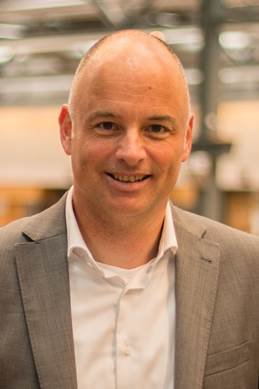 J.R. (Roland) Ortt合作论文数Section of Economics of Technology and Innovation, Department of Values, Technology and Innovation, Faculty of Technology, Policy and Management, Delft University of Technology31
 Dap Hartmann合作论文数16
 Guus Berkhout合作论文数14
 P. Trott合作论文数Portsmouth Business Sch, Univ Portsmouth6Dhoya Snijders合作论文数5
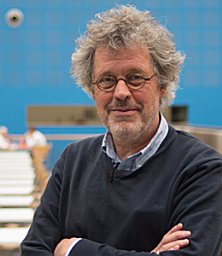 Harry Bouwman合作论文数Delft University of Technology5
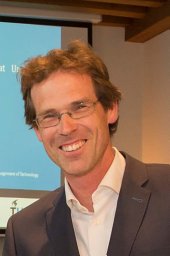 Victor Scholten合作论文数Strategy and Business Environment;School of Management, Rotterdam;Erasmus University;Rotterdam School of Management, Erasmus University4
 V.A.W.J. Marchau (Vincent)合作论文数Institute for Management Research, Radboud University4rob de graaf合作论文数3René W. Wagenaar合作论文数3Langeler, T.合作论文数3
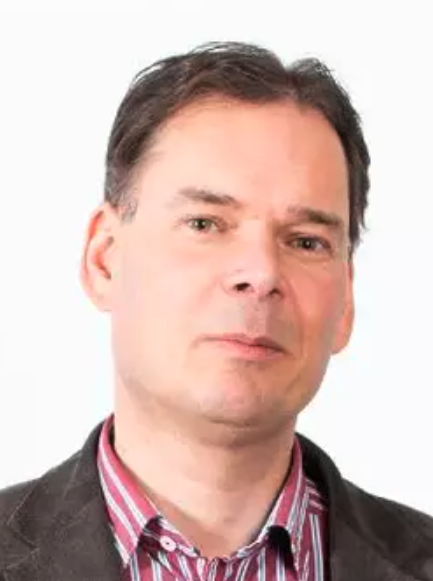 M.F.W.H.A. (Marijn) Janssen合作论文数Department of Engineering Systems and Services, Faculty of Technology, Policy and Management, Delft University of Technology3Erik Van De Linde合作论文数3
 Rob de Graaf合作论文数3ouden den e合作论文数2theodore gordon us合作论文数2Rene Hoogerwerf合作论文数2Jacintha Scheerder合作论文数2Lars van der Goes合作论文数2maya sule合作论文数2D HARTMANN合作论文数2
 Luke Georghiou合作论文数Manchester Institute of Innovation Research, Alliance Manchester Business School, Faculty of Humanities, The University of Manchester2
 Alan Porter合作论文数School of Public Policy, Ivan Allen College of Liberal Arts, Georgia Institute of Technology;Technology Policy and Assessment Center, Georgia Institute of Technology;School of Industrial & Systems Engineering, Georgia Institute of Technology;Search Technology, Inc.2Harold A. Linstone合作论文数2A. J. Berkhout合作论文数2
 Rianne Valkenburg合作论文数2
 Melanie Bicking合作论文数2
 Maria A. Wimmer合作论文数Institut f??r Angewandte Informatik
JK Universit?0?1t Linz2
Maria A. Wimmer合作论文数Institut f??r Angewandte Informatik
JK Universit?0?1t Linz2 Maaike Kleinsmann合作论文数2Andreas Ligtvoet合作论文数RAND Europe2Ken Ducatel合作论文数1Hugo W. L. ter Doest合作论文数1Maximilian D. Schlesinger合作论文数1Enid Mante-Meijer合作论文数1Elisabeth van de Kar合作论文数1m mogee合作论文数1g massari合作论文数1g clar合作论文数1w b ashton合作论文数1Jf Coates合作论文数1wieger t m aarts合作论文数1
 Jeroen Scheerder合作论文数1
 Giacomo Marzi合作论文数Corresponding author.1
 Ian Miles合作论文数Institute of Innovation Research, The University of Manchester;Laboratory of Economics of Innovation, Higher School of Economics, National Research University1
 Paul Lodder合作论文数Department of Psychology, University of Amsterdam Amsterdam1
 R.M. (Robert) Verburg合作论文数Department of Values, Technology and Innovation, Faculty of Technology, Policy and Management, Delft University of Technology1
 L.M. (Linda) Kamp合作论文数Delft University of Technology1
 David Baxter合作论文数Southampton Business School, Faculty of Social Sciences, University of Southampton1
 Sharon S. Dawes合作论文数Center for Technology in Government, University at Albany, State University of New York1




