The authors explore performance scalability of the open-source thermal-fluids code, NekRS, on the U.S. Department of Energy's leadership computers, Crusher, Frontier, Summit, Perlmutter, and Polaris. Particular attention is given to analyzing performance and time-to-solution at the strong-scale limit for a target efficiency of 80%, which is typical for production runs on the DOE's high-performance computing systems. Several examples of anomalous behavior are also discussed and analyzed.
Laser ablation is performed on an oxidized, roughly 35-year-old 232Th foil. The produced anionic and cationic molecules are investigated utilizing precision mass measurements by a multireflection time-of-flight mass spectrometer. Molecules with up to three thorium atoms are identified. This includes oxides ThnO+x containing up to 2n - 1 oxygen atoms and further species incorporating carbon or nitrogen. In addition, signals of U+, UO+, and the compound species ThUO+2 are found. Photoexcitation reveals selected molecules' dissociation patterns. The experimental findings are compared to density functional theory calculations.
Packed beds are commonly found in many engineering systems and have been widely studied for decades. A relatively new packed bed system is the Pebble Bed Reactor, a type of generation-IV nuclear reactor. Unlike many of the packed beds encountered in chemical and process engineering applications, Pebble Bed Reactors are larger and operate at significantly higher Reynolds numbers. As a result of these differences, there is a very limited amount of information on the detailed flow physics that exist in these complex geometries. This work seeks to contribute to a growing database of flow data for Pebble Bed Reactor systems by performing Direct Numerical Simulations of the flow in an experimental bed of 67 pebbles for a range of conditions. Simulations are performed at a Prandtl number of 0.66 and Reynolds numbers from 300–600. These Reynolds numbers are chosen to gain additional knowledge on the spatial development of turbulence in these systems. Analysis of the Turbulent Kinetic Energy, turbulence anisotropy, and Turbulent Heat Flux is performed. Results demonstrate significant development of the TKE across the tested range of Reynolds numbers. Examination of both the TKE and THF reveal that development first occurs near the center of the bed and propagates radially as the flow moves further into the bed. Notable regions of negative production of turbulent kinetic energy are observed in regions where flow accelerates around pebble contact points. These regions are found to coincide with regions of 1-component turbulence.Kindly check and confirm, all authors email id is correctly identified.These are correct
The Greifswald multi-reflection time-of-flight setup has been extended with a magnetron sputtering gas aggregation source for the production of atomic cluster ions with sizes ranging from a single to thousands of atoms. This source, combined with a newly added quadrupole mass filter and a linear Paul trap, opens up the possibility of many new atomic-cluster studies not feasible with the setup before. The new components and their interfacing with the previous setup are described, and benchmarking as well as the first experimental results are presented. The capability of the system to handle singly charged ions with masses of several ten thousand atomic mass units is demonstrated.
The antiProton Unstable Matter Annihilation experiment (PUMA) at CERN aims at investigating the nucleon composition in the matter density tail of radioactive as well as stable isotopes by use of low-energy antiproton-nucleon annihilation processes. For this purpose, antiprotons provided by the Extra Low ENergy Antiproton (ELENA) facility will be trapped together with the ions of interest. While exotic ions will be obtained by the Isotope mass Separator On-Line DEvice (ISOLDE), stable ions will be delivered from an offline ion source setup designed for this purpose. This allows the proposed technique to be applied to a variety of stable nuclei and for reference measurements. For beam purification, the ion source setup includes a multi-reflection time-of-flight mass spectrometer (MR-ToF MS). Supported by SIMION® simulations, an earlier MR-ToF MS design has been modified to meet the requirements of PUMA. During commissioning of the new MR-ToF device with Ar+ ions, mass resolving powers in excess of 50,000 have been obtained after 150 revolutions, limited by the chopping of the continuous beam from an electron impact ionisation source.
Packed beds play an important role in many engineering fields, with their applications in nuclear energy being driven by the development of next-generation reactors utilizing pebble fuel. The random nature of a packed pebble bed creates a flow field that is complex and difficult to predict. Porous media models are an attractive option for modeling pebble-bed reactors (PBRs), as they provide intermediate fidelity results and are computationally efficient. Porous media models, however, rely on the use of correlations to estimate the effect of complicated flow features on the pressure drop and heat transfer in the system. Existing correlations were developed to predict the average behavior of the bed, but they are inaccurate in the near-wall region where the presence of the wall affects the pebble packing.This work aims to investigate the accuracy of a porous media model using the Kerntechnischer Ausschuss (KTA) correlation, the most common pressure drop correlation for PBRs compared to the high-fidelity large eddy simulation (LES). A bed of 1568 pebbles is investigated at Reynolds numbers from 625 to 10 000. The bed is divided into five concentric subdomains to compare the average velocity, friction losses, and form losses between the porous media and LES codes. The comparison between the LES simulation and the KTA correlation revealed that the KTA correlation largely underpredicts the form losses in the near-wall region, leading to an overprediction of the velocity near the wall by nearly 30%. An investigation of the form losses across the range of Reynolds numbers in the LES results provided additional insight into how the KTA correlation may be improved to better predict these spatial effects in a pebble bed. These data suggest that the form coefficient near the wall must be increased by 48% while decreasing the form coefficient of the inner bulk region of the bed by 15%. The implementation of these improvements to the KTA correlation in a porous media model produced a radial velocity profile that saw significantly improved agreement with the LES results.
We present Validation and Verification (V & V) study of two high-order spectral element method (SEM) based Computational Fluid Dyanimcs (CFD) codes that we will utilize for work on turbulence modeling: Nek5000 and SOD2D. While the former solves the incompressible form of Navier-Stokes equation, the latter works with compressible set of equations and uses an entropy-viscosity formulation to account for the discontinuities for high Mach number flows. We demonstrate the accuracy of these codes for two benchmark sub-sonic turbulent flows: periodic channel and pipe flow, by carrying out first and second order statistical analysis, grid convergence and turbulent structure analysis using wall-resolved large eddy simulations (WRLES). Later, we report on the implementation and testing of various wall-modeling strategies for large eddy simulation of turbulent flows in Nek5000. These include both classical log-law based and decision-tree based machine-learning models. Accuracy of these closure strategies are analyzed and necessary future work is outlined.
Many experiments at radioactive ion beam (RIB) facilities suffer from isobaric contamination, i.e. unwanted ions of similar mass. During the last decade, Multi-Reflection Time-of-Flight (MR-ToF) devices have gained remarkable attention for mass separation of short-lived, low-intensity beams of radionuclides at RIB facilities throughout the world. They exceed mass resolving powers m/Delta m of 10(5) within a processing time of some (tens of) milliseconds. Due to space-charge effects, however, the mass separation remains an experimental challenge when many ions are simultaneously confined in the MR-ToF device. This limits the wider application of MR-ToF mass separators at RIB facilities. By performing ion-optical simulations including space-charge effects, we investigate different schemes of ion preparation in a Paul trap upstream of the MR-ToF device as well as MR-ToF operation and study their influence on mass separation and maximal ion flux. The validity of these simulations are benchmarked by time-of-flight and collision-induced fluorescence measurements with a 1.5 keV MR-ToF device. More advanced ion-beam preparation techniques such as the use of laser cooling, buffer-gas cooling at cryogenic temperatures or specific electric-field parameters for ion trapping and ejection from the Paul trap can significantly reduce the processing time needed to reach a given mass resolving power. However, the simulations of these methods also indicate that space-charge effects in the MR-ToF device become relevant at lower ion numbers compared to 'standard' ion preparation. Thus, the overall amount of mass separated ions per unit of time remains essentially the same. In contrast, the simulations suggest that increasing the kinetic energy of typically just a few kiloelectronvolts in present MR-ToF instruments to 30 keV results in a significant increase of the attainable maximal ion flux.
In modern rare isotope facilities, ion cooling and bunching lies at the heart of the ion transfer along a low-energy beam line that consists of several differential pumping stages. We present a conceptual design of an ion guide as an alternative to the conventional linear Radio-Frequency Quadrupole (RFQ) for cooling and bunching rare isotopes. The ion guide is composed of stacked ring electrodes of varying apertures, to which a confining RF potential following a rectangular waveform is applied. The thicknesses of the rings and the gaps in between are varied accordingly to maximize the confining volume and to reduce ion losses. Ion transport within the ion guide is facilitated by a lower-frequency wave traveling on top of the higher-frequency confining field. The former is induced by locally adjusting the duty cycle of the rectangular waveform of the confining potential. Design parameters are first calculated by analytical studies and then optimized by ion trajectory simulations with SIMION®. The results show that the ion guide enables high ion transmission and produces well focused ion bunches. It will be used in the NEXT project—an experimental study of atomic masses of Neutron-rich EXotic nuclei produced in multi-nucleon Transfer reactions.
The goal of this milestone was to improve the high-order software ecosystem for CEED-enabled ECP applications by making progress on efficient matrix-free kernels targeting forthcoming ECP architectures. These kernels included matrix-free preconditioning and the development of new set of CEED solver bake-off problems. As part of this milestone, we also released the next version of the CEED software stack, CEED-4.0, reported on results from several application collaborations, and documented the efforts of porting to AMD GPUs for Frontier and other modern architectures, such as Fugaku. The specific tasks addressed in this milestone were: (1) Port and run CEED benchmarks/miniapps on Frontier EA systems; (2) Demonstrate performant libCEED integration in MFEM, Nek and applications; (3) Matrix-free preconditioning of high-order operators; (4) Benchmark problems for fast high-order solvers on GPU platforms; and (5) Public release of CEED-4.0. The artifacts delivered include the next version of the CEED software stack, CEED-4.0, the next libCEED release, libCEED-0.8, and a number of developments integrated within applications to improve their GPU and CPU performance and capabilities. See the CEED website, https://ceed.exascaleproject.org and the CEED GitHub organization, https://github.com/ceed for more details.
Collinear laser spectroscopy (CLS) has been performed in a multi-reflection time-of-flight (MR-ToF) device operated in single-pass mode, i.e., without confining the ions in the ion trap. While our Multi Ion Reflection Apparatus for Collinear Laser Spectroscopy (MIRACLS) aims to increase the CLS sensitivity by storing ions in the MR-ToF device, the present work characterises conventional single-passage CLS as a preparatory step for the upcoming comparison with MIRACLS' multi-pass mode. To this end, the isotope shift in the 3s2S1/2→3p2P3/2 transition (D2 line) between ions of the magnesium isotopes 24Mg and 26Mg has been measured under varying experimental conditions. Our result agrees with the precise literature value. Associated studies of systematic uncertainties demonstrate a measurement accuracy of better than 20 MHz in this new apparatus. This value will serve as the reference for analogous studies to be performed in the MIRACLS approach in which ions are trapped in the MR-ToF device for thousands of revolutions and probed by the spectroscopy laser during each passage.
Complex flow structure interactions and heat transfer processes take place in nuclear reactor cores. Given the extreme pressure/temperature and radioactive conditions inside the core, numerical simulations offer an attractive and sometimes more feasible approach to study the related flow and heat transfer phenomena in addition to the experiments. Under the Exascale Computing Project, the full-core simulation of a small modular reactor (SMR) has been pursued coupling Computational Fluid Dynamics (CFD) and neutronics. A key aspect of the modeling of SMR fuel assemblies is the presence of spacer grids and the mixing promoted by mixing vanes or the equivalent. A reduced order methodology is adopted based on momentum sources to mimic the mixing of the vanes. The momentum sources have been carefully calibrated with detailed Large Eddy Simulations (LES) of spacer grids performed with Nek5000. Modeling the spacer grid and mixing vanes (SGMV) effect without body-fitted computational grid avoids the excessive costs in resolving the local geometric details, and thus supports the simulation to be scaled up to the full core. Besides the progress on momentum source modeling, this paper also features the first full-core pin resolved CFD simulation ever performed to the authors' knowledge. This represents a significant advancement in capability for the CFD of nuclear reactors, which will hopefully serve as an inspiration for further integrating high-fidelity numerical simulations in actual engineering designs.
We develop a multirate timestepper for semi-implicit solutions of the unsteady incompressible Navier-Stokes equations (INSE) based on a recently-developed multidomain spectral element method (SEM) [1]. For incompressible flows, multirate timestepping (MTS) is particularly challenging because of the tight coupling implied by the incompressibility constraint, which manifests as an elliptic subproblem for the pressure at each timestep. The novelty of our approach stems from the development of a stable overlapping Schwarz method applied directly to the Navier-Stokes equations, rather than to the convective, viscous, and pressure substeps that are at the heart of most INSE solvers. Our MTS approach is based on a predictor-corrector (PC) strategy that preserves the temporal convergence of the underlying semi-implicit timestepper. We present numerical results demonstrating that this approach scales to an arbitrary number of overlapping grids, accurately models complex turbulent flow phenomenon, and improves computational efficiency in comparison to singlerate timestepping-based calculations. (c) 2021 Elsevier Inc. All rights reserved.
The performance of a multi-reflection time-of-flight (MR-ToF) mass spectrometer is evaluated under the use of four voltage feedback loops to actively regulate its mirror potentials. Different electronic hardware is characterized to find the most useful configuration for parallel regulation of all of the MR-ToF analyzer's reflecting potentials. The gain in mass resolving power for low-abundance ion species is demonstrated by measuring pairs of molecular isobars of zinc clusters and analyzed in the context of expected flight-time fluctuations. For higher-abundance species, the resolving powers reached in short- and long-term measurements are probed with bismuth-cluster ions, resulting in values up to 500000 and 200000, respectively, in the absence of offline corrections. Additionally, feedback-loop regulation is found to be advantageous for changes of experiment cycles in which voltages are switched for, e.g., ion ejection.
The Poisson pressure solve resulting from the spectral element discretization of the incompressible Navier-Stokes equation requires fast, robust, and scalable preconditioning. In the current work, a parallel scaling study of Chebyshev-accelerated Schwarz and Jacobi preconditioning schemes is presented, with special focus on GPU architectures, such as OLCF's Summit. Convergence properties of the Chebyshev-accelerated schemes are compared with alternative methods, such as low-order preconditioners combined with algebraic multigrid. Performance and scalability results are presented for a variety of preconditioner and solver settings. The authors demonstrate that Chebyshev-accelerated-Schwarz methods provide a robust and effective smoothing strategy when using $p$-multigrid as a preconditioner in a Krylov-subspace projector. At the same time, optimal preconditioning parameters can vary for different geometries, problem sizes, and processor counts. This variance motivates the development of an autotuner to optimize solver parameters on-line, during the course of production simulations.
This thesis describes recent developments in multi-reflection time-of-flight mass spectrometry (MR-ToF MS) with ions exhibiting large masses and mass differences at an MR-ToF setup at the University of Greifswald. A series of in-trap manipulation techniques to selectively retain or eject ion bunches of multiple species with disparate mass-to-charge ratios is investigated. These highlight the possibility to correct long-term flight-time drifts using a reference ion species far away in mass from the species of interest and also the ability to use such a pair to perform single-reference precision mass determinations. In both cases, the results obtained with disparate-mass ion pairs are comparable to those known from operation with isobaric species. In addition, an in-trap photoexcitation technique is developed and applied to study the dissociation behavior of atomic bismuth clusters (systems of some number of bismuth atoms). Compared to previous works by other groups, the probed cluster-size range is expanded for both ion polarities, resulting in a more comprehensive picture of the underlying dissociation pathways. The known significance of neutral-tetramer breakoff is confirmed, however, evidence is also found for the loss of larger neutral fragments. Lastly, the principle of tandem high-resolution MR-ToF MS is introduced. This new method allows the study of the change in dissociation behavior of the cationic bismuth octamer resulting from substituting one of its atoms for lead. It is found that the lead-doping opens new preferential fragmentation pathways that outstrip the dominant tetramer breakoff for this specific precursor cluster size. As a first proof-of-principle experiment, the case of the cationic octamer shows that tandem MR-ToF MS is well-suited for the investigation of compound clusters.
Large eddy simulation (LES) of an experimental benchmark investigating buoyant mixing among two fluids is developed for verification and validation. Flow physics involve a completely closed system where after a valve is opened, two initially stationary fluids with different densities are allowed to mix. The Boussinesq approximation and low-Mach equations are coded into spectral element code Nek5000 to predict the buoyancy forces, and miscibility is accounted for using the advection-diffusion equation for concentration. Due to computational costs of higher order solutions, current analysis consists of initial flow development after the valve is opened. Minor differences between the models and Schmidt number are found within the turbulent spectrum and time integrated quantities. Moreover, solutions for higher polynomial orders are compared to quantify error due to spatial discretization. Error estimates using a posteriori spectral derivation of truncation and quadrature error are also calculated. Validation with particle image velocimetry (PIV) reveals good prediction of both average and fluctuating components of the primary flow within the cold leg but less accurate results in the downcomer. It is concluded that instabilities due to resolving more of the interface using the high molecular Schmidt number is essential for accurately predicting this type of flow.
 Misun Min合作论文数Mathematics and Computer Science Division, Argonne National Laboratory15
 Elia Merzari合作论文数Research Laboratory for Nuclear Reactors N1-5, Tokyo Institute of Technology12
 Lutz Schweikhard合作论文数Institut fur Physik, Universitat Greifswald10
 Yassin A. Hassan合作论文数Thermal-Hydraulic Research Laboratory, Department of Nuclear Engineering, College of Engineering, Texas A&M University6Ananias G. Tomboulides合作论文数Department of Engineering and Management of Energy Resources, University of Western Macedonia5
 Francis Loth合作论文数Departments of Mechanical and Biomedical Engineering, University of Akron5Aleksandr V. Obabko合作论文数Department of Astronomy and Astrophysics, University of Chicago4H. M. Tufo合作论文数3Adam R. Kraus合作论文数Nuclear Science and Engineering Division, Argonne National Laboratory3
 Wienholtz F合作论文数Institut für Physik, Ernst-Moritz-Arndt Universität Greifswald3
 Tzanio Kolev合作论文数Center for Applied Scientific Computing;Lawrence Livermore National Laboratory;Center for Applied Scientific Computing, Lawrence Livermore National Laboratory3Veselin Dobrev合作论文数Department of Mathematics, Texas A&M University3
 Gary Leaf合作论文数Mathematics and Computer Science Division, Argonne National Laboratory3
 Yulia T. Peet合作论文数3
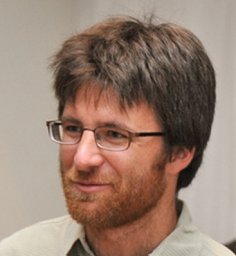 Jed Brown合作论文数Argonne National Laboratory3
 Miles Greiner合作论文数Argonne National Laboratory;University of Nevada;Argonne National Laboratory, University of Nevada3
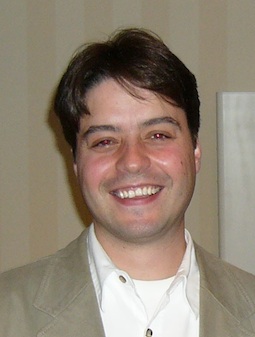 Philipp Schlatter合作论文数KTH Mechancis3S. Malbrunot-Ettenauer合作论文数2F. M. Maier合作论文数2M. Schlaich合作论文数2
 Carina Kanitz合作论文数2
 Taehun Lee合作论文数2
 V. Lagaki合作论文数2
 David Reger合作论文数Penn State Univ2P. Plattner合作论文数2
 Ronald Rahaman合作论文数2Yu-Hsiang Lan合作论文数Department of Computer Science, University of Illinois at Urbana-Champaign2M. Vilen合作论文数2
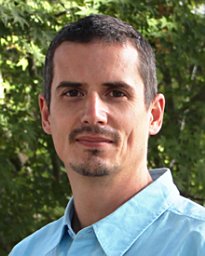 Jean-Sylvain Camier合作论文数Lawrence Livermore National Laboratory2
 Thilina Rathnayake合作论文数Department of Computer Science, University of Illinois at Urbana-Champaign2Jeremy Thompson合作论文数2S. Lechner合作论文数2
 Dillon Shaver合作论文数2
 Simon Sels合作论文数Katholieke Univ Leuven, Inst Kern Stralingsfys, B-3001 Leuven, Belgium2
 Vladimir Tomov合作论文数Lawrence Livermore National Laboratory2
 Robert N. Wolf合作论文数Division of Neuropathology, University of Mainz2Heylen H合作论文数2
 Sang-Wook Lee合作论文数School of Mechanical Engineering, University of Ulsan2Annick Pouquet合作论文数Laboratory for Atmospheric and Space Physics, University of Colorado, Boulder2Marco Rosenbusch合作论文数2
 Stanislav Boldyrev合作论文数Department of Physics, University of Wisconsin–Madison;Wisconsin Plasma Physics Laboratory, University of Wisconsin–Madison2
 Sofiane Benhamadouche合作论文数EDF-DER-LNH2Gerrit Marx合作论文数2
 Hisham S. Bassiouny合作论文数University of Chicago.2
 Tim Warburton合作论文数timwar@caam.rice.edu2
 Vijay Mahadevan合作论文数University of California, San Diego2
 Juan M. Restrepo合作论文数Department of Mathematics and Department of Physics, University of Arizona2Anil Deane合作论文数2




