Research into disability is often complex and simultaneously involves multiple aspects of patients, health professionals, carers and the situations within which patients live and care is received. Qualitative research into healthcare in general, and more specifically disability, must likewise incorporate the multiple important components of the care situation. In this paper I present the declarative mapping sentence method for conducting qualitative research with a particular emphasis upon its use in undertaking studies into disability and rehabilitation. The declarative mapping sentence is a sentence in ordinary English language that incorporates the important features (facets) of a domain of research interest along with sub-divisions of these facets (called elements). The facets are joined together using ordinary language (connective ontology) with great care so as to suggest the real life relationships between facets. In this paper I explore the components of the declarative mapping sentence in some detail and offer illustrative examples of a declarative mapping sentence developed for use in disability research. I draw attention to and discuss the advantages of using this method in disability and other health related research and suggest that the approach offers a framework within which to understand patients and healthcare professionals within context.
[Voir la version anglaise de l’article ici: www.cmaj.ca/lookup/doi/10.1503/cmaj.221284][1] Au Canada, la tuberculose (TB) demeure un héritage du colonialisme, la prévalence en étant bien plus élevée chez Premières Nations et les Inuits que chez les personnes non autochtones nées au pays[1
In this chapter, we turn our attention to projective approaches to research that employ some form of map or mapping technique in their procedure, or which involve the use and creation of maps of concepts or ideas, that are pertinent to participants. We will present these projective approaches under three major categories: Mapping, Mind Mapping and Concept Mapping. This chapter also addresses ways to plan research utilising a mapping approach and how to collect, analyse and present the related data. We also aim to point out both the pros and cons mapping approaches have so that you are able to make an educated decision on how to include these approaches into your work.
In this article, we discuss the ways in which the United Kingdom and the United States communicate health information to their respective citizens. While this article is not limited to the study of COVID-19 health communications, we look at the institutions that were tasked with communication responsibilities regarding the COVID-19 virus in the United States and United Kingdom. To highlight the possible repercussions on the general public of each nation, we present a review of the institutions of communication as a gateway for discussion and an opportunity to unveil discrepancies and inequitable forms of communication. These institutions are the Centers for Disease Control and Prevention, the National Institutes of Health in the United States, and the National Health Service in the United Kingdom. We consider the language and vocabulary used within these organizations' mission statements, privacy policies, digital channels and platforms, regulations for advice and feedback from federal agents as well the general public, and accessibility. We use an intersectional lens to explore the nuanced and multifarious impacts of communication praxis and aim to discuss how these have led to limitations of passive and comprehensive communication influences in both nations and their relation to health infrastructure. By understanding the constraints of health infrastructure on the current disenfranchised citizens in both the United States and United Kingdom, we can register the adverse behavioral imprint on individuals as a result and finally call for further research into the impact of reconstructive governmental health communications.
 Gordon Foxall合作论文数Cardiff Business School, Cardiff University8
 Sylvia Abonyi合作论文数8
 Christopher M Hayre合作论文数Dept Hlth & Care Profess, Univ Exeter7
 Katelyn Lustig合作论文数6
 Ava Gordley-Smith合作论文数5Bonnie Jeffery合作论文数5
 Nazeem Muhajarine合作论文数Department of Community Health & Epidemiology, University of Saskatchewan5
 Jessica Schwarzenbach合作论文数4
 Uta Maria Jurgens合作论文数Department of Psychology, Christian-Albrechts-University4
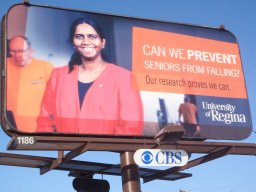 Shanthi Johnson合作论文数Saskatchewan Population Health and Evaluation Research Unit, University of Regina4Marc Viger合作论文数3
 Juanita Bacsu合作论文数Rural Dementia Act Res RaDAR Team, Univ Saskatchewan3Dan Caruana合作论文数2Madeleine Mant合作论文数Department of Anthropology, University of Toronto Mississauga2Dyck Roland F合作论文数university of saskatchewan2Richard Long合作论文数2P Lucas合作论文数2
 Courtney Heffernan合作论文数2
 Rollnick Stephen合作论文数School of Medicine, Cardiff University2Novik Nuelle合作论文数2Pamela M. Kenealy合作论文数2
 Fred van Raaij合作论文数Department of Social Sciences, Tilburg University2
 Bram Noble合作论文数Department of Geography & Planning, College of Arts and Science, University of Saskatchewan2Tom Mcintosh合作论文数Saskatchewan Population Health and Evaluation Research Unit, University of Regina2William C. Shaw合作论文数2
 Pammla Petrucka合作论文数Saskatchewan Population Health and Evaluation Research Unit, University of Saskatchewan2Neil Frude合作论文数2James M. Suvak合作论文数1D Müller合作论文数1Mary Hampton合作论文数1Apeksha Heendeniya Vidanaral合作论文数1
 Margaret Rauliuk合作论文数1Juanita Bascu合作论文数1B. Jeffery合作论文数1D Muller合作论文数1
 Ruth Gamble合作论文数Dept Archaeol & Hist, La Trobe Univ1
 Anthony Patt合作论文数Department of Environmental Systems Science, Institute For Environmental Decisions, Eidgenössische Technische Hochschule Zürich/International Institute For Applied Systems Analysis/University of Bayreuth1
 Farrah Mateen合作论文数Harvard Medical School, Massachusetts General Hospital;Department of Neurology, Massachusetts General Hospital1
 David B. Resnik合作论文数National Institute of Environmental Health Sciences, National Institutes of Health1
 Rachael C Shaw合作论文数Department of Psychology, University of Cambridge;Department of Psychology, University of Cambridge1Scherer Marcia J合作论文数1
 Sarah Pink合作论文数Department of Design, Monash University1MacNeil Scott合作论文数1Daschuk J W合作论文数1
 O'Connell Megan E合作论文数University of Saskatchewan1
 Deanna Bickford合作论文数College of Nursing, University of Saskatchewan1Philip Burnard合作论文数1
 Russell Jackson合作论文数1
 Paul Kinnersley合作论文数1




