Paul M. Romer delivered his Prize Lecture on 8 December 2018 at the Aula Magna, Stockholm University.
Stagnant global trade, subdued investment, and heightened policy uncertainty marked another difficult year for the world economy. A moderate recovery is expected for 2017, with receding obstacles to activity in commodity exporters and solid domestic demand in commodity importers. Weak investment is weighing on medium-term prospects across many emerging markets and developing economies (EMDEs). Although fiscal stimulus in major economies, if implemented, may boost global growth above expectations, risks to growth forecasts remain tilted to the downside. Important downside risks stem from heightened policy uncertainty in major economies.
When economists in the 1950s and 1960s used growth models to understand the experience of developing countries, they allowed for the possibility of technology differences between developing countri...
Polyamines are widespread distributed all over in living organisms. In Thalassiosira pseudonana 10 N-aminopropyl transferase like nucleotide sequences exists. It is assumed that these sequences are involved in the biomineralization of the diatom shell. The cDNA of the sequences were cloned, recombinant overexpressed and assayed with decarboxylated S-adenosylmethionine and several radioactive labelled polyamines. However, only a spermidine synthase and a thermospermine synthase were found to be enzymatically active in an in vitro assay. Both enzyme activities could be recognized in the crude extracts of Thalassiosira pseudonana and Cyclotella meneghiana. In further investigations the kinetics of the thermospermine synthase was determined and a site-specific mutagenesis of the bindig cavity of decarboxylated S-adenosylmethionine was carried out.
In a world with two similar, developedeconomies,economicintegrationcancausea permanentincreasein the worldwide rateof growth. Starting from a positionof isolation, closerintegrationcan beachievedby increasingtradein goodsor by increasingflows of ideas. We considertwo modelswith different specificationsof the researchand developmentsector that is the sourceof growth. Either form of integrationcan increase thelong-run rateof growthif it encouragestheworldwide exploitationof increasingreturns to scalein the researchand developmentsector.
IN A PREVIOUS PAPER I explored two suggestions about how to understand time-series and cross-country variations in measured total factor productivity growth: increases in the labor force might slow technological change and increases in capital might speed it up. 1 Neither suggestion was new. The conjecture about the effect of labor dates back, at least, to attempts to explain the divergence in productivity growth rates observed in the United States and the United Kingdom.2 The suggestion that investment or savings is a fundamental determinant of the rate of growth dates back to Adam Smith. Neither possibility can be considered within the narrow theoretical confines of neoclassical growth theory, but more recent models of endogenous growth show that they can arise in richer economic environments. This paper presents new evidence and new theoretical arguments that bear on these matters. In the theoretical model presented here, the rate of technological change depends on the amount of educated human capital devoted to applied research and development, which is interpreted in a broad sense. The model confirms the conjecture that an increase in the labor force can reduce the rate of technological change under appropriate assumptions about the possibilities for substitution between capital goods, physical labor, and skilled human capital, for example in the form of managers. The rate of improvement in the
Abstract Donald Lessard: Good afternoon, and, on behalf of our hosts Jerry Fair and Mike Murray of Bank of America, let me welcome you all to this discussion of the role of soft, or intangible, assets in driving corporate growth in the new global economy. I am Don Lessard, Professor of International Management at MIT’s Sloan School of Management, and I will be serving as moderator of the discussion.
This paper describes two strands of work that converged under the heading of ‘endogenous growth.’ One strand, which is primarily empirical, asks whether there is a general tendency for poor countries to catch up with rich countries. The other strand, which is primarily theoretical, asks what modifications are necessary to construct a theory of aggregate growth that takes the economics of discovery, innovation, and technological change seriously. The paper argues that the second strand of work will ultimately have a more significant impact on our understanding of growth and our approach to aggregate theory.
In 1953, the U.S. Chamber of Commerce proposed a major expansion in the coverage of the Old Age and Survivors Insurance Program-the program that we now think of as Social Security. There was much room for expansion because only 55% of the workforce was covered when the Social Security Act was passed in 1935. Legislation enacted in 1950 had already expanded the coverage of the program. It brought many additional workers into the Social Security system and substantially reduced the number of quarters of covered employment that were necessary to qualify for retirement benefits. However, these changes came too late for many people. Many workers had retired before 1950. Others died without working long enough to qualify, leaving widows who were not eligible for survivors insurance. Under the Social Security Act, these unfortunate people were eligible only for Old Age Assistance, the lessgenerous, means-tested welfare program administered by the states. Under the chamber’s proposal, everyone over the age of sixty-five would immediately become eligible for retirement benefits. The Old Age Assistance program would be terminated. Retirement benefits would continue to be financed on a pay-as-you-go basis, using a payroll tax. All remaining workers who had not yet been brought into the Social Security system would be subjected to the payroll tax, but the tax rate would still have to be increased to pay for the expanded system of benefits. From the perspective of the 1990s, it seems odd that a proposal for expanded social spending should come from a major business lobby. The political response this proposal provoked is equally surprising. Conservative Republicans
The typical economic model implicitly assumes that the set of goods in an economy never changes. As a result, the predicted efficiency loss from a tariff is small, on the order of the square of the tariff rate. If we loosen this assumption and assume that international trade can bring new goods into an economy, the fraction of national income lost when a tariff is imposed can be much larger, as much as two times the tariff rate. Much of this paper is devoted to explaining why this seemingly small change in the assumptions of a model can have such important positive and normative implications. The paper also asks why the implications of new goods have not more extensively been explored, especially given that the basic economic issues were identified 150 years ago. The mathematical difficulty of modeling new goods has no doubt been part of the problem. An equally, if not more important stumbling block has been the deep philosophical resistance that humans feel toward the unavoidable logical consequence of assuming that genuinely new things can happen and could have happened at every date in the past. We are forced to admit that the world as we know it is the result of a long string of chance outcomes.
No abstract is available for this paper.
 A Faltermeier合作论文数1xavier salaymartin合作论文数1robert m solow合作论文数1R Mai合作论文数1
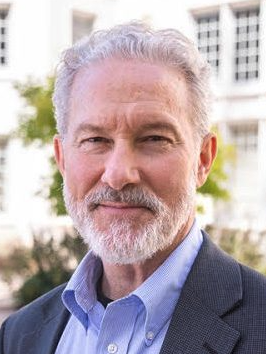 Rich Lyons合作论文数Haas School of Business, University of California, Berkeley1
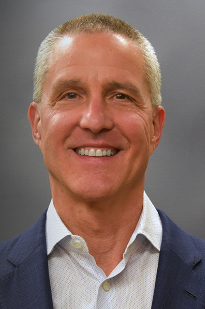 Ross Levine合作论文数University of California, Berkeley;Hoover Institution, Stanford University;National Bureau of Economic Research;Asia Bureau of Finance and Economic Research1
 Tomasz Gedrange合作论文数1
 William A. Brock合作论文数Economics Department, College of Arts and Science, University of Missouri;Department of Economics, University of Wisconsin - Madison1
 Sergio Schmukler合作论文数The World Bank1
 Richard Nelson合作论文数The Center on Capitalism and Society, Columbia University in the City of New York1
 José De Gregorio合作论文数Departamento de Economía, Facultad de Economía y Negocios, Universidad de Chile;Peterson Institute for International Economics1
 Lant Pritchett合作论文数School of Public Policy, London School of Economics1
 M. Ayhan Kose合作论文数international monetary fund1
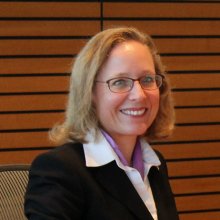 Franziska Ohnsorge合作论文数International Monetary Fund1
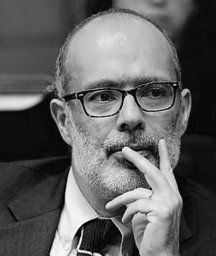 Rodrigo O. Valdés合作论文数Research Department, Central Bank of Chile1
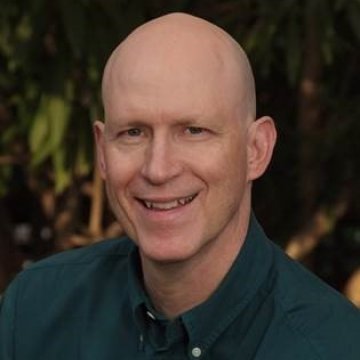 Pete Klenow合作论文数Department of Economics, School of Humanities and Sciences, Stanford University;National Bureau of Economic Research1
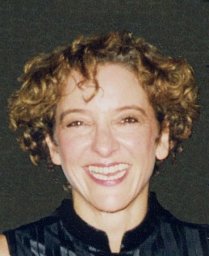 Graciela L. Kaminsky合作论文数Board of Governors of the Federal Reserve System1
 Peter Proff合作论文数1




