Quantum technologies promise a radically new way to solve classically intractable computing problems. Superconducting circuits as a platform are at the forefront of this field. The cryogenic operation temperatures of superconducting circuits however impose challenges for the further scaling to many connected quantum information processing units into a local area or global network. In this work, we present a hardware solution for connecting quantum devices operating at microwave frequencies into local area networks, which enable the exchange of quantum information between spatially separated parties. Specifically, we demonstrate a modular system spanning distances of 5, 10 and 30 meters operated at cryogenic temperatures and connecting two superconducting circuit systems, located in individual dilution refrigerators, through a quantum communication channel. We develop a thermal model to evaluate the heat transfer processes in the setup, optimize the design and select appropriate materials for its construction. The assembled 30-meter-long system achieves operating temperatures of below 50 mK after a cooldown time of about six and a half days. This link enables the execution of distributed quantum computing and communication algorithms. It also adds the resource of non-locality, certified by a loophole-free Bell test, to the field of quantum science and technology with superconducting circuits.
Dissipative cat-qubits are a promising architecture for quantum processors due to their built-in quantum error correction. By leveraging two-photon stabilization, they achieve an exponentially suppressed bit-flip error rate as the distance in phase-space between their basis states increases, incurring only a linear increase in phase-flip rate. This property substantially reduces the number of qubits required for fault-tolerant quantum computation. Here, we implement a squeezing deformation of the cat qubit basis states, further extending the bit-flip time while minimally affecting the phase-flip rate. We demonstrate a steep reduction in the bit-flip error rate with increasing mean photon number, characterized by a scaling exponent γ=4.3, rising by a factor of 74 per added photon. Specifically, we measure bit-flip times of 22 seconds for a phase-flip time of 1.3 μs in a squeezed cat qubit with an average photon number n̅=4.1, a 160-fold improvement in bit-flip time compared to a standard cat. Moreover, we demonstrate a two-fold reduction in Z-gate infidelity, with an estimated phase-flip probability of ϵ_X = 0.085 and a bit-flip probability of ϵ_Z = 2.65 · 10^-9 which confirms the gate bias-preserving property. This simple yet effective technique enhances cat qubit performances without requiring design modification, moving multi-cat architectures closer to fault-tolerant quantum computation.
The performance of a wide range of quantum computing algorithms and protocols depends critically on the fidelity and speed of the employed qubit readout. Examples include gate sequences benefiting from midcircuit real-time measurement-based feedback, such as qubit initialization, entanglement generation, teleportation, and, perhaps most importantly, quantum error correction. A prominent and widely used readout approach is based on the dispersive interaction of a superconducting qubit strongly coupled to a large-bandwidth readout resonator, frequently combined with a dedicated or shared Purcell filter protecting qubits from decay. By dynamically reducing the qubit-resonator detuning and thus increasing the dispersive shift, we demonstrate a beyond-state-of-the-art two-state-readout error of only 0.25% in 100-ns integration time. Maintaining low-readout-drive strength, we nearly quadruple the signal-to-noise ratio of the readout by doubling the readout-mode line width, which we quantify by considering the hybridization of the readout resonator and its dedicated Purcell filter. We find excellent agreement between our experimental data and our theoretical model. The presented results are expected to further boost the performance of new and existing algorithms and protocols critically depending on high-fidelity fast midcircuit measurements.
Superposition, entanglement and non-locality constitute fundamental features of quantum physics. The fact that quantum physics does not follow the principle of local causality1-3 can be experimentally demonstrated in Bell tests4 performed on pairs of spatially separated, entangled quantum systems. Although Bell tests, which are widely regarded as a litmus test of quantum physics, have been explored using a broad range of quantum systems over the past 50 years, only relatively recently have experiments free of so-called loopholes5 succeeded. Such experiments have been performed with spins in nitrogen-vacancy centres6, optical photons7-9 and neutral atoms10. Here we demonstrate a loophole-free violation of Bell's inequality with superconducting circuits, which are a prime contender for realizing quantum computing technology11. To evaluate a Clauser-Horne-Shimony-Holt-type Bell inequality4, we deterministically entangle a pair of qubits12 and perform fast and high-fidelity measurements13 along randomly chosen bases on the qubits connected through a cryogenic link14 spanning a distance of 30 metres. Evaluating more than 1 million experimental trials, we find an average S value of 2.0747 ± 0.0033, violating Bell's inequality with a P value smaller than 10-108. Our work demonstrates that non-locality is a viable new resource in quantum information technology realized with superconducting circuits with potential applications in quantum communication, quantum computing and fundamental physics15.
Deterministic photon-photon gates enable the controlled generation of entanglement between mobile carriers of quantum information. Such gates have thus far been exclusively realized in the optical domain and by relying on post-selection. Here, we present a non-post-selected, deterministic, photon-photon gate in the microwave frequency range realized using superconducting circuits. We emit photonic qubits from a source chip and route those qubits to a gate chip with which we realize a universal gate set by combining controlled absorption and re-emission with single-qubit gates and qubit-photon controlled-phase gates. We measure quantum process fidelities of 75 % for single- and of 57 % for two-qubit gates, limited mainly by radiation loss and decoherence. This universal gate set has a wide range of potential applications in superconducting quantum networks.
Superconducting circuits are a strong contender for realizing quantum computing systems and are also successfully used to study quantum optics and hybrid quantum systems. However, their cryogenic operation temperatures and the current lack of coherence-preserving microwave-to-optical conversion solutions have hindered the realization of superconducting quantum networks spanning different cryogenic systems or larger distances. Here, we report the successful operation of a cryogenic waveguide coherently linking transmon qubits located in two dilution refrigerators separated by a physical distance of five meters. We transfer qubit states and generate entanglement on demand with average transfer and target state fidelities of 85.8% and 79.5%, respectively, between the two nodes of this elementary network. Cryogenic microwave links provide an opportunity to scale up systems for quantum computing and create local area superconducting quantum communication networks over length scales of at least tens of meters.
A challenge in building large-scale superconducting quantum processors is to find the right balance between coherence, qubit addressability, qubit-qubit coupling strength, circuit complexity and the number of required control lines. Leading all-microwave approaches for coupling two qubits require comparatively few control lines and benefit from high coherence but suffer from frequency crowding and limited addressability in multi-qubit settings. Here, we overcome these limitations by realizing an all-microwave controlled-phase gate between two transversely coupled transmon qubits which are far detuned compared to the qubit anharmonicity. The gate is activated by applying a single, strong microwave tone to one of the qubits, inducing a coupling between the two-qubit $|f,g\rangle$ and $|g,e\rangle$ states, with $|g\rangle$, $|e\rangle$, and $|f\rangle$ denoting the lowest energy states of a transmon qubit. Interleaved randomized benchmarking yields a gate fidelity of $97.5\pm 0.3 \%$ at a gate duration of $126\,\rm{ns}$, with the dominant error source being decoherence. We model the gate in presence of the strong drive field using Floquet theory and find good agreement with our data. Our gate constitutes a promising alternative to present two-qubit gates and could have hardware scaling advantages in large-scale quantum processors as it neither requires additional drive lines nor tunable couplers.
Sources of entangled electromagnetic radiation are a cornerstone in quantum information processing and offer unique opportunities for the study of quantum many-body physics in a controlled experimental setting. Generation of multi-mode entangled states of radiation with a large entanglement length, that is neither probabilistic nor restricted to generate specific types of states, remains challenging. Here, we demonstrate the fully deterministic generation of purely photonic entangled states such as the cluster, GHZ, and W state by sequentially emitting microwave photons from a controlled auxiliary system into a waveguide. We tomographically reconstruct the entire quantum many-body state for up to N = 4 photonic modes and infer the quantum state for even larger N from process tomography. We estimate that localizable entanglement persists over a distance of approximately ten photonic qubits.
A robust cryogenic infrastructure in form of a wired, thermally optimized dilution refrigerator is essential for solid-state based quantum processors. Here, we engineer a cryogenic setup, which minimizes passive and active heat loads, while guaranteeing rapid qubit control and readout. We review design criteria for qubit drive lines, flux lines, and output lines used in typical experiments with superconducting circuits and describe each type of line in detail. The passive heat load of stainless steel and NbTi coaxial cables and the active load due to signal dissipation are measured, validating our robust and extensible concept for thermal anchoring of attenuators, cables, and other microwave components. Our results are important for managing the heat budget of future large-scale quantum computers based on superconducting circuits.
Heralding techniques are useful in quantum communication to circumvent losses without resorting to error correction schemes or quantum repeaters. Such techniques are realized, for example, by monitoring for photon loss at the receiving end of the quantum link while not disturbing the transmitted quantum state. We describe and experimentally benchmark a scheme that incorporates error detection in a quantum channel connecting two transmon qubits using traveling microwave photons. This is achieved by encoding the quantum information as a time-bin superposition of a single photon, which simultaneously realizes high communication rates and high fidelities. The presented scheme is straightforward to implement in circuit QED and is fully microwave-controlled, making it an interesting candidate for future modular quantum computing architectures.
Active qubit reset is a key operation in many quantum algorithms, and particularly in quantum error correction. Here, we experimentally demonstrate a reset scheme for a three-level transmon artificial atom coupled to a large bandwidth resonator. The reset protocol uses a microwave-induced interaction between the |f,0⟩ and |g,1⟩ states of the coupled transmon-resonator system, with |g⟩ and |f⟩ denoting the ground and second excited states of the transmon, and |0⟩ and |1⟩ the photon Fock states of the resonator. We characterize the reset process and demonstrate reinitialization of the transmon-resonator system to its ground state in less than 500 ns and with 0.2% residual excitation. Our protocol is of practical interest as it has no additional architectural requirements beyond those needed for fast and efficient single-shot readout of transmons, and does not require feedback.
Sharing information coherently between nodes of a quantum network is fundamental to distributed quantum information processing. In this scheme, the computation is divided into subroutines and performed on several smaller quantum registers that are connected by classical and quantum channels 1 . A direct quantum channel, which connects nodes deterministically rather than probabilistically, achieves larger entanglement rates between nodes and is advantageous for distributed fault-tolerant quantum computation 2 . Here we implement deterministic state-transfer and entanglement protocols between two superconducting qubits fabricated on separate chips. Superconducting circuits 3 constitute a universal quantum node 4 that is capable of sending, receiving, storing and processing quantum information 5 – 8 . Our implementation is based on an all-microwave cavity-assisted Raman process 9 , which entangles or transfers the qubit state of a transmon-type artificial atom 10 with a time-symmetric itinerant single photon. We transfer qubit states by absorbing these itinerant photons at the receiving node, with a probability of 98.1 ± 0.1 per cent, achieving a transfer-process fidelity of 80.02 ± 0.07 per cent for a protocol duration of only 180 nanoseconds. We also prepare remote entanglement on demand with a fidelity as high as 78.9 ± 0.1 per cent at a rate of 50 kilohertz. Our results are in excellent agreement with numerical simulations based on a master-equation description of the system. This deterministic protocol has the potential to be used for quantum computing distributed across different nodes of a cryogenic network.
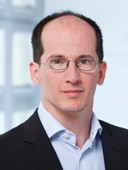 Andreas Wallraff合作论文数Department of Physics, Eidgenossische Technische Hochschule Zurich21
 P Kurpiers合作论文数ETH, Dept Phys, CH-8093 Zurich, Switzerland18
 Jean-Claude Besse合作论文数ETH Zurich14
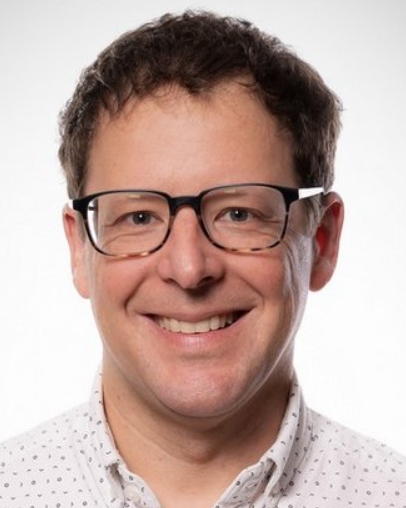 Alexandre Blais合作论文数Département de Physique, Faculté des Sciences, Universite de Sherbrooke;Institut Quantique, Universite de Sherbrooke11
 Baptiste Royer合作论文数Département de Physique, Université de Sherbrooke10
 Abdulkadir Akin合作论文数Electronics Engineering;Sabanci University;Sabanci University8
 Kevin Reuer合作论文数ETH Zurich7
 Simon Storz合作论文数6
 Christopher Eichler合作论文数Department of Physics, Naturwissenschaftliche Fakultät, Friedrich-Alexander-Universität;Institute of Optics, Information and Photonics, Friedrich-Alexander-Universität6
 Simone Gasparinetti合作论文数Low Temperature Laboratory (OVLL),, Aalto University6Pechal M合作论文数Department of Physics, ETH Zurich6S. Storz合作论文数5Norris Graham J.合作论文数5
 Johannes Heinsoo合作论文数5Theo Walter合作论文数5
 M. Gabureac合作论文数Service de Physique de l'État Condensé, CEA Saclay 91191 Gif-Sur-Yvette Cedex France 91191 Gif-Sur-Yvette Cedex France5Lucien Wernli合作论文数4Josua Schär合作论文数4
 Sebastian Krinner合作论文数Institute for Quantum Electronics, ETH Zürich4Adrian Copetudo合作论文数3Janis Lütolf合作论文数3Fabian Marxer合作论文数3Ants Remm合作论文数Dept Phys, Swiss Fed Inst Technol2Yves Salathe合作论文数2
 Daniel Malz合作论文数Max Planck Inst Quantum Opt, Hans Kopfermann Str 1, D-85748 Garching, Germany2Michele C. Collodo合作论文数2
 Antoine Marquet合作论文数1Theodore Walter合作论文数1Peronnin Théau合作论文数1R. Keller合作论文数1Janis Luetolf合作论文数1Juan Cirac合作论文数1Markus Oppliger合作论文数1Elie Gouzien合作论文数1Dante Colao Zanuz合作论文数1Diego Ruiz合作论文数1
 Ross Shillito合作论文数1
 Antoine Essig合作论文数Lab Phys, Univ Lyon1
 Ulysse Reglade合作论文数Mines ParisTech, PSL Res Univ1
 Jean-Loup Ville合作论文数Quantum Nanoelect Lab, Univ Calif Berkeley1
 Raphael Lescanne合作论文数QUANTIC Team, INRIA Paris1
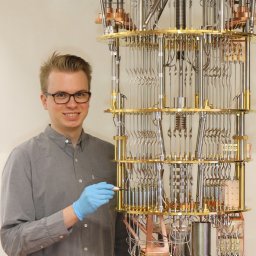 Francois Swiadek合作论文数Dept Phys, Swiss Fed Inst Technol1
 Nathan Lacroix合作论文数Dept Phys, Swiss Fed Inst Technol1Jeremy Stevens合作论文数1Ivan Tsitsilin合作论文数Bayer Akad Wissensch, Walther Meissner Inst1
 Andres Rosario Hamann合作论文数ARC Ctr Excellence Engn Quantum Syst, Univ Queensland1Emanuele Albertinale合作论文数Quantronics Group, SPEC, CEA, CNRS, Université Paris-Saclay, CEA Saclay 91191, Gif-sur-Yvette Cedex, France1
 Nathanaël Cottet合作论文数Sorbonne Paris Cite, Univ Paris Diderot,Lab Pierre Aigrain, Sorbonne Univ,Ecole Normale Super, Univ Pierre & Marie CuriePSL Res Univ,CNRS, F-75231 Paris 05, France1




