The physics of quantum dot based optical devices has been studied intensively due to their interesting blend of atomic and solid state properties. Recently, attention has been focused on their absorption properties and has led to QD materials finding favour in such applications as monolithic mode-locked lasers, electro-absorption modulators and saturable absorber mirrors. In this study we perform a detailed experimental investigation of the ultrafast absorption and phase dynamics of a QD InAs/GaAs structure under reverse bias conditions using single colour pump-probe measurements. Experimental results reveal the fundamental timescales and underlying dynamical processes occurring in such absorbers. We will also consider the impact of the observed absorption and phase dynamics on some current applications of QD absorbers.
Two-color pump-probe measurements are used to study the carrier dynamics of InAs/GaAs quantum dots in a waveguide structure under reverse bias conditions. For the case of initially populating the ground state (GS), we find relaxation dynamics that include both absorptive and bleaching components in the excited state (ES) wavelength range. We reproduce the main features of this induced absorption dynamics using a simple model with an additional term for induced absorption at the ES due to carriers injected at the GS. The induced absorption dynamics includes multiple recovery timescales which can be attributed to phonon-assisted processes of GS/ES interaction.
Hybrid mode-locking in monolithic quantum dot (QD) lasers is studied experimentally and theoretically. A strong asymmetry of the locking range with respect to the passive mode locking frequency is observed. The width of this range increases linearly with the modulation amplitude for all operating parameters. Maximum locking range found is 30 MHz. The results of a numerical analysis performed using a set of delay-differential equations taking into account carrier exchange between QDs and wetting layer are in agreement with experiments and indicate that a spectral filtering element could improve locking characteristics.
In this study we perform a detailed investigation of the ultrafast processes which govern the intradot recovery dynamics of a QD InAs/GaAs structure under reverse bias condition by means of the Single and Two Colour Pump-Probe technique. By studying the GS and ES recoveries as a function of reverse bias voltage and fitting the experimental results with a simple rate equation model for the intradot carrier dynamics we have illustrated the dominance of Auger mediated recovery when the ES is initially populated while phonon mediated recovery dominates for the GS case. This provides opportunities for the design of the next generation of electro-absorbing devices based on QD materials.
The nonlinear recovery of quantum dot based reverse-biased waveguide absorbers is investigated both experimentally and analytically. We show that the recovery dynamics consists of a fast initial layer followed by a relatively slow decay. The fast recovery stage is completely determined by the intradot properties, while the slow stage depends on the escape from the dot to the wetting layer.
We consider a rate equation model of a quantum dot semiconductor optical amplifier that takes into account carrier capture, escape, and Pauli blocking processes. We evaluate possible differences between phonon-assisted or Auger processes being dominant for recovery. An analytical solution which corresponds to phonon-assisted interaction is then used to accurately fit experimental recovery curves and allows an estimation of both the carrier capture and escape rates.
We analyze the relaxation dynamics of quantum dot/dash lasers in terms of the energy exchange between the ground state and the wetting layer. We consider the case where both capture and escape times are of the same order of magnitude and determine the relaxation oscillation frequency and its damping rate. We show that the escape process may significantly affect the modulation characteristics and the tolerance to optical feedback.
The carrier relaxation and escape dynamics of InAs/GaAs quantum dot waveguide absorbers is studied using heterodyne pump-probe measurements. Under reverse bias conditions, we reveal differences in intradot relaxation dynamics, related to the initial population of the dots’ ground or excited states. These differences can be attributed to phonon-assisted or Auger processes being dominant for initially populated ground or excited states, respectively.
There remain a number of critical issues involving dynamical stability properties of semiconductor lasers even though lasers with nano-structured quantum dot (QD) active layers have provided an enormous stimulus to work in this field. In QD devices, the carriers are first injected into a wetting layer before being captured by an empty dot. It has long been suspected that this capture will contribute to a larger damping rate of the relaxation oscillations. In summary, QD lasers exhibit a two-stage recovery for low intensities that increase their stability compared to QW lasers.
This paper theoretically and experimentally studies the stability of the modelocking regime in quantum dot lasers. Experimental investigations are carried out with a 40 GHz QD-ML module, having a standard single mode fiber pigtail and a microwave port. The active zone of the device contains 15 layers of self-organized InAs quantum dots embedded in InGaAs quantum wells. Observations show a small region of modulated mode-locking at low gain currents apparent in quantum well devices.
Our theoretical analysis is based on time-delayed equations describing the properties of two section quantum dot semiconductor lasers (Viktorov et al., 2006) under the influence of noise. The ML regime is described by two recovery stages with different timescales that can be related to carrier capture and relaxation mechanisms within a dot. Here the numerical study shows that the timing jitter is strongly affected by the presence of bistability. In particular, contrary to the usual behavior, our analysis shows that, near the lasing threshold, the timing jitter increases with increasing injection current.
We discuss level mixing induced transparency (LMIT), which is experimentally found in a thick absorber of FeCO3 containing the 57Fe Mössbauer nuclei. LMIT is observed if two hyperfine levels of the excited state nucleus cross. Absorption of gamma radiation drops by about 25% with respect to the sum of two overlapping absorption lines. The absorption deficit is explained by the mixing of the crossing levels with a symmetry breaking interaction. The level mixing induces a polarization change of the scattered radiation. In such a way, the radiation develops in “normal modes,” which are less absorbed in a thick absorber. We show that, in spite of the absorption drop, the area of the absorption line does not change. This confirms the general knowledge that interference phenomena (destructive or constructive) do not change the lifetime of an excited state particle (atom, nucleus, etc).
We propose a delay-differential equation to model dynamical instabilities in a quantum dot laser. We focus on a laser with a small gain section and a long empty section. A long cavity reduces the strong damping of the relaxation oscillation frequency. It leads to the appearance of dropouts at the delay period, which evolve to chaos.
We report on experimental and theoretical studies of the stability regime of passive mode-locked quantum dot lasers, which is decisively larger than in quantum well lasers. A small range of Q-switched instability is observed at low gain currents. Transition to Q switching is inhibited due to fast damping of the relaxation oscillations. A double pulse mode-locking regime appears for longer cavities, and exhibits bistability and coupling to the fundamental mode-locking operation.
In this paper, we report on both experimental and theoretical investigations on the dynamics of self-pulsation regimes in a two-section QD laser that is operating simultaneously on the GS and ES transitions. We show that the competition between the two states results in anti-phase dynamics. We also found a sub-harmonic sequence that leads ultimately to chaos.
We analyze a three-variable rate equation model that takes into account carrier capture and Pauli blocking in quantum dot semiconductor lasers. The exponential decay of the relaxation oscillations is analyzed from the linearized equations in terms of three key parameters that control the time scales of the laser. Depending on their relative values, we determine two distinct two-variable reductions of the rate equations in the limit of large capture rates. The first case leads to the rate equations for quantum well lasers, exhibiting relaxation oscillations dynamics. The second case corresponds to dots nearly saturated by the carriers and is characterized by the absence of relaxation oscillations.
We consider the time-delayed coincidence counting of two photons emitted in a cascade by a single particle (atom, molecule, nucleus, etc.). The time-dependence of the probability amplitude of the second photon in the cascade has a sharply rising leading edge due to the detection of the first photon, as results from causality. If a macroscopic ensemble of resonant two-level absorbers is placed in the path of the second photon between the radiation source and the detector, the photon absorption does not follow Beer's law due to the time-asymmetric shape of the photon. For very short delay times almost no absorption takes place, even in an optically dense medium. We analyze the propagation of such a second photon in a thick resonant three-level absorber if a narrow electromagnetically induced transparency (EIT) window is present at the center of the absorption line. It is shown that the EIT medium can change the asymmetric time dependence of the photon probability amplitude to a bell shape (EIT filtering). This bell-shaped photon interacts much more efficiently with another ensemble of two-level absorbers chosen, for example, to store this photon and the information it carries. Ideally a photon wave packet with a Gaussian time-envelope is most effectively stored.
 Evgeny Viktorov合作论文数Institute for Laser Physics St. Petersburg42
 Thomas Erneux合作论文数Unité de recherche en Physique des systèmes dynamiques, Université libre de Bruxelles31
 Mustapha Tlidi合作论文数Belgian National Science Foundation28
 Kenju Otsuka合作论文数TS3L21
 Andrei G. Vladimirov合作论文数Weierstrass Institute for Applied Analysis and Stochastics17
 Olga Kocharovskaya合作论文数Department of Physics & Astronomy, College of Arts & Sciences, Texas A&M University16
 Gregory Kozyreff合作论文数Optique Nonlineaire Theorique;UniversiteLibre de Bruxelles;Optique Nonlineaire Theorique, UniversiteLibre de Bruxelles15
 Guillaume Huyet合作论文数Institut de Physique de Nice, Université Côte d'Azur12Didier Pieroux合作论文数12
 Luigi Lugiato合作论文数University of Insubria11Jos Odeurs合作论文数11Rustem Shakhmuratov合作论文数Instituut voor Kern-& Stralingsfysica, Katholieke Universiteit Leuven11
 Igor Koryukin合作论文数10H. Zeghlache合作论文数10Romain Coussement合作论文数9
 Nicolas Pettiaux合作论文数9Ba D. Nguyen合作论文数7Jing-Yi Wang合作论文数7Ruo-Ding Li合作论文数7Tomasz Piwonski合作论文数6
 Masoller Cristina合作论文数Physics department, Universitat Politecnica de Catalunya6
 Marc Haelterman合作论文数Université Libre de Bruxelles6Neal B Abraham合作论文数6J. Houlihan合作论文数6
 John Houlihan合作论文数5
 Raymond Kapral合作论文数Lash Miller Chemical Laboratories, Department of Chemistry, Faculty of Arts & Science, University of Toronto5
 M. S. Torre合作论文数Facultad de Ciencias Exactas, Universidad Nacional del Centro de la Provincia de Buenos Aires5
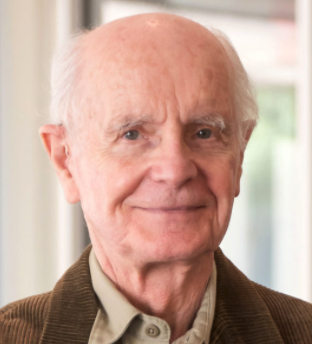 Marlan Scully (司嘉理)合作论文数Department of Physics and Astronomy, Texas A&M University;Princeton University5Christoph Etrich合作论文数5M. Georgiou合作论文数5
 Gian Luca Lippi合作论文数Institut de Physique de Nice, Université Côte d'Azur;UMR 7010 CNRS5YI KHANIN合作论文数4PA KHANDOKHIN合作论文数4Alejandro M. Yacomotti合作论文数4Lm Narducci合作论文数4lois m hoffer合作论文数4
 Yuri Rostovtsev合作论文数Department of Physics, Texas A & M University4Stijn Gheysen合作论文数4G. Fiol合作论文数Institut für Festkörperphysik;Technische Univer sität Berlin;Institut für Festkörperphysik, Technische Univer sität Berlin4Neal B. Abraham合作论文数4Pasquale Nardone合作论文数4a c maan合作论文数3
 K. Alan Shore合作论文数School of Computer Science and Engineering, Bangor University3Pulka, J.合作论文数3
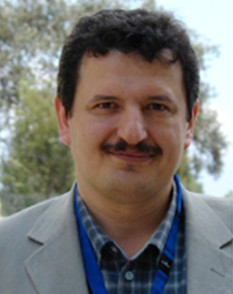 Edik Rafailov合作论文数School of Engineering and Applied Science, Aston University3Andrzej Kossakowski合作论文数3
 H.T.C. (Henk) Stoof合作论文数Institute for Theoretical Physics, University of Utrecht3René Lefever合作论文数3S. T. Dembiński合作论文数3




