Recent experimental advances in nanofluidics have allowed to explore ion transport across molecular-scale pores, in particular, for iontronic applications. Two-dimensional nanochannels-in which a single molecular layer of electrolyte is confined between solid walls-constitute a unique platform to investigate fluid and ion transport in extreme confinement, highlighting unconventional transport properties. In this work, we study ionic association in 2D nanochannels, and its consequences on non-linear ionic transport, using both molecular dynamics simulations and analytical theory. We show that under sufficient confinement, ions assemble into pairs or larger clusters in a process analogous to a Kosterlitz-Thouless transition, here modified by the dielectric confinement. We further show that the breaking of pairs results in an electric-field dependent conduction, a mechanism usually known as the second Wien effect. However the 2D nature of the system results in non-universal, temperature-dependent, scaling of the conductivity with electric field, leading to ionic coulomb blockade in some regimes. A 2D generalization of the Onsager theory fully accounts for the non-linear transport. These results suggest ways to exploit electrostatic interactions between ions to build new nanofluidic devices.
β-Barrel nanopores are involved in crucial biological processes, from ATP export in mitochondria to bacterial resistance, and represent a promising platform for emerging sequencing technologies. However, in contrast to ion channels, the understanding of the fundamental principles governing ion transport through these nanopores remains largely unexplored. Here we integrate experimental, numerical and theoretical approaches to elucidate ion transport mechanisms in β-barrel nanopores. We identify and characterize two distinct nonlinear phenomena: open-pore rectification and gating. Through extensive mutation analysis of aerolysin nanopores, we demonstrate that open-pore rectification is caused by ionic accumulation driven by the distribution of lumen charges. In addition, we provide converging evidence suggesting that gating is controlled by electric fields dissociating counterions from lumen charges, promoting local structural deformations. Our findings establish a rigorous framework for characterizing and understanding ion transport processes in protein-based nanopores, enabling the design of adaptable nanofluidic biotechnologies. We illustrate this by optimizing an aerolysin mutant for computing applications.
Electrostatic correlations between ions dissolved in water are known to impact their transport properties in numerous ways, from conductivity to ion selectivity. The effects of these correlations on the solvent itself remain, however, much less clear. In particular, the addition of salt has been consistently reported to affect the solution's viscosity, but most modeling attempts fail to reproduce experimental data even at moderate salt concentrations. Here, we use an approach based on stochastic density functional theory, which accurately captures charge fluctuations and correlations. We derive a simple analytical expression for the viscosity correction in concentrated electrolytes, by directly linking it to the liquid's structure factor. Our prediction compares quantitatively to experimental data at all temperatures and all salt concentrations up to the saturation limit. This universal link between the microscopic structure and viscosity allows us to shed light on the nanoscale dynamics of water and ions under highly concentrated and correlated conditions.
Lydéric Bocquet opened a general discussion of the paper by Markus Valtiner: These are very nice and important experiments (https://doi.org/10.1039/d3fd00038a). Can you comment on the dynamics? The dynamics in the experiments seems to be substantially faster than the diffusion time scale (among others). Did you s
Sanli Faez opened discussion of the paper by Tanja Vidaković-Koch: In the reported measurements, for example in Table 1 of your paper (https://doi.org/10.1039/d3fd00030c), the specific energy consumption is increasing with increasing frequency, but all values are still lower than the steady state value. What expl
Sophie Marbach opened a discussion of the paper by Sumita Pennathur: Could you please tell us how you measure the size of the channel (80, 100 nm)? Sumita Pennathur responded: We use hard polydimethylsiloxane (hPDMS) as a removable top that can bond to our glass channel. Then, once we have coated the channel, we
Nanofluidics, the field interested in flows at the smallest scales, has grown at a fast pace, reaching an ever finer control of fluidic and ionic transport at the molecular level. Until now, artificial pores are far from reaching the wealth of functionalities of biological channels that regulate sensory detection, biological transport, and neurostransmission-all while operating at energies comparable to thermal noise. Here, we argue that artificial ionic machines can be designed by harnessing the entire wealth of phenomena available at the nanoscales and exploiting techniques developed in various fields of physics. As they are generally based on solid-state nanopores, rather than soft membranes and proteins, they should, in particular, aim at taking advantage of their specific properties, such as their electronic structure or their ability to interact with light. These observations call for the design of new ways of probing nanofluidic systems. Nanofluidics is now at the crossroads, there are new avenues to build complex ionic machines, and this may allow to develop new functionalities inspired by nature.
Ion transport through biological and solid-state nanochannels is known to be a highly noisy process. The power spectrum of current fluctuations is empirically known to scale like the inverse of frequency, following the long-standing yet poorly understood Hooge's law. Here, we report measurements of current fluctuations across nanometer-scale two-dimensional channels with different surface properties. The structure of fluctuations is found to depend on the channel's material. While in pristine channels current fluctuations scale like 1/f1+a with a = 0-0.5, the noise power spectrum of activated graphite channels displays different regimes depending on frequency. Based on these observations, we develop a theoretical formalism directly linking ion dynamics and current fluctuations. We predict that the noise power spectrum takes the form 1/f × Schannel(f), where 1/f fluctuations emerge in fluidic reservoirs on both sides of the channel and Schannel describes fluctuations inside it. Deviations to Hooge's law thus allow direct access to the ion transport dynamics of the channel - explaining the entire phenomenology observed in experiments on 2D nanochannels. Our results demonstrate how current fluctuations can be used to characterize nanoscale ion dynamics.
Alexei A. Kornyshev opened the discussion of the introductory lecture by Yan Levin: Actually, in a very small pore of the size of the ion, any interactions between two ions will be strongly (exponentially) screened, so that when the electrode is polarized, it will be easier to uncouple the ions of opposite sign a
Ion transport measurements are widely used as an indirect probe for various properties of confined electrolytes. It is generally assumed that the ion concentration in a nanoscale channel is equal to the ion concentration in the macroscopic reservoirs it connects to, with deviations arising only in the presence of surface charges on the channel walls. Here, we show that this assumption may break down even in a neutral channel due to electrostatic correlations between the ions arising in the regime of interaction confinement, where Coulomb interactions are reinforced due to the presence of the channel walls. We focus on a one-dimensional channel geometry, where an exact evaluation of the electrolyte's partition function is possible with a transfer operator approach. Our exact solution reveals that in nanometer-scale channels, the ion concentration is generally lower than in reservoirs and depends continuously on the bulk salt concentration, in contrast to the conventional mean-field theory that predicts an abrupt filling transition. We develop a modified mean-field theory taking into account the presence of ion pairs that agrees quantitatively with the exact solution and provides predictions for experimentally relevant observables, such as the ionic conductivity. Our results will guide the interpretation of nanoscale ion transport measurements.
The transport of fluids at the nanoscale is fundamental to manifold biological and industrial processes, ranging from neurotransmission to ultrafiltration. Yet, it is only recently that well-controlled channels with cross sections as small as a few molecular diameters became an experimental reality. When aqueous electrolytes are confined within such channels, the Coulomb interactions between the dissolved ions are reinforced due to dielectric contrast at the channel walls: We dub this effect "interaction confinement." Yet, no systematic way of computing these confined interactions has been proposed beyond the limiting cases of perfectly metallic or perfectly insulating channel walls. Here, we introduce a new formalism, based on the so-called surface response functions, that expresses the effective Coulomb interactions within a two-dimensional channel in terms of the wall's electronic structure, described to any desired level of precision. We use it to demonstrate that in few-nanometer-wide channels, the ionic interactions can be tuned by the wall material's screening length. We illustrate this approach by implementing these interactions in Brownian dynamics simulations of a strongly confined electrolyte and show that the resulting ionic conduction can be adjusted between Ohm's law and a Wien effect behavior. Our results provide a quantitative approach to tuning nanoscale ion transport through the electronic properties of the channel wall material.
New energy-efficient architectures inspired by the brain are growing as an alternative to traditional von Neumann computing. While existing hardware implementations use electrons as charge carriers, advances in nanofluidics have opened the possibilities for ion-based computation, inspired by biological neurons. We develop an analytical theory, backed up by molecular dynamics simulations, predicting neuromorphic behaviour in recently demonstrated two-dimensional electrolytes confined in a subnanometric slit. We show that under an electric field, ions assemble into micelle-like clusters, whose long-timescale dynamics result in a history-dependent conductivity. We carry out molecular simulations of two such devices, reproducing the Hodgkin-Huxley neuron model with experimentally-accessible biomimetic nanofluidic circuitry. The resulting system highlights spontaneous emission of voltage spikes trains characteristic of neuromorphic activity. The brain activity relies on the transport of ion species to carry out complex computations [1, 2]. As ions come with various size, shape, valence and chemical properties, they are intrinsically more versatile than electrons. This offers manifold possibilities for computational architectures beyond von Neumann’s. Notably, ionic systems are best suited to implement parallel computing methods – which are crucial for energy saving [3] – since they can encode information through the fluxes of many different chemical species. Yet, biomimetic ion-based computing has not been achieved so far. This points to the need of inventing and designing artificial iontronic devices with advanced functionalities [4], incorporating experimentally-accessible molecular channels as ion conduits. On the experimental side, considerable progress in the design of novel nanofluidic devices has been achieved over the past decade [4, 5, 6, 7, 8, 9, 10], and a milestone has been reached very recently, as confinement of an electrolyte down to a single molecular layer was demonstrated and investigated experimentally [11, 12, 13]. Extremely confined systems are 1 ar X iv :2 10 5. 07 90 4v 1 [ co nd -m at .s of t] 1 7 M ay 2 02 1
Recent advances in nanofluidics have enabled the confinement of water down to a single molecular layer. Such monolayer electrolytes show promise in achieving bioinspired functionalities through molecular control of ion transport. However, the understanding of ion dynamics in these systems is still scarce. Here, we develop an analytical theory, backed up by molecular dynamics simulations, that predicts strongly nonlinear effects in ion transport across quasi-two-dimensional slits. We show that under an electric field, ions assemble into elongated clusters, whose slow dynamics result in hysteretic conduction. This phenomenon, known as the memristor effect, can be harnessed to build an elementary neuron. As a proof of concept, we carry out molecular simulations of two nanofluidic slits that reproduce the Hodgkin-Huxley model and observe spontaneous emission of voltage spikes characteristic of neuromorphic activity.
 Lydéric Bocquet合作论文数CNRS;Laboratoire de Physique, Ecole Normale Supérieure12
 Nikita Kavokine合作论文数Univ Paris Diderot, Sorbonne Univ, Univ PSL, Lab Phys,ENS,CNRS,Sorbonne Paris Cite, Paris, France5
 Sophie Marbach合作论文数Courant Inst Math Sci, NYU4
 F. Kanoufi合作论文数Laboratoire de Chimie et Electrochimie des Matériaux Moléculaires, ESPCI, 10, rue Vauquelin, 75231 Paris Cedex 05, France4
 Rene van Roij合作论文数Inst Theoret Phys, Univ Utrecht4
 Yan Levin合作论文数Instituto de Física, Universidade Federal do Rio Grande do Sul4
 Zuzanna Siwy合作论文数Department of Physics and Astronomy, School of Physical Sciences, University of California, Irvine;Department of Chemistry, School of Physical Sciences, University of California, Irvine;Departrment of Biomedical Engineering, Samueli School of Engineering, University of California, Irvine4
 Derek Stein合作论文数Department of Physics, Brown University4
 Gilad Yossifon合作论文数Micro & Nanofluid Lab, Technion Israel Inst Technol4
 Tim M Kamsma合作论文数3
 Alexei Kornyshev合作论文数Department of Chemistry, Faculty of Natural Sciences, Imperial College London3
 Christian Holm合作论文数Institute for Computational Physics, University of Stuttgart3
 Siretanu Igor合作论文数3
 Martin Z. Bazant合作论文数Department of Chemical Engineering, School of Engineering, Massachusetts Institute of Technology;Department of Mathematics, Massachusetts Institute of Technology3
 Felipe Jiménez-Ángeles合作论文数Programa de Ingeniería Molecular, Instituto Mexicano del Petróleo3
 Benjamin Rotenberg合作论文数Laboratoire Liquides Ioniques et Interfaces Chargees3
 Monica Olvera De La Cruz合作论文数Department of Physics and Astronomy, Northwestern University;Department of Chemical & Biological Engineering, Northwestern University;Department of Materials Science & Engineering, Northwestern University;Department of Chemistry, Northwestern University3
 Susan Perkin合作论文数Physical & Theoretical Chemistry Laboratory, University of Oxford3Serge G. Lemay合作论文数MESA Institute for Nanotechnolog, University of Twente3
 Sanli Faez合作论文数FOM Institute for Atomic and Molecular Physics AMOLF3
 Robert D. Johnson合作论文数2Tanja Vidaković-Koch合作论文数2Y K Catherine Fung合作论文数2
 Theo Emmerich合作论文数2Mark Aarts合作论文数Sci Pk 109, AMOLF2
 Sidahmed A. Abayzeed合作论文数Optics and Photonics Research Group, University of Nottingham2Kislon Voitchovsky合作论文数2
 Giovanni Pireddu合作论文数CNRS, Sorbonne Université2
 Schlaich Alexander合作论文数Fachbereich Physik, Freie Universität Berlin2
 Markus Valtiner合作论文数Institute of Applied Synthetic Chemistry;University of Technology;Max-Planck-Institut für Eisenforschung;Max-Planck-Institut für Eisenforschung, University of Technology2
 F. G. Mugele (Frieder)合作论文数Faculty of Science and Technology, University of Twente;MESA+ Institute, University of Twente2Alice Thorneywork合作论文数1Bee Hockin合作论文数1Elalyaa Mohamed合作论文数1
 Mathieu Lizee合作论文数1
 Nathan Ronceray合作论文数1
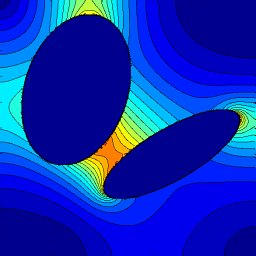 Lucien F. Krapp合作论文数École Polytechnique Fédérale de Lausanne1Jacco Ton合作论文数1
 Dominik Duleba合作论文数School of Chemistry, University College Dublin1
 Simon Finn Mayer合作论文数School of Life Sciences, Ecole Polytechnique Fédérale de Lausanne (EPFL),1Ehud Haimov合作论文数School of Physics and Astronomy, Tel-Aviv University1Zhu Zhang合作论文数1Tarique Anwar合作论文数1
 Qian Yang合作论文数Department of Physics and Astronomy, The University of Manchester1
 Matteo Dal Peraro合作论文数School of Life Sciences, École Polytechnique Fédérale de Lausanne1
 Aleksandra Radenovic合作论文数School of Engineering, École Polytechnique Fédérale de Lausanne1Abriata Luciano A合作论文数Sch Life Sci, Ecole Polytech Fed Lausanne1
 Henry Brinkerhoff合作论文数Department of Physics, University of Washington1Andrew Laszlo合作论文数Department of Physics, University of Washington1




