Today's computer networks are under increasing threat from malicious activity. Botnets (networks of remotely controlled computers, or “bots”) operate in such a way that their activity superficially resembles normal network traffic which makes their behavior hard to detect by current intrusion detection systems (IDS). Therefore, new monitoring techniques are needed to enable network operators to detect botnet activity quickly and in real time. Here, we show a sonification technique using the SoNSTAR system that maps characteristics of network traffic to a real-time soundscape enabling an operator to hear and detect botnet activity. A case study demonstrated how using traffic log files alongside the interactive SoNSTAR system enabled the identification of new traffic patterns characteristic of botnet behavior and subsequently the effective targeting and real-time detection of botnet activity by a human operator. An experiment using the 11.39 GiB ISOT botnet data set, containing labeled botnet traffic data, compared the SoNSTAR system with three leading machine learning-based traffic classifiers in a botnet activity detection test. SoNSTAR demonstrated greater accuracy (99.92%), precision (97.1%), and recall (99.5%) and much lower false positive rates (0.007%) than the other techniques. The knowledge generated about characteristic botnet behaviors could be used in the development of future IDSs.
Maintaining situational awareness of what is happening within a computer network is challenging, not only because the behaviour happens within machines, but also because data traffic speeds and volumes are beyond human ability to process. Visualisation techniques are widely used to present information about network traffic dynamics. Although they provide operators with an overall view and specific information about particular traffic or attacks on the network, they often still fail to represent the events in an understandable way. Also, because they require visual attention they are not well suited to continuous monitoring scenarios in which network administrators must carry out other tasks. Here we present SoN-STAR (Sonification of Networks for SiTuational AwaReness), a real-time sonification system for monitoring computer networks to support network administrators' situational awareness. SoNSTAR provides an auditory representation of all the TCP/IP traffic within a network based on the different traffic flows between between network hosts. A user study showed that SoNSTAR raises situational awareness levels by enabling operators to understand network behaviour and with the benefit of lower workload demands (as measured by the NASA TLX method) than visual techniques. SoNSTAR identifies network traffic features by inspecting the status flags of TCP/IP packet headers. Combinations of these features define particular traffic events which are mapped to recorded sounds to generate a soundscape that represents the real-time status of the network traffic environment. The sequence, timing, and loudness of the different sounds allow the network to be monitored and anomalous behaviour to be detected without the need to continuously watch a monitor screen.
Like audification, auditory graphs maintain the temporal relationships of data while using parameter mappings to represent the ordinate values. Such direct approaches have the advantage of presenting the data stream ‘as is’ without the imposed interpretations or accentuation of particular features found in indirect approaches. However, datasets can often be subdivided into short non-overlapping variable length segments that each encapsulate a discrete unit of domain-specific significant information and current direct approaches cannot represent these. We present Direct Segmented Sonification (DSSon) for highlighting the segments’ data distributions as individual sonic events. Using domain knowledge DSSon presents segments as discrete auditory gestalts while retaining the overall temporal regime and relationships of the dataset. The method’s structural decoupling from the sound stream’s formation means playback speed is independent of the individual sonic event durations, thereby offering highly flexible time compression/stretching to allow zooming into or out of the data. DSSon displays high directness, letting the data ‘speak’ for themselves.
In this paper we describe our experience of investigating the development of future technological products to support older people in everyday living through the agency of a community art group. Recent research has identified a number of challenges facing designers seeking to use traditional participatory design approaches to gather technology requirements data from older people. We describe a project that sought to get a group of older people to think creatively about their needs and desires for technological support through the medium of paint. The artistic expression technique described in this article allowed us to identify issues that had also been found by previous research that used a range of different techniques. This indicates that the approach shows promise as it allows information to be gathered in an environment that is comfortable and familiar using methods already known by the participants and which they find enjoyable. It provides a complement (or possible alternative) to standard protocols and has the potential benefit of extracting even richer information as the primary task for participants is enjoyable in its own right and is not associated with an interrogative process. Furthermore, it is argued that some of the key risks of traditional approaches are lessened or removed by the naturalistic setting of this project.
The journal Displays promotes dissemination of knowledge in “display technology and its effective presentation and perception of information”. For obvious reasons it has been publishing research dealing with visual display technology. However, the last two-and-a-half decades have witnessed the growth of auditory displays and their applications exposing a knowledge gap inhow data and information may be communicated sonically rather than visually. Sonification, is a branch of auditory displays concerned with the representation of data and information using non-speech audio. Sonification research lies at the intersections of a number of disciplines including computer science and engineering, perceptual psychology, physics, acoustics, music, and aesthetics.
The matter of listening and aesthetics is a tension at the heart of sonification. This chapter proposes that adopting an ecological approach based upon Eric Clarke's use of the subject-position in musical listening can provide the language and tools necessary for this. In pursuit of an aesthetics of sonification, the chapter discusses how Clarke's ecological account may be usefully adapted to overcome these hindrances. Sonification may be heard as music, but it is not intended to produce music as an outcome; the intended outcome of sonification is knowledge and understanding of the phenomenon under investigation. A sonification can be described as an external representation of data or information, for example, communicating the state of a computer network to a network administrator. A sonification aesthetic is not a Western concert music aesthetic. It is an experiential, ecological or perception-action aesthetic.
Graph layout is the process of creating a visual representation of a graph through a node-link diagram. Node-attribute graphs have additional data stored on the nodes which describe certain properties of the nodes called attributes. Typical force-directed representations often produce hairball-like structures that neither aid in understanding the graph's topology nor the relationship to its attributes. The aim of this research was to investigate the use of node-attributes for graph layout in order to improve the analysis process and to give further insight into the graph over purely topological layouts. In this article we present graphTPP, a graph based extension to targeted projection pursuit (TPP) --- an interactive, linear, dimension reduction technique --- as a method for graph layout and subsequent further analysis. TPP allows users to control the projection and is optimised for clustering. Three case studies were conducted in the areas of influence graphs, network security, and citation networks. In each case graphTPP was shown to outperform standard force-directed techniques and even other dimension reduction methods in terms of clarity of clustered structure in the layout, the association between the structure and the attributes and the insights elicited in each domain area.
Communication networks involve the transmission and reception of large volumes of data. Research indicates that network traffic volumes will continue to increase. These traffic volumes will be unprecedented and the behaviour of global information infrastructures when dealing with these data volumes is unknown. It has been shown that complex systems (including computer networks) exhibit self-organized criticality under certain conditions. Given the possibility in such systems of a sudden and spontaneous system reset the development of techniques to inform system administrators of this behaviour could be beneficial. This article focuses on the combination of two dissimilar research concepts, namely sonification (a form of auditory display) and self-organized criticality (SOC). A system is described that sonifies in real time an information infrastructure’s self-organized criticality to alert the network administrators of both normal and abnormal network traffic and operation. It is shown how the system makes changes in a system’s SOC readily perceptible. Implications for how such a system may support real-time situational awareness and post hoc incident analysis are discussed.
Many networks exhibit small-world properties. The structure of a small-world network is characterized by short average path lengths and high clustering coefficients. Few graph layout methods capture this structure well which limits their effectiveness and the utility of the visualization itself. Here we present an extension to our novel graphTPP layout method for laying out small-world networks using only their topological properties rather than their node attributes. The Watts-Strogatz model is used to generate a variety of graphs with a small-world network structure. Community detection algorithms are used to generate six different clusterings of the data. These clusterings, the adjacency matrix and edgelist are loaded into graphTPP and, through user interaction combined with linear projections of the adjacency matrix, graphTPP is able to produce a layout which visually separates these clusters. These layouts are compared to the layouts of two force-based techniques. graphTPP is able to clearly separate each of the communities into a spatially distinct area and the edge relationships between the clusters show the strength of their relationship. As a secondary contribution, an edge-grouping algorithm for graphTPP is demonstrated as a means to reduce visual clutter in the layout and reinforce the display of the strength of the relationship between two communities. (C) 2016 The Authors. Published by Elsevier B.V.
The visualisation of structural biology data can be quite challenging as the datasets are complex, in particular the intrinsic dynamics/flexibility. Therefore some researchers have looked into the use of sonification for the display of proteins. Combining sonification and visualisation appears to be well fitted to this problem, but at the time of writing there are no plugins available for any of the major molecular visualisation applications. Therefore we set out to develop a sonification plugin for one of those applications, released as open-source software, in order to facilitate scrutiny and evaluation from as many parties as possible. This paper presents our open source sonification plugin for UCSF Chimera, which we have developed in collaboration with medicinal chemists and structural biologists. We determined two tasks that we deemed were not well represented visually and developed sonifications for them. Furthermore, we extended a general-purpose Chimera tool to map attributes of protein residues to pitch. We evaluated one of the tasks with eight participants and present the results of this evaluation.
This chapter treats computer networks as a cyber warfighting domain in which the maintenance of situational awareness is impaired by increasing traffic volumes and the lack of immediate sensory perception. Sonification (the use of non-speech audio for communicating information) is proposed as a viable means of monitoring a network in real time and a research agenda employing the sonification of a network's self-organized criticality within a context-aware affective computing scenario is given. The chapter views a computer network as a cyber battlespace with a particular operations spectrum and dynamics. Increasing network traffic volumes are interfering with the ability to present real-time intelligence about a network and so suggestions are made for how the context of a network might be used to help construct intelligent information infrastructures. Such a system would use affective computing principles to sonify emergent properties (such as self-organized criticality) of network traffic and behaviour to provide effective real-time situational awareness.
In this multi-disciplinary project, we intend to explore the advantages of an information fusion system in which the infrastructure finds new ways to reflect upon its own state and new ways to express this state that provides a good fit to human communication and cognition processes. This interplay should then generate a better and more responsive human-computer symbiosis. The outcomes of this project will help to develop context and content aware networks that are better able to extract meaning and understanding from network data and behaviour.
This paper looks at the problem of using sonification to enable network administrators to maintaining situational awareness about their network environment. Network environments generate a lot of data and the need for continuous monitoring means that sonification systems must be designed in such a way as to maximise acceptance while minimising annoyance and listener fatigue. It will be argued that solutions based on the concept of the soundscape offer an ecological advantage over other sonification designs.
Communication networks involve the transmission and reception of large volumes of data. Research indicates that network traffic volumes will continue to increase. These traffic volumes will be unprecedented and the behaviour of global information infrastructures when dealing with these data volumes is unknown. It has been shown that complex systems (including computer networks) exhibit self-organized criticality under certain conditions. Given the possibility in such systems of a sudden and spontaneous system reset the development of techniques to inform system administrators of this behaviour could be beneficial. This article focuses on the combination of two dissimilar research concepts, namely sonification (a form of auditory display) and self-organized criticality (SOC). A system is described that sonifies in real time an information infrastructure's self-organized criticality to alert the network administrators of both normal and abnormal network traffic and operation.
The role of triage in digital forensics is disputed, with some practitioners questioning its reliability for identifying evidential data. Although successfully implemented in the field of medicine, triage has not established itself to the same degree in digital forensics. This article presents a novel approach to triage for digital forensics. Case-Based Reasoning Forensic Triager (CBR-FT) is a method for collecting and reusing past digital forensic investigation information in order to highlight likely evidential areas on a suspect operating system, thereby helping an investigator to decide where to search for evidence. The CBR-FT framework is discussed and the results of twenty test triage examinations are presented. CBR-FT has been shown to be a more effective method of triage when compared to a practitioner using a leading commercial application.
This paper combines the vocabulary of semiotics and category theory to provide a formal analysis of visualization. It shows how familiar processes of visualization fit the semiotic frameworks of both Saussure and Peirce, and extends these structures using the tools of category theory to provide a general framework for understanding visualization in practice, including: Relationships between systems, data collected from those systems, renderings of those data in the form of representations, the reading of those representations to create visualizations, and the use of those visualizations to create knowledge and understanding of the system under inspection. The resulting framework is validated by demonstrating how familiar information visualization concepts (such as literalness, sensitivity, redundancy, ambiguity, generalizability, and chart junk) arise naturally from it and can be defined formally and precisely. This paper generalizes previous work on the formal characterization of visualization by, inter alia, Ziemkiewicz and Kosara and allows us to formally distinguish properties of the visualization process that previous work does not.
Auditory display is concerned with the use of non-speech sound to communicate information. If the term seems at first oxymoronic, then consider auditory display as an activity of perceptualization, that is, the process of making perceptible to humans aspects or features of a given data set or system. Most commonly this is done using visual representations (which process we call visualization) but it is not limited to the visual channel and recent years have witnessed the increased use of auditory representations in the production of tools for exploring data. By way of semiotics and an aesthetic perspective shift this article posits that auditory display may be considered a form of organized sound and explores the listening experience in this context.
 Christopher Laing合作论文数CEIS, Northumbria University18
 James Alty合作论文数Department of Computer Science, Loughborough University10
 john pardoe合作论文数5Tom Fairfax合作论文数5
 Shadi Aljawarneh合作论文数Jordan University of Science and Technology5Graeme Horsman合作论文数Computing, Engineering and Information Sciences, Northumbria University5
 Helen Gibson合作论文数4
 Maia Angelova合作论文数School of Computing;University of Northumbria;School of Computing, University of Northumbria4
 Fausto Sainz de Salces合作论文数4Bennett Hogg合作论文数3
 Mohamed Debashi合作论文数3
 Joe Faith合作论文数3
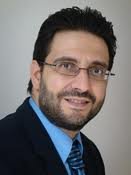 Dimitrios Rigas合作论文数Faculty of Technology, De Montfort University3
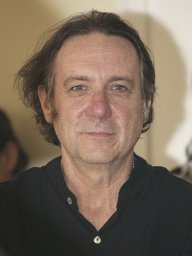 David R Worrall合作论文数Sonic Communications Research Group;University of Canberra;Sonic Communications Research Group, University of Canberra3
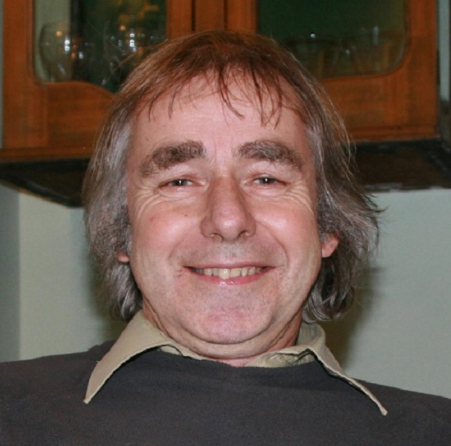 Nick Rossiter合作论文数School of Computing, Engineering and Information Sciences, Northumbria University3Susan Heaford合作论文数2David England合作论文数Liverpool John Moores University2
 Jeremy Ellman合作论文数MARI Computer Systems Ltd2
 Paul Brna合作论文数University of Glasgow;Lancaster University2Linda Banwell合作论文数University of Northumbria2
 Stephen Barrass合作论文数SONIFICATION.COM2Jiraporn Buranatrived合作论文数2
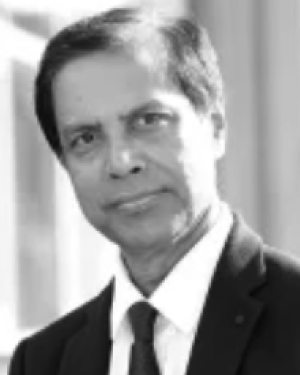 Alamgir Hossain合作论文数1melvyn king合作论文数1Holger Ballweg合作论文数1
 Nabila Kazmi合作论文数1
 Jiang, Yang合作论文数1
 Mohammad A. Almamun合作论文数Comput. Intell. Res. Group, Northumbria Univ.;c;Comput. Intell. Res. Group, Northumbria Univ.1
 Andrew King合作论文数1
 Atta Badii合作论文数1Mark Nicholson合作论文数1Agnieszka Bronowska合作论文数1Mosa Elbendak合作论文数1
 Duenpen Kochakornjarupong合作论文数The SCRE Centre, University of Glasgow1
 Robert Holdrich合作论文数Institute of Electronic Music and Acoustics;University of Music;Institute of Electronic Music and Acoustics, University of Music1Louise Midgley合作论文数1




