We show that under certain inequality assumptions an arbitrary linear operator D:C^∞ (ℝ) → C(ℝ) is a differential operator, for example, if D[f] is nonnegative in local minima of f.
We study the Stokes operator with Hodge, Navier, and Robin boundary conditions on domains Ω⊆ℝ^d that are uniformly C^2,1. Starting with the Hodge Laplacian we etablish a bounded Hörmander functional calculus for the Stokes operator with Hodge boundary conditions. This entails a Hörmander functional calculus and boundedness of the H^∞-calculus in spaces of soleniodal vector fields for the Stokes operator with Hodge boundary conditions. We then establish boundedness of the H^∞-calculus for Stokes operators with Navier type conditions via Robin type perturbations of Hodge boundary conditions. This implies maximal L^p-regularity for these operators and results on fractional domain spaces. Our results cover certain non-Helmholtz domains.
In this article, we give an overview on known as well as new results on the boundedness of the H^∞-calculus of the Stokes operator in rough as well as in unbounded (smoother) domains. We present a special case of an abstract comparison principle due to Kunstmann and Weis () that serves as the basis for all considerations. Subsequently, we show how this result can be applied to arrive at a bounded H^∞-calculus for the Stokes operator. We sketch the proof for no slip boundary conditions in bounded Lipschitz domains which was given in . For unbounded domains this approach yields a shorter proof compared to previous arguments. Moreover, we further establish the boundedness of the H^∞-calculus for the Stokes operator with Neumann type boundary conditions in bounded convex domains which is entirely new.
We consider analyticity in the space and time variables of solutions to the Navier-Stokes equations, using the method of the "parameter trick". Exploiting the maximal Lorentz regularity of the Stokes equations, we prove that the solution of the Navier-Stokes equations in the Serrin class is real analytic in the time variable. Our method is also applicable to the proof of analyticity, in both space and time variables, of solutions to the problem in the whole space problem.
For an element a of a Banach algebra (scaled to spectral radius 1) we prove that the spectral radius is contained in the spectrum, if the sequence of powers (a^k) is asymptotically not too far from a normal cone.
We show that, if -A generates a bounded holomorphic semigroup in a Banach space X, α∈ [0,1) , and f:D(A)→ X satisfies ‖ f(x)-f(y)‖≤ L‖ A^α (x-y)‖ , then a non-constant T-periodic solution of the equation u̇+Au=f(u) satisfies LT^1-α≥ K_α where K_α >0 is a constant depending on α and the semigroup. This extends results by Robinson and Vidal-Lopez, which have been shown for self-adjoint operators A≥ 0 in a Hilbert space. For the latter case, we obtain - with a conceptually new proof - the optimal constant K_α , which only depends on α , and we also include the case α =1 . In Hilbert spaces H and for α =0 , we present a similar result with optimal constant where Au in the equation is replaced by a possibly unbounded gradient term ∇ _Hℰ(u) . This is inspired by applications with bounded gradient terms in a paper by Mawhin and Walter.
Answering a question of Peter Volkmann, we prove a result on differential inequalities in a weak setting.
In ordered Banach algebras, we introduce eventually and asymptotically positive elements. We give conditions for the following spectral properties: the spectral radius belongs to the spectrum (Perron--Frobenius property); the spectral radius is the only element in the peripheral spectrum; there are positive (approximate) eigenvectors for the spectral radius. Recently such types of results have been shown for operators on Banach lattices. Our results can be viewed as a complement, since our structural assumptions on the ordered Banach algebra are much weaker.
Generalized Radon transforms are Fourier integral operators which are used, for instance, as imaging models in geophysical exploration. They appear naturally when linearizing about a known background compression wave speed. In this work we first consider a linearly increasing background velocity in two spatial dimensions. We verify the Bolker condition for the zero-offset scanning geometry and provide meaningful arguments for it to hold even if the common offset is positive. Based on this result we suggest an imaging operator for which we calculate the top order symbol in the zero-offset case to study how it maps singularities. Second, to support the usage of background models obtained from linear regression we present a stability result for the Bolker condition under perturbations of the background velocity and of the offset.
There are several proofs by now for the famous Cwikel–Lieb–Rozenblum (CLR) bound, which is a semiclassical bound on the number of bound states for a Schrödinger operator, proven in the 1970s. Of the rather distinct proofs by Cwikel, Lieb, and Rozenblum, the one by Lieb gives the best constant, the one by Rozenblum does not seem to yield any reasonable estimate for the constants, and Cwikel’s proof is said to give a constant which is at least about 2 orders of magnitude off the truth. This situation did not change much during the last 40+ years. It turns out that this common belief, i.e, Cwikel’s approach yields bad constants, is not set in stone: We give a substantial refinement of Cwikel’s original approach which highlights a natural but overlooked connection of the CLR bound with bounds for maximal Fourier multipliers from harmonic analysis. Moreover, it gives an astonishingly good bound for the constant in the CLR inequality. Our proof is also quite flexible and leads to rather precise bounds for a large class of Schrödinger-type operators with generalized kinetic energies.
We show global wellposedness for the defocusing cubic nonlinear Schrödinger equation (NLS) in H1(R)+H3/2+(T), and for the defocusing NLS with polynomial nonlinearities in H1(R)+H5/2+(T). This complements local results for the cubic NLS [6] and global results for the quadratic NLS [8] in this hybrid setting.
We show the existence of weak solutions in the extended sense of the Cauchy problem for the cubic fourth order nonlinear Schrödinger equation with the initial data u0 ∈ X, where $$X \in \{M_{2,q}^s(\mathbb{R}),\,{H^\sigma}(\mathbb{T}),\,{H^{{s_1}}}(\mathbb{R}) + {H^{{s_2}}}(\mathbb{T})\}$$ and q ∈ [1, 2], s ⩾ 0, or σ ⩾ 0, or s2 ⩾ s1 ⩾ 0. Moreover, if M 2, (ℝ) ↪ L3(ℝ), or if $$\sigma \geqslant {1 \over 6}$$ , or if $${s_1} \geqslant {1 \over 6}$$ and $${s_2} > {1 \over 2}$$ we how that the Cauchy problem is unconditionally wellposed in X. Similar results hold true for all higher order nonlinear Schrödinger equations and mixed order NLS due to a factorization property of the corresponding phase factors. For the proof we employ the normal form reduction via the differentiation by parts technique and build upon our previous work.
We show global wellposedness for the defocusing cubic nonlinear Schrodinger equation (NLS) in $H^1(\mathbb{R}) + H^{3/2+}(\mathbb{T})$, and for the defocusing NLS with polynomial nonlinearities in $H^1(\mathbb{R}) + H^{5/2+}(\mathbb{T})$. This complements local results for the cubic NLS [6] and global results for the quadratic NLS [8] in this hybrid setting.
We report on a version of Cwikel's proof of the famous Cwikel–Lieb–Rozenblum (CLR) inequality which highlights the connection of the CLR inequality to maximal Fourier multipliers. This new approach enables us to get a constant at least ten times better than Cwikels in all dimensions. In dimensions $d\geq 5$ our results are better than all previously known ones.
We study the one dimensional nonlinear Schrodinger equation with power nonlinearity $$\\left| u \\right| ^{\\alpha - 1} u$$\n for $$\\alpha \\in [1,5]$$\n and initial data $$u_0 \\in H^1({{\\mathbb {T}}}) + L^2({{\\mathbb {R}}})$$\n . We show via Strichartz estimates that the Cauchy problem is locally well-posed. In the case of the quadratic nonlinearity (\n $$\\alpha = 2$$\n ) we obtain global well-posedness in the space $$C({{\\mathbb {R}}}, H^1({{\\mathbb {T}}}) + L^2({{\\mathbb {R}}}))$$\n via Gronwall’s inequality.
We study the one dimensional nonlinear Schrödinger equation with power nonlinearity |u| u for α ∈ [2, 5] and initial data u0 ∈ L(R) + H(T). We show via Strichartz estimates that the Cauchy problem is locally well-posed. In the case of the quadratic nonlinearity (α = 2) we obtain unconditional global well-posedness in the space C(R, L(R)+H(T)) via Gronwall’s inequality.
Starting from a bi-continuous semigroup in a Banach space X (which might actually be strongly continuous), we investigate continuity properties of the semigroup that is induced in real interpolation spaces between X and the domain D(A) of the generator. Of particular interest is the case $$(X,D(A))_{\theta ,\infty }$$ ( X , D ( A ) ) θ , ∞ . We obtain topologies with respect to which the induced semigroup is bi-continuous, among them topologies induced by a variety of norms. We illustrate our results with applications to a nonlinear Schrödinger equation and to the Navier–Stokes equations on $$\mathbb {R}^d$$ R d .
The original version of the chapter was inadvertently published with an error in the abstract. On line 6 of the abstract, the name ‘Okoudjou’ was misspelled as ‘Oboudjou’. The chapter has now been corrected and approved by the author.
The three-dimensional elliptic Radon transform (eRT) averages distributions over ellipsoids of revolution. It thus serves as a linear model in seismic imaging where one wants to recover the earth's interior from reflected wave fields. As there is no inversion formula known for the eRT, approximate formulas have to be used. In this paper we suggest several of those, microlocally analyze their properties, and provide and implement an adapted algorithm whose performance we test by diverse numerical experiments. Our previous results of [Inverse Problems, 34 (2018), 014002, 114001] are thus generalized to three space dimensions.
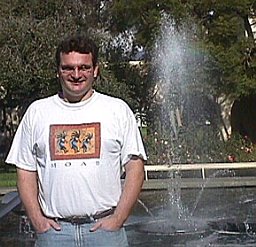 Dirk Hundertmark合作论文数Departments of Physics;Princeton University;Theoretische Physik;Departments of Physics, Princeton University17
 Nikolaos Pattakos合作论文数Dept Math, Karlsruhe Inst Technol15
 Leonid Chaichenets合作论文数14
 Gerd Herzog合作论文数9
 Lutz Weis合作论文数Fachbereich Mathematik Universität Kaiserslautern7Sönke Blunck合作论文数6Andreas Rieder合作论文数4
 Eric Todd Quinto合作论文数Department of Mathematics;Tufts University;Department of Mathematics, Tufts University4Christine Grathwohl合作论文数3Friedrich Klaus合作论文数3Roland Schnaubelt合作论文数3Uhl Matthias合作论文数2alexander ullmann合作论文数2Jens Babutzka合作论文数2
 Tobias Ried合作论文数Max Planck Inst Math Nat Wissensch, Inselstr 22, D-04103 Leipzig, Germany2Semjon Vugalter合作论文数2Hendrik Vogt合作论文数2Bernhard H. Haak合作论文数2željko strkalj合作论文数1Stevan Pilipović合作论文数1esther bleich合作论文数1Markus Haase合作论文数1Dorothee Frey合作论文数Delft Institute of Applied Mathematics, Delft University of Technology1
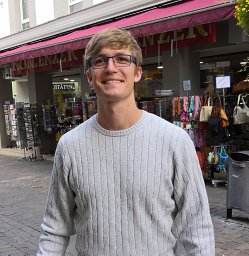 Patrick Tolksdorf合作论文数Inst Math, Johannes Gutenberg Univ Mainz1MARKUS HAASE合作论文数1
 Lizhen Ji合作论文数Department of Mathematics, College of Literature, Science, and the Arts, University of Michigan1
 Christian Lubich合作论文数Fachbereich Mathematik, Mathematisch-Naturwissenschaftliche Fakultät, Universität Tübingen1
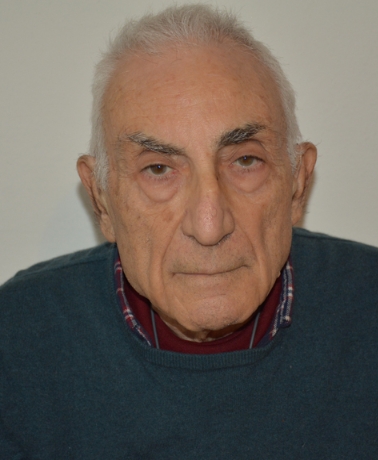 Giuseppe Da Prato合作论文数Scuola Normale Superiore1Andreas Weber合作论文数Institut für Algebra und Geometrie, Universität Karlsruhe (TH),1
 Hideo Kozono合作论文数Department of Mathematics, Waseda University/Research Alliance Center for Mathematical Sciences, Tohoku University1
 Buyang Li (李步扬)合作论文数Department of Applied Mathematics, Faculty of Computer and Mathematical Sciences, The Hong Kong Polytechnic University1
 Irena Lasiecka合作论文数Department of Mathematical Sciences, The University of Memphis;Department of Mathematics, University of Virginia1Universitat Karlsruhe合作论文数1Milorad Mijatovic合作论文数1
 Abdelaziz Rhandi合作论文数Faculty of Sciences, Cadi Ayyad University1Nigel J. Kalton合作论文数1
 Alessandra Lunardi合作论文数1Matthias Geissert合作论文数1Senjo Shimizu合作论文数1




