DiT models have achieved great success in text-to-video generation, leveraging their scalability in model capacity and data scale. High content and motion fidelity aligned with text prompts, however, often require large model parameters and a substantial number of function evaluations (NFEs). Realistic and visually appealing details are typically reflected in high-resolution outputs, further amplifying computational demands-especially for single-stage DiT models. To address these challenges, we propose a novel two-stage framework, FlashVideo, which strategically allocates model capacity and NFEs across stages to balance generation fidelity and quality. In the first stage, prompt fidelity is prioritized through a low-resolution generation process utilizing large parameters and sufficient NFEs to enhance computational efficiency. The second stage achieves a nearly straight ODE trajectory between low and high resolutions via flow matching, effectively generating fine details and fixing artifacts with minimal NFEs. To ensure a seamless connection between the two independently trained stages during inference, we carefully design degradation strategies during the second-stage training. Quantitative and visual results demonstrate that FlashVideo achieves state-of-the-art high-resolution video generation with superior computational efficiency. Additionally, the two-stage design enables users to preview the initial output and accordingly adjust the prompt before committing to full-resolution generation, thereby significantly reducing computational costs and wait times as well as enhancing commercial viability.
We present Segment Anything Model (SAM) 3, a unified model that detects, segments, and tracks objects in images and videos based on concept prompts, which we define as either short noun phrases (e.g., “yellow school bus”), image exemplars, or a combination of both. Promptable Concept Segmentation (PCS) takes such prompts and returns segmentation masks and unique identities for all matching object instances. To advance PCS, we build a scalable data engine that produces a high-quality dataset with 4M unique concept labels, including hard negatives, across images and videos. Our model consists of a vision backbone shared between an image-level detector and a memory-based video tracker. Recognition and localization are decoupled with a presence head, which significantly boosts detection accuracy. SAM 3 delivers a 2x gain over existing systems in both image and video PCS, and improves previous SAM capabilities in interactive visual segmentation tasks. We open source SAM 3 along with our new Segment Anything with Concepts (SA-Co) benchmark.
Vision-language models are integral to computer vision research, yet many high-performing models remain closed-source, obscuring their data, design and training recipe. The research community has responded by using distillation from black-box models to label training data, achieving strong benchmark results, at the cost of measurable scientific progress. However, without knowing the details of the teacher model and its data sources, scientific progress remains difficult to measure. In this paper, we study building a Perception Language Model (PLM) in a fully open and reproducible framework for transparent research in image and video understanding. We analyze standard training pipelines without distillation from proprietary models and explore large-scale synthetic data to identify critical data gaps, particularly in detailed video understanding. To bridge these gaps, we release 2.8M human-labeled instances of fine-grained video question-answer pairs and spatio-temporally grounded video captions. Additionally, we introduce PLM–VideoBench, a suite for evaluating challenging video understanding tasks focusing on the ability to reason about ''what'', ''where'', ''when'', and ''how'' of a video. We make our work fully reproducible by providing data, training recipes, code & models.
Autoregressive (AR) models, long dominant in language generation, are increasingly applied to image synthesis but are often considered less competitive than Diffusion-based models. A primary limitation is the substantial number of image tokens required for AR models, which constrains both training and inference efficiency, as well as image resolution. To address this, we present Token-Shuffle, a novel yet simple method that reduces the number of image tokens in Transformer. Our key insight is the dimensional redundancy of visual vocabularies in Multimodal Large Language Models (MLLMs), where low-dimensional visual codes from visual encoder are directly mapped to high-dimensional language vocabularies. Leveraging this, we consider two key operations: token-shuffle, which merges spatially local tokens along channel dimension to decrease the input token number, and token-unshuffle, which untangles the inferred tokens after Transformer blocks to restore the spatial arrangement for output. Jointly training with textual prompts, our strategy requires no additional pretrained text-encoder and enables MLLMs to support extremely high-resolution image synthesis in a unified next-token prediction way while maintaining efficient training and inference. For the first time, we push the boundary of AR text-to-image generation to a resolution of 2048x2048 with gratifying generation performance. In GenAI-benchmark, our 2.7B model achieves 0.77 overall score on hard prompts, outperforming AR models LlamaGen by 0.18 and diffusion models LDM by 0.15. Exhaustive large-scale human evaluations also demonstrate our prominent image generation ability in terms of text-alignment, visual flaw, and visual appearance. We hope that Token-Shuffle can serve as a foundational design for efficient high-resolution image generation within MLLMs.
Autoregressive (AR) models have demonstrated strong potential in visual generation, offering competitive performance with simple architectures and optimization objectives. However, existing methods are typically limited to single-modality conditions, \eg, text or category labels, restricting their applicability in real-world scenarios that demand image synthesis from diverse forms of controls. In this work, we present \system, the first unified autoregressive framework for Any-to-Image generation. By discretizing various visual conditions through a shared visual tokenizer and text prompts with a text tokenizer, \system supports a broad spectrum of conditional inputs within a single model, including text (text-to-image generation), spatial signals (segmentation-to-image and depth-to-image), and visual context (image editing, frame prediction, and text-to-video generation). To mitigate the risk of information leakage from condition tokens to content tokens, we introduce Disentangled Causal Attention (DCA), which separates the full-sequence causal mask into condition causal attention and content causal attention. It serves as a training-time regularizer without affecting the standard next-token prediction during inference. With this design, \system achieves new state-of-the-art results across a range of benchmark, \eg, 0.63 on GenEval and 80.02 on VBench, demonstrating its effectiveness in flexible and high-fidelity visual generation.
We present PixelFlow, a family of image generation models that operate directly in the raw pixel space, in contrast to the predominant latent-space models. This approach simplifies the image generation process by eliminating the need for a pre-trained Variational Autoencoder (VAE) and enabling the whole model end-to-end trainable. Through efficient cascade flow modeling, PixelFlow achieves affordable computation cost in pixel space. It achieves an FID of 1.98 on 256×256 ImageNet class-conditional image generation benchmark. The qualitative text-to-image results demonstrate that PixelFlow excels in image quality, artistry, and semantic control. We hope this new paradigm will inspire and open up new opportunities for next-generation visual generation models. Code and models are available at https://github.com/ShoufaChen/PixelFlow.
Classifier-Free Guidance (CFG) is a critical technique for enhancing the sample quality of visual generative models. However, in autoregressive (AR) multi-modal generation, CFG introduces design inconsistencies between language and visual content, contradicting the design philosophy of unifying different modalities for visual AR. Motivated by language model alignment methods, we propose Condition Contrastive Alignment (CCA) to facilitate guidance-free AR visual generation. Unlike guidance methods that alter the sampling process to achieve the ideal sampling distribution, CCA directly fine-tunes pretrained models to fit the same distribution target. Experimental results show that CCA can significantly enhance the guidance-free performance of all tested models with just one epoch of fine-tuning (1% of pretraining epochs) on the pretraining dataset. This largely removes the need for guided sampling in AR visual generation and cuts the sampling cost by half. Moreover, by adjusting training parameters, CCA can achieve trade-offs between sample diversity and fidelity similar to CFG. This experimentally confirms the strong theoretical connection between language-targeted alignment and visual-targeted guidance methods, unifying two previously independent research fields.
Autoregressive (AR) models have reformulated image generation as next-token prediction, demonstrating remarkable potential and emerging as strong competitors to diffusion models. However, control-to-image generation, akin to ControlNet, remains largely unexplored within AR models. Although a natural approach, inspired by advancements in Large Language Models, is to tokenize control images into tokens and prefill them into the autoregressive model before decoding image tokens, it still falls short in generation quality compared to ControlNet and suffers from inefficiency. To this end, we introduce ControlAR, an efficient and effective framework for integrating spatial controls into autoregressive image generation models. Firstly, we explore control encoding for AR models and propose a lightweight control encoder to transform spatial inputs (e.g., canny edges or depth maps) into control tokens. Then ControlAR exploits the conditional decoding method to generate the next image token conditioned on the per-token fusion between control and image tokens, similar to positional encodings. Compared to prefilling tokens, using conditional decoding significantly strengthens the control capability of AR models but also maintains the model efficiency. Furthermore, the proposed ControlAR surprisingly empowers AR models with arbitrary-resolution image generation via conditional decoding and specific controls. Extensive experiments can demonstrate the controllability of the proposed ControlAR for the autoregressive control-to-image generation across diverse inputs, including edges, depths, and segmentation masks. Furthermore, both quantitative and qualitative results indicate that ControlAR surpasses previous state-of-the-artcontrollable diffusion models, e.g., ControlNet++.
Text-to-video models have made remarkable advancements through optimization on high-quality text-video pairs, where the textual prompts play a pivotal role in determining quality of output videos. However, achieving the desired output often entails multiple revisions and iterative inference to refine user-provided prompts. Current automatic methods for refining prompts encounter challenges such as Modality-Inconsistency, Cost-Discrepancy, and Model-Unaware when applied to text-to-video diffusion models. To address these problem, we introduce an LLM-based prompt adaptation framework, termed as Prompt-A-Video, which excels in crafting Video-Centric, Labor-Free and Preference-Aligned prompts tailored to specific video diffusion model. Our approach involves a meticulously crafted two-stage optimization and alignment system. Initially, we conduct a reward-guided prompt evolution pipeline to automatically create optimal prompts pool and leverage them for supervised fine-tuning (SFT) of the LLM. Then multi-dimensional rewards are employed to generate pairwise data for the SFT model, followed by the direct preference optimization (DPO) algorithm to further facilitate preference alignment. Through extensive experimentation and comparative analyses, we validate the effectiveness of Prompt-A-Video across diverse generation models, highlighting its potential to push the boundaries of video generation.
The rapid advancement of Large Vision-Language models (LVLMs) has demonstrated a spectrum of emergent capabilities. Nevertheless, current models only focus on the visual content of a single scenario, while their ability to associate instances across different scenes has not yet been explored, which is essential for understanding complex visual content, such as movies with multiple characters and intricate plots. Towards movie understanding, a critical initial step for LVLMs is to unleash the potential of character identities memory and recognition across multiple visual scenarios. To achieve the goal, we propose visual instruction tuning with ID reference and develop an ID-Aware Large Vision-Language Model, IDA-VLM. Furthermore, our research introduces a novel benchmark MM-ID, to examine LVLMs on instance IDs memory and recognition across four dimensions: matching, location, question-answering, and captioning. Our findings highlight the limitations of existing LVLMs in recognizing and associating instance identities with ID reference. This paper paves the way for future artificial intelligence systems to possess multi-identity visual inputs, thereby facilitating the comprehension of complex visual narratives like movies.
This paper introduces Goku, a state-of-the-art family of joint image-and-video generation models leveraging rectified flow Transformers to achieve industry-leading performance. We detail the foundational elements enabling high-quality visual generation, including the data curation pipeline, model architecture design, flow formulation, and advanced infrastructure for efficient and robust large-scale training. The Goku models demonstrate superior performance in both qualitative and quantitative evaluations, setting new benchmarks across major tasks. Specifically, Goku achieves 0.76 on GenEval and 83.65 on DPG-Bench for text-to-image generation, and 84.85 on VBench for text-to-video tasks. We believe that this work provides valuable insights and practical advancements for the research community in developing joint image-and-video generation models.
Robotic behavior synthesis, the problem of understanding multimodal inputs and generating precise physical control for robots, is an important part of Embodied AI. Despite successes in applying multimodal large language models for high-level understanding, it remains challenging to translate these conceptual understandings into detailed robotic actions while achieving generalization across various scenarios. In this paper, we propose a tree-structured multimodal code generation framework for generalized robotic behavior synthesis, termed RoboCodeX. RoboCodeX decomposes high-level human instructions into multiple object-centric manipulation units consisting of physical preferences such as affordance and safety constraints, and applies code generation to introduce generalization ability across various robotics platforms. To further enhance the capability to map conceptual and perceptual understanding into control commands, a specialized multimodal reasoning dataset is collected for pre-training and an iterative self-updating methodology is introduced for supervised fine-tuning. Extensive experiments demonstrate that RoboCodeX achieves state-of-the-art performance in both simulators and real robots on four different kinds of manipulation tasks and one navigation task.
In this work, we introduce Semantic-SAM, an augmented image segmentation foundation for segmenting and recognizing anything at desired granularities. Compared to the foundational segmentation model SAM [31], our model has two unique advantages: (i) granularity-controllability in that the model can produce segmentation masks at any desired granularities, from objects to parts to both; (ii) semantic-awareness in that the model simultaneously predicts semantic labels for masks at different granularities. To enable multi-granularity capabilities, we propose a multi-choice learning scheme, where each click point generates a set of masks at multiple levels of granularity, corresponding to a set of ground-truth masks. To achieve semantic awareness, we consolidate multiple datasets of different levels of granularity and train our model using decoupled object- and part-based tasks to facilitate knowledge sharing and transfer among different tasks. To the best of our knowledge, this work is the first attempt to jointly train a model on SA-1B, instance-level, and part-level segmentation datasets. Experimental results and visualizations demonstrate that our model successfully achieves the desired goals. Furthermore, we show that multi-task training using the segmentation task defined on SA-1B and other segmentation tasks (e.g., panoptic and part segmentation) leads to performance gains on all segmentation tasks. In particular, we achieve a new state-of-the-art in COCO panoptic segmentation 60.2 PQ by adding SAM data.
We introduce LlamaGen, a new family of image generation models that apply original “next-token prediction” paradigm of large language models to visual generation domain. It is an affirmative answer to whether vanilla autoregressive models, e.g., Llama, without inductive biases on visual signals can achieve state-of-the-art image generation performance if scaling properly. We reexamine design spaces of image tokenizers, scalability properties of image generation models, and their training data quality. The outcome of this exploration consists of: (1) An image tokenizer with downsample ratio of 16, reconstruction quality of 0.94 rFID and codebook usage of 97 benchmark. (2) A series of class-conditional image generation models ranging from 111M to 3.1B parameters, achieving 2.18 FID on ImageNet 256x256 benchmarks, outperforming the popular diffusion models such as LDM, DiT. (3) A text-conditional image generation model with 775M parameters, from two-stage training on LAION-COCO and high aesthetics quality images, demonstrating competitive performance of visual quality and text alignment. (4) We verify the effectiveness of LLM serving frameworks in optimizing the inference speed of image generation models and achieve 326 and codes to facilitate open-source community of visual generation and multimodal foundation models.
Visual instruction tuning large language model(LLM) on image-text pairs has achieved general-purpose vision-language abilities. However, the lack of region-text pairs limits their advancements to fine-grained multimodal understanding. In this paper, we propose spatial instruction tuning, which introduces the reference to the region-of-interest(RoI) in the instruction. Before sending to LLM, the reference is replaced by RoI features and interleaved with language embeddings as a sequence. Our model GPT4RoI, trained on 7 region-text pair datasets, brings an unprecedented interactive and conversational experience compared to previous image-level models. (1) Interaction beyond language: Users can interact with our model by both language and drawing bounding boxes to flexibly adjust the referring granularity. (2) Versatile multimodal abilities: A variety of attribute information within each RoI can be mined by GPT4RoI, e.g., color, shape, material, action, etc. Furthermore, it can reason about multiple RoIs based on common sense. On the Visual Commonsense Reasoning(VCR) dataset, GPT4RoI achieves a remarkable accuracy of 81.6%, surpassing all existing models by a significant margin (the second place is 75.6%) and almost reaching human-level performance of 85.0%. The code, dataset, and demo can be found at https://github.com/jshilong/GPT4RoI.
In this paper, we introduce Semantic-SAM, a universal image segmentation model to enable segment and recognize anything at any desired granularity. Our model offers two key advantages: semantic-awareness and granularity-abundance. To achieve semantic-awareness, we consolidate multiple datasets across three granularities and introduce decoupled classification for objects and parts. This allows our model to capture rich semantic information. For the multi-granularity capability, we propose a multi-choice learning scheme during training, enabling each click to generate masks at multiple levels that correspond to multiple ground-truth masks. Notably, this work represents the first attempt to jointly train a model on SA-1B, generic, and part segmentation datasets. Experimental results and visualizations demonstrate that our model successfully achieves semantic-awareness and granularity-abundance. Furthermore, combining SA-1B training with other segmentation tasks, such as panoptic and part segmentation, leads to performance improvements. We will provide code and a demo for further exploration and evaluation.
Object detection has been expanded from a limited number of categories to open vocabulary. Moving forward, a complete intelligent vision system requires understanding more fine-grained object descriptions, object parts. In this paper, we propose a detector with the ability to predict both open-vocabulary objects and their part segmentation. This ability comes from two designs. First, we train the detector on the joint of part-level, object-level and image-level data to build the multi-granularity alignment between language and image. Second, we parse the novel object into its parts by its dense semantic correspondence with the base object. These two designs enable the detector to largely benefit from various data sources and foundation models. In open-vocabulary part segmentation experiments, our method outperforms the baseline by 3.3∼7.3 mAP in cross-dataset generalization on PartImageNet, and improves the baseline by 7.3 novel AP_50 in cross-category generalization on Pascal Part. Finally, we train a detector that generalizes to a wide range of part segmentation datasets while achieving better performance than dataset-specific training.
Object detection serves as one of most fundamental computer vision tasks. Existing works on object detection heavily rely on dense object candidates, such as k anchor boxes pre-defined on all grids of an image feature map of size H x W. In this paper, we present Sparse R-CNN, a very simple and sparse method for object detection in images. In our method, a fixed sparse set of learned object proposals (N in total) are provided to the object recognition head to perform classification and localization. By replacing HWk (up to hundreds of thousands) hand-designed object candidates with N (e.g., 100) learnable proposals, Sparse R-CNN makes all efforts related to object candidates design and one-to-many label assignment completely obsolete. More importantly, Sparse R-CNN directly outputs predictions without the non-maximum suppression (NMS) post-processing procedure. Thus, it establishes an end-to-end object detection framework. Sparse R-CNN demonstrates highly competitive accuracy, run-time and training convergence performance with the well-established detector baselines on the challenging COCO dataset and CrowdHuman dataset. We hope that our work can inspire re-thinking the convention of dense prior in object detectors and designing new high-performance detectors.
We present a conceptually simple, efficient, and general framework for localization problems in DETR-like models. We add plugins to well-trained models instead of inefficiently designing new models and training them from scratch. The method, called RefineBox, refines the outputs of DETR-like detectors by lightweight refinement networks. RefineBox is easy to implement and train as it only leverages the features and predicted boxes from the well-trained detection models. Our method is also efficient as we freeze the trained detectors during training. In addition, we can easily generalize RefineBox to various trained detection models without any modification. We conduct experiments on COCO and LVIS $1.0$. Experimental results indicate the effectiveness of our RefineBox for DETR and its representative variants (Figure 1). For example, the performance gains for DETR, Conditinal-DETR, DAB-DETR, and DN-DETR are 2.4 AP, 2.5 AP, 1.9 AP, and 1.6 AP, respectively. We hope our work will bring the attention of the detection community to the localization bottleneck of current DETR-like models and highlight the potential of the RefineBox framework. Code and models will be publicly available at: \href{https://github.com/YiqunChen1999/RefineBox}{https://github.com/YiqunChen1999/RefineBox}.
Existing object detection methods are bounded in a fixed-set vocabulary by costly labeled data. When dealing with novel categories, the model has to be retrained with more bounding box annotations. Natural language supervision is an attractive alternative for its annotation-free attributes and broader object concepts. However, learning open-vocabulary object detection from language is challenging since image-text pairs do not contain fine-grained object-language alignments. Previous solutions rely on either expensive grounding annotations or distilling classification-oriented vision models. In this paper, we propose a novel open-vocabulary object detection framework directly learning from image-text pair data. We formulate object-language alignment as a set matching problem between a set of image region features and a set of word embeddings. It enables us to train an open-vocabulary object detector on image-text pairs in a much simple and effective way. Extensive experiments on two benchmark datasets, COCO and LVIS, demonstrate our superior performance over the competing approaches on novel categories, e.g. achieving 32.0% mAP on COCO and 21.7% mask mAP on LVIS. Code is available at: https://github.com/clin1223/VLDet.
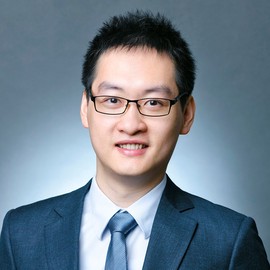 Ping Luo (羅平)合作论文数Department of Computer Science, School of Computing and Data Science, The University of Hong Kong27
 Zehuan Yuan (袁泽寰)合作论文数Bytedance Inc.14
 Yi Jiang合作论文数ByteDance Ads GenAI13
 Shoufa Chen合作论文数Department of Computer Science, The University of Hong Kong13
 Enze Xie (谢恩泽)合作论文数NVIDIA Research8
 Shilong Zhang (张士龙)合作论文数The Multimedia Laboratory, The University of Hong Kong7
 Wenhai Wang (王文海)合作论文数Multimedia Laboratory, The Chinese University of Hong Kong6
 Chongjian Ge (葛崇剑)合作论文数Adobe Research6
 Changhu Wang (王长虎)合作论文数ByteDance5
 Wenqi Shao (邵文琪)合作论文数Shanghai AI Lab4
 Bingyue Peng合作论文数3
 Jiannan Wu (吴剑南)合作论文数Department of Computer Science, The University of Hong Kong3
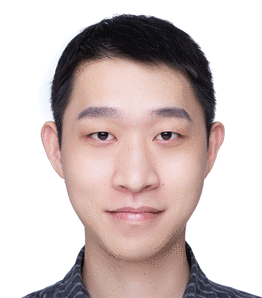 Rufeng Zhang合作论文数Baidu3
 Yifu Zhang (张一夫)合作论文数Baidu3
 Hang Xu (徐航)合作论文数Huawei Noah‘s Ark Lab;2030 Lab, Huawei ADS3
 Feng Li (李峰)合作论文数Department of Computer Science & Engineering, School of Engineering, The Hong Kong University of Science and Technology3
 Xinggang Wang (王兴刚)合作论文数Artificial Intelligence Institute, School of Electronic Information and Communications, Huazhong University of Science and Technology3
 Nikhila Ravi合作论文数Meta AI Research2
 Yatai Ji合作论文数University of Hong Kong2
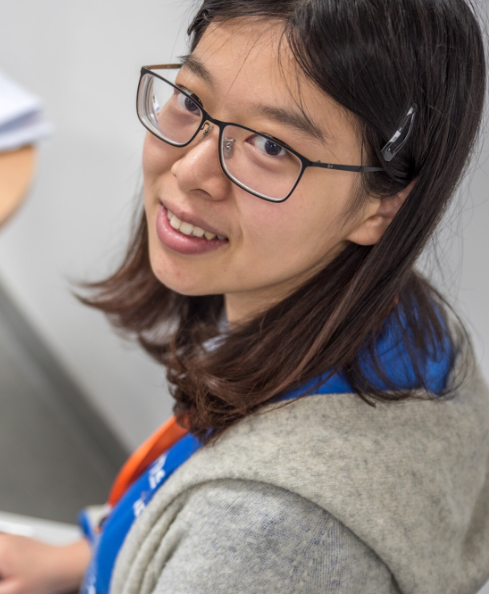 Xueyan Zou (邹雪妍)合作论文数Contextual Robotics Institute, UC San Diego2
 Hao Zhang (张浩)合作论文数NVIDIA Research2
 Jinkun Cao (曹金坤)合作论文数Carnegie Mellon University2
 Chenfeng Xu合作论文数Mechanical Systems Control Lab, University of California, Berkeley;NVIDIA2
 Chuang Lin合作论文数Faculty of Information Technology, Monash University2
 Xuefeng Xiao合作论文数2
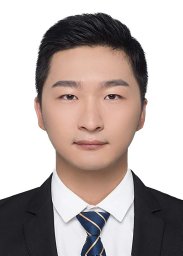 Wenjia Wang合作论文数Tongji University2Lan Ma合作论文数2
 Triantafyllos Afouras合作论文数Meta AI2
 Effrosyni Mavroudi合作论文数FAIR, Meta AI2
 Shilong Liu (刘世隆)合作论文数Princeton AI Lab, Princeton University2
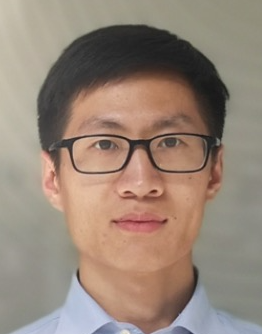 Tao Kong (孔涛)合作论文数ByteDance2
 Jianfeng Gao (高剑峰)合作论文数Microsoft Research2
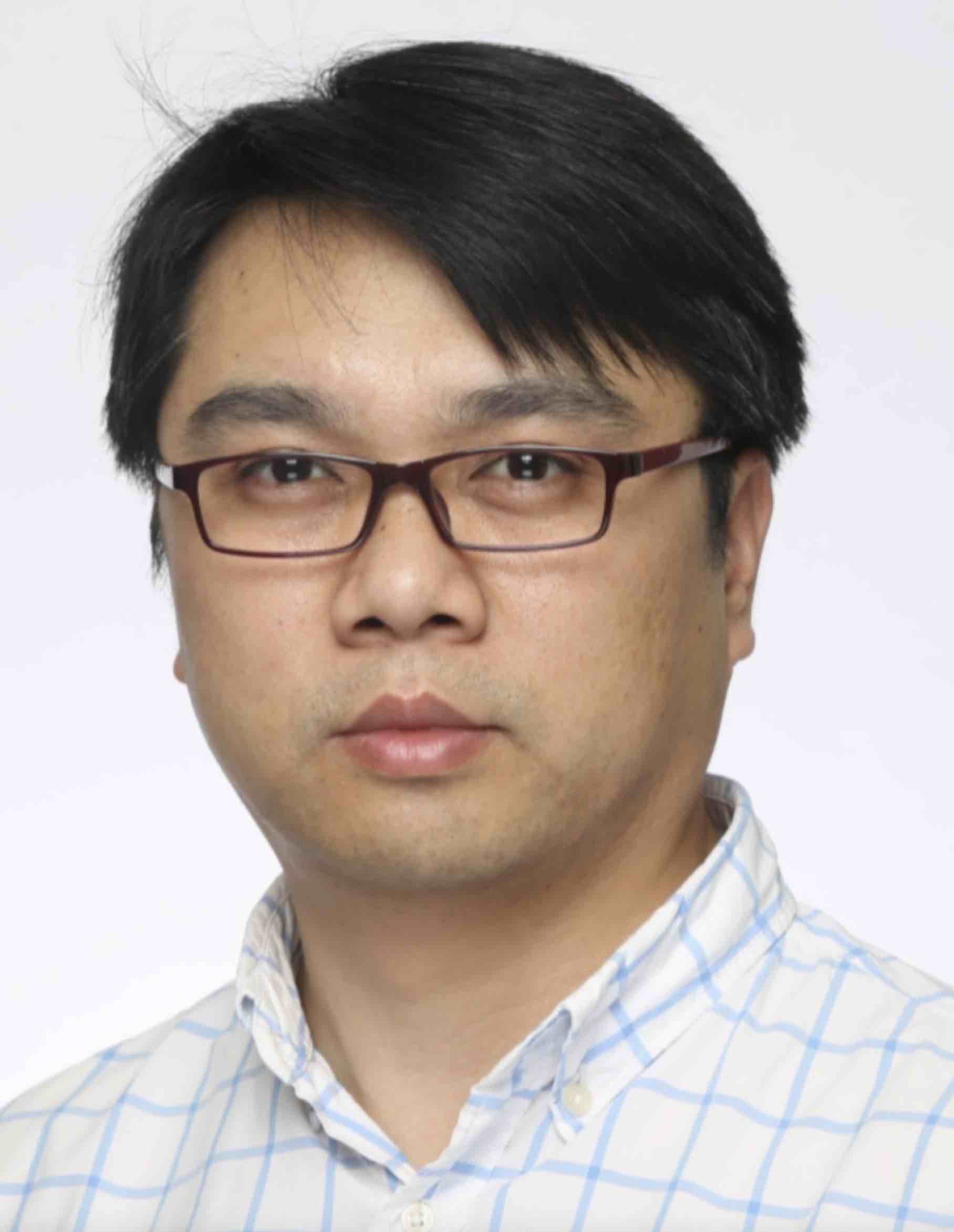 Chunhua Shen (沈春华)合作论文数College of Computer Science and Technology, Zhejiang University2
 Liang Ding (丁亮)合作论文数Generative AI2
 Jianwei Yang合作论文数Meta SuperIntelligence Lab2
 Weilin Huang合作论文数Alibaba Group2
 Wei Zhan合作论文数Applied Intuition;Mechanical Systems Control Lab, University of California, Berkeley;Berkeley DeepDrive2
 Piotr Dollár合作论文数Thinking Machines Lab2
 Lei Zhang (张磊)合作论文数International Digital Economy Academy2
 Tengyu Ma (马腾宇)合作论文数Department of Computer Science, Stanford University;Institute for Human-Centered Artificial Intelligence, Stanford University;MongoDB2
 Masayoshi Tomizuka合作论文数Mechanical Systems Control Lab, Department of Mechanical Engineering, University of California, Berkeley2Jie Wu合作论文数ByteDance Inc.2
 Jianfei Cai合作论文数Department of Data Science & AI, Faculty of Information Technology, Monash University;Monash Data Futures Institute, Monash University;School of Artificial Intelligence, Xidian University2
 Jingdong Wang (王井东)合作论文数2
 Christoph Feichtenhofer合作论文数Meta2
 Chunyuan Li合作论文数Google DeepMind2
 Wenyu Liu (刘文予)合作论文数School of Electronic Information and Communications, Huazhong University of Science & Technology2Weifeng Chen合作论文数1Qiushan Guo合作论文数1




