General audio source separation is a key capability for multimodal AI systems that can perceive and reason about sound. Despite substantial progress in recent years, existing separation models are either domain-specific, designed for fixed categories such as speech or music, or limited in controllability, supporting only a single prompting modality such as text. In this work, we present SAM Audio, a foundation model for general audio separation that unifies text, visual, and temporal span prompting within a single framework. Built on a diffusion transformer architecture, SAM Audio is trained with flow matching on large-scale audio data spanning speech, music, and general sounds, and can flexibly separate target sources described by language, visual masks, or temporal spans. The model achieves state-of-the-art performance across a diverse suite of benchmarks, including general sound, speech, music, and musical instrument separation in both in-the-wild and professionally produced audios, substantially outperforming prior general-purpose and specialized systems. Furthermore, we introduce a new real-world separation benchmark with human-labeled multimodal prompts and a reference-free evaluation model that correlates strongly with human judgment.
We present Segment Anything Model (SAM) 3, a unified model that detects, segments, and tracks objects in images and videos based on concept prompts, which we define as either short noun phrases (e.g., “yellow school bus”), image exemplars, or a combination of both. Promptable Concept Segmentation (PCS) takes such prompts and returns segmentation masks and unique identities for all matching object instances. To advance PCS, we build a scalable data engine that produces a high-quality dataset with 4M unique concept labels, including hard negatives, across images and videos. Our model consists of a vision backbone shared between an image-level detector and a memory-based video tracker. Recognition and localization are decoupled with a presence head, which significantly boosts detection accuracy. SAM 3 delivers a 2x gain over existing systems in both image and video PCS, and improves previous SAM capabilities in interactive visual segmentation tasks. We open source SAM 3 along with our new Segment Anything with Concepts (SA-Co) benchmark.
We introduce Perception Encoder-Audiovisual, PE-AV, a new family of encoders for audio and video understanding trained with scaled contrastive learning. Built on PE~\citep{pe}, PE-AV makes several key contributions to extend representations to audio, and natively support joint embeddings across audio–video, audio–text, and video–text modalities. PE-AV's unified cross-modal embeddings enable novel tasks such as speech retrieval, and set a new state of the art across standard audio and video benchmarks. We unlock this by building a strong audiovisual data engine that synthesizes high-quality captions for O(100M) audio–video pairs, enabling large-scale supervision consistent across modalities. Our audio data includes speech, music, and general sound effects—avoiding single-domain limitations common in prior work. We exploit ten pairwise contrastive objectives, showing that scaling cross-modality and caption-type pairs strengthens alignment and improves zero-shot performance. Our models and code will be available.
We present Segment Anything Model 2 (SAM 2), a foundation model towards solving promptable visual segmentation in images and videos. We build a data engine, which improves model and data via user interaction, to collect the largest video segmentation dataset to date. Our model is a simple transformer architecture with streaming memory for real-time video processing. SAM 2 trained on our data provides strong performance across a wide range of tasks. In video segmentation, we observe better accuracy, using 3x fewer interactions than prior approaches. In image segmentation, our model is more accurate and 6x faster than the Segment Anything Model (SAM). We believe that our data, model, and insights will serve as a significant milestone for video segmentation and related perception tasks. We are releasing our main model, the dataset, an interactive demo and code.
Vision-language models are integral to computer vision research, yet many high-performing models remain closed-source, obscuring their data, design and training recipe. The research community has responded by using distillation from black-box models to label training data, achieving strong benchmark results, at the cost of measurable scientific progress. However, without knowing the details of the teacher model and its data sources, scientific progress remains difficult to measure. In this paper, we study building a Perception Language Model (PLM) in a fully open and reproducible framework for transparent research in image and video understanding. We analyze standard training pipelines without distillation from proprietary models and explore large-scale synthetic data to identify critical data gaps, particularly in detailed video understanding. To bridge these gaps, we release 2.8M human-labeled instances of fine-grained video question-answer pairs and spatio-temporally grounded video captions. Additionally, we introduce PLM–VideoBench, a suite for evaluating challenging video understanding tasks focusing on the ability to reason about ''what'', ''where'', ''when'', and ''how'' of a video. We make our work fully reproducible by providing data, training recipes, code & models.
We introduce Ego4D, a massive-scale egocentric video dataset and benchmark suite. It offers 3,670 hours of daily-life activity video spanning hundreds of scenarios (household, outdoor, workplace, leisure, etc.) captured by 931 unique camera wearers from 74 worldwide locations and 9 different countries. The approach to collection is designed to uphold rigorous privacy and ethics standards with consenting participants and robust de-identification procedures where relevant. Ego4D dramatically expands the volume of diverse egocentric video footage publicly available to the research community. Portions of the video are accompanied by audio, 3D meshes of the environment, eye gaze, stereo, and/or synchronized videos from multiple egocentric cameras at the same event. Furthermore, we present a host of new benchmark challenges centered around understanding the first-person visual experience in the past (querying an episodic memory), present (analyzing hand-object manipulation, audio-visual conversation, and social interactions), and future (forecasting activities). By publicly sharing this massive annotated dataset and benchmark suite, we aim to push the frontier of first-person perception. Project page: https://ego4d-data.org/
This paper explores Masked Autoencoders (MAE) with Gaussian Splatting. While reconstructive self-supervised learning frameworks such as MAE learns good semantic abstractions, it is not trained for explicit spatial awareness. Our approach, named Gaussian Masked Autoencoder, or GMAE, aims to learn semantic abstractions and spatial understanding jointly. Like MAE, it reconstructs the image end-to-end in the pixel space, but beyond MAE, it also introduces an intermediate, 3D Gaussian-based representation and renders images via splatting. We show that GMAE can enable various zero-shot learning capabilities of spatial understanding (e.g., figure-ground segmentation, image layering, edge detection, etc.) while preserving the high-level semantics of self-supervised representation quality from MAE. To our knowledge, we are the first to employ Gaussian primitives in an image representation learning framework beyond optimization-based single-scene reconstructions. We believe GMAE will inspire further research in this direction and contribute to developing next-generation techniques for modeling high-fidelity visual data. More details at https://brjathu.github.io/gmae
We empirically study autoregressive pre-training from videos. To perform our study, we construct a series of autoregressive video models, called Toto. We treat videos as sequences of visual tokens and train transformer models to autoregressively predict future tokens. Our models are pre-trained on a diverse dataset of videos and images comprising over 1 trillion visual tokens. We explore different architectural, training, and inference design choices. We evaluate the learned visual representations on a range of downstream tasks including image recognition, video classification, object tracking, and robotics. Our results demonstrate that, despite minimal inductive biases, autoregressive pre-training leads to competitive performance across all benchmarks. Finally, we find that scaling our video models results in similar scaling curves to those seen in language models, albeit with a different rate. More details at https://brjathu.github.io/toto/
We introduce Perception Encoder (PE), a family of state-of-the-art vision encoders for image and video understanding. Traditionally, vision encoders have relied on a variety of pretraining objectives, each excelling at different downstream tasks. Surprisingly, after scaling a carefully tuned image pretraining recipe and refining with a robust video data engine, we find that contrastive vision-language training alone can produce strong, general embeddings for all of these downstream tasks. There is only one caveat: these embeddings are hidden within the intermediate layers of the network. To draw them out, we introduce two alignment methods: language alignment for multimodal language modeling, and spatial alignment for dense prediction. Together, our PE family of models achieves state-of-the-art results on a wide variety of tasks, including zero-shot image and video classification and retrieval; document, image, and video Q&A; and spatial tasks such as detection, tracking, and depth estimation. We release our models, code, and novel dataset of synthetically and human-annotated videos: https://github.com/facebookresearch/perception_models
This paper focuses on creating synthetic data to improve the quality of image captions. Existing works typically have two shortcomings. First, they caption images from scratch, ignoring existing alt-text metadata, and second, lack transparency if the captioners’ training data (e.g. GPT) is unknown. In this paper, we study a principled approach Altogether based on the key idea to edit and re-align existing alt-texts associated with the images. To generate training data, we perform human annotation where annotators start with the existing alt-text and re-align it to the image content in multiple rounds, consequently constructing captions with rich visual concepts. This differs from prior work that carries out human annotation as a one-time description task solely based on images and annotator knowledge. We train a captioner on this data that generalizes the process of re-aligning alt-texts at scale. Our results show our Altogether approach leads to richer image captions that also improve text-to-image generation and zero-shot image classification tasks.
Contrastive Language-Image Pre-training (CLIP) is an approach that has advanced research and applications in computer vision, fueling modern recognition systems and generative models. We believe that the main ingredient to the success of CLIP is its \textit{data} and \textit{not} the \textit{model} architecture or pre-training {objective}. However, CLIP only provides very limited information about its data and how it has been collected, leading to works that aim to reproduce CLIP's data by filtering with its model parameters. In this work, we intend to reveal CLIP's data curation approach and in our pursuit of making it open to the community introduce Metadata-Curated Language-Image Pre-training (MetaCLIP). MetaCLIP takes a raw data pool and metadata (derived from CLIP's concepts) and yields a balanced subset over the metadata distribution. Our experimental study rigorously isolates the model and training settings, concentrating solely on data. MetaCLIP applied to CommonCrawl with 400M image-text data pairs outperforms CLIP's data on multiple standard benchmarks. In zero-shot ImageNet classification, MetaCLIP achieves 70.8\% accuracy, surpassing CLIP's 68.3\% on \mbox{ViT-B} models. Scaling to 1B data, while maintaining the same training budget, attains \textbf{72.4\%}. Our observations hold across various model sizes, exemplified by ViT-H achieving \textbf{80.5\%}, without any bells-and-whistles. Curation code and training data distribution over metadata will be made available.
Window attention, position embeddings, and high resolution finetuning are core concepts in the modern transformer era of computer vision. However, we find that naively combining these near ubiquitous components can have a detrimental effect on performance. The issue is simple: interpolating position embeddings while using window attention is wrong. We study two state-of-the-art methods that have these three components, namely Hiera and ViTDet, and find that both do indeed suffer from this bug. To fix it, we introduce a simple absolute window position embedding strategy, which solves the bug outright in Hiera and allows us to increase both speed and performance of the model in ViTDet. We finally combine the two to obtain HieraDet, which achieves 61.7 box mAP on COCO, making it state-of-the-art for models that only use ImageNet-1k pretraining. This all stems from what is essentially a 3 line bug fix, which we name "absolute win".
Modern artificial intelligence (AI) systems are powered by foundation models. This paper presents a new set of foundation models, called Llama 3. It is a herd of language models that natively support multilinguality, coding, reasoning, and tool usage. Our largest model is a dense Transformer with 405B parameters and a context window of up to 128K tokens. This paper presents an extensive empirical evaluation of Llama 3. We find that Llama 3 delivers comparable quality to leading language models such as GPT-4 on a plethora of tasks. We publicly release Llama 3, including pre-trained and post-trained versions of the 405B parameter language model and our Llama Guard 3 model for input and output safety. The paper also presents the results of experiments in which we integrate image, video, and speech capabilities into Llama 3 via a compositional approach. We observe this approach performs competitively with the state-of-the-art on image, video, and speech recognition tasks. The resulting models are not yet being broadly released as they are still under development.
In this work we study the benefits of using tracking and 3D poses for action recognition. To achieve this, we take the Lagrangian view on analysing actions over a trajectory of human motion rather than at a fixed point in space. Taking this stand allows us to use the tracklets of people to predict their actions. In this spirit, first we show the benefits of using 3D pose to infer actions, and study person-person interactions. Subsequently, we propose a Lagrangian Action Recognition model by fusing 3D pose and contextualized appearance over tracklets. To this end, our method achieves state-of-the-art performance on the AVA v2.2 dataset on both pose only settings and on standard benchmark settings. When reasoning about the action using only pose cues, our pose model achieves +10.0 mAP gain over the corresponding state-of-the-art while our fused model has a gain of +2.8 mAP over the best state-of-the-art model. Code and results are available at: https://brjathu.github.io/LART
There has been a longstanding belief that generation can facilitate a true understanding of visual data. In line with this, we revisit generatively pre-training visual representations in light of recent interest in denoising diffusion models. While directly pre-training with diffusion models does not produce strong representations, we condition diffusion models on masked input and formulate diffusion models as masked autoencoders (DiffMAE). Our approach is capable of (i) serving as a strong initialization for downstream recognition tasks, (ii) conducting high-quality image inpainting, and (iii) being effortlessly extended to video where it produces state-of-the-art classification accuracy. We further perform a comprehensive study on the pros and cons of design choices and build connections between diffusion models and masked autoencoders. Project page.
Large vision-language models are generally applicable to many downstream tasks, but come at an exorbitant training cost that only large institutions can afford. This paper trades generality for efficiency and presents Curation in Training (CiT), a simple and efficient vision-text learning algorithm that couples a data objective into training. CiT automatically yields quality data to speed-up contrastive image-text training and alleviates the need for an offline data filtering pipeline, allowing broad data sources (including raw image-text pairs from the web). CiT contains two loops: an outer loop curating the training data and an inner loop consuming the curated training data. The text encoder connects the two loops. Given metadata for tasks of interest, e.g., class names, and a large pool of image-text pairs, CiT alternatively selects relevant training data from the pool by measuring the similarity of their text embeddings and embeddings of the metadata. In our experiments, we observe that CiT can speed up training by over an order of magnitude, especially if the raw data size is large.
Modern hierarchical vision transformers have added several vision-specific components in the pursuit of supervised classification performance. While these components lead to effective accuracies and attractive FLOP counts, the added complexity actually makes these transformers slower than their vanilla ViT counterparts. In this paper, we argue that this additional bulk is unnecessary. By pretraining with a strong visual pretext task (MAE), we can strip out all the bells-and-whistles from a state-of-the-art multi-stage vision transformer without losing accuracy. In the process, we create Hiera, an extremely simple hierarchical vision transformer that is more accurate than previous models while being significantly faster both at inference and during training. We evaluate Hiera on a variety of tasks for image and video recognition. Our code and models are available at https://github.com/facebookresearch/hiera.
This paper revisits the standard pretrain-then-finetune paradigm used in computer vision for visual recognition tasks. Typically, state-of-the-art foundation models are pretrained using large scale (weakly) supervised datasets with billions of images. We introduce an additional pre-pretraining stage that is simple and uses the self-supervised MAE technique to initialize the model. While MAE has only been shown to scale with the size of models, we find that it scales with the size of the training dataset as well. Thus, our MAE-based pre-pretraining scales with both model and data size making it applicable for training foundation models. Pre-pretraining consistently improves both the model convergence and the downstream transfer performance across a range of model scales (millions to billions of parameters), and dataset sizes (millions to billions of images). We measure the effectiveness of pre-pretraining on 10 different visual recognition tasks spanning image classification, video recognition, object detection, low-shot classification and zero-shot recognition. Our largest model achieves new state-of-the-art results on iNaturalist-18 (91.3%), 1-shot ImageNet-1k (62.1%), and zero-shot transfer on Food-101 (96.2%). Our study reveals that model initialization plays a significant role, even for web-scale pretraining with billions of images.
We introduce Token Merging (ToMe), a simple method to increase the throughput of existing ViT models without needing to train. ToMe gradually combines similar tokens in a transformer using a general and light-weight matching algorithm that is as fast as pruning while being more accurate. Off-the-shelf, ToMe can 2x the throughput of state-of-the-art ViT-L @ 512 and ViT-H @ 518 models on images and 2.2x the throughput of ViT-L on video with only a 0.2-0.3% accuracy drop in each case. ToMe can also easily be applied during training, improving in practice training speed up to 2x for MAE fine-tuning on video. Training with ToMe further minimizes accuracy drop, leading to 2x the throughput of ViT-B on audio for only a 0.4% mAP drop. Qualitatively, we find that ToMe merges object parts into one token, even over multiple frames of video. Overall, ToMe's accuracy and speed are competitive with state-of-the-art on images, video, and audio.
We present Masked Audio-Video Learners (MAViL) to train audio-visual representations. Our approach learns with three complementary forms of self-supervision: (1) reconstruction of masked audio and video input data, (2) intra- and inter-modal contrastive learning with masking, and (3) self-training by reconstructing joint audio-video contextualized features learned from the first two objectives. Pre-training with MAViL not only enables the model to perform well in audio-visual classification and retrieval tasks but also improves representations of each modality in isolation, without using information from the other modality for fine-tuning or inference. Empirically, MAViL sets a new state-of-the-art on AudioSet (53.1 mAP) and VGGSound (67.1 accuracy). For the first time, a self-supervised audio-visual model outperforms ones that use external supervision on these benchmarks.
 Haoqi Fan合作论文数ByteDance Seed17
 Jitendra Malik合作论文数Department of Electrical Engineering and Computer Sciences, University of California, Berkeley15
 Yanghao Li合作论文数OpenAI13
 Axel Pinz合作论文数Institute of Electrical Measurement and Measurement Signal Processing, Graz University of Technology13
 Bernie Huang合作论文数Facebook AI Research12
 Hu Xu合作论文数Facebook AI Research10
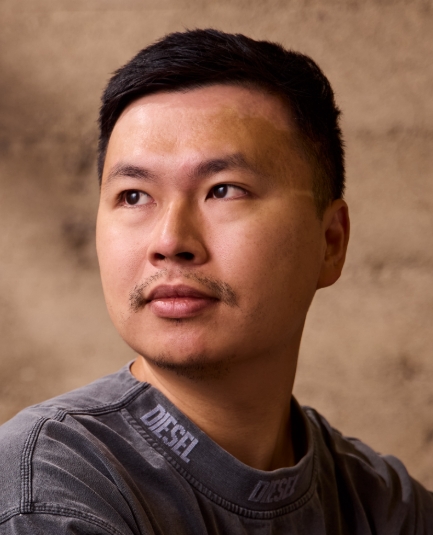 Chao-Yuan Wu合作论文数World Labs9
 Bo Xiong合作论文数Department of Computer Science, University of Texas at Austin8
 Richard P. Wildes合作论文数Department of Electrical Engineering and Computer Science, Lassonde School of Engineering, York University;Centre for Vision Research, York University8
 Piotr Dollár合作论文数Thinking Machines Lab7
 Ross Girshick合作论文数Anthropic7
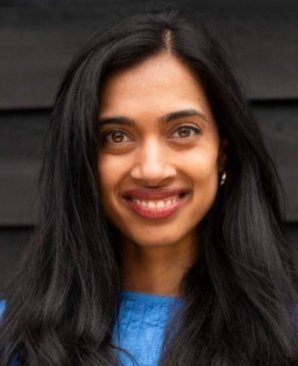 Nikhila Ravi合作论文数Meta AI Research6
 Gargi Ghosh合作论文数Facebook AI6
 Karttikeya Mangalam合作论文数SigIQ.ai6
 Kristen Grauman合作论文数Department of Computer Science, University of Texas at Austin;Facebook AI Research6
 Kaiming He (何恺明)合作论文数Department of Electrical Engineering & Computer Science, Schwarzman College of Computing, Massachusetts Institute of Technology6
 Daniel Bolya合作论文数Meta5
 Kalyan Vasudev Alwala合作论文数Meta5
 Luke Zettlemoyer合作论文数Paul G. Allen School of Computer Science & Engineering, University of Washington;Facebook AI5
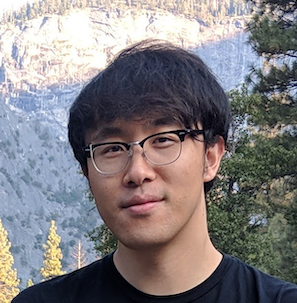 Saining Xie (谢赛宁)合作论文数Courant Institute of Mathematical Sciences, New York University;AMI Labs5
 Chaitanya K. Ryali合作论文数University of California, San Diego5
 Jathushan Rajasegaran合作论文数xAI4
 Daniel Li合作论文数Amazon Web Services AI4
 Tushar Nagarajan合作论文数FAIR, Meta4
 Chen Wei合作论文数Rice University4
 Andrew Zisserman合作论文数Department of Engineering Science, University of Oxford4
 Lorenzo Torresani合作论文数Northeastern University;Meta4
 Florian Metze合作论文数Language Technologies Institute, School of Computer Science, Carnegie Mellon University;College of Engineering, Carnegie Mellon University;Meta4
 Ishan Misra合作论文数GenAI Research3
 Rohit Girdhar合作论文数GenAI Research Group, Meta3
 Ronghang Hu (胡戎航)合作论文数3
 Jianbo Shi合作论文数Department of Computer and Information Science, School of Engineering and Applied Science, University of Pennsylvania3
 Judy Hoffman合作论文数School of Interactive Computing, College of Computing, Georgia Institute of Technology;Machine Learning Center, Georgia Institute of Technology3Aaron B. Adcock合作论文数3
 Michael Auli合作论文数Ello3
 Philipp Krähenbühl合作论文数Department of Computer Science, College of Natural Sciences, University of Texas at Austin;Apple2
 Vasu Sharma合作论文数2Russell Howes合作论文数2
 Huiyu Wang合作论文数FAIR, Meta2
 Mannat Singh合作论文数Meta2
 Laura Gustafson合作论文数Meta2
 Alexei Baevski合作论文数Google DeepMind2Bram Wasti合作论文数Meta2
 Matthew Le合作论文数Facebook AI Research2
 Andrew Westbury合作论文数Meta2
 Haitham Khedr合作论文数Meta2
 vaibhav aggarwal合作论文数2
 Nicolas Carion合作论文数Meta2
 Triantafyllos Afouras合作论文数Meta AI2