Over a long professional lifetime, Ragnar Rommetveit contributed to numerous disciplines in the social sciences and humanities, reflecting discussions in global social science and his own unending quest to understand social and individual life. His remarkable career and impact can be outlined in terms of four main phases. The first involved general social psychology in the 1950s and was reflected in Social Norms and Roles (1953/1955). In the second phase during the 1960s and 1970s, he focused on language-related psycholinguistic research leading to publications such as his 1968 volume Words, Meanings and Messages. The third phase came in the 1970s and 1980s and was motivated by his critique of formal linguistics and resulted in his short, magisterial 1974 volume On Message Structure. The fourth phase between 1980 and 2010 focused on "dialogism," giving rise to works such as his 1992 article "Outlines of a dialogically based social-cognitive approach to human cognition and communication." Along with his intellectual accomplishments, Rommetveit's brilliance and generosity inspired students and colleagues at the University of Oslo, as well as from around the world. His capacity to engage with others in unending mediations on communication and mental life ranks among his most important legacies.
In this paper I comment on the relationship between general dialogical theory (”dialogism”) and the analysis of interaction involving persons with congenital deafbildness (CDB). My treatment of CDB communication builds heavily on the work of Vege (2009) and Souriau (2009). In addressing some differences between major dialogical meta-theories I argue that we need a theory of ”extended dialogism”, which – among other things – extends its domains of interest beyond exchanges between co-present persons using vocal-verbal
This article is an empirical study of 220 mishearings in Swedish conversations. A mishearing is defined as a specific perception that appears in a hearer's mind immediately after a speaker's source utterance, and is lexically discrepant from what the speaker actually said.
This review article is a discussion of Stephen Cowley’s (2011) anthology entitled Distributed Language. The review takes up some important concepts and discussions that have acquired renewed interest within the language sciences, in and through Distributed Language Theory. These include the claims that language is ‘distributed’, ‘non-local’ and ‘values-realising’. In particular I discuss the relation of DLT to ‘dialogical’ ideas of language and languaging, that is, claims that human sense-making (in languaging and by other means) is fundamentally characterised by interdependencies between different sense-makers.
This article is a study of how the participation status of asylum-seeking children is interactively constructed in interpreter-mediated asylum hearings. We have undertaken a discourse analysis of 50 non-repair side-sequences from 26 hearings with Russian-speaking, asylum-seeking children in Sweden. A side-sequence is here defined as a monolingual sequence conducted in only one of the languages involved in the interviews. It involves the interpreter and only one of the primary interlocutors. In this article, four extracts are chosen for a micro-analysis in order to elucidate how interpreters can challenge asylum-seeking children’s participant statuses. We show that the right of the child to make his or her voice heard can be challenged, especially when the interpreters exclude, distort, discredit and guide the voices of the children, which is often done with the tacit approval of caseworkers.
Background Although there are effective ways of treating hypertension, only a minority of all hypertensive people reach target blood pressure levels. This may be a function of how patients and physicians put measured values into context when they decide if the blood pressure is well controlled or too high. Methodology Qualitative analysis of audio-taped follow-up appointments for hypertension between 51 outpatients and their 11 physicians. All patients came for routine follow-up appointments for hypertension. The setting was primary and a specialist outpatient care in the south of Sweden. Principal findings Borderline blood pressure values led to more deliberation. Common ways of contextualising the blood pressure were by comparing it to previous values and by explaining it in terms of stress or lack of rest. The net effect of this was that the representativity and severity of the measured blood pressure value were downplayed by both patients and physicians. In some instances, physicians (but not patients) worked in the opposite direction. Patients were less actively engaged in interpreting the blood pressure values, stated their views about therapy less often, and were careful not to express views that were overly critical of the drug treatment. Conclusions Patients and physicians make sense of the blood pressure through a contextualisation process which tends to normalise the face values towards the reference values. The resulting (processed) value is the one acted upon. Discursive handling of the blood pressure therefore makes up an important part of the decision-making.
This article is a brief discussion of a claim often made in linguistics, namely, that the ultimate goal of a theoretical account is formalisation. The focus of the article will be on the application of this claim to interactional language and linguistic practices, primarily in talk-in-interaction. After having dismissed the possibility of formalising situated usage events, I will begin to consider some of the requirements and limitations on formalising linguistic resources, such as grammatical constructions in conversational language.
Hypertension is an important risk factor for cardiovascular disease, the incidence of which it is possible to reduce by prophylactic treatment with antihypertensive drugs. In clinical practice, however, only a minority of patients reach target blood pressure levels. The resulting gap between actual and potential health gains has been attributed to the fact that many patients do not take prescribed treatment as recommended, i.e. ”medication non-adherence”. This phenomenon is, however, insufficiently understood. We investigated the topic of adherence by way of a randomised questionnaire material comprising 1013 patients, and audio-recordings of 51 patient-physician consultations and 33 interviews with the patients made after the consultations. All patients came for regular follow-up appointments with their physicians and were under treatment with antihypertensives. In the questionnaire material, we found that patients who reported side effects of their drugs tended to rate their future risk of cardiovascular complications as being higher. Analysis of the interview data showed that patients had various reasons for sticking to the treatment recommendations: trust in physicians and wanting to avoid sequelae of hypertension were common arguments for doing so, while having side effects and disliking pharmaceuticals in general were reasons against. In the follow-up appointments, we found that the determinants of treatment decisions, i.e. the measured blood pressure values and (suspected) side effects, were defined through negotiation between patients and physicians. On the whole, patients and physicians were more in agreement about the interpretation of blood pressure values than of side effects, and physicians had the last say in the decision-making. We concluded that the antecedents of decisions about using medication are surrounded by uncertainty, and that it is the patient’s interpretation of the ”facts” that, ultimately, determines if and how antihypertensive medications will be taken.
Dans cet article nous discutons des focus groups en tant que méthode d’exploration des représentations sociales. Notre étude porte sur les aliments, ou organismes, génétiquement modifiés (OGM). Les données de onze focus groups, organisés en Suède, ont étés soumises à une analyse de contenu thématique. Sont retenus les deux procédés rhétoriques utilisés par les participants. Pour comprendre le sujet nouveau, complexe et qui présente plusieurs facettes, les participants utilisent différentes analogies et distinctions. Souvent, les analogies et les distinctions se trouvent dans des séquences ou cycles. L'autre ressource argumentative discutée dans cet article est l’emploi de citations hypothétiques. Les participants utilisent les voix d’autres acteurs, souvent des acteurs collectifs (participants virtuels), ce qui rend compte de la polyvocalité (intérêts et points de vue différents) des représentations sociales.
This article deals with multi-unit questioning turns used in different genres of institutional interactions. Analyzing in detail a corpus of about 400 multiunit questions from health care interactions, court trials, police interrogations, and social welfare office talks from Sweden and Finland (all in the Swedish language), a number of sequential patterns are established. Some of these sequential organizations revolve around the interplay between declarative and interrogative units. Several interrogatives in a series usually narrow down questions, for example, by suggesting candidate answers to the initial more general questions. However, many multi-unit questioning turns are concluded with an appended generalizing question. The communicative functions of these different question delivery structures are summarized. We argue that the theory must be sensitive to differences between communicative activity types. However, on the general level, we propose that designing a multi-unit question is an attempt at solving a complex communicative task, which typically involves several, possibly mutually conflicting, demands on the speaker. For example, in court trials, the avoidance of leading questions must be balanced against the need for precise answers. At the same time, the use of an appended generalizing unit might be formulated to secure anything that could count as an acceptable response.
When analysing risk discussions in medical settings it is important to consider the specific activity type. In this qualitative study 20 first-time consultations by healthy women regarding hormone replacement therapy (HRT) in the menopause the risk discussion is asymmetrical with the doctors dominating. Despite being set up as a specific opportunity for women in the menopause to discuss problems and risks, it comes forth as a decision-making activity in a traditional medical setting. The consultations fulfil to a high extent the demands for informed decision making, but the risk discussions are recontextualised into a cost-benefit discourse with a typical implicit quantitative bias. The doctors use several different rhetorical strategies such as positive introduction of HRT, embedding drawbacks in positive introductions and/or exits thereby diminishing them. The word risk is avoided to a considerable extent and the term 'drawbacks' is used instead. The most obvious strategy is to move from the woman's symptoms to aspects of prevention, thus changing the discussion from the menopause and different strategies to cope with menopausal problems into a medically oriented discussion of pharmacological treatment alternatives. The 'change of life' in these talks is entirely conceptualised within a 'medical model'.
In medical contexts, parties often have reasons to focus on risks: risks of developing diseases or of having children with congenital diseases, risks involved in taking drugs or in using a particular type of therapy, and so forth. In such risk-implicative contexts, doctors and nurses deal with the risk topics sometimes directly, at other times quite indirectly. In this article, we discuss results from studying 5 different health care contexts. We discuss contextual factors that might account for some of the considerable differences in risk talk. Our claim is that the different explicit versus implicit orientations are linked to where and how the different health care experts position themselvesvis-á-vis scientific risk formulations and everyday risk perceptions. Our data on the implicit orientations to risk cast doubt on theories of discourse that would hold that all relevant understandings in discourse are made verbally manifest.
I den har boken har vi samlat ett antal texter skrivna av forskare som pa olika satt haft formanen att samarbeta med och sta i dialog med Viveka Adelsward. Den omedelbara anledningen ar att vi alla ...
 Karin Aronsson合作论文数5
 Viveka Adelsward合作论文数5
 Karin I Kjellgren合作论文数4linda jonsson合作论文数3Staffan Svensson合作论文数3margareta bredmar合作论文数3Per-Anders Forstorp合作论文数School of Computer Science and Communication, Royal Institute of Technology2Olga Keselman合作论文数2
 Victoria Wibeck合作论文数Centre for Climate Science and Policy Research, Linköping University2kerstin noren合作论文数1Jan Anward合作论文数1konstantin economou合作论文数1Ivana Markova合作论文数1
 Camilla Lindholm合作论文数Department of Scandinavian Languages and Literature, University of Helsinki1Hans Starkhammar合作论文数1Päivi Juvonen合作论文数1Astri Heen Wold合作论文数1Mikael Hoffmann合作论文数Division of Clinical Pharmacology, Department of Medicine and Care, Faculty of Health Sciences, Linköping, Sweden1
 Johan Hofvendahl合作论文数1I. Sanden合作论文数1
 James Wertsch合作论文数Department of Anthropology, College of Arts & Sciences, Washington University in St. Louis1Michele Grossen合作论文数1
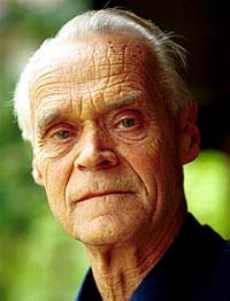 Ragnar Rommetveit合作论文数University of Oslo1Lennart Gustavsson合作论文数1
 Lisbeth Sachs合作论文数1U S Larsson合作论文数1Anne Salazar Orvig合作论文数1Lotta Lindh-Astrand合作论文数1
 Ann-Christin Cederborg合作论文数1Bente E. Hagtvet合作论文数1




