Written by leaders in the field, this text showcases some of the remarkable properties of the finite Toda lattice and applies this theory to establish universality for the associated Toda eigenvalue algorithm for random Hermitian matrices. The authors expand on a 2019 course at the Courant Institute to provide a comprehensive introduction to the area, including previously unpublished results. They begin with a brief overview of Hamiltonian mechanics and symplectic manifolds, then derive the action-angle variables for the Toda lattice on symmetric matrices. This text is one of the first to feature a new perspective on the Toda lattice that does not use the Hamiltonian structure to analyze its dynamics. Finally, portions of the above theory are combined with random matrix theory to establish universality for the runtime of the associated Toda algorithm for eigenvalue computation.
We prove an asymptotic formula for the recurrence coefficients of orthogonal polynomials with orthogonality measure $\log \bigl(\frac{2}{1-x}\bigr) {\rm d}x$ on $(-1,1)$. The asymptotic formula confirms a special case of a conjecture by Magnus and extends earlier results by Conway and one of the authors. The proof relies on the Riemann-Hilbert method. The main difficulty in applying the method to the problem at hand is the lack of an appropriate local parametrix near the logarithmic singularity at $x = +1$.
This is a survey of Harold Widom’s work in random matrices. We start with his pioneering papers on the sine-kernel determinant, continue with his and Craig Tracy’s groundbreaking results concerning the distribution functions of random matrix theory, touch on the remarkable universality of the Tracy–Widom distributions in mathematics and physics, and close with Tracy and Widom’s remarkable work on the asymmetric simple exclusion process.
We consider the open Toda chain with external forcing, and in the case when the forcing stretches the system, we derive the longtime behavior of solutions of the chain. Using an observation of Jürgen Moser, we then show that the system is completely integrable, in the sense that the $2N$-dimensional system has $N$ functionally independent Poisson commuting integrals, and also has a Lax-Pair formulation. In addition, we construct action-angle variables for the flow. In the case when the forcing compresses the system, the analysis of the flow remains open.
We prove that the number of iterations required to solve a random positive definite linear system with the conjugate gradient algorithm is almost deterministic for large matrices. We treat the case of Wishart matrices W = X X ∗ W = XX^* where X X is n × m n \times m and n / m ∼ d n/m \sim d for 0 > d > 1 0 > d > 1 . Precisely, we prove that for most choices of error tolerance, as the matrix increases in size, the probability that the iteration count deviates from an explicit deterministic value tends to zero. In addition, for a fixed iteration count, we show that the norm of the error vector and the norm of the residual converge exponentially fast in probability, converge in mean, and converge almost surely.
We consider the normalized distribution of the overall running times of some cryptographic algorithms, and what information they reveal about the algorithms. Recent work of Deift, Menon, Olver, Pfrang, and Trogdon has shown that certain numerical algorithms applied to large random matrices exhibit a characteristic distribution of running times, which depends only on the algorithm but are independent of the choice of probability distributions for the matrices. Different algorithms often exhibit different running time distributions, and so the histograms for these running time distributions provide a time-signature for the algorithms, making it possible, in many cases, to distinguish one algorithm from another. In this paper we extend this analysis to cryptographic algorithms, and present examples of such algorithms with time-signatures that are indistinguishable, and others with time-signatures that are clearly distinct.
In this paper, the authors discuss various results on universality in numerical computation with random data, obtained by the authors and their collaborators—C. Pfrang, G. Menon, S. Olver, and S. Miller—at various stages over the last 6–7 years. This paper follows closely the plenary talk with the same title given by the first author at ICMP Montreal 2018. The reader wishing to follow more closely the evolution and development of the ideas in this paper is invited to consult Deift et al. in the arXiv 2012–2019.
We discuss various universality aspects of numerical computations using standard algorithms. These aspects include empirical observations and rigorous results. We also make various speculations about computation in a broader sense.
These lectures introduce the method of nonlinear steepest descent for Riemann-Hilbert problems. This method finds use in studying asymptotics associated to a variety of special functions such as the Painlevé equations and orthogonal polynomials, in solving the inverse scattering problem for certain integrable systems, and in proving universality for certain classes of random matrix ensembles. These lectures highlight a few such applications.
The goal in the first two Coxeter lectures was to give an answer to the question $$\displaystyle \mbox{``What is an integrable system?''} $$ and to describe some of the tools that are available to identify and integrate such systems. The goal of the third lecture was to describe the role of integrable systems in certain numerical computations, particularly the computation of the eigenvalues of a random matrix. This paper closely follows these three Coxeter lectures, and is written in an informal style with an abbreviated list of references. Detailed and more extensive references are readily available on the web. The list of authors mentioned is not meant in any way to be a detailed historical account of the development of the field and I ask the reader for his'r indulgence on this score.
The author discusses integrability of Hamiltonian dynamical systems in the aftermath of KdV. The author also discusses the role of integrable systems in certain numerical computations, particularly the computation of the eigenvalues of a random symmetric matrix.
We prove universality for the fluctuations of the halting time for the Toda algorithm to compute the largest eigenvalue of real symmetric and complex Hermitian matrices. The proof relies on recent results on the statistics of the eigenvalues and eigenvectors of random matrices (such as delocalization, rigidity and edge universality) in a crucial way.
We review the authors' recent work \cite{BDIK1,BDIK2,BDIK3} where we obtain the uniform large $s$ asymptotics for the Fredholm determinant $D(s,\gamma):=\det(I-\gamma K_s\upharpoonright_{L^2(-1,1)})$, $0\leq\gamma\leq 1$. The operator $K_s$ acts with kernel $K_s(x,y)=\sin(s(x-y))/(\pi(x-y))$ and $D(s,\gamma)$ appears for instance in Dyson's model \cite{Dyson2} of a Coulomb log-gas with varying external potential or in the bulk scaling analysis of the thinned GUE \cite{BP}.
Communications on Pure and Applied MathematicsVolume 48, Issue 3 p. 277-337 Article Asymptotics for the painlevé II equation P. A. Deift, P. A. Deift Courant InstituteSearch for more papers by this authorX. Zhou, X. Zhou Yale UniversitySearch for more papers by this author P. A. Deift, P. A. Deift Courant InstituteSearch for more papers by this authorX. Zhou, X. Zhou Yale UniversitySearch for more papers by this author First published: 1995 https://doi.org/10.1002/cpa.3160480304Citations: 109AboutPDF ToolsRequest permissionExport citationAdd to favoritesTrack citation ShareShare Give accessShare full text accessShare full-text accessPlease review our Terms and Conditions of Use and check box below to share full-text version of article.I have read and accept the Wiley Online Library Terms and Conditions of UseShareable LinkUse the link below to share a full-text version of this article with your friends and colleagues. Learn more.Copy URL Share a linkShare onFacebookTwitterLinked InRedditWechat Citing Literature Volume48, Issue31995Pages 277-337 RelatedInformation
In this paper we compute the asymptotic behavior of the recurrence coefficients for polynomials orthogonal with respect to a logarithmic weight w(x)dx = log 2k 1-x dx on (-1, 1), k > 1, and verify a conjecture of A. Magnus for these coefficients.We use Riemann-Hilbert/steepest-descent methods, but not in the standard way as there is no known parametrix for the Riemann-Hilbert problem in a neighborhood of the logarithmic singularity at x = 1.
 Carlos Tomei合作论文数Departamento de Matemática, PUC-Rio30Alexander Its合作论文数16
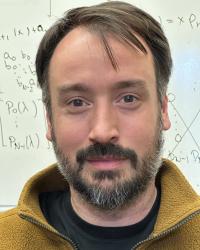 Tom Trogdon合作论文数Department of Applied Mathematics, College of Arts & Sciences, University of Washington;Algorithmic Foundations of Data Sciences Institute, University of Washington15
 Stephanos Venakides合作论文数Department of Mathematics, Trinity College of Arts & Sciences, Duke University13
 Jinho Baik合作论文数Department of Mathematics, College of Literature, Science, and The Arts, University of Michigan13Xinghe Zhou合作论文数11T. Kriecherbauer合作论文数10
 Igor Krasovsky合作论文数Department of Mathematics, Faculty of Natural Sciences, Imperial College London9
 Richard Beals合作论文数Department of Mathematics, Yale University8Dimitri Gioev合作论文数8
 Zhou Xin J合作论文数Canc Ctr Dept Genet, Univ Texas MD Anderson6Eugene Trubowitz合作论文数6T. Nanda合作论文数5
 Barry M. Simon合作论文数The Division of Physics, Mathematics and Astronomy, California Institute of Technology5Lianchong Li合作论文数5
 Luen-Chau Li合作论文数Department of Mathematics, Pennsylvania State University5
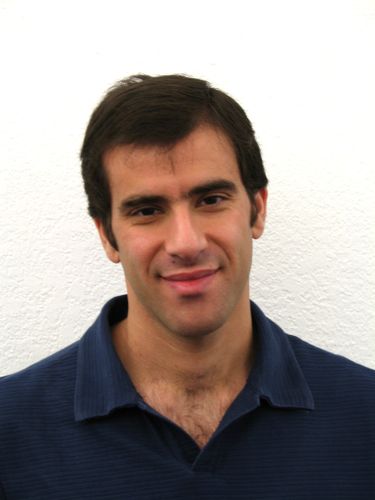 Toufic Suidan合作论文数Department of Mathematics, University of Arizona;Simons Laufer Mathematical Sciences Institute5Rainer Hempel合作论文数5Ktr Mclaughlin合作论文数4
 Alexei Borodin合作论文数Department of Mathematics, Massachusetts Institute of Technology4
 Thomas Kriecherbauer合作论文数4K. T.-R. Mclaughlin合作论文数Department of Mathematics, The University of Arizona4
 Eugene Wayne合作论文数Department of Mathematics and Statistics, College of Arts & Sciences, Boston University3
 Dave Levermore合作论文数Institute for Physical Science and Technology, University of Maryland;Department of Mathematics, University of Maryland3
 Alan Edelman合作论文数Department of Mathematics, Massachusetts Institute of Technology;Julia Computing, Inc3
 Friedrich (Fritz) Gesztesy合作论文数Department of Mathematics, Baylor University3
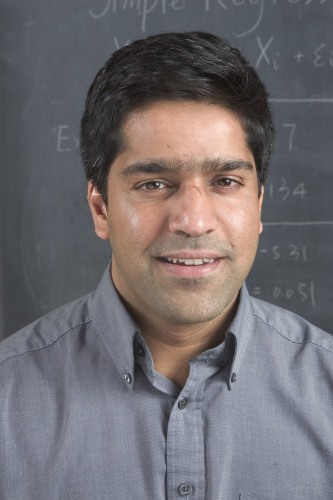 Govind Menon合作论文数Division of Applied Mathematics, Brown University3
 Peter A Clarkson合作论文数School of Mathematics, Statistics and Actuarial Science, University of Kent3
 Folkmar Bornemann合作论文数Department of Mathematics, Technische Universitat Munchen3
 Stan Alama合作论文数Department of Mathematics and Statistics, McMaster University3cherie galvez合作论文数2
 Thomas Bothner合作论文数Sch Math, Univ Bristol2
 Felix Krahmer合作论文数Department of Mathematics, Technische Universität München2
 James Demmel合作论文数Computer Science Division, Department of Mathematics, University of California at Berkeley2
 Wilhelm Schlag合作论文数Department of Mathematics, Yale University2Kurt Johansson合作论文数Division of Mathematics, Department of Mathematics, School of Engineering Sciences, KTH Royal Institute of Technology2Chris Goertz合作论文数2
 Peter Anton Perry合作论文数Department of Mathematics, University of Kentucky2Linda C Li合作论文数2
 Mateusz Piorkowski合作论文数1Ar Its合作论文数1hsingwei chou合作论文数1Guillaume Dubach合作论文数1
 Rowan Killip合作论文数Department of Mathematics, College of Physical Sciences, University of California, Los Angeles1XinMin Zhou (周新民)合作论文数1
 Peter D. Miller合作论文数Department of Mathematics, College of Literature, Science, and the Arts, University of Michigan1
 Sheehan S Olver合作论文数Department of Mathematics, Faculty of Natural Sciences, Imperial College London1
 Peter Forrester合作论文数School of Mathematics and Statistics, Faculty of Science, University of Melbourne1




