With the fast moving world and information era, the seeking of information through "just a click - to your fingertips" has become a culture, growing rapidly in the Tourist Industry, which as a nation, Sri Lanka lacks for the time being. For us to grow and conquer the present through our glorious heritage, we should seek out for new sources of information distribution methodology and let the world see what we have with the touch of new technology and influence the sensational feeling of a "Tour through our Heritage". Virtual Eye is a platform, a smarter mode of interaction to virtual environments, as per the stepping stone to the new era of tourism, for the first time in Sri Lankan history, with the touch of 3D simulation, and transform the architectural and archeological monuments within Sri Lanka in to a "lively walk through" with embedded tour guide information using textual and audio captions by the unique and unprecedented product, "Virtual Eye", which will "not be Just a Tour Guide with a map" but will be a product including a "walk through the changes over Colonial Eras to the day it is being built" for the tourist to get a remarkable first-hand experience of our heritage behind the monuments preserved by generation over generation
Providing entertainment is the primary concern of the gaming. Once this primary objective alters to provide learning and training materials it calls simulators or the serious gaming. Learning through experiencing or facing the actual scenario is considered as an effective learning technique. The limitations of the experiential learning and how the simulations are going to address those limitations are also reviewed in this paper. Aviation field is one of the most critical and potentially high risk areas where one has to spend lots of money and resources in training scenario. Hence the serious gaming concepts have being playing as an effective cost cutting solution in aviation training. In this paper it is intended to discuss the seriousness of a selected flight simulator and how they adopted the teaching learning concepts. How the simulator can be used in the learning curve is also discussed separately
Sri Lankan government has taken a policy decision to develop the country as a knowledge hub in Asia. Universities have a pivotal role in realizing this goal and they have the responsibility to contribute new knowledge, through innovation and research, towards the economic development. Research culture in the Sri Lankan universities is gradually developing and there have been several research projects that resulted in commercializ able innovative outcomes. However, commercialization is a challenging task due to several reasons and only a few significant outcomes of the university research have been successfully commercialized. Commercialization challenges are an integral part of the universities and research institutes and they are looking for pragmatic solutions.In developed and industrialized countries, it is now widely accepted that the research outcomes of universities plays an important role in the economic development and it is quite common for the industry to work in collaboration with the universities to innovate and find solutions to their problems. However, this is not the case in Sri Lanka and due to this there is a large gap between the university research outcomes and industry expectations.In this paper, as a case study, we present our experience in taking the outcome of a university research project and adapting it to solve a problem faced by two entities responsible for handling maritime traffic in Sri Lanka. We have productized the research outcome to a large extent and deployed it to handle a real world problem. While we cannot claim that it is fully commercialized yet, we have bridged the gap between the expectations of the real world users and the researchers at the university. Also, in this paper we explore how other countries have handled the problem of commercializing research projects as well as the Sri Lankan effort in this regard.
 Aruni Nisansala合作论文数3Chamath Keppitiyagama合作论文数University of Colombo3
 Maheshya Weerasinghe合作论文数University of St Andrews, University of Primorska3
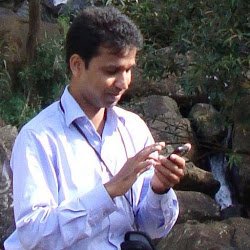 Damitha Sandaruwan合作论文数3
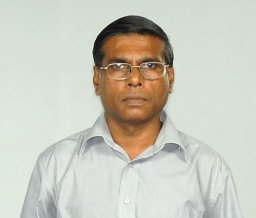 N.D. Kodikara合作论文数Department of Statistics;Computer Science;University of Colombo;Department of Statistics, University of Colombo3
 Kapila Asanga Dias合作论文数2Ranjith Senadheera合作论文数1
 Nuwan Dhammika合作论文数1Ishan Buddhika合作论文数1




