At the time that the 2017-2027 Decadal Survey for Earth Science and Applications from Space was released, there was a strong emphasis on reducing the possibility of a substantial gap between the GRACE Follow-On mission and a successor mission. This has led to the subsequent rapid development of a successor mission in partnership between NASA and DLR, GRACE-Continuity (GRACE-C), expected to launch in 2028, to continue the timeseries of Earth system mass change established by GRACE and GRACE-FO. In parallel, ESA continues development of a pair of satellites called Next Generation Gravity Mission (NGGM), targeted for an inclination between 65 degrees and 75 degrees to complement GRACE-C, launching in the early 2030s. NGGM offers the possibility for reduced noise in measuring short-period variations in the satellite separation using an improved accelerometer relative to what is flying on GRACE-C. One pathway for this is by using a simplified version of the Gravitational Reference Sensors demonstrated on the LISA Pathfinder Mission in 2016. And, if the measurement accuracy is much improved, it appears desirable to fly NGGM with a fixed ground track and an approximately 5-day orbit repeat period.
ANOTHER OPTION FOR THE NEXT GEN. GRAVITY MISSION ORBIT CONFIGURATION For the polar pair of a next generation gravity mission, an attractive feature would be to keep the repeat period for the ground track quite short. The satellites hopefully will include a much-simplified version of the Gravitational Reference Sensors demonstrated on the LISA Pathfinder Mission, as well as laser interferometry between the two satellites. A short period repeat option for the orbits is 107 satellite revolutions in 7 sidereal days, at an altitude of 468 km. Because of the fairly high altitude, the amount of propulsion needed for drag-free operation would be relatively small. With this geometry, the upward passes across the equator will be separated by 3.4 deg in longitude, and will be followed 3.5 days later by downward passes at the same longitudes. In the northern hemisphere, the upward and downward passes also will cross at latitudes of 25.7 and 51.4 degrees. At all latitudes, the maximum gaps in longitude between upward and downward passes for 3 successive days will be 6.7 deg. or less. In analysing the 7-day data sets, the maximum ground track separation in longitude would be 378 km. Thus, for a point mass half way between the nearest ground tracks, the minimum distance to the satellites would be increased only from 468 km to 505 km at the most. A recent study by R. Spero (Adv. Space Res. 67 (2021) 1656-1664) addressed the question of how accurately rapid changes in a local mass concentration could be measured with earth gravity change mission measurements. One case that was included had about the same measurement capability as the next generation gravity mission (NGGM) assumed here. For this case, the reduction in the instrumental measurement uncertailty was dramatic. However, the actual usefulness of the results would be strongly limited by the a priory uncertainty in our ability to understand the geophysical sources of the geopotential variations. Thus, while our uncertainty in the geopotential variations at satellite altitude would be reduced at almost all frequencies, it probably would be a long time before our understanding of the geophysical sources of the variations becomes good in most regions at frequencies below about 60 cycles/rev. Fortunately, this limitation will be less severe in regions where one source of geopotential variation is dominant, such as river basins where the dominant variation is in the near-surface stored water level.
There is an opportunity to make a major reduction in the acceleration noise level for the first Next Generation Gravity Mission by replacing the accelerometers used on the GRACE Follow-On Mission by a highly simplified version of the Gravitational Reference Sensors flown very successfully on the LISA Pathfinder mission of ESA. The reduced measurement noise level can make possible much-improved measurements of the short-period and short-wavelength variations in the geopotential. This would be particularly from the along-track analysis of the results, which can permit repeat measurements about half a day apart along ground tracks within 200 km of each other over a substantial part of the globe. Such a mission would permit considerably improved testing of geophysical models for the geopotential variations due to changes in the Earth’s mass distribution.
A new mission called the Gravity Recovery And Climate change Experiment Follow‐On (GRACE‐FO) is now flying to continue the measurements started by the GRACE mission and to test a laser interferometry system for making more accurate measurements of the satellite separation. In this study, we discuss the potential scientific benefit of strongly reducing the acceleration noise in a Next Generation Gravity Mission (NGGM), compared with that for GRACE and for GRACE‐FO. A useful way of comparing the scientific benefits is from the view point of how well they can be used to test different procedures for estimating the changes in the geopotential based on sources of geophysical information other than satellite gravity results. In particular, changes in hydrology, the atmospheric density, and ocean conditions can make large and very nonuniform changes in the geopotential in short periods of time. To make the discussion as simple as possible, we consider mainly the variations in the geopotential at altitude along the satellite orbit for different ground tracks. For the NGGM, we initially assume laser interferometry between the two satellites but the same satellite acceleration noise level as for the GRACE‐FO mission. Then the total measurement noise level at long and medium wavelengths would be only moderately below the geopotential variation estimation uncertainty. However, if the acceleration noise level were sharply reduced by replacing the GRACE‐type accelerometers by simplified gravitational reference sensors, it appears that improved tests of our understanding of the causes of the geopotential variations could be obtained.
The NASA LISA Study Team was tasked to study how NASA might support US scientists to participate and maximize the science return from the Laser Interferometer Space Antenna (LISA) mission. LISA is gravitational wave observatory led by ESA with NASA as a junior partner, and is scheduled to launch in 2034. Among our findings: LISA science productivity is greatly enhanced by a full-featured US science center and an open access data model. As other major missions have demonstrated, a science center acts as both a locus and an amplifier of research innovation, data analysis, user support, user training and user interaction. In its most basic function, a US Science Center could facilitate entry into LISA science by hosting a Data Processing Center and a portal for the US community to access LISA data products. However, an enhanced LISA Science Center could: support one of the parallel independent processing pipelines required for data product validation; stimulate the high level of research on data analysis that LISA demands; support users unfamiliar with a novel observatory; facilitate astrophysics and fundamental research; provide an interface into the subtleties of the instrument to validate extraordinary discoveries; train new users; and expand the research community through guest investigator, postdoc and student programs. Establishing a US LISA Science Center well before launch can have a beneficial impact on the participation of the broader astronomical community by providing training, hosting topical workshops, disseminating mock catalogs, software pipelines, and documentation. Past experience indicates that successful science centers are established several years before launch; this early adoption model may be especially relevant for a pioneering mission like LISA.
The first terrestrial gravitational wave interferometers have dramatically underscored the scientific value of observing the Universe through an entirely different window, and of folding this new channel of information with traditional astronomical data for a multimessenger view. The Laser Interferometer Space Antenna (LISA) will broaden the reach of gravitational wave astronomy by conducting the first survey of the millihertz gravitational wave sky, detecting tens of thousands of individual astrophysical sources ranging from white-dwarf binaries in our own galaxy to mergers of massive black holes at redshifts extending beyond the epoch of reionization. These observations will inform - and transform - our understanding of the end state of stellar evolution, massive black hole birth, and the co-evolution of galaxies and black holes through cosmic time. LISA also has the potential to detect gravitational wave emission from elusive astrophysical sources such as intermediate-mass black holes as well as exotic cosmological sources such as inflationary fields and cosmic string cusps.
Following the selection of The Gravitational Universe by ESA, and the successful flight of LISA Pathfinder, the LISA Consortium now proposes a 4 year mission in response to ESA's call for missions for L3. The observatory will be based on three arms with six active laser links, between three identical spacecraft in a triangular formation separated by 2.5 million km. LISA is an all-sky monitor and will offer a wide view of a dynamic cosmos using Gravitational Waves as new and unique messengers to unveil The Gravitational Universe. It provides the closest ever view of the infant Universe at TeV energy scales, has known sources in the form of verification binaries in the Milky Way, and can probe the entire Universe, from its smallest scales near the horizons of black holes, all the way to cosmological scales. The LISA mission will scan the entire sky as it follows behind the Earth in its orbit, obtaining both polarisations of the Gravitational Waves simultaneously, and will measure source parameters with astrophysically relevant sensitivity in a band from below $10^{-4}\,$Hz to above $10^{-1}\,$Hz.
The origin and properties of black hole seeds that grow to produce the detected population of supermassive black holes are unconstrained at present. Despite the existence of several potentially feasible channels for the production of initial seeds in the high redshift universe, since even actively growing seeds are not directly observable at these epochs, discriminating between models remains challenging. Several new observables that encapsulate information about seeding have been proposed in recent years, and these offer exciting prospects for truly unraveling the nature of black hole seeds in the coming years. One of the key challenges for this task lies in the complexity of the problem, the required disentangling of the confounding effects of accretion physics and mergers, as mergers and accretion events over cosmic time stand to erase these initial conditions. Nevertheless, some unique signatures of seeding do survive and still exist in: local scaling relations between black holes and their galaxy hosts at low-masses; in high-redshift luminosity functions of accreting black holes; and in the total number and mass functions of gravitational wave coalescence events from merging binary black holes. One of the clearest discriminants for seed models are these high redshift gravitational wave detections of mergers from space detectable in the milliHertz range. These predicted event rates offer the most direct constraints on the properties of initial black hole seeds. Improving our theoretical understanding of black hole dynamics and accretion will also be pivotal in constraining seeding models in combination with the wide range of multi-messenger data.
John Baker Jillian Bellovary Peter L. Bender Emanuele Berti Robert Caldwell Jordan Camp John W. Conklin Neil Cornish Curt Cutler Ryan DeRosa Michael Eracleous Elizabeth C. Ferrara Samuel Francis Martin Hewitson Kelly Holley-Bockelmann Ann Hornschemeier Craig Hogan Brittany Kamai Bernard J. Kelly Joey Shapiro Key Shane L. Larson NASA Goddard Space Flight Center CUNY-Queensborogh Community College University of Colorado Johns Hopkins University Dartmouth College NASA Goddard Space Flight Center University of Florida Montana State University NASA Goddard Space Flight Center NASA Jet Propulsaion Laboratory The Pennsylvania State University University of Maryland, College Park NASA Jet Propulsion Laboratory Albert Einstein Institute Hannover Vanderbilt University NASA Goddard Space Flight Center University of Chicago / Fermilab CalTech, Vanderbilt University University of Maryland Baltimore County University of Washington Bothell Northwestern University
The Laser Interferometer Space Antenna (LISA) will open three decades of gravitational wave (GW) spectrum between 0.1 and 100 mHz, the mHz band. This band is expected to be the richest part of the GW spectrum, in types of sources, numbers of sources, signal-to-noise ratios and discovery potential. When LISA opens the low-frequency window of the gravitational wave spectrum, around 2034, the surge of gravitational-wave astronomy will strongly compel a subsequent mission to further explore the frequency bands of the GW spectrum that can only be accessed from space. The 2020s is the time to start developing technology and studying mission concepts for a large-scale mission to be launched in the 2040s. The mission concept would then be proposed to Astro2030. Only space based missions can access the GW spectrum between 10 nHz and 1 Hz because of the Earths seismic noise. This white paper surveys the science in this band and mission concepts that could accomplish that science. The proposed small scale activity is a technology development program that would support a range of concepts and a mission concept study to choose a specific mission concept for Astro2030. In this white paper, we will refer to a generic GW mission beyond LISA as bLISA.
The GRACE mission has been providing valuable new information on time variations in the Earth's gravity field since 2002. In addition, the GRACE Follow-On mission is scheduled to be flown soon after the end of life of the GRACE mission in order to minimize the loss of valuable data on the Earth's gravity field changes. In view of the major benefits to hydrology and oceanography, as well as to other fields, it is desirable to investigate the fundamental limits to monitoring the time variations in the Earth's gravity field during GRACE-type missions. A simplified model is presented in this paper for making estimates of the effect of differential spurious accelerations of the satellites during times when four successive revolutions cross the Pacific Ocean. The analysis approach discussed is to make use of changes in the satellite separation observed during passages across low latitude regions of the Pacific and of other oceans to correct for spurious accelerations of the satellites. The low latitude regions of the Pacific and of other oceans are the extended regions where the a priori uncertainties in the time variations of the geopotential heights due to mass distribution changes are known best. In addition, advantage can be taken of the repeated crossings of the South Pole and the North Pole, since the uncertainties in changes in the geopotential heights at the poles during the time required for four orbit revolutions are likely to be small.
A major objective that has been suggested for a follow-on mission to a Laser Interferometer Space Antenna (LISA)-type mission is to investigate more completely how intermediate mass black holes were formed and grew in the early universe, before they evolved into the much more massive black holes at the centers of many galaxies today. The actual design of such a follow-on mission will of course depend on what is observed by a LISA-type mission, such as the recently modified proposal for an evolved LISA mission, with the interferometer arm lengths between spacecraft reduced from 5 million to 1 million km. However, the sensitivity goals of a follow-on mission are likely to be influenced strongly by the desire to be able to see mergers of 10 M⊙ black holes with roughly 3000 M⊙ or larger intermediate mass black holes out to as large redshifts as possible. Approximate calculations of the expected signal-to-noise have been made for a possible LISA follow-on mission that was suggested about eight years ago (Bender and Begelman 2005 Trends in Space Science and Cosmic Vision 2020 (Noordwijk: ESA Publications Division) pp 33–38), and was called the Advanced Laser Interferometer Antenna. Based on the calculations, it appears that detections out to a redshift of 10 would be possible for 10 M⊙ black holes spiraling into perhaps 5000 M⊙ or larger intermediate mass black holes if the extragalactic gravitational wave background due to close white dwarf binaries is in the currently estimated range.
This paper investigates the possible application of periodic orbit control maneuvers for so-called evolved-LISA (eLISA) missions, i.e., missions for which the constellation arm lengths and mean distance from the Earth are substantially reduced. We find that for missions with arm lengths of 106 km and Earth-trailing distance ranging from approx. 12deg to 20deg over the science lifetime, the occasional use of the spacecraft micro-Newton thrusters for constellation configuration maintenance should be able to essentially eliminate constellation distortion caused by Earth-induced tidal forces at a cost to science time of only a few percent. With interior angle variation kept to approx. +/-0:1deg, the required changes in the angles between the laser beam pointing directions for the two arms from any spacecraft could be kept quite small. This would considerably simplify the apparatus necessary for changing the transmitted beam directions.
A paper published recently (Hogan et al. in Gen. Relativ. Gravit. 43:1953–2009, 2011 ) suggests the use of atom interferometry between satellites in Earth orbit to observe gravitational waves. The proposed altitude and satellite separation are about 1,000 and 30 km respectively. The difference in acceleration between clouds of ultracold atoms in atom interferometers near the two satellites would be detected by using laser beams between the interferometers. Because of the measurement path being very short compared with the million km or longer measurement path for a proposed laser interferometer gravitational wave antenna in space, the sensitivity to differential fluctuations in the laser phase as seen by the atoms in the two atom interferometers is very high. Problems introduced by this high sensitivity to spurious laser beam phase changes will be described in the first part of this paper. Then other limitations on the performance and on the suggested types of sources that could be observed will be discussed.
In the next decade or two, extremely accurate tests of general relativity under extreme conditions are expected from gravitational wave observations of binary black hole mergers with a wide range of mass ratios. In addition, major improvements are planned in both strong and weak equivalence principle tests; clock measurements based on the ACES program on the ISS; more accurate light-bending measurements; and other new types of tests. However, whether these tests are all consistent with general relativity or not, it still appears desirable to proceed with a much improved measurement of the Shapiro time delay. A suggested approach is based on using a high-quality optical clock in a drag-free spacecraft near the sun-earth L1 point and a smaller drag-free transponder spacecraft in a two-year period solar orbit. Laser phase travel-time measurements would be made between the two spacecraft over a period of 10 or 20 days around the time when the line of sight passes through the Sun. The requirements on the optical clock stability and on the drag-free systems will be discussed. The accuracy achievable for the time-delay appears to be better than 1 part in 100 million.
The use of laser interferometers for detecting and studying gravitational-wave signals from many types of astronomical sources is being pursued actively by a number of groups in different countries. However, it has been suggested recently that cooled atom clouds in atom interferometers could be used to replace the test masses in space-based gravitational-wave detectors and the end mirrors in ground-based detectors [S. Dimopoulos, P. W. Graham, J. M. Hogan, M. A. Kasevich, and S. Rajendran, Phys. Rev. D 78, 122002 (2008).]. Some new error sources that apparently have not been included in proposals of atom interferometer gravitational-wave detectors will be discussed in this comment. They are based on additional effects of aberrations in the laser wave fronts that interact with the atom clouds.
AbstractThe gravitational wave detectors that are operating now are looking for several kinds of gravitational wave signals at frequencies of tens of Hertz to kilohertz. One of these is mergers of roughly 10 M⊙ BH binaries. Sometime between now and about 8 years from now, it is likely that signals of this kind will be observed. The result will be strong tests of the dynamical predictions of general relativity in the high field regime. However, observations at frequencies below 1 Hz will have to wait until the launch of the Laser Interferometer Space Antenna (LISA), hopefully only a few years later. LISA will have 3 main objectives, all involving massive BHs. The first is observations of mergers of pairs of intermediate mass (100 to 105M⊙) and higher mass BHs at redshifts out to roughly z=10. This will provide new information on the initial formation and growth of BHs such as those found in most galaxies, and the relation between BH growth and the evolution of galactic structure. The second objective is observations of roughly 10 M⊙ BHs, neutron stars, and white dwarfs spiraling into much more massive BHs in galactic nuclei. Such events will provide detailed information on the populations of such compact objects in the regions around galactic centers. And the third objective is the use of the first two types of observations for testing general relativity even more strongly than ground based detectors will. As an example, an extreme mass ratio event such as a 10 M⊙ BH spiraling into a galactic center BH can give roughly 105 observable cycles during about the last year before merger, with a mean relative velocity of 1/3 to 1/2 the speed of light, and the frequencies of periapsis precession and Lense-Thirring precession will be high. The LISA Pathfinder mission to prepare for LISA is scheduled for launch in 2011.
Abstract Improved accuracy in measurement of the gravitational time delay of electromagnetic waves passing by the sun may be achieved with two drag-free spacecraft, one with a stable clock and laser transmitter and one with a high-stability transponder. We consider one spacecraft near the Earth-Sun L1 point with an advanced optical clock, and the transponder on a second satellite, which has a 2 year period orbit and eccentricity e = 0.37. Superior conjunctions will occur at aphelion 1, 3, and 5 years after launch of the second spacecraft. The measurements can be made using carrier phase comparisons on the laser beam that would be sent to the distant spacecraft and then transponded back. Recent development of clocks based on optical transitions in cooled and trapped ions or atoms indicate that a noise spectral amplitude of about 5 × 10⁻¹⁵/ at frequencies down to at least 1 microhertz can be achieved in space-borne clocks. An attractive candidate is a clock based on a single laser-cooled Yb+ trapped ion. Both spacecraft can be drag-free at a level of 1×10⁻¹³m/s2/ at frequencies down to at least 1 microhertz. The corresponding requirement for the LISA gravitational wave mission is 3 × 10⁻¹⁵m/s2/ at frequencies down to 10−4 Hz, and Gravitational Reference Sensors have been developed to meet this goal. They will be tested in the LISA Pathfinder mission, planned by ESA for flight in 2011. The requirements to extend the performance to longer times are mainly thermal. The achievable accuracy for determining the PPN parameter γ is about 1 × 10⁻⁸.
 Robin Tucker Stebbins合作论文数Gravitational Astrophysics Laboratory, NASA Goddard Space Flight Center19james e faller合作论文数8
 William M. Folkner合作论文数Jet Propulsion Laboratory8
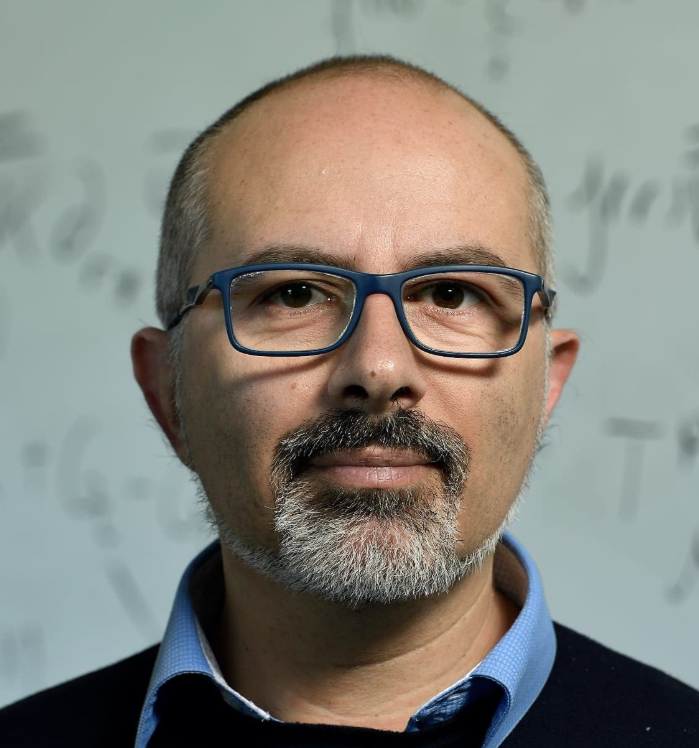 Emanuele Berti合作论文数William H. Miller III Department of Physics & Astronomy, Krieger School of Arts & Sciences, Johns Hopkins University6
 Kelly Holley-Bockelmann合作论文数Department of Physics and Astronomy, Vanderbilt University6S. Richman合作论文数5
 Neil Cornish合作论文数Department of Physics, College of Letters and Science, Montana State University;eXTreme Gravity Institute, Montana State University5
 David B. Newell合作论文数National Institute of Standards and Technology5
 Shane L. Larson合作论文数Northwestern University;Clarkson University5James E Faller合作论文数5
 Deirdre M Shoemaker合作论文数Department of Physics, College of Natural Sciences, University of Texas at Austin4
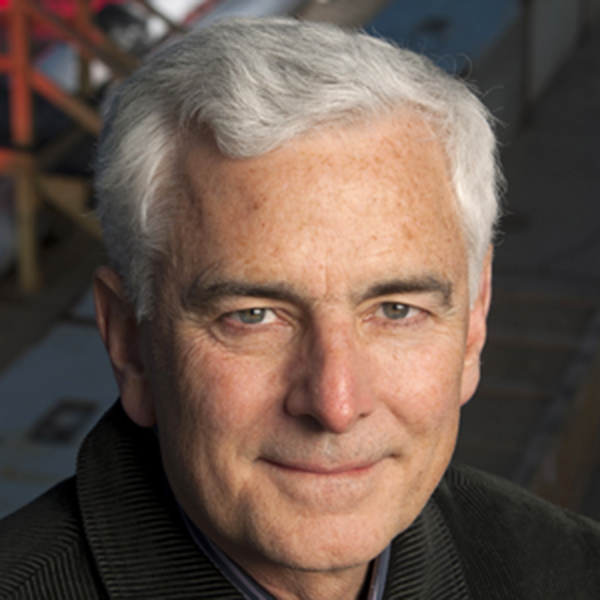 Craig J. Hogan合作论文数Department of Astronomy and Astrophysics, The University of Chicago;Enrico Fermi Institute, The University of Chicago4
 Robert R. Caldwell合作论文数Department of Physics and Astronomy, Dartmouth College4
 Priyamvada Natarajan合作论文数Department of Physics, Yale University;Flatiron Institute, Center for Computational Astrophysics;Black Hole Initiative, Harvard University;DARK Cosmology Center, Niels Bohr Institute;Dark Cosmology Centre, Niels Bohr Institute, University of Copenhagen4
 John K. Ziemer合作论文数Jet Propulsion Laboratory;California Institute of Technology;Jet Propulsion Laboratory, California Institute of Technology4
 John W Conklin合作论文数Department of Mechanical and Aerospace Engineering, University of Florida4
 Jillian Bellovary合作论文数Graduate Center, City University of New York;Department of Physics, Queensborough Community College, City University of New York;American Museum of Natural History4
 Sean McWilliams合作论文数Center for Gravitational Waves and Cosmology, Department of Physics and Astronomy, Eberly College of Arts & Sciences, West Virginia University4
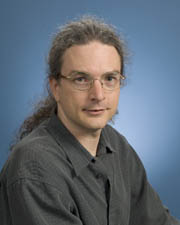 John Baker合作论文数Gravitational Astrophysics Laboratory, NASA4
 Neil Ashby合作论文数Time Realization and Distribution Group, National Institute of Standards and Technology4dieter hils合作论文数4David Shoemaker合作论文数3
 Brittany Kamai合作论文数3Ira Thorpe合作论文数3Martin Hewitson合作论文数3
 Marta Volonteri合作论文数Institut d'Astrophysique de Paris3
 Jacob Slutsky合作论文数NASA Goddard Space Flight Center3
 Michele Vallisneri合作论文数Department of Physics, ETH Zurich3
 Joey Shapiro Key合作论文数Department of Physics;Montana State University;Department of Physics, Montana State University3
 David Wiese合作论文数NASA Jet Propulsion Laboratory3
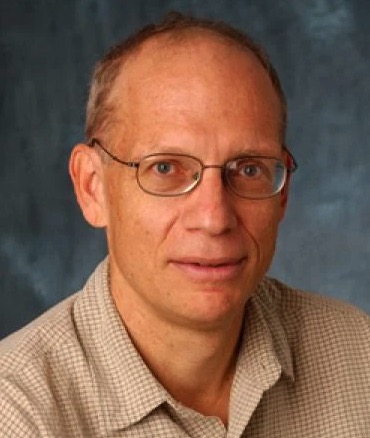 John Matthew Wahr合作论文数Department of Physics, College of Arts and Sciences, University of Colorado Boulder3
 Michelle Stephens合作论文数3
 Curt Cutler合作论文数Jet Propulsion Laboratory, California Institute of Technology3
 Elizabeth C. Ferrara合作论文数Department of Astronomy, University of Maryland;NASA's Goddard Space Flight Center3
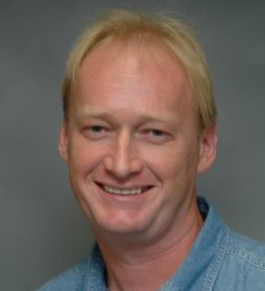 Guido Mueller合作论文数Department of Physics, College of Liberal Arts and Sciences, University of Florida3
 Jordan Camp合作论文数Astrophysics Science Division, Goddard Space Flight Center, NASA3
 Karsten Danzmann合作论文数Albert Einstein Institute, Max-Planck-Institut fur Gravitationsphysik;Institute of Gravitational Physics, Faculty of Mathematics and Physics, Leibniz Universität Hannover3
 Peter James Wass合作论文数Department of Mechanical and Aerospace Engineering, Herbert Wertheim College of Engineering, University of Florida3
 R Steven Nerem合作论文数Ann and H.J. Smead Aerospace Engineering Sciences, College of Engineering & Applied Science, University of Colorado Boulder;Colorado Center for Astrodynamics Research, University of Colorado Boulder3Livas Jeff合作论文数2jeffery lawrence hall合作论文数2Sankar Shannon R.合作论文数2
 David Robertson合作论文数School of Physics & Astronomy, University of Glasgow2n rioux合作论文数2Rita Dolesi合作论文数2
 Joseph A. Giaime合作论文数Department of Physics & Astronomy, College of Science, Louisiana State University;LIGO Livingston Observatory, California Institute of Technology2brent ware合作论文数2S. Vitale合作论文数2
 Kirk McKenzie合作论文数Department of Quantum Science, Research School of Physics, College of Science, The Australian National University2




