Molecules of tris(2,2'-bipyridine-4-thiomethyl-BEDT-TTF)iron(II) (BEDT-TTF = bis(ethylenedithio)tetrathiafulvalene) assemble in pairs to form a novel supramolecular capsular structure in the solid state. Three BEDT-TTF residues from one complex lie in the three grooves between coordinated bipyridines of the other complex, and vice versa, to form a capsule with 3-fold rotational symmetry and an internal volume of ca. 160 Å(3). Further aspects of the coordination chemistry of this ligand, its 6-substituted isomer, and the 2,2':6'2″-terpyridyl-4'-thiomethyl-BEDT-TTF analogue are described.
BEDT-TTF forms three packing arrangement styles in its radical cation salts with [Cr(NCS)6]3− in two of which two trans-oriented isothiocyanate ligands penetrate the BEDT-TTF layers either at the point where a solvent (nitrobenzene) is incorporated in a stack of donors or by four donor molecules forming a “tube” motif to accept a ligand at each end along with a small solvent molecule in between (acetonitrile). The [Cr(NCS)5NH3]2− ion forms a related crystal packing arrangement with BEDT-TTF with a reduction in the number of “tube” motifs needed to accept an isothiocyanate ligand.
Triiodides are arranged in head to tail pairs, infinite lines or a castellated arrangement in the radical cation salts of chiral bis(N(1-arylethyl))pyrrolo-tetrathiafulvalene salts.
An entry from the Cambridge Structural Database, the world’s repository for small molecule crystal structures. The entry contains experimental data from a crystal diffraction study. The deposited dataset for this entry is freely available from the CCDC and typically includes 3D coordinates, cell parameters, space group, experimental conditions and quality measures.
für Naturforschung in cooperation with the Max Planck Society for the Advancement of Science under a Creative Commons Attribution 4.0 International License. Dieses Werk wurde im Jahr 2013 vom Verlag Zeitschrift für Naturforschung in Zusammenarbeit mit der Max-Planck-Gesellschaft zur Förderung der Wissenschaften e.V. digitalisiert und unter folgender Lizenz veröffentlicht: Creative Commons Namensnennung 4.0 Lizenz. Optical Spectroscopy of Mixed Metamagnetic Fe,Co,_xCl2 Crystals
The syntheses of a range of enantiopure organosulfur donors with hydrogen bonding groups are described including TTF related materials with two, four, six and eight hydroxyl groups and multiple stereogenic centres and a pair of chiral N-substituted BEDT-TTF acetamides. Three charge transfer salts of enantiopure poly-hydroxy-substituted donors are reported, including a 4:1 salt with the meso stereoisomer of the dinuclear [Fe2(oxalate)5]4− anion in which both cation and anion have chiral components linked together by hydrogen bonding, and a semiconducting salt with triiodide.
The electrochemical and spectroelectrochemical properties of a bis-pyrid-4-yl functionalised vinylenedithio-TTF derivative, 1, in solution are reported. The compound was immobilised on a Pt electrode and the resulting layers formed were investigated using electrochemical techniques. Two oxidation processes were observed for 1, typical of TTF derivatives. A solvent dependence study revealed that the stabilisation of the radical cation intermediate, 1+, towards further oxidation is achieved in solvents with a low Gutmann donor number such as dichloromethane. Analysis of 12+ in solution under aerobic and anaerobic conditions reveal that its stability is compromised in the presence of oxygen and therefore the stability of monolayers of 1 is greatly enhanced under anaerobic conditions. Time dependent DFT calculations of the compound in several oxidation states are discussed to obtain information on the location of the various redox processes.
The novel radical cation salt (BEDT-TTF)3(sulfamate)2·2H2O (BEDT-TTF = bis(ethylenedithio)tetrathiafulvalene) is semiconducting with donor stacks comprised of pairs of partially oxidized molecules and a single more highly oxidized molecule which is twisted out of the stack by ca. 30°. Hydrogen bonded pairs of sulfamate ions are linked into parallel ribbons by further hydrogen bonding between sulfamates and bridging water molecules. In contrast, the BEDT-TTF salt with pentaborate contains infinite layers formed of a network of hydrogen bonded pentaborate anions. Two new bromide salts of BEDT-TTF are reported, one is a semiconducting 1 : 1 salt in which the bromide is integrated among the BEDT-TTF donors, while the other contain a square of four bromide ions linked together by hydrogen bonding to a centrally located H5O2(+) cation for every five BEDT-TTF molecules.
Six new enantiopure chiral organosulfur donors, with structures related to BEDT-TTF, have been synthesised for use in the preparation of organic metals, starting either by double nucleophilic substitutions on the bis-mesylate of 2R,4R-pentane-2,4-diol or by a cycloaddition with subsequent elimination of acetic acid on the enol acetate of (+)-nopinone. Crystal structures of some of their radical cation triiodides salts and TCNQ complexes are reported.
Magnetic properties of monoradicals and diradicals based on thienyl-substituted nitronyl nitroxide (NN) were investigated by measuring temperature and magnetic-field dependences of magnetization. The magnetic behavior of the monoradical 3-benzo[b]thienyl NN (3-BTHNN) is interpreted in terms of the quasi-2D ferromagnetic Heisenberg model with the coupling constant J/k=+0.16K and J′/k=+0.02K, while the alternating antiferromagnetic (AFM) intermolecular interactions are observed in the monoradicals, 2- and 3-thienyl NN (2- and 3-THNN). In contrast, the magnetic behavior of the diradicals, 2,3- and 2,5-bis(NN)thiophene (2,3- and 2,5-THBNN), is explained by quite strong AFM intramolecular interactions between the two spin centers, each located on the two NN moieties. We discuss here the origin of the magnetic interactions observed in these radicals by considering their molecular and crystal structures determined by the X-ray diffraction techniques.
The community focused on collective electronic properties of organic and metal-organic molecular crystals sometimes assumes that these are uniquely a consequence of the fact that the lattice is composed of molecular building blocks. However, quantum mechanics has a wider horizon and precursors for some of the phenomena currently occupying our field were observed and investigated a while ago in various inorganic lattices. We recall some of the latter, which serve to highlight what really is unique to the molecular solid state. We also recall a simplified classification scheme to correlate crystal structures and physical properties. Examples from magnetism include one- and two-dimensional ferromagnetism and complex magnetic lattice topologies; from electron transport we mention low-dimensional superconductors incorporating localized magnetic moments
Two polymorphs of a chiral conductor formulated (BEDT-TTF)(3)NaCr(C(2)O(4))(3)center dot CH(3)NO(2) have been crystallised from a solution containing the racemic anion tris( oxalato) chromate(III). In the presence of (R)-(-)-carvone the electrocrystallisation of Na(3)Cr(C(2)O(4))(3) with BEDT-TTF and nitromethane yields two products: hexagons crystallising in the space group P2(1)2(1)2(1) (I) and needles in the space group P2(1) (II). Single crystal electrical transport measurements show semiconducting behavior for both salts.
Most of contemporary microelectronics is based on nano‐layers, either single or in multiple combinations. This lecture raises the question whether molecular lattices can be devised that have comparable properties. In particular, in recent years the many salts of BEDT‐TTF [bis(ethylenedithio)tetrathiafulvalene] form structures consisting of alternating layers of donor cations and inorganic anions, hence combining the two‐dimensional Fermi surface derived from the donor layer with other properties characteristic of transition‐metal‐containing solids Recent developments in chemical and physical studies of these low‐dimensional structures, including new ordered multilayers will be surveyed.
The synthesis, crystal structure, and conducting properties of two new BEDT-TTF charge-transfer salts containing tris(oxalato)germanate(IV) anions are described. (BEDT-TTF)(5)[Ge(C2O4)(3)](2) (1) crystallizes in the monoclinic space group C2, a = 23.0994(11) angstrom, b = 11.0200(5) angstrom, c = 19.5455(9) angstrom, beta = 117.628(4)degrees, V = 4408.1(4) angstrom(3), T = 120(2) K, Z = 2, R1 = 0.0659 [F-2 > 2 sigma(F-2)]. Compound 2 (BEDT-TTF)(7)[(Ge(C2O4)(3)](2)center dot 0.87CH(2)Cl(2)center dot 0.09H(2)O crystallizes in the monoclinic space group C2/c, a = 37.081(2) angstrom, b = 11.5449(7) angstrom, c = 28.6415(13) angstrom, beta = 93.7767(9)degrees, V = 12234.8(12) angstrom(3), T = 293(2) K, Z= 4, R1 = 0.0834 [F-2 > 2 sigma(F-2)]. Electrical resistivity measurements show that 1 and 2 are both semiconductors.
The first chiral BEDT-TTF-tris(oxalato)metallate(III) salt has been crystallised from a solution containing the racemic anion in the chiral solvent (R)-(−)-carvone.
Two novel enantiopure bis(pyrrolo[3,4-d])tetrathiafulvalene derivatives, substrates for preparing chiral conducting materials, show chiral crystal packing arrangements in which successive layers are rotated in accordance with an exact or approximate 4(3) axis. The corresponding donors containing fused dihydropyrrole groups, and thus four more hydrogen atoms, form stacks along a crystal axis.
AbstractThis report describes the results of a Project whose goals were to "assemble, collate and disseminate information about the scope of the newly-emerging discipline of materials chemistry, leading to an authoritative definition of the subject within the family of chemical sciences" and further, as a corollary, "to recommend to IUPAC how this new discipline might best be represented within the IUPAC structure". The history and current status of the research and teaching, only recently labeled as "materials chemistry", is described. This field has become one of the major growth sectors in pure and applied chemistry and now accounts for a significant fraction of all publications in the chemical sciences, based on measures such as journal citations and submitted papers and journals that are devoted entirely or in part to this subject. Nonetheless, there is still considerable confusion about what does, and does not, fall within the scope of "materials chemistry", and there is no consensus regarding a definition for the subject. After examining existing definitions for "chemistry" and "materials science" and considering prior attempts to define the subject, the following working definition for "materials chemistry" was suggested: "Materials chemistry comprises the application of chemistry to the design, synthesis, characterization, processing, understanding and utilisation of materials, particularly those with useful, or potentially useful, physical properties." In conclusion, the report suggests that IUPAC consider elevating this field from its current Subdivision status to that of "a cross-divisional Committee that would work with all the current IUPAC Divisions to develop and co-sponsor new projects, in the area of chemical education, nomenclature, terminology, health and safety, etc., that will increase the recognition of the current and future importance of this field to the international chemistry community".
The synthesis and characterisation of a group of vinylenedithio-TTFs bearing two or four 2- or 4-pyridyl groups are described, along with related nickel and gold bidithiolene, as potential substrates for preparing multifunctional materials. In spite of the pyridyl groups not being coplanar with the vinylenedithio-TTF cores and the significant chair-type distortions of the cores, because of the flexing of the dithiin rings, these substituted donors preserve the stacking ability of the unsubstituted donors in the solid state. The pyridyl substitution does not significantly change the redox potentials of these donors. Electrocrystallisation. of a bis(2-pyridyl) donor with perrhenate gave a dicationic salt in which the donor is both protonated and oxidized, and the pyridinium group makes a hydrogen bond to a perrhenate ion. ((C) Wiley-VCH Verlag GmbH & Co. KGaA, 69451 Weinheim, Germany, 2009)
 Mohamedally Kurmoo合作论文数44
 Scott Steven Turner合作论文数36
 John Singleton合作论文数National High Magnetic Field Laboratory;Department of Physics, University of Oxford27Simon G. Carling合作论文数25
 Kosmas Prassides合作论文数Department of Materials Science, Graduate School of Engineering, Osaka Metropolitan University21
 Lee Martin合作论文数20
 Hiroki Akutsu合作论文数Grad Sch Mat Sci, Univ Hyogo18John D. Wallis合作论文数17
 Michael B Hursthouse合作论文数School of Chemistry and Chemical Engineering, University of Southampton16A. Akutsu-Sato合作论文数15Dale William Visser合作论文数15Terence E. Wood合作论文数15
 Matthew Rosseinsky合作论文数School of Physical Sciences, Faculty of Science and Engineering, University of Liverpool;Department of Chemistry, University of Liverpool14
 Philippe Guionneau合作论文数Institut de Chimie de la Matiere Condensee, Universite Bordeaux I14L. Oleari合作论文数13
 Steven Bramwell合作论文数Department of Physics and Astronomy, Faculty of Maths & Physical Sciences, University College London13
 Arzhang Ardavan合作论文数Clarendon Laboratory, Department of Physics, University of Oxford;Magdalen College, University of Oxford12
 Amalia Coldea合作论文数Department of Physics, University of Oxford;Somerville College, University of Oxford12Andrew C. Brooks合作论文数11Christopher J. Nuttall合作论文数The Royal Institution of Great Britain11
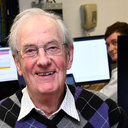 Michael Hutchings合作论文数10Carlo Bellitto合作论文数ITSE-CNR10R. Borromei合作论文数10
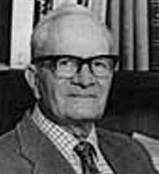 William Hayes合作论文数9Alimamy F. Bangura合作论文数9Laurent Ducasse合作论文数9Daniel Chasseau合作论文数9A.M. Buckley合作论文数8Ian D. Watts合作论文数8
 Judith Howard合作论文数Department of Chemistry, Durham University7D. Le Pevelen合作论文数7m m honold合作论文数6G. Ingletto合作论文数6MW MOORE合作论文数6
 Mark Light合作论文数School of Chemistry, Faculty of Engineering and Physical Sciences, University of Southampton6
 Peter Horton合作论文数School of Biosciences, The University of Sheffield6J. R. G. Thorne合作论文数6Denning Robert G.合作论文数6Dimitri Hautot合作论文数6Georges Bravic合作论文数6e janke合作论文数5D. Visser合作论文数5
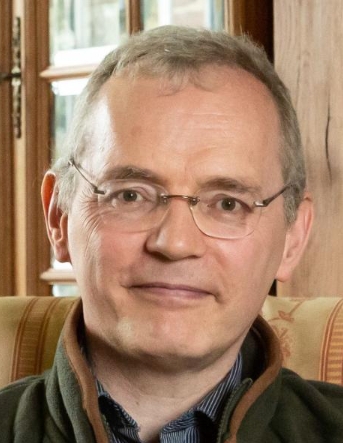 Stephen Blundell合作论文数Department of Physics, University of Oxford;Clarendon Laboratory, University of Oxford5Shin’Ichi Nakatsuji合作论文数5A.K. Gregson合作论文数5Samina Rashid合作论文数5
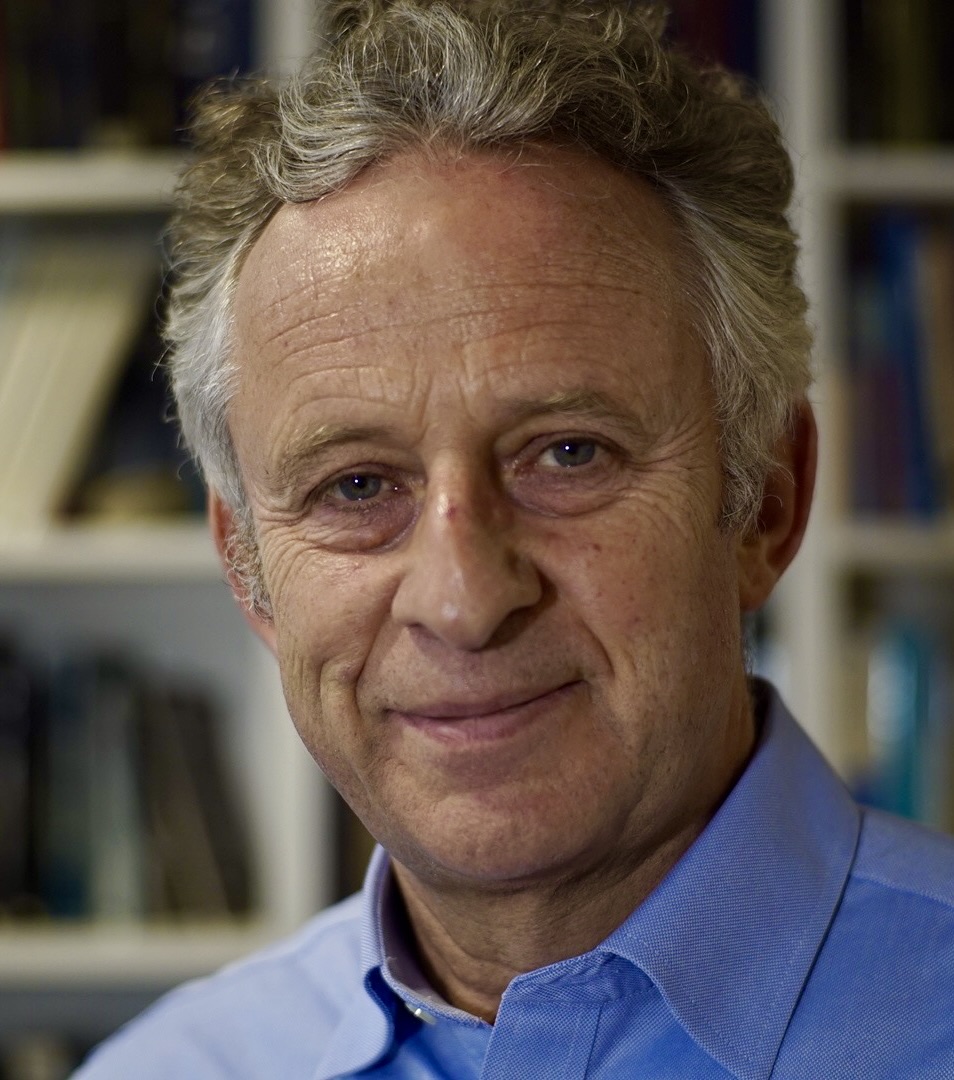 Richard Friend合作论文数The Cavendish Laboratory, Department of Physics, University of Cambridge;Interdisciplinary Research Centre, University of Cambridge5M.J. Fair合作论文数5
 Cameron Kepert合作论文数Molecular Materials Group, School of Chemistry, Faculty of Science, The University of Sydney5




