Memes are a modern form of communication and meme templates possess a base semantics that is customizable by whomever posts it on social media. Machine learning systems struggle with memes, which is likely due to such systems having insufficient context to understand memes, as there is more to memes than the obvious image and text. Here, to aid understanding of memes, we release a knowledge base of memes and information found on www.knowyourmeme.com, which we call the Know Your Meme Knowledge Base (KYMKB), composed of more than 54,000 images. The KYMKB includes popular meme templates, examples of each template, and detailed information about the template. We hypothesize that meme templates can be used to inject models with the context missing from previous approaches. To test our hypothesis, we create a non-parametric majority-based classifier, which we call Template-Label Counter (TLC). We find TLC more effective than or competitive with fine-tuned baselines. To demonstrate the power of meme templates and the value of both our knowledge base and method, we conduct thorough classification experiments and exploratory data analysis in the context of five meme analysis tasks.
Memes have emerged as a powerful form of communication, integrating visual and textual elements to convey humor, satire, and cultural messages. Existing research has focused primarily on aspects such as emotion classification, meme generation, propagation, interpretation, figurative language, and sociolinguistics, but has often overlooked deeper meme comprehension and meme-text retrieval. To address these gaps, this study introduces ClassicMemes-50-templates (CM50), a large-scale dataset consisting of over 33,000 memes, centered around 50 popular meme templates. We also present an automated knowledge-grounded annotation pipeline leveraging large vision-language models to produce high-quality image captions, meme captions, and literary device labels overcoming the labor intensive demands of manual annotation. Additionally, we propose a meme-text retrieval CLIP model (mtrCLIP) that utilizes cross-modal embedding to enhance meme analysis, significantly improving retrieval performance. Our contributions include:(1) a novel dataset for large-scale meme study, (2) a scalable meme annotation framework, and (3) a fine-tuned CLIP for meme-text retrieval, all aimed at advancing the understanding and analysis of memes at scale.
Large language models (LLMs) are increasingly used as primary knowledge sources, yet their epistemic diversity - defined as the diversity of real-world claims in their outputs - has never been measured. Low epistemic diversity would pose a risk of knowledge collapse as homogeneous LLMs mediate a shrinking in the range of accessible information over time. The dominant paradigm is that overall LLM diversity is low, but this is always with respect to a single point in time, with no reference baseline or consideration for variation across countries. We address this gap in knowledge by performing the first systematic study of epistemic diversity in LLMs across time and cultural context, testing 27 LLMs on 155 topics covering 12 countries, resulting in 1.7M responses and 70M individual claims. We find that epistemic diversity has increased substantially over the past three years, a positive counter to recent diversity pessimism. However, despite progress, we find that every system is less diverse than a search baseline. This gap is not uniform: RAG can improve diversity, while large models are counterintuitively less diverse than smaller ones. Moreover, LLM parametric knowledge systematically reflects English over local-language knowledge for country specific topics. Together, these results demonstrate that while progress on epistemic diversity is tangible, it is insufficient and unevenly distributed.
Unsupported and unfalsifiable claims we encounter in our daily lives can influence our view of the world. Characterizing, summarizing, and -- more generally -- making sense of such claims, however, can be challenging. In this work, we focus on fine-grained debate topics and formulate a new task of distilling, from such claims, a countable set of narratives. We present a crowdsourced dataset of 12 controversial topics, comprising more than 120k arguments, claims, and comments from heterogeneous sources, each annotated with a narrative label. We further investigate how large language models (LLMs) can be used to synthesise claims using In-Context Learning. We find that generated claims with supported evidence can be used to improve the performance of narrative classification models and, additionally, that the same model can infer the stance and aspect using a few training examples. Such a model can be useful in applications which rely on narratives , e.g. fact-checking.
Recently, advances in differential volumetric rendering enabled significant breakthroughs in the photo-realistic and fine-detailed reconstruction of complex 3D scenes, which is key for many virtual reality applications. However, in the context of augmented reality, one may also wish to effect semantic manipulations or augmentations of objects within a scene. To this end, we propose a volumetric framework for (i) disentangling or separating, the volumetric representation of a given foreground object from the background, and (ii) semantically manipulating the foreground object, as well as the background. Our framework takes as input a set of 2D masks specifying the desired foreground object for training views, together with the associated 2D views and poses, and produces a foreground-background disentanglement that respects the surrounding illumination, reflections, and partial occlusions, which can be applied to both training and novel views. Our method enables the separate control of pixel color and depth as well as 3D similarity transformations of both the foreground and background objects. We subsequently demonstrate the applicability of our framework on a number of downstream manipulation tasks including object camouflage, non-negative 3D object inpainting, 3D object translation, 3D object inpainting, and 3D text-based object manipulation. Full results are given in our project webpage at https://sagiebenaim.github.io/volumetric-disentanglement/
The robustness of image classifiers is essential to their deployment in the real world. The ability to assess this resilience to manipulations or deviations from the training data is thus crucial. These modifications have traditionally consisted of minimal changes that still manage to fool classifiers, and modern approaches are increasingly robust to them. Semantic manipulations that modify elements of an image in meaningful ways have thus gained traction for this purpose. However, they have primarily been limited to style, color, or attribute changes. While expressive, these manipulations do not make use of the full capabilities of a pretrained generative model. In this work, we aim to bridge this gap. We show how a pretrained image generator can be used to semantically manipulate images in a detailed, diverse, and photorealistic way while still preserving the class of the original image. Inspired by recent GAN-based image inversion methods, we propose a method called Adversarial Pivotal Tuning (APT). Given an image, APT first finds a pivot latent space input that reconstructs the image using a pretrained generator. It then adjusts the generator's weights to create small yet semantic manipulations in order to fool a pretrained classifier. APT preserves the full expressive editing capabilities of the generative model. We demonstrate that APT is capable of a wide range of class-preserving semantic image manipulations that fool a variety of pretrained classifiers. Finally, we show that classifiers that are robust to other benchmarks are not robust to APT manipulations and suggest a method to improve them.
Social media platforms give rise to an abundance of posts and comments on every topic imaginable. Many of these posts express opinions on various aspects of society, but their unfalsifiable nature makes them ill-suited to fact-checking pipelines. In this work, we aim to distill such posts into a small set of narratives that capture the essential claims related to a given topic. Understanding and visualizing these narratives can facilitate more informed debates on social media. As a first step towards systematically identifying the underlying narratives on social media, we introduce PAPYER, a fine-grained dataset of online comments related to hygiene in public restrooms, which contains a multitude of unfalsifiable claims. We present a human-in-the-loop pipeline that uses a combination of machine and human kernels to discover the prevailing narratives and show that this pipeline outperforms recent large transformer models and state-of-the-art unsupervised topic models.
Continuous Glucose Monitoring (CGM) has enabled important opportunities for diabetes management. This study explores the use of CGM data as input for digital decision support tools. We investigate how Recurrent Neural Networks (RNNs) can be used for Short Term Blood Glucose (STBG) prediction and compare the RNNs to conventional time-series forecasting using Autoregressive Integrated Moving Average (ARIMA). A prediction horizon up to 90 min into the future is considered. In this context, we evaluate both population-based and patient-specific RNNs and contrast them to patient-specific ARIMA models and a simple baseline predicting future observations as the last observed. We find that the population-based RNN model is the best performing model across the considered prediction horizons without the need of patient-specific data. This demonstrates the potential of RNNs for STBG prediction in diabetes patients towards detecting/mitigating severe events in the STBG, in particular hypoglycemic events. However, further studies are needed in regards to the robustness and practical use of the investigated STBG prediction models.
Discrete structure rules for validating molecular structures are usually limited to fulfillment of the octet rule or similar simple deterministic heuristics. We propose a model, inspired by language modeling from natural language processing, with the ability to learn from a collection of undirected molecular graphs, enabling fitting of any underlying structure rule present in the collection. We introduce an adaption to the popular Transformer model, which can learn relationships between atoms and bonds. To our knowledge, the Transformer adaption is the first model that is trained to solve the unsupervised task of recovering partially observed molecules. In this work, we assess how different degrees of information impact performance w.r.t. to fitting the QM9 dataset, which conforms to the octet rule, and to fitting the ZINC dataset, which contains hypervalent molecules and ions requiring the model to learn a more complex structure rule. More specifically, we test a full discrete graph with bond order information, a full discrete graph with only connectivity, a bag-of-neighbors, a bag-of-atoms, and a count-based unigram statistics. These results provide encouraging evidence that neural networks, even when only connectivity is available, can learn arbitrary molecular structure rules specific to a dataset, as the Transformer adaption surpasses a strong octet rule baseline on the ZINC dataset.
The use of deep learning techniques has achieved significant progress for program synthesis from input-output examples. However, when the program semantics become more complex, it still remains a challenge to synthesize programs that are consistent with the specification. In this work, we propose SED, a neural program generation framework that incorporates synthesis, execution, and debugging stages. Instead of purely relying on the neural program synthesizer to generate the final program, SED first produces initial programs using the neural program synthesizer component, then utilizes a neural program debugger to iteratively repair the generated programs. The integration of the debugger component enables SED to modify the programs based on the execution results and specification, which resembles the coding process of human programmers. On Karel, a challenging input-output program synthesis benchmark, SED reduces the error rate of the neural program synthesizer itself by a considerable margin, and outperforms the standard beam search for decoding.
 Serge Belongie合作论文数Department of Computer Science, University of Copenhagen;European Laboratory for Learning and Intelligent Systems;Det Nationale Center for AI i Samfundet5
 Srishti Yadav合作论文数Simon Fraser University2
 Alexander Rosenberg Johansen合作论文数Technical University of Denmark, Kongens Lyngby, Denmark2
 Sagie Benaim合作论文数School of Computer Science and Engineering, Hebrew University of Jerusalem2
 Frederik Warburg合作论文数Teton.Ai;Teton2
 Jared Moore合作论文数Stanford University1
 Chan Young Park合作论文数Microsoft Research1
 Henrik Bengtsson合作论文数1Luke Bates合作论文数1
 Vésteinn Snæbjarnarson合作论文数Mieind Ehf, Reykjavik, Iceland1
 Maria Antoniak合作论文数Pioneer Centre for AI, University of Copenhagen1
 Ali Mohebbi合作论文数Food and Drug Safety Research Center, Tabriz University of Medical Sciences1Tarp Jens M合作论文数Niels Bohr Institute, University of Copenhagen1
 Kavi Gupta合作论文数Massachussets Institute of Technology1
 Hansen Martin H合作论文数Department of Physics, Technical University of Denmark1
 Preslav Nakov合作论文数Natural Language Processing Department, Mohamed Bin Zayed University of Artificial Intelligence1
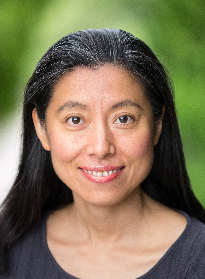 Dawn Song (宋晓东)合作论文数Department of Electrical Engineering and Computer Science, University of California, Berkeley1
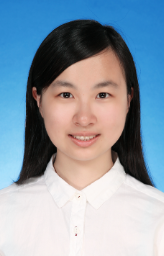 Xinyun Chen (陈昕昀)合作论文数Meta Superintelligence Labs1
 Nicklas Hansen合作论文数University of California, San Diego;NVIDIA Research1
 Sarah Masud合作论文数Journal of Open Source Software1Morten Lind Jensen合作论文数1
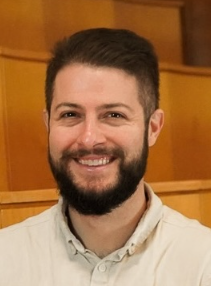 Dustin Wright合作论文数Natural Language Processing Research Group, Department of Computer Science, University of Copenhagen;University of Michigan1
 Menglin Jia (贾梦霖)合作论文数Meta1
 Iryna Gurevych合作论文数Ubiquitous Knowledge Processing Lab, Technical University of Darmstadt;Department of Computer Science, Technical University of Darmstadt1
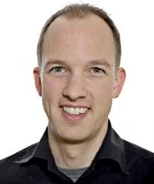 Morten Mørup合作论文数Department of Applied Mathematics and Computer Science, DTU1
 Andrea Dittadi合作论文数Helmholtz AI1
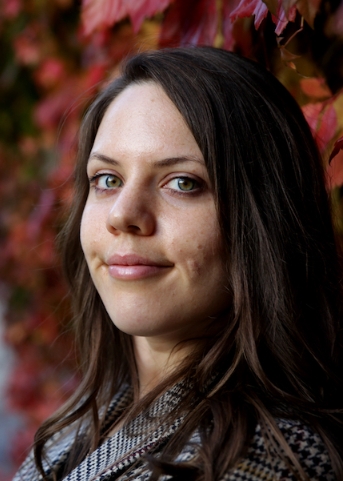 Isabelle Augenstein合作论文数Department of Computer Science, University of Copenhagen;Pioneer Centre for Artificial Intelligence, University of Copenhagen1




