ABSTRACT Some experimental data suggest that rapid bolus administration of albumin causes less plasma-expanding effects than slow, continuous infusion. To determine whether rapid bolus administration, in comparison with slow infusion, results in greater extravasation of albumin in experimental septic shock we performed a randomized controlled trial with 32 endotoxemic pigs. The animals were monitored and ventilated with standard intensive care equipment and given 10 mL × kg−1 5% albumin labeled with Technetium-99m, either as a rapid 15-min bolus (Bolus group, n = 16) or as a 2-h infusion (Infusion group, n = 16). Radioactivity was monitored in plasma, extracellular microdialysate, and urine for 6 h. Physiological parameters were monitored hourly. Radioactivity in the liver, spleen, kidney, and lung was analyzed post mortem. The plasma area under the curve activity0–6 h was 4.4 ± 0.9 × 10⁷ in the Bolus group and 4.4 ± 1.1 × 10⁷ counts × min−1 × mL−1 × h in the Infusion group. Blood hemoglobin levels increased in both groups, suggesting severe capillary leakage. Yet, there were no group differences in albumin radioactivity in plasma, muscle tissue, urine, or in the post-mortem analysis of the organs. Following albumin administration, circulatory and respiratory parameters were similar in the two groups. In conclusion, the present results suggest that albumin might be given as a bolus without leading to increased extravasation of albumin, in contrast to previous animal experiments in rodents.
Some experimental data suggest that rapid bolus administration of albumin causes less plasma-expanding effects than slow, continuous infusion. To determine whether rapid bolus administration, in comparison with slow infusion, results in greater extravasation of albumin in experimental septic shock we performed a randomized controlled trial with 32 endotoxemic pigs. The animals were monitored and ventilated with standard intensive care equipment and given 10 mL × kg 5% albumin labeled with Technetium-99m, either as a rapid 15-min bolus (Bolus group, n = 16) or as a 2-h infusion (Infusion group, n = 16). Radioactivity was monitored in plasma, extracellular microdialysate, and urine for 6 h. Physiological parameters were monitored hourly. Radioactivity in the liver, spleen, kidney, and lung was analyzed post mortem.The plasma area under the curve activity0-6 h was 4.4 ± 0.9 × 10 in the Bolus group and 4.4 ± 1.1 × 10 counts × min × mL × h in the Infusion group. Blood hemoglobin levels increased in both groups, suggesting severe capillary leakage. Yet, there were no group differences in albumin radioactivity in plasma, muscle tissue, urine, or in the post-mortem analysis of the organs. Following albumin administration, circulatory and respiratory parameters were similar in the two groups.In conclusion, the present results suggest that albumin might be given as a bolus without leading to increased extravasation of albumin, in contrast to previous animal experiments in rodents.
Summary In angiosperms, WUSCHEL‐RELATED HOMEOBOX 3 (WOX3) genes are required for the recruitment of founder cells from the lateral domains of shoot meristems that form lateral regions of leaves. However, the regulation of the formation of lateral organs in gymnosperms remains unknown. By using somatic embryos of Norway spruce (Picea abies) we have studied the expression and function of PaWOX3 during embryo development. The mRNA abundance of PaWOX3 was determined by quantitative real‐time PCR, and the spatial expression of PaWOX3 was analysed by histochemical β‐glucuronidase (GUS) assays and in situ mRNA hybridization. To investigate the function of PaWOX3, we analysed how downregulation of PaWOX3 in RNA interference lines affected embryo development and morphology. PaWOX3 was highly expressed in mature embryos at the base of each cotyledon close to the junction between the cotyledons, and in the lateral margins of cotyledons and needles, separating them into an adaxial and an abaxial side. Downregulation of the expression of PaWOX3 caused defects in lateral margin outgrowth in cotyledons and needles, and reduced root elongation. Our data suggest that the WOX3 function in margin outgrowth in lateral organs is conserved among the seed plants, whereas its function in root elongation may be unique to gymnosperms.
Abscisic acid plays important roles in maintaining seed dormancy while gibberellins (GA) and other phytohormones antagonize ABA to promote germination. However, how ABA signaling is desensitized during the transition from dormancy to germination is still poorly understood. We functionally characterized the role of membrane-associated transcription factor peptidase, site-2 protease (S2P), in ABA signaling during seed germination in Arabidopsis. Genetic analysis showed that loss-of-function of S2P conferred high ABA sensitivity during seed germination, and expression of the activated form of membrane-associated transcription factor bZIP17, in which the transmembrane domain and endoplasmic reticulum (ER) lumen-facing C-terminus were deleted, in the S2P mutant rescued its ABA-sensitive phenotype. MYC and green fluorescent protein (GFP)-tagged bZIP17 were processed and translocated from the ER to the nucleus in response to ABA treatment. Furthermore, genes encoding negative regulators of ABA signaling, such as the transcription factor ATHB7 and its target genes HAB1, HAB2, HAI1 and AHG3, were up-regulated in seeds of the wild-type upon ABA treatment; this up-regulation was impaired in seeds of S2P mutants. Our results suggest that S2P desensitizes ABA signaling during seed germination through regulating the activation of the membrane-associated transcription factor bZIP17 and therefore controlling the expression level of genes encoding negative regulators of ABA signaling.
Reproductive organs in seed plants are morphologically divergent and their evolutionary history is often unclear. The mechanisms controlling their development have been extensively studied in angiosperms but are poorly understood in conifers and other gymnosperms. Here, we address the molecular control of seed cone development in Norway spruce, Picea abies. We present expression analyses of five novel MADS-box genes in comparison with previously identified MADS and LEAFY genes at distinct developmental stages. In addition, we have characterized the homeotic transformation from vegetative shoot to female cone and associated changes in regulatory gene expression patterns occurring in the acrocona mutant. The analyses identified genes active at the onset of ovuliferous and ovule development and identified expression patterns marking distinct domains of the ovuliferous scale. The reproductive transformation in acrocona involves the activation of all tested genes normally active in early cone development, except for an AGAMOUS-LIKE6/SEPALLATA (AGL6/SEP) homologue. This absence may be functionally associated with the nondeterminate development of the acrocona ovule-bearing scales. Our morphological and gene expression analyses give support to the hypothesis that the modern cone is a complex structure, and the ovuliferous scale the result of reductions and compactions of an ovule-bearing axillary short shoot in cones of Paleozoic conifers.
Plants perceiving drought activate multiple responses to improve survival, including large-scale alterations in gene expression. This article reports on the roles in the drought response of two Arabidopsis thaliana homeodomain-leucine zipper class I genes; ATHB7 and ATHB12, both strongly induced by water-deficit and abscisic acid (ABA). ABA-mediated transcriptional regulation of both genes is shown to depend on the activity of protein phosphatases type 2C (PP2C). ATHB7 and ATHB12 are, thus, targets of the ABA signalling mechanism defined by the PP2Cs and the PYR/PYL family of ABA receptors, with which the PP2C proteins interact. Our results from chromatin immunoprecipitation and gene expression analyses demonstrate that ATHB7 and ATHB12 act as positive transcriptional regulators of PP2C genes, and thereby as negative regulators of abscisic acid signalling. In support of this notion, our results also show that ATHB7 and ATHB12 act to repress the transcription of genes encoding the ABA receptors PYL5 and PYL8 in response to an ABA stimulus. In summary, we demonstrate that ATHB7 and ATHB12 have essential functions in the primary response to drought, as mediators of a negative feedback effect on ABA signalling in the plant response to water deficit.
The major outer membrane protein (MOMP) of Chlamydia trachomatis is a highly antigenic and hydrophobic transmembrane protein. Our attempts to express the full-length protein in a soluble form in Escherichia coli and in transgenic plants failed. A chimeric gene construct of C. trachomatis serovar E MOMP was designed in order to increase solubility of the MOMP protein but with retained antigenicity. The designed construct was successfully expressed in E. coli, in Arabidopsis thaliana, and in Daucus carota. The chimeric MOMP expressed in and purified from E. coli was used as antigen for production of antibodies in rabbits. The anti-chimeric MOMP antibodies recognized the corresponding protein in both E. coli and in transgenic plants, as well as in inactivated C. trachomatis elementary bodies. Transgenic Arabidopsis and carrots were characterized for the number of MOMP chimeric genetic inserts and for protein expression. Stable integration of the transgene and the corresponding protein expression were demonstrated in Arabidopsis plants over at least six generations. Transgenic carrots showed a high level of expression of the chimeric MOMP - up to 3% of TSP.
Evolutionary conservation of protein-protein interaction ability in MIKC and Malpha MADS-box transcription factors in seed plants
Urogenital chlamydial infection, caused by Chlamydia trachomatis, is the main sexually transmitted infection in Sweden. Despite active programmes for detection and case finding, nearly 37 000 cases ...
P>The morphological variation among reproductive organs of extant gymnosperms is remarkable, especially among conifers. Several hypotheses concerning morphological homology between various conifer reproductive organs have been put forward, in particular in relation to the pine ovuliferous scale. Here, we use the expression patterns of orthologs of the ABC-model MADS-box gene AGAMOUS (AG) for testing morphological homology hypotheses related to organs of the conifer female cone. To this end, we first developed a tailored 3'RACE procedure that allows reliable amplification of partial sequences highly similar to gymnosperm-derived members of the AG-subfamily of MADS-box genes. Expression patterns of two novel conifer AG orthologs cloned with this procedure-namely PodAG and TgAG, obtained from the podocarp Podocarpus reichei and the yew Taxus globosa, respectively-are then further characterized in the morphologically divergent female cones of these species. The expression patterns of PodAG and TgAG are compared with those of DAL2, a previously discovered Picea abies (Pinaceae) AG ortholog. By treating the expression patterns of DAL2, PodAG, and TgAG as character states mapped onto currently accepted cladogram topologies, we suggest that the epimatium-that is, the podocarp female cone organ previously postulated as a "modified" ovuliferous scale-and the canonical Pinaceae ovuliferous scale can be legitimally conceptualized as "primary homologs." Character state mapping for TgAG suggests in turn that the aril of Taxaceae should be considered as a different type of organ. This work demonstrates how the interaction between developmental-genetic data and formal cladistic theory could fruitfully contribute to gymnosperm systematics.
In this comparative developmental genetics study, we test hypotheses based on fossil and morphological data on reproductive organ morphology and evolution in conifers--specifically, the ovule-bearing organ in Cupressaceae and Taxodiaceae. Genes homologous to the Arabidopsis gene AGAMOUS are expressed in ovuliferous scales of spruces (Picea) throughout development. Previous studies have shown that the AGAMOUS subfamily of MADS-box genes predates the split between angiosperms and gymnosperms, and that these genes have in part conserved functions in reproductive development among seed plants, especially in the specification of identity of the ovule-bearing organs. These data indicate that their expression in conifer families other than Pinaceae might be used as markers for organs homologous to the Pinaceae ovuliferous scale. Here we have isolated putative AGAMOUS orthologs from Cupressaceae and Taxodiaceae and analyzed their expression pattern in seed cones to test for the presence of morphological homologs of ovuliferous scales. Our results were not congruent with the hypothesis that the tooth of the Cryptomeria seed cone is homologous to the Picea ovuliferous scale. Likewise, the hypothesis that the bracts of Thujopsis and Juniperus contain fused ovuliferous scales was not supported. However, we found expression of AGAMOUS homologs in the sterile bracts of Cupressaceae seed cones at late developmental stages. This expression probably represents a novel gene function in these conifer families, since no corresponding expression has been identified in Pinaceae. Our study suggests that the evolutionary history of modern conifer cones is more diverse than previously thought.
Conservation of alternative splicing in TM3-like MIKC-type MADS-domain transcription factors in conifers
Functional divergence by multiple mechanisms between the paralogous sister genes DAL1 and DAL14 in the AGL6 subfamily of MADS-box genes in the conifer Picea abies
Spontaneous homeotic transformations have been described in natural populations of both plants and animals, but little is known about the molecular-genetic mechanisms underlying these processes in plants. In the ABC model of floral organ identity in Arabidopsis thaliana, the B- and C-functions are necessary for stamen morphogenesis, and C alone is required for carpel identity. We provide ABC model-based molecular-genetic evidence that explains the unique inside-out homeotic floral organ arrangement of the monocotyledonous mycoheterotroph species Lacandonia schismatica (Triuridaceae) from Mexico. Whereas a quarter million flowering plant species bear central carpels surrounded by stamens, L. schismatica stamens occur in the center of the flower and are surrounded by carpels. The simplest explanation for this is that the B-function is displaced toward the flower center. Our analyses of the spatio-temporal pattern of B- and C-function gene expression are consistent with this hypothesis. The hypothesis is further supported by conservation between the B-function genes of L. schismatica and Arabidopsis, as the former are able to rescue stamens in Arabidopsis transgenic complementation lines, and Ls-AP3 and Ls-PI are able to interact with each other and with the corresponding Arabidopsis B-function proteins in yeast. Thus, relatively simple molecular modifications may underlie important morphological shifts in natural populations of extant plant taxa.
MADS-box genes are important regulators of reproductive development in seed plants, including both flowering plants and conifers. In this thesis the evolution of the AGAMOUS subfamily of MADS-box genes, and what the ancestral function of this group of genes might have been in the early seed plants about 300 million years ago, was addressed by the discovery of two novel conifer genes, both basal to all previously known AGAMOUS subfamily genes. DAL20, the most basal of these genes, was exclusively expressed in roots, unlike all previously known AGAMOUS subfamily genes. I also studied the evolutionary mechanisms leading to functional diversification of duplicated genes in two different subfamilies of MADS-box genes; the AGAMOUS and AGL6 subfamilies. Focus was on studying changes in gene expression pattern, representing changes in the transcriptional regulation between the genes, and on comparing the functional properties of the gene products, representing changes in the protein-coding sequence between the genes. Duplicated genes in the AGL6 subfamily were found to have evolved by both mechanisms. In the AGAMOUS subfamily I found duplicated spruce genes; DAL2 and DAL20, that appear to have functionally diversified mainly by changes in the transcriptional regulation. Conifer AGAMOUS subfamily genes were also used in a comparative developmental-genetics approach to evaluate hypotheses, based on the morphology of fossil and extant conifer seed cones, on the identity of the female reproductive organ, the ovuliferous scale, and the evolution of seed cone morphology in the conifer families Pinaceae, Taxodiaceae and Cupressaceae. Seed cones in these families have been hypothesized to have homologous ovule-bearing organs, but I found substantial differences in the expression patterns of orthologous AGAMOUS subfamily genes in seed cones of these families that are not compatible with this hypothesis, indicating that the evolutionary history of conifer seed cones is more diverse than previously thought.
An optimized gene expression construct was designed in order to increase the accumulation of the HIV-1 subtype C p24 protein in Arabidopsis thaliana and carrot (Daucus carota) plants. An ER retention signal was introduced into the genetic construct generating a p24 protein containing a SEKDEL amino acid sequence at its C-terminus. Mature A. thaliana plants and carrot cells were transformed using Agrobacterium tumefaciens carrying the improved pGreen0229/p24_SEKDEL vector. Several transgenic plant lines were obtained from both plant species by growth on selective medium and confirmed by PCR. Transformed lines were analyzed for p24 protein content by western blotting using anti-p24-specific antibodies and by Southern blotting to establish the number of copies of the insert in the plant nuclear genome. To estimate the accumulation levels of p24 protein in the plants, ELISA was run using soluble plant extracts. By comparing these results with our previous findings, the ER retention signal increased the level of p24 protein fivefold in the A. thaliana plants. In carrot taproot, the content of p24_SEKDEL protein was approximately half of that in Arabidopsis on a fresh weight basis and was stable in planta for several months. However, on a total soluble protein basis, carrots produced considerable higher levels of the p24_SEKDEL protein than Arabidopsis.
 Karolina Tandre合作论文数16
 E. M. Soderman合作论文数15
 Gerald Hazelbauer合作论文数College of Agriculture, Food & Natural Resources, University of Missouri10
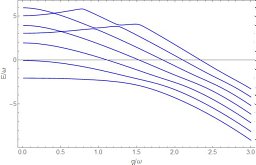 Henrik Johannesson合作论文数Institute of Theoretical Physics;Chalmers University of Technology;Goteborg University;Chalmers University of Technology, Goteborg University10
 Annelie Carlsbecker合作论文数Evolutionary Biology Centre, Uppsala University10erika groth合作论文数8Sundås A合作论文数7Kvarnheden Anders合作论文数7
 Marie (Svenson) Englund合作论文数7Marie Englund合作论文数7
 Johannes Hanson合作论文数6T Eriksson合作论文数6
 Elin Overnas合作论文数Molecular Medicine and Science for Life Laboratory, Uppsala University6Eva Henriksson合作论文数6Jens F. Sundstrom合作论文数Department of Molecular;Cellular and Developmental Biology;Yale University;Department of Molecular, Yale University6henrik johansson合作论文数5
 Valdés Ana Elisa合作论文数Evolutionary Biology Centre, Uppsala University5
 Francisco Vergara-Silva合作论文数Instituto de Biología (Jardín Botánico),, Universidad Nacional Autónoma de México (UNAM),5Shigeaki Harayama合作论文数Department of Microbiology, Faculty of Science and Engineering, Chuo University4Anita Wallin合作论文数3A Carlsson合作论文数3H Bennich合作论文数3Sören Andersson合作论文数3
 Jim Mattsson合作论文数3Izquierdo Liz合作论文数3Yan Wang合作论文数3Ingrid Lindh合作论文数3Chumpol Borkird合作论文数3Kerstin Nordin Henriksson合作论文数3
 Urban Johanson合作论文数Department of Plant Biochemistry;Lund University;Department of Plant Biochemistry, Lund University3Irina Kalbina合作论文数3
 Daniel Uddenberg合作论文数2T. Vahala合作论文数2P Stabel合作论文数2
 Jong-Kuk Na合作论文数2Magnus von Seth合作论文数2Lipcsey Miklós合作论文数Department of Surgery, Uppsala University2
 Elena R. Alvarez Buylla合作论文数Instituto de Ecologia, Departamento de Ecologia Funcional, Universidad Nacional Autonoma de Mexico2
 Åke Strid合作论文数Centrum for Livsvetenskap, Institutionen for naturvetenskap och teknik, Orebro Universitet2
 Victor A. Albert合作论文数Department of Biological Sciences;University of Alabama;Department of Biological Sciences, University of Alabama2
 Lars Hillered合作论文数Department of Medical Sciences, Uppsala University;Uppsala University Hospital;Uppsala Brain Injury Center2Annemarie H. Meijer合作论文数2Pieter B. F. Ouwerkerk合作论文数2J. Puonti-Kaerlas合作论文数2Charles Widstrom合作论文数2
 Anders Larsson合作论文数Department of Medical Sciences, Uppsala University;Department of Medical Science, Uppsala University Hospital;Department of Clinical Chemistry and Pharmacology, Akademiska Sjukhuset2
 Hanna Johannesson合作论文数Department of Ecology, Environmental and Plant Sciences, Stockholm University2Enn Maripuu合作论文数2




