The Payload for Ultrahigh Energy Observations (PUEO) is a long-duration balloon payload under construction scheduled to fly over Antarctica in late 2025. PUEO will deploy a broadband interferometric radio telescope pointing down at the ice sheet with a primary science goal of detecting the impulsive Askaryan radio emission expected to accompany interactions of ultrahigh-energy (UHE) neutrinos (> 1 EeV) in the glacial ice. PUEO’s design represents an order-of-magnitude improvement to neutrino sensitivity compared to the predecessor ANITA program. This contribution will give an overview of PUEO’s science case and detection concept, as well as present the expected diffuse sensitivity of PUEO to UHE neutrinos.
The upcoming Payload for Ultra-high Energy Observations (PUEO) experiment is planned for launch in the 2025/2026 season, and detailed simulation of the experiment is necessary for both the design of the instrument prior to launch, as well as data analysis post-flight. The new simulations package for PUEO builds upon the previously developed IceMC framework that was used by the ANITA experiment, and boasts a new model of the PUEO detector, including descriptions of the response of the antennas, amplification electronics, phased array trigger, and a more accurate parameterization of the Askaryan emission in ice that were not present in previous simulations. This improved simulation framework has since been used to provide a more accurate description of the projected capabilities of the PUEO experiment. Additionally, improvements in scalability and modularity of the codebase ensure that event sources, detector components, and even entirely new detectors can be easily added in the future
The Payload for Ultrahigh Energy Observations (PUEO) is a balloon-borne neutrino observatory currently under construction and slated to fly in December 2025. PUEO will be sensitive to both Askaryan radio emission from neutrino interactions in the ice, and geomagnetic and Askaryan emission created from either cosmic ray interactions or tau leptons decaying. Separating the air shower emission from the Askaryan emission is critical to achieving PUEO's main science goal of measuring the flux of neutrinos above 1 EeV. In this contribution, I will describe how the sensitivity of PUEO's air shower channel has been improved relative to its predecessor, ANITA. In particular, in addition to the classic main instrument which targets emission in the 300-1200 MHz range, PUEO is deploying a drop-down low frequency (LF) instrument capable of independently triggering on air shower events with frequencies between 50-300 MHz. Together, the main instrument and the LF instrument will increase the number of air shower events detected by PUEO, measure the frequency content, polarity, and pointing resolution of candidate events, and will further investigate the origin of the anomalous ANITA events.
the important next step was the development of large area (1m x 1m) GEM planes, we also have looked into opportunities of applying this technology to precision tracking detectors to significantly improve the performance of the Range Stack detector for CP violation experiments and to provide an amplification layer for the liquid Argon Time Projection Chamber in the LBNE experiment. We have jointly developed 33cmx100cm large GEM foils with the CERN gas detector development group to construct 33cm x100cm unit chambers. Three of these unit chambers will be put together to form a 1m x 1m detector plane. Following characterization of one 33cmx100cm unit chamber prototype, a total of five 1m x 1m planes will be constructed and inserted into an existing 1m3 RPC DHCAL stack to test the performance of the new GEM DHCAL in particle beams. The large area GEM detector we planned to develop in this proposal not only gives an important option to DHCAL for future collider experiments but also the potential to expand its use to Intensity Frontier and Cosmic Frontier experiments as high efficiency, high amplification anode planes for liquid Argon time projection chambers. Finally, thanks to its sensitivity to X-rays and other neutral radiations and its light-weight characteristics, the large area GEM has a great potential for the use in medical imaging and homeland security, as well as satellite based astronomy experiments.
The recent likely implosion of the Titan deep ocean submersible's spherical pressure hull has elevated interest and concerns on the nature and dynamics of such events. Here we report on studies of three deep-ocean implosions of 43 cm diameter glass instrument housings, made by Benthos Inc. The goal of the studies was to determine the effects on their associated cabling, moorings, and other spheres as part of a larger deep sea observatory. High resolution acoustic profiles were also measured for two of the three implosions, allowing us to infer some of the dynamics and kinematics of the events. The mechanical forces on the ancillary mooring hardware during the entire implosive/explosive event were found to be most probably dominated by the explosive shock wave following the initial infall. A syntactic float at a distance of 16 m from the implosion center was probably shattered by such a shock wave, but 3 glass instrument housings apparently survived within a distance of 6 m from the same implosion.
PUEO (the Payload for Ultrahigh Energy Observations) is a balloon-borne payload designed to detect the impulsive radio signals produced through the Askaryan effect by ultrahigh-energy (UHE) neutrinos (>1 EeV) in the Antarctic ice. Several key upgrades over its predecessor ANITA allow for an order of magnitude improvement in sensitivity to UHE neutrinos. These include an interferometric phased array trigger, newly designed antennas that double the overall collecting area above 300 MHz, a dedicated low-frequency instrument optimized for detection of air showers, and a roughly order-of-magnitude improvement in pointing resolution enabled by new inertial navigation systems. Through the combination of these improvements, PUEO is expected to have world-leading sensitivity to UHE neutrinos when it flies on a long duration balloon during the 2025-2026 austral summer from McMurdo Station, Antarctica.
We study in detail the sensitivity of the Antarctic Impulsive Transient Antenna (ANITA) to possible $\nu_\tau$ point source fluxes detected via $\tau$-lepton-induced air showers. This investigation is framed around the observation of four upward-going extensive air shower events very close to the horizon seen in ANITA-IV. We find that these four upgoing events are not observationally inconsistent with $\tau$-induced EASs from Earth-skimming $\nu_\tau$, both in their spectral properties as well as in their observed locations on the sky. These four events, as well as the overall diffuse and point source exposure to Earth-skimming $\nu_\tau$, are also compared against published ultrahigh-energy neutrino limits from the Pierre Auger Observatory. While none of these four events occurred at sky locations simultaneously visible by Auger, the implied fluence necessary for ANITA to observe these events is in strong tension with limits set by Auger across a wide range of energies and is additionally in tension with ANITA's Askaryan in-ice neutrino channel above $10^{19}$ eV. We conclude by discussing some of the technical challenges with simulating and analyzing these near horizon events and the potential for future observatories to observe similar events.
Over the last several decades, radio detection of air showers has been widely used to detect ultra-high-energy cosmic rays. We developed an experiment under controlled laboratory conditions at SLAC with which we measured the radio-frequency radiation from a charged particle shower produced by bunches of electrons as primaries with known energy. The shower took place in a target made of High Density Polyethylene located in a strong magnetic field. The experiment was designed so that Askaryan and magnetically-induced components of the radio emission could be measured independently. At the same time, we performed a detailed simulation of this experiment to predict the radio signal using two microscopic formalisms, endpoint and ZHS. In this paper, we present the simulation scheme and make a comparison with data characteristics such as linearity with magnetic field and amplitude. The simulations agree with the measurements within uncertainties and present a good description of the data. In particular, reflections within the target that accounted for the largest systematic uncertainties are addressed. The prediction of the amplitude of Askaryan emission agrees with measurements to within 5% for the endpoint formalism and 11% for the ZHS formalism. The amplitudes of magnetically-induced emission agree to within 5% for the endpoint formalism and less than 1% for the ZHS formalism. The agreement of the absolute scale of emission gives confidence in state-of-the-art air shower simulations which are based on the applied formalisms.
We report experimental test-beam results on dielectric-loaded waveguide detectors that utilize microwave Cherenkov signals to time and characterize high energy particle showers. These results are used to validate models and produce high-fidelity simulations of timing plane systems which yield picosecond time tags and millimeter spatial coordinates for the shower centroid. These timing planes, based on the Askaryan effect in solid dielectrics, are most effective at the high center-of-momentum energies planned for the Future Circular Collider (FCC-hh), and are of particular interest in the forward region due to their high radiation immunity. We use our beam test results and GEANT4 simulations to validate a hybrid microwave detector model, which is used to simulate a reference timing plane design for the FCC forward calorimeters. Our results indicate that 0.5-3 ps particle timing is possible for a wide range of collision products in the reference FCC hadron collider detector, even with current technology.
We present a new technique to perform passive bistatic subsurface radar probes on airless planetary bodies. This technique uses the naturally occurring radio impulses generated when high-energy cosmic rays impact the body's surface. As in traditional radar sounding, the downward-beamed radio emission from each individual cosmic ray impact will reflect off subsurface dielectric contrasts and propagate back up to the surface to be detected. We refer to this technique as Askaryan radar after the fundamental physics process, the Askaryan effect, that produces this radio emission. This technique can be performed from an orbiting satellite, or from a surface lander, but since the radio emission is generated beneath the surface, an Askaryan radar can completely bypass the effects of surface clutter and backscatter typically associated with surface-penetrating radar. We present the background theory of Askaryan subsurface radar and show results from both finite-difference time-domain (FDTD) and Monte Carlo simulations that confirm that this technique is a promising planetary radar sounding method, producing detectable signals for realistic planetary science applications.
The Payload for Ultrahigh Energy Observations (PUEO) is a NASA Long-Duration Balloon Mission that has been selected for concept development. PUEO has unprecedented sensitivity to ultra-high energy neutrinos above $10^{18}$ eV. PUEO will be sensitive to both Askaryan emission from neutrino-induced cascades in Antarctic ice and geomagnetic emission from upward-going air showers that are a result of tau neutrino interactions. PUEO is also especially well-suited for point source and transient searches. Compared to its predecessor ANITA, PUEO achieves better than an order-of-magnitude improvement in sensitivity and lowers the energy threshold for detection, by implementing a coherent phased array trigger, adding more channels, optimizing the detection bandwidth, and implementing real-time filtering. Here we discuss the science reach and plans for PUEO, leading up to a 2024 launch.
In this White Paper for the 2021 Snowmass process, we discuss aspects of precision timing within electromagnetic and hadronic calorimeter systems for high-energy physics collider experiments. Areas of applications include particle identification, event and object reconstruction, and pileup mitigation. Two different system options are considered, namely cell-level timing capabilities covering the full detector volume, and dedicated timing layers integrated in calorimeter systems. A selection of technologies for the different approaches is also discussed.
The Payload for Ultrahigh Energy Observations (PUEO) long-duration balloon experiment is designed to have world-leading sensitivity to ultrahigh-energy neutrinos at energies above 1 EeV. Probing this energy region is essential for understanding the extreme-energy universe at all distance scales. PUEO leverages experience from and supersedes the successful Antarctic Impulsive Transient Antenna (ANITA) program, with an improved design that drastically improves sensitivity by more than an order of magnitude at energies below 30 EeV. PUEO will either make the first significant detection of or set the best limits on ultrahigh-energy neutrino fluxes.
ANITA's fourth long-duration balloon flight in 2016 detected 29 cosmic-ray (CR)-like events on a background of 0.37_{-0.17}^{+0.27} anthropogenic events. CRs are mainly seen in reflection off the Antarctic ice sheets, creating a phase-inverted waveform polarity. However, four of the below-horizon CR-like events show anomalous noninverted polarity, a p=5.3×10^{-4} chance if due to background. All anomalous events are from locations near the horizon; ANITA-IV observed no steeply upcoming anomalous events similar to the two such events seen in prior flights.
The ANtarctic Impulsive Transient Antenna (ANITA) long-duration balloon experiment is sensitive to interactions of ultrahigh-energy (E>1018 eV) neutrinos in the Antarctic ice sheet. The third flight of ANITA, lasting 22 days, began in December 2014. We develop a methodology to search for energetic neutrinos spatially and temporally coincident with potential source classes in ANITA data. This methodology is applied to several source classes: the potential IceCube-identified neutrino sources TXS 0506+056 and NGC 1068, flaring high-energy blazars reported by the Fermi All-Sky Variability Analysis, gamma-ray bursts, and supernovae. Among searches within the five source classes, one candidate was identified as associated with SN 2015D, although not at a statistically significant level. We proceed to place upper limits on the source classes. We further comment on potential application of this methodology to more sensitive future instruments.
The balloon-borne ANITA [1] experiment is designed to detect ultra-high energy neutrinos via radio emissions produced by in-ice showers. Although initially purposed for interactions within the Antarctic ice sheet, ANITA also demonstrated the ability to self-trigger on radio emissions from ultra-high energy charged cosmic rays [2] (CR) interacting in the Earth's atmosphere. For showers produced above the Antarctic ice sheet, reflection of the down-coming radio signals at the Antarctic surface should result in a polarity inversion prior to subsequent observation at the ∼35–40 km altitude ANITA gondola. Based on data taken during the ANITA-1 and ANITA-3 flights, ANITA published two anomalous instances of upcoming cosmic-rays with measured polarity opposite the remaining sample of ∼50 UHECR signals [3, 4]. The steep observed upwards incidence angles (25–30 degrees relative to the horizontal) require non-Standard Model physics if these events are due to in-ice neutrino interactions, as the Standard Model cross-section would otherwise prohibit neutrinos from penetrating the long required chord of Earth. Shoemaker et al. [5] posit that glaciological effects may explain the steep observed anomalous events. We herein consider the scenarios offered by Shoemaker et al. and find them to be disfavored by extant ANITA and HiCal experimental data. We note that the recent report of four additional near-horizon anomalous ANITA-4 events [6], at >3σ significance, are incompatible with their model, which requires significant signal transmission into the ice.
We report on three launches of ballooning Erigone spiders observed in a 0.9m^{3} laboratory chamber, controlled under conditions where no significant air motion was possible. These launches were elicited by vertical, downward-oriented electric fields within the chamber, and the motions indicate clearly that negative electric charge on the ballooning silk, subject to the Coulomb force, produced the lift observed in each launch. We estimate the total charge required under plausible assumptions, and find that at least 1.15 nC is necessary in each case. The charge is likely to be nonuniformly distributed, favoring initial longitudinal mobility of electrons along the fresh silk during extrusion. These results demonstrate that spiders are able to utilize charge on their silk to attain electrostatic flight even in the absence of any aerodynamic lift.
Ultra-high energy cosmic rays (UHECRs) are the most energetic particles observed and serve as a probe of the extreme universe. A key question to understanding the violent processes responsible for their acceleration is identifying which classes of astrophysical objects (active galactic nuclei or starburst galaxies, for example) correlate to their arrival directions. While source clustering is limited by deflections in the Galactic magnetic field, at the highest energies the scattering angles are sufficiently low to retain correlation with source catalogues. While there have been several studies attempting to identify source catalogue correlations with data from the Pierre Auger Observatory and the Telescope Array, the significance above an isotropic background has not yet reached the threshold for discovery. It has been known for several decades that a full-sky UHECR observatory would provide a substantial increase in sensitivity to the anisotropic component of UHECRs. There have been several concepts developed in that time targeting the identification of UHECR sources such as OWL, JEM-EUSO, and POEMMA, using fluorescence detection in the Earth's atmosphere from orbit. In this white paper, we present a concept called the Zettavolt Askaryan Polarimeter (ZAP), designed to identify the source of UHECRs using radio detection of the Askaryan radio emissions produced by UHECRs interacting in the Moon's regolith from low lunar orbit.
A Monte Carlo simulation program for the radio detection of Ultra High Energy (UHE) neutrino interactions in the Antarctic ice as viewed by the Antarctic Impulsive Transient Antenna (ANITA) is described in this article. The program, icemc, provides an input spectrum of UHE neutrinos, the parametrization of the Askaryan radiation generated by their interaction in the ice, and the propagation of the radiation through ice and air to a simulated model of the third and fourth ANITA flights. This paper provides an overview of the icemc simulation, descriptions of the physics models used and of the ANITA electronics processing chain, data/simulation comparisons to validate the predicted performance, and a summary of the impact of published results.
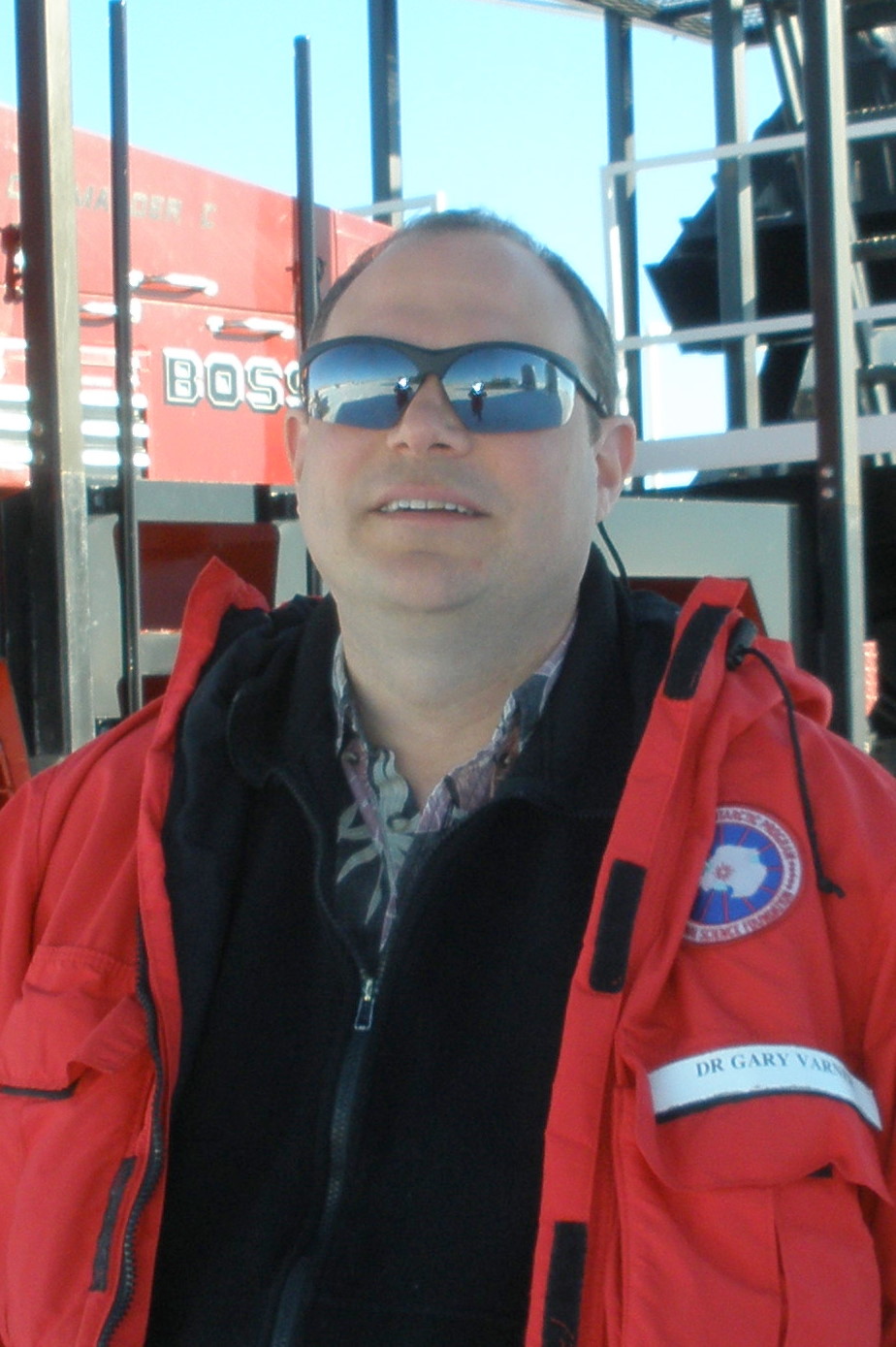 Gary Varner合作论文数University of Hawaii99
 James J. Beatty合作论文数Department of Physics, College of Arts and Sciences, The Ohio State University;NASA91
 P. Allison合作论文数72
 David Walz合作论文数60
 David Seckel合作论文数Department of Physics and Astronomy, College of Arts & Sciences, University of Delaware60S. Matsuno合作论文数54R. Nichol合作论文数Phys & Astron Dept, UCL52C. Miki合作论文数51
 Andres Romero-Wolf合作论文数Jet Propulsion Laboratory, California Institute of Technology50J. M. Clem合作论文数Dept . of Physics and Astronomy;University of Delaware;Dept . of Physics and Astronomy, University of Delaware50
 K. M. Liewer合作论文数50
 J. Nam合作论文数Dept Phys, Natl Taiwan Univ48
 Dave Z. Besson合作论文数Department of Physics and Astronomy, College of Liberal Arts & Sciences, University of Kansas48J. Álvarez-Muñiz合作论文数47
 David Saltzberg合作论文数Department of Physics & Astronomy, University of California, Los Angeles;Division of Physical Sciences, University of California, Los Angeles46
 Tim Huege合作论文数Institute for Astroparticle Physics, Karlsruhe Institute of Technology;Faculty of Sciences and Bioengineering Sciences, Vrije Universiteit Brussel44Enrique Zas Arregui合作论文数Department of Particle Physics, Faculty of Physics, Universidad de Santiago de Compostela44
 W. Robert Binns合作论文数Department of Physics, Washington University in St. Louis44Martin Israel合作论文数Washington University43
 Abigail Vieregg合作论文数Department of Physics, The University of Chicago;Kavli Institute for Cosmological Physics, The University of Chicago41S. Coutu合作论文数40Carlos Hojvat合作论文数40D. LaHurd合作论文数39M. Lauscher合作论文数39N. Krohm合作论文数39
 Mariela Josebachuili合作论文数39
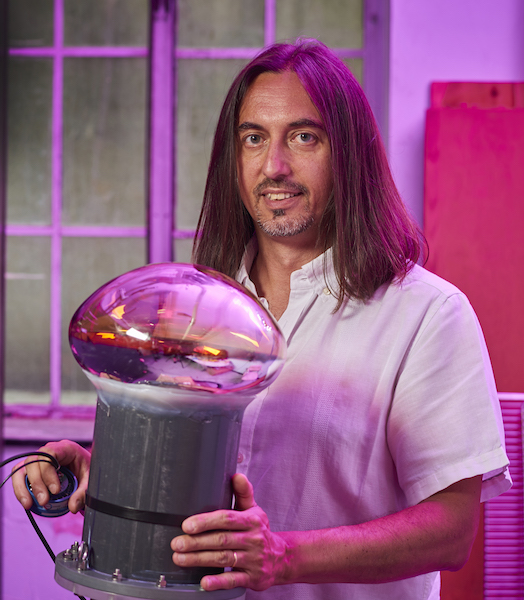 Miguel Mostafa合作论文数College of Science and Technology, Temple University39
 Joao R. T. De Mello Neto合作论文数IF-UFRJ39R. M. Kieckhafer合作论文数38L. Niemietz合作论文数38P. Homola合作论文数38F. Guarino合作论文数38C. Bonifazi合作论文数38M. Kleifges合作论文数38Francisco Diogo合作论文数38
 John L Harton合作论文数38
 Laura Collica合作论文数38
 M. Malacari合作论文数Kavli Inst Cosmol Phys, Univ Chicago38W. Carvalho合作论文数38a herve合作论文数38T. A. Harrison合作论文数38Diego Harari合作论文数38M. Bohacova合作论文数38H. Schoorlemmer合作论文数38
 Luis Anchordoqui合作论文数Department of Physics and Astronomy, Lehman College, City University of New York38I. M. Brancus合作论文数38
 I. De Mitri合作论文数Dipartimento di Fisica dell’Università del Salento and Sezione INFN, Lecce, Italy38
 Gabriella Cataldi合作论文数Istituto Nazionale di Fisica Nucleare38M.L. Díaz Castro合作论文数38




