Abstract The lithology, geochemistry, and architecture of the continental lithospheric mantle (CLM) underlying the Kimberley Craton of north‐western Australia has been constrained using pressure‐temperature estimates and mineral compositions for >5,000 newly analyzed and published garnet and chrome (Cr) diopside mantle xenocrysts from 25 kimberlites and lamproites of Mesoproterozoic to Miocene age. Single‐grain Cr diopside paleogeotherms define lithospheric thicknesses of 200–250 km and fall along conductive geotherms corresponding to a surface heat flow of 37–40 mW/m2. Similar geotherms derived from Miocene and Mesoproterozoic intrusions indicate that the lithospheric architecture and thermal state of the CLM has remained stable since at least 1,000 Ma. The chemistry of xenocrysts defines a layered lithosphere with lithological and geochemical domains in the shallow (<100 km) and deep (>150 km) CLM, separated by a diopside‐depleted and seismically slow mid‐lithosphere discontinuity (100–150 km). The shallow CLM is comprised of Cr diopsides derived from depleted garnet‐poor and spinel‐bearing lherzolite that has been weakly metasomatized. This layer may represent an early (Meso to Neoarchean?) nucleus of the craton. The deep CLM is comprised of high Cr2O3 garnet lherzolite with lesser harzburgite, and eclogite. The peridotite components are inferred to have formed as residues of polybaric partial mantle melting in the Archean, whereas eclogite likely represents former oceanic crust accreted during Paleoproterozoic subduction. This deep CLM was metasomatized by H2O‐rich melts derived from subducted sediments and high‐temperature FeO‐TiO2 melts from the asthenosphere.
The Mad Gap Yards ultramafic lamprophyre (UML) dykes in the East Kimberley region of northern Western Australia form part of a widespread Neoproterozoic ( 842–800 Ma) alkaline mafic–ultramafic magmatic province in the north, east and central regions of the Kimberley Craton of Western Australia. The NE-trending Mad Gap Yards dykes lie at the southeastern margin of the Kimberley Basin adjacent to the Greenvale Fault and intrude the Paleoproterozoic Elgee Siltstone. The dykes are classified as alnöite, and contain abundant macrocrystic olivine in a groundmass of phlogopite, perovskite, spinels, diopside, apatite, andradite–hydroandradite, serpentine, calcite, pseudomorphs after melilite and rare gittinsite. Mantle-derived olivine macrocrysts have compositions in the range Mg#91–92, similar to moderately refractory peridotite from other parts of the Kimberley Craton, whereas magmatic olivine phenocrysts have Mg#88–90. Olivine and chromian spinel were the earliest phenocrysts; they record equilibration temperatures of 1030–920℃ under moderately reducing conditions with fO2 values below the fayalite-magnetite-quartz (FMQ) oxygen buffer (Δ FMQ = mostly − 0.8 to − 1.7 log units). Magnetite rims and groundmass grains crystallised at 850–740℃ under more oxidising conditions with Δ FMQ + 0.6 to − 0.75 log units. Perovskite is well preserved in parts of the dykes and indicates crystallisation inside this fO2 range. The perovskite yielded a SHRIMP 206Pb/238U age of 842 ± 8 Ma. The Mad Gap Yards dykes carry rare partially altered spinel-peridotite xenoliths containing olivine (Mg#86.3–90), Cr-diopside, enstatite and Al-Cr spinel, and well as mantle xenocrysts of Cr-Al spinel and Cr-diopside. Bulk rock trace-element geochemistry, Cr-diopside thermobarometry and Sr–Nd-isotopic compositions of perovskite suggest that the UML magma was derived from partial melting of a garnet-bearing asthenospheric mantle source at 200 km depth. Nd depleted-mantle model ages (TDM) for perovskite range from 1106–865 Ma and broadly correlate with regional mantle metasomatism during the Yampi Orogeny ( 1000–800 Ma). Rare evidence of mantle metasomatism by LILE and HFSE-enriched melts has been found in the form of priderite and loveringite replacing Mg-rich ilmenite in an olivine macrocryst. The timing of emplacement of the Mad Gap Yards UML dykes at 842 Ma correlates with the early stages of the breakup of Rodinia.
The crystal structure of segelerite, Ca2Mg2Fe1.43+Al0.6(PO4)(4)(OH)(2)(H2O)(8), from the Mount Deverell variscite deposit, Western Australia, has been refined using single-crystal X-ray data to wR(obs) = 0.048 for 2082 unique reflections and all H atoms were located during the refinement. Cell parameters are a = 14.7772(2) angstrom, b = 18.7079(2) angstrom, c = 7.2424(1) angstrom, space group Pbca. The H-bonding scheme is described and compared to that for the combinatorial polymorph, jahnsite. The crystal structures of both minerals comprise heteropolyhedral slabs of composition [XM1Fe(2)(3+)(OH)(2)(PO4)(4)], that are linked together via corner-sharing of PO4 tetrahedra with isolated [M2(Op)(2)(H2O)(4)] octahedra. The structures differ in the mode of linkage of the M2 octahedra, which is via trans O-p ligands in segelerite and via both trans and cis O-p ligands in jahnsite. In segelerite, X = M1 = Ca, whereas in jahnsite-group minerals, X = Ca, Na, Mn2+ and M1 = Mn2+, Mg2+, Fe2+, Fe3+. X and M1 alternate along the 7 angstrom axis and it is proposed that different magnitudes of rotation of the Fe3+ octahedra about the 7 angstrom axis to accommodate the different coordination requirements of the X and M1 cations drives the symmetry changes in the two minerals so that a strong H-bonding network is maintained.
Siversson, M., Cook, T.D., Ryan, H.E., Watkins, D.K., Tatarnic, N.J., Downes, P.J. & Newbrey, M.G. 5 June 2018. Anacoracid sharks and calcareous nannofossil stratigraphy of the mid-Cretaceous Gearle Siltstone and Haycock Marl in the lower Murchison River area, Western Australia. Alcheringa 43, 85–113. Extensive bulk sampling over the past 20 years and greatly improved stratigraphic control permitted a meaningful revision of previously described anacoracid sharks from the ‘upper’ Gearle Siltstone and lower Haycock Marl in the lower Murchison River area, Western Australia. Isolated teeth of anacoracids are rare in the lower three (Beds 1–3) of four stratigraphic units of the ‘upper’ Gearle Siltstone but relatively common in the uppermost layer (Bed 4) and in the lower part of the overlying Haycock Marl. On the basis of calcareous nannofossils, Beds 1 and 2 of the ‘upper’ Gearle Siltstone can be placed in the uppermost upper Albian calcareous nannofossil Subzone CC9b whereas Bed 3 can be referred to the lowermost Cenomanian CC9c Subzone. Bed 1 yielded fragments of strongly serrated anacoracid teeth as well as a single, smooth-edged tooth. The samples from Beds 2 and 3 contained a few small fragments of serrated anacoracid teeth. Bed 4 is barren of calcareous nannofossils but the presence of a dentally advanced tooth of the cosmopolitan lamniform genus Cretoxyrhina in combination with the age of the overlying Haycock Marl indicate deposition within the younger half of the Cenomanian. The unit produced teeth of two anacoracids; Squalicorax acutus sp. nov. and S. bazzii sp. nov. The basal, laminated part of the Haycock Marl is placed in the uppermost upper Cenomanian part of CC10b. It yielded Squalicorax mutabilis sp. nov. and S. aff. S. bernardezi. Exceptionally well-preserved teeth of the former species span a 5:1 size ratio range for teeth of comparable jaw position. The teeth reveal strong ontogenetic heterodonty with a large increase in the relative size of the main cusp with age and the transition from a vertical distal heel of the crown in very young juveniles to a sub-horizontal, well demarcated heel in ‘adult’ teeth. An isolated phosphatic lens in the lower part of the Haycock Marl produced calcareous nannofossils indicative of the CC10b SubZone, most likely the lowermost lower Turonian part. It contains teeth of Squalicorax mutabilis sp. nov., S. aff. S. bernardezi, and S. sp. C. Mikael Siversson* [mikael.siversson@museum.wa.gov.au], Helen E. Ryan [helen.ryan@museum.wa.gov.au] and Peter Downes [peter.downes@museum.wa.gov.au] Department of Earth and Planetary Sciences, Western Australian Museum, 49 Kew Street, Welshpool, Western Australia 6106, Australia; David K. Watkins [dwatkins@unl.edu] Department of Earth and Atmospheric Sciences, University of Nebraska, Lincoln, NE 68588, USA; Todd D. Cook [tdc15@psu.edu] School of Science, Penn State Behrend, 4205 College Drive, Erie, PA 16563, USA; Nikolai J. Tatarnic† [nikolai.tatarnic@museum.wa.gov.au] Department of Terrestrial Zoology, Western Australian Museum, 49 Kew Street, Welshpool, Western Australia 6106, Australia; Michael G. Newbrey‡ [newbrey_michael@columbusstate.edu] Department of Biology, Columbus State University, Columbus, GA 31907-5645, USA. *Also affiliated with: School of Molecular and Life Sciences, Curtin University, Kent Street, Bentley, WA 6102, Australia. †Also affiliated with: Centre for Evolutionary Biology, University of Western Australia, Crawley, Western Australia 6009. ‡Also affiliated with: Canadian Fossil Discovery Centre, 111-B Gilmour Street, Morden, Manitoba R6 M 1N9, Canada. http://zoobank.org/urn:lsid:zoobank.org:pub:97D5131F-C0D5-4A7E-9C9A-0FDF13BFCBBB http://zoobank.org/urn:lsid:zoobank.org:act:5977DCC2-355C-4732-8B0A-4BD0EABBA8DE http://zoobank.org/urn:lsid:zoobank.org:act:2D7C4147-B756-4434-847A-B0C1C6D167DF http://zoobank.org/urn:lsid:zoobank.org:act:33F3B55E-41E0-45B3-8296-A3B95C17B41D
On February 24, 1979, a deeply oxidized mass of iron meteorite was excavated from bauxite at an open cut mine on the Gove Peninsula, Northern Territory, Australia. The meteorite, measuring 0.75–1 m in diameter and of unknown total weight, was found at coordinates 12°15.8′S, 136°50.3′E. On removal from the ground, the meteorite is reported to have disintegrated rapidly. A preliminary analysis at the mine laboratory reportedly gave 8.5 wt% Ni. A modern analysis of oxidized material gave Ni = 32.9, Co = 3.67 (both mg g −1 ), Cr = 168, Cu = 195, Ga = 22.5, Ge = <70, As = 4.16, W = 1.35, Ir = 10.5, Pt = 21.2, Au = 0.672 (all μg g −1 ), Sb = <150, and Re = 844 (both ng g −1 ). Competent fragments of oxidized material retain a fine to medium Widmanstätten pattern with an apparent average bandwidth of 0.5 mm (range 0.2–0.9 mm in plane section). Primary mineralogy includes rare γ–taenite and daubréelite, and secondary minerals produced by weathering include awaruite (with up to 78.5 wt% Ni) and an, as yet, unnamed Cu‐Cr‐bearing sulfide with the ideal formula CuCrS 2 that is hitherto unknown in nature. Deep weathering has masked many of the features of the meteorite; however, the analysis normalized to the analyses of fresh iron meteorites favors chemical group IIIAB . The terrestrial age of the meteorite is unknown, although it is likely to be in the Neogene (2.5–23 Ma), which is widely accepted as the major period of bauxite formation in the Northern Territory of Australia. Gove is the second authenticated relict meteorite found in Australia.
Natural samples of the substituted basic Cu(II) chloride series, Cu4-xMx2+(OH)(6)Cl-2 (M= Zn, Ni, or Mg) were investigated by single-crystal X-ray diffraction in order to elucidate compositional boundaries associated with paratacamite and its congeners. The compositional ranges examined are Cu3.65Zn0.35(OH)(6)Cl2Cu3.36Zn0.64( OH)(6)Cl-2 and Cu3.61Ni0.39(OH)(6)Cl-2 - Cu3.13Ni0.87(OH)(6)Cl-2, along with a single Mg-bearing phase. The majority of samples studied have trigonal symmetry (R (3) over barm) analogous to that of herbertsmithite (Zn) and gillardite (Ni), with a approximate to 6.8, c approximate to 14.0 angstrom. Crystallographic variations for these samples caused by composition are compared with both published and new data for the R (3) over barm sub-cell of paratacamite, paratacamite-(Mg) and paratacamite-(Ni). The observed trends suggest that the composition of end-members associated with the paratacamite congeners depend upon the nature of the substituting cation.
This special issue is a tribute to the work of the late Rex T. Prider, who undertook pioneering work on the West Kimberley leucite lamproites and predicted a link to diamonds. The special issue incorporates both authoritative research and significant new contributions to the understanding of the mineralogy and petrology of carbonatites, kimberlites, lamproites and related alkaline rocks. Apart from their scientific interest, these rocks are of major and growing economic importance. They are significant repositories of certain metals and other mineral commodities, indeed the only source of some of them, including diamonds, niobium, the rare-earth elements, copper, phosphate, vermiculite, and raw materials for the manufacture of ceramics. Mining exploration efforts result in the discovery of new localities that add to our understanding of these rocks and their mantle source regions. Not only do such rocks provide a unique sample of the upper
In situ SHRIMP U-Pb dating of zirconolite in clinopyroxenite from the Cummins Range Carbonatite Complex, situated in the southern Halls Creek Orogen, Kimberley region, Western Australia, has provided a reliable 207Pb/206Pb age of emplacement of 1009 ± 16 Ma. Variably metamict and recrystallised zircons from co-magmatic carbonatites, including a megacryst ~1.5 cm long, gave a range of ages from ~1043–998 Ma, reflecting partial isotopic resetting during post-emplacement deformation and alteration. Monazite-(Ce) in a strongly foliated dolomite carbonatite produced U-Th-Pb dates ranging from ~900–590 Ma. Although the monazite-(Ce) data cannot give any definitive ages, they clearly reflect a long history of hydrothermal alteration/recrystallisation, over at least 300 million years. This is consistent with the apparent resetting of the Rb-Sr and K-Ar isotopic systems by a post-emplacement thermal event at ~900 Ma during the intracratonic Yampi Orogeny. The emplacement of the Cummins Range Carbonatite Complex probably resulted from the reactivation of a deep crustal structure within the Halls Creek Orogen during the amalgamation of Proterozoic Australia with Rodinia over the period ~1000–950 Ma. This may have allowed an alkaline carbonated silicate magma that was parental to the Cummins Range carbonatites, and generated by redox and/or decompression partial melting of the asthenospheric mantle, to ascend from the base of the continental lithosphere along the lithospheric discontinuity constituted by the southern edge of the Halls Creek Orogen. There is no evidence of a link between the emplacement of the Cummins Range Carbonatite Complex and mafic large igneous province magmatism indicative of mantle plume activity. Rather, patterns of Proterozoic alkaline magmatism in the Kimberley Craton may have been controlled by changing plate motions during the Nuna–Rodinia supercontinent cycles (~1200–800 Ma).
This is the second part of a two-volumespecial issueof Open Geoscience (formerly Central European Journalof Geosciences) that aims to be instrumental in providingan update of Mafic-Ultramafic Rocks and Alkaline-Carbonatitic Magmatism and Associated HydrothermalMineralization. Together, these two volumes provide a detailedand comprehensive coverage of the subjects thatare relevant to the research work of P.Comin-Chiaramonti(Italy) and LiaN. Kogarko (Russia) towhomPart-I and Part-II have been respectively dedicated.To a significant extent, the development of advanced samplingtechnologies related to alkaline and carbonatiticmagmatism by Lia N. Kogarko, has allowed geoscientiststo measure and sample the deep crust of the planet notonly for the exploration for the mineral deposits, but alsoto answer basic scientific questions about the origin andevolution of alkaline rocks (kimberlites, lamproites and relatedrocks associated with carbonatites). The papers presentedin this Part-II of the special issue cover the petrologyand geochemistry of the rocks collected from the surfaceand penetrated by drilling. Lia Kogarko proposed anew theory for the evolution of alkaline magmatism in thegeological history of the Earth – that the appearance of alkalinemagmatism at the Archaean-Proterozoic boundary(~2.5 – 2.7 Ga), and its growing intensity, was related tochanges in the geodynamic regime of the Earth and oxidationof the mantle due to mantle-crust interaction.
The Reverend Charles Grenfell Nicolay (1815-1897) made an important contribution to early geological work in Western Australia as a scientific adviser to the Colonial government and founder of the Colony's first public collection of rocks, minerals and fossils. During his early career he taught geography at King's and Queen's Colleges in London, before leaving London in 1858 to serve as the Anglican Church Chaplain to the British residents in the city of Salvador, Bahia, Brazil. We describe here some of his geological activities in Brazil over the period 1858-1869. He assisted Charles Frederick Hartt (1840-1878) and Louis Agassiz (1807-1873) on the Thayer Expedition of 1865 1866 in their geological investigations of the province of Bahia, most notably providing geological descriptions of the diamond deposits of the Chapada Diamantina, then a diamond province of world importance. After returning to England, he presented his findings on the Chapada Diamantina to the British Association for the Advancement of Science meeting in Norwich in 1868. From May to August 1869, he made a brief return visit to Brazil acting as a geological advisor to the Brazilian Turba Company, who were hoping to exploit bituminous sedimentary deposits adjacent to the Bahia de Camamu, Bahia, in the production of oil and gas. Following his arrival in Western Australia, he corresponded with the Reverend William B. Clarke (1798-1878), in 1871-1872, on the subject of Brazilian diamonds, as Clarke sought to understand the diamond occurrences in eastern Australia. Through Clarke, Nicolay's description of the geology of the Chapada Diamantina was circulated to the Australian scientific community,
In this study, the C-O-isotopic data from calcite at Yungul and Wilmott (Speewah. Western-Australia) are integrated with microthermometry, H 2 O-, CO 2 -content and H-He-Ar-isotopic data from fluid inclusions in genetically related calcite and fluorite to map the origin and crystallization paths of the fluids. In addition to the hydrogen isotopic compositions of fluid inclusions in fluorite, oxygen isotopic compositions were also determined by cavity ring-down spectroscopy. The geochemical data suggest mixing of a CO 2 -dominated mantle fluid and a H 2 O-domintated crustal brine. The fluid produced by this mixing is characterized by radiogenic (crustal-like) 3 He/ 4 He ratios, crustal-like δD values, relatively high salinity (19 − 24wt.% NaCl eq.), moderate homogenization temperatures (150 − 450 °C) and mantle-like CO 2 / 3 He ratios. Moreover, the large isotopic and elemental variations found in calcite indicate that its formation was accompanied by an extensive degassing (open system) leading to a decrease in δD and an increase in the CO 2 / 3 He values relative to the starting fluid composition. This degassing is consistent with the fluidal- and breccia-like texture of calcite observed in the field. In contrast, the fluorite which has coarse-grained banded to vughy textures formed in a passive aqueous system. Apparently the fluid that formed the fluorite has the same origin as the calcite, but the higher water content and the more radiogenic 3 He/ 4 He ratios reflect a greater involvement of crustal fluids. The historical description of the calcite-fluorite system in the Speewah area as “carbonatite” is now considered inappropriate because there is no evidence that crystallization is dominated by magmatic processes.
The Neoproterozoic Cummins Range Carbonatite Complex (CRCC) is situated in the southern Halls Creek Orogen adjacent to the Kimberley Craton in northern Western Australia. The CRCC is a composite, subvertical to vertical stock ∼2 km across with a rim of phlogopite–diopside clinopyroxenite surrounding a plug of calcite carbonatite and dolomite carbonatite dykes and veins that contain variable proportions of apatite–phlogopite–magnetite ± pyrochlore ± metasomatic Na–Ca amphiboles ± zircon. Early high-Sr calcite carbonatites (4,800–6,060 ppm Sr; La/Yb CN = 31.6–41.5; δ 13 C = −4.2 to −4.0 ‰) possibly were derived from a carbonated silicate parental magma by fractional crystallization. Associated high-Sr dolomite carbonatites (4,090–6,310 ppm Sr; La/Yb CN = 96.5–352) and a late-stage, narrow, high rare earth element (REE) dolomite carbonatite dyke (La/Yb CN = 2756) define a shift in the C–O stable isotope data (δ 18 O = 7.5 to 12.6 ‰; δ 13 C = −4.2 to −2.2 ‰) from the primary carbonatite field that may have been produced by Rayleigh fractionation with magma crystallization and cooling or through crustal contamination via fluid infiltration. Past exploration has focussed primarily on the secondary monazite-(Ce)-rich REE and U mineralization in the oxidized zone overlying the carbonatite. However, high-grade primary hydrothermal REE mineralization also occurs in narrow (<1 m wide) shear-zone hosted lenses of apatite–monazite-(Ce) and foliated monazite-(Ce)–talc rocks (≤∼25.8 wt% total rare earth oxide (TREO); La/Yb CN = 30,085), as well as in high-REE dolomite carbonatite dykes (3.43 wt% TREO), where calcite, parisite-(Ce) and synchysite-(Ce) replace monazite-(Ce) after apatite. Primary magmatic carbonatites were widely hydrothermally dolomitized to produce low-Sr dolomite carbonatite (38.5–282 ppm Sr; La/Yb CN = 38.4–158.4; δ 18 O = 20.8 to 21.9 ‰; δ 13 C = −4.3 to −3.6 ‰) that contains weak REE mineralization in replacement textures, veins and coating vugs. The relatively high δD values (−54 to −34 ‰) of H 2 O derived from carbonatites from the CRCC indicate that the fluids associated with carbonate formation contained a significant amount of crustal component in accordance with the elevated δ 13 C values (∼−4 ‰). The high δD and δ 13 C signature of the carbonatites may have been produced by CO 2 –H 2 O metasomatism of the mantle source during Paleoproterozoic subduction beneath the eastern margin of the Kimberley Craton.
This article discusses two inscriptions thought to be associated with wrecks of the Dutch East India Company (Verenigde Oostindische Compagnie) ships Vergulde Draak and Zuiddorp, off the Western Australian coastline. We evaluate their authenticity using comparative studies with similar contemporaneous Dutch inscriptions, placing them within the broader context of pseudoarchaeology and the public preoccupation surrounding shipwrecks. The morphology and manufacture of the lettering argues against a 17th or 18th century provenance. Further, photographic records of the Zuiddorp site indicate that its associated inscription is modern. We argue these inscriptions were likely attempts by enthusiasts to 'participate' in the shipwrecking stories, or to claim some recognition with regards to the wrecks. Whatever the reasons, they have been used as evidence to support unorthodox hypotheses about the shipwrecks' survivors, and serve to keep these theories alive in the public imagination.
 Brendan John Griffin合作论文数CMM, University of Western Australia6
 A.L. Jaques合作论文数Geoscience Australia6L.G. Gwalani合作论文数4Michael Verrall合作论文数CSIRO Exploration and Mining4
 A. W. R. Bevan合作论文数3Alex W.R. Bevan合作论文数3
 Kirtikumar Randive合作论文数Postgrad Dept Geol, RTM Nagpur Univ3
 Willaim L. Griffin合作论文数ARC Centre of Excellence for Core to Crust, Macquarie University;ARC National Key Centre for Geochemical Evolution and Metallogeny of Continents, Department of Earth and Planetary Sciences, Macquarie University;Wuhan University3
 Attila Demeny合作论文数Laboratory for Geochemical Research, Hungarian Academy of Sciences3c j stephens合作论文数2R. R. Ramsay合作论文数2P. A. Williams合作论文数2Marcus Sweetapple合作论文数2Neal J. Mcnaughton合作论文数2A. Ewart合作论文数2
 Scott E. Bryan合作论文数DEPARTMENT OF GEOLOGY & GEOPHYSICS;YALE UNIVERSITY;DEPARTMENT OF GEOLOGY & GEOPHYSICS, YALE UNIVERSITY2Jo-Anne Wartho合作论文数School of Earth and Space Exploration, Arizona State University2Lalchand G. Gwalani合作论文数2David K. Watkins合作论文数1Jochen Schlueter合作论文数1Dermot A. Henry合作论文数1Benjamin A. Grguric合作论文数1W.R. Taylor合作论文数1
 Zachary Sudholz合作论文数1
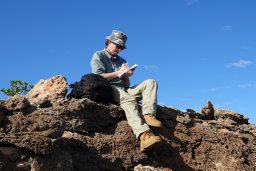 Helen E. Ryan合作论文数Dept Earth & Planetary Sci, Western Australian Museum1Matthew Sciberras合作论文数Sch Sci & Hlth, Univ Western Sydney1T. Kennedy合作论文数1A. Frew合作论文数1Michał Bucha合作论文数Institute of Earth Sciences, University of Silesia1
 Wendy van Duivenvoorde合作论文数Maritime Archaeology Program, Flinders University1
 Sarah Gain合作论文数Centre for Microscopy, Characterisation and Analysis, The University of Western Australia1
 Gy?rgy Czuppon合作论文数Magyar Tudomanyos Akademia, Hungarian Academy of Sciences,Hungarian Acad of Sciences1David E. Hibbs合作论文数School of Chemistry, University of Sydney1Ian R. Fletcher合作论文数1Cristina Talavera合作论文数1
 David Groves合作论文数Centre for Exploration Targeting, School of Earth Sciences, The University of Western Australia;School of Earth and Oceans, The University of Western Australia1L. Papp合作论文数1
 Ismet Ozgenc合作论文数1
 K.R. Hari合作论文数Department of Geology, Govt. V.Y.T.PG. Autonomous College1
 Anthony R. Kampf合作论文数Mineral Sciences Department, Natural History Museum of Los Angeles County1
 Gregory M. Yaxley (Greg Yaxley)合作论文数Research School of Earth Sciences, College of Science, Australian National University1
 Michael G. Newbrey合作论文数1
 F. Stoppa合作论文数Dipartimento di Scienze della Terra, Università G. d'Annunzio1Ernest H. Nickel合作论文数1
 John B. Cliff合作论文数Advanced Radioanalytical Chemistry, Pacific Northwest National Laboratory1Alex Bevan合作论文数1
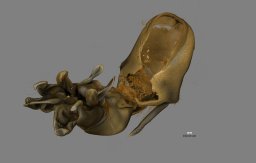 Nikolai J Tatarnic合作论文数Evolution & Ecology Research Centre;School of Biological , Earth and Environmental Sciences;University of New South Wales;School of Biological , Earth and Environmental Sciences, University of New South Wales1
 Andrew Beard合作论文数1
 Birger Rasmussen合作论文数School of Earth Sciences, The University of Western Australia1




