In this paper, we compared the linear and nonlinear motion prediction models of a long combination vehicle (LCV). We designed a nonlinear model predictive control (NMPC) for trajectory-following and off-tracking minimisation of the LCV. The used prediction model allowed coupled longitudinal and lateral dynamics together with the possibility of a combined steering, propulsion and braking control of those vehicles in long prediction horizons and in all ranges of forward velocity. For LCVs where the vehicle model is highly nonlinear, we showed that the control actions calculated by a linear time-varying model predictive control (LTV-MPC) are relatively close to those obtained by the NMPC if the guess linearisation trajectory is sufficiently close to the nonlinear solution, in contrast to linearising for specific operating conditions that limit the generality of the designed function. We discussed how those guess trajectories can be obtained allowing off-line fixed time-varying model linearisation that is beneficial for real-time implementation of MPC in LCVs with long prediction horizons. The long prediction horizons are necessary for motion planning and trajectory-following of LCVs to maintain stability and tracking quality, e.g. by optimally reducing the speed prior to reaching a curve, and by generating control actions within the actuators limits.
With the objective of reducing fuel consumption, this paper presents real-time predictive energy management of hybrid electric heavy vehicles. We propose an optimal control strategy that determines the power split between different vehicle power sources and brakes. Based on model predictive control (MPC) and sequential programming, the optimal trajectories of the vehicle velocity and battery state of charge are found for upcoming horizons with a length of 5-20 km. Then, acceleration and brake pedal positions together with the battery usage are regulated to follow the requested speed and state of charge, which is verified using a high-fidelity vehicle plant model. The main contribution of this paper is the development of a sequential linear program for predictive energy management that is faster and simpler than sequential quadratic programming in tested solvers and provides trajectories that are very close to the best trajectories found by nonlinear programming. The performance of the method is also compared to that of two different sequential quadratic programs.
This paper presents nonlinear mathematical models of one- and two-track multitrailer vehicles. We derive nonlinear equations of motion in the form of a system of implicit ordinary differential equations (ODEs) by using Lagrangian mechanics. The system of ODEs has the minimum number of states and equations that enables efficient computations yet maintains the most important nonlinear vehicle dynamic behavior and allows actuator coordination and energy consumption evaluation. As examples, we build different models of a 4-unit long combination vehicle, i.e., two-track 11-axle and single-track 6-axle nonlinear models as well as a linear single-track 6-axle model. We compare the performance of these models to experimental data of different driving maneuvers. The nonlinear single-track model demonstrates close dynamic behavior to the experiment, which makes it an efficient alternative to the two-track model. The vehicle equations can be generated automatically by using the code provided in this paper and subsequently used for conducting frequency analysis, evaluating energy consumption, deriving performance measures from simulations, and facilitating optimal control applications that involve combined steering, braking and propulsion control.
The patent is about combined predictive and optimal energy and motion management of multitrailer heavy-duty vehicles.
In this paper we address drivers' actions prior to mandatory lane changes of long combination vehicles in dense highway traffic. The studied driver actions were: turn indicator activation, speed reduction and lateral intrusion. We categorised and compared the drivers' actions with respect to the surrounding traffic cooperation and the level of urgency. Urgency here was based on the remaining distance to a targeted exit ramp. The results show that when the subject vehicle is close to the exit ramp, drivers used speed reduction significantly more than when the vehicle is further away. No significant difference was found for the use of lateral intrusion considering the distance to the exit ramp. As regards traffic cooperation, significant differences were found for both speed reduction and lateral intrusion. The drivers' speed reduction and lateral intrusion were significantly greater when the surrounding traffic cooperation was low. (C) 2018 Elsevier Ltd. All rights reserved.
The aim of this project was to develop a lane-change scenario for driving simulators to analyse the characteristics of lane-change manoeuvres performed with heavy vehicles.The definition of the lan ...
This paper presents a back-to-back performance comparison of lane-change maneuvers using two automated driving approaches and manual driving. The lane changes were conducted in a moving-base truck driving simulator using an A-double long combination vehicle. One of the automated driving approaches was based on driver model control and the other used optimization-based control. The comparison addresses lane change and braking, both initiation and execution, from the perspective of driver behavior and defined characteristic variables. We also discuss combined braking and steering behavior using a moderately safety-critical lane-change scenario. The purpose of this paper is to improve driving automation in early development by comparing and learning from professional truck drivers to enable higher driver acceptance.
This work aimed at analysing the potential for the application of large driving simulators on the study of future automated driving functionality. The case study was centred on applications for heavy vehicles, focusing on lane-change manoeuvres and automated driving. A simulation environment was created which hosted a model of a real world road, motion emulation with high fidelity truck dynamics, controllable surrounding traffic and a driver assistance system including autonomous driving. Two types of heavy vehicles were selected for this study, an 80ton and 32m long A-Double combination vehicle and a 40ton and 20m tractor semi-trailer. The final experimental set-up was driven by a group of professional truck drivers. It was concluded that today’s resources in terms of hardware, software and even knowledge base satisfy the requirements for testing such automated systems in a holistic way. Driving simulators are capable of providing much valued feedback as well as insight at early stages of function design which can effectively speed up, focus and streamline further development.
The main scope of the project was to initiate a technical framework for studying manual and automated high-speed driving of long vehicle combinations (LVCs) in a driving simulator environment.The p ...
This work aimed at analysing the potential for the application of large driving simulators on the study of future automated driving functionality. The case study was centred on applications for heavy vehicles, focusing on lane-change manoeuvres and automated driving. A simulation environment was created which hosted a model of a real world road, motion emulation with high fidelity truck dynamics, controllable surrounding traffic and a driver assistance system including autonomous driving. Two types of heavy vehicles were selected for this study, an 80ton and 32m long A-Double combination vehicle and a 40ton and 20m tractor semi-trailer. The final experimental set-up was driven by a group of professional truck drivers. It was concluded that today’s resources in terms of hardware, software and even knowledge base satisfy the requirements for testing such automated systems in a holistic way. Driving simulators are capable of providing much valued feedback as well as insight at early stages of function design which can effectively speed up, focus and streamline further development.
This paper compares the vehicle dynamics performances of two approaches for automated lane change manoeuvres of a long vehicle combination in simulated highway driving. One of the two approaches is a non-linear model predictive controller (NMPC), and the other is based on driver model control (DMC) theory. Both approaches utilize traffic situation predictions that include motion variable constraints and actuation requests for steering, propulsion and braking. The two automated driving approaches are compared in a simulation environment including a high-fidelity vehicle plant model and models of surrounding vehicles. Simulations show that both approaches can generate feasible lane change manoeuvres at the constant speeds of 44 and 78 km/h. In addition, lane changes were successfully conducted in combination with retardation due to leading vehicle braking from 80 to 50 km/h with a varying retardation range of 0.1-0.7 g. In general, the non-linear model predictive control shows a shorter lane change duration and lower values of the used absolute magnitude of the longitudinal and lateral accelerations. However, the specific objective function used in the NMPC leads to an unnecessary variation of longitudinal vehicle speed compared to the driver model control approach.
This paper proposes a framework for automated highway driving of an A-double long vehicle combination. The included driving manoeuvres are maintain lane, lane change to right and left, abort lane change to right and left, and emergency brake. A combined longitudinal and lateral driver model is used for the generation of longitudinal acceleration and steering requests. The behaviour of the driver model, both regarding heuristics and safety thresholds, is inspired by human cognition and optical flow theory. Traffic situation predictions of feasible lane changes are calculated using the driver model in combination with prediction models of the subject and surrounding vehicles. The traffic situation predictions are used for the evaluation of constraints related to vehicle dynamics, road boundaries and distance to surrounding objects. When the framework is started, the subject vehicle is initiated in the maintain lane state respecting the road speed limit and the distance to surrounding objects. A lane change manoeuvre is performed on request from the driver when the corresponding traffic situation prediction and control request become feasible. The framework has been implemented in a simulation environment including a high-fidelity vehicle plant model and models of surrounding vehicles. Simulations show that the framework gives anticipated results when initial conditions are varied. Results are shown for maintain lane and lane change manoeuvres at constant longitudinal velocity, varying from 20-80 km/h and lane changes combined with retardation including leading vehicle braking from different initial velocities ranging from 30-80 km/h.
The introduction of longer vehicle combinations for road transports than are currently allowed is an important viable option for achieving the environmental goals on transported goods in Sweden and Europe by the year 2030. This thesis addresses how driver assistance functionality for high-speed manoeuvring can be designed and realized for prospective long vehicle combinations. The main focus is the derivation and usage of traffic situation predictions in order to provide driver support functionalities with a high driver acceptance. The traffic situation predictions are of a tactical character and include a time horizon of up to 10 s. Data collection of manual and automated driving with an A-double combination was carried out in a moving-base driving simulator. The driving scenario was comprised of a relatively curvy and hilly single-lane Swedish county road (180). The driving trajectories were analysed and complemented with results from optimization. Based on observations of utilized accelerations it was proposed that the combined steering and braking should prioritize a smooth and comfortable driving experience. It was hypothesized that high driver acceptance of driver assistance functionality including automated steering and propulsion/braking, can be realized by utilizing driver models inspired by human cognition as an integrated part in the generation of traffic situation predictions. A longitudinal and lateral driver model based on optic information was proposed for lane-change manoeuvring. The driver model was implemented in a real-time framework for automated driving of an A-double combination on a multiple lane one-way road. Simulations showed that the framework gave reasonable results for maintain lane and lane change manoeuvres at constant and varying longitudinal velocities.
This work presents a Nonlinear Model Predictive Control (NMPC) approach to realtime trajectory generation for highway driving with long truck combinations. In order to consider all relevant information for the road and the surrounding traffic, we formulate a fininite-horizon optimal control problem (OCP) that incorporates a prediction model in spatial coordinates for the vehicle and the surrounding traffic. This allows road properties (such as curvature) to appear as known variables in the prediction horizon. The objective function of the resulting constrained nonlinear least-squares problem provides a trade-off between tracking performance, driver comfort, and keeping a comfortable distance from fellow road users. The OCP is solved with a direct multiple shooting solution method implemented in a real-time iteration scheme using ACADO code generation and compared with a feedback scheme that solves the entire nonlinear program in each time step with the interior point solver IPOPT. To illustrate the efficacy and the real-time implementability of the methodology, simulation results are presented for a high way merging scenario of a long heavy vehicle combination.
This report presents single-track models representing an A-double vehicle combination. The equations of motion are expressed relative the center of mass for the first vehicle unit and are derived using Lagrangian formalism. The symbolic manipulations of the equations have been done using the software Mathematica. The model derived in this report is intended to be valid for studies of vehicle cornering in high speed with moderate lateral and longitudinal acceleration levels. In order to keep the model complexity as low as possible, the derived equations of motion are simplified. The steering angle and the articulation angles of the towed vehicle units are assumed to be small. All products of the steering angle, the yaw rate of the first unit and the articulation angles and their time derivatives are set to zero. Further, the representation of longitudinal vehicle velocity leads to different level of model complexity. Firstly, the longitudinal velocity is assumed to be constant. Together with the use of a linear lateral tyre model this results in a fully linear vehicle model, consisting of eight states and one input. Secondly, the longitudinal velocity is allowed to be varying and is represented as a model state variable. Also here a linear lateral tyre model is used. The resulting vehicle model becomes non-linear, consisting of nine states and six inputs. Further simplifications of the longitudinal dynamics is carried out by assuming e.g. slowly varying longitudinal velocity and longitudinal forces only on the towing unit. This results in a non-linear model consisting of nine states and two inputs. This model is to be compared with the fully linear model. Realistic linear tyre parameters are found by tuning the derived linear single-track model with results from a high fidelity vehicle model developed at Volvo Group Trucks Technology (VGTT). The tuning was made using the software Matlab and a built-in Genetic Algorithm(GA), where the summarized squared difference in yaw rate gain for vehicle units was minimized. The performance of the derived vehicle model, including the difference in treatment of the longitudinal velocity, is evaluated in a comparison with the high fidelity model developed at VGTT. The open-loop analysis carried out in the comparison are step steer response analysis, single-sine steer response analysis, braking in a turn analysis (ISO14794).
This paper presents a driving simulator experiment in which manual and automated driving of a prospective long vehicle combination has been studied. Based on post analysis of manual and automated driving trajectories, characteristic measures reflecting the manual drivers behavior have been proposed. It was observed that the drivers had a round shape of the utilized accelerations while negotiating the curves. A similar shape was found when using an objective function which included minimizing the resultant jerk vector.
High driver acceptance is believed to be an important aspect when introducing automated driving functionalities for prospective long vehicle combinations. The main hypothesis of this paper is that high driver acceptance can be realized by utilizing driver models inspired by human cognition as an integrated part of such functions. It is envisioned that the human driver will more easily understand, and trust, a system that behaves in a human-like manner. In the study of a combined retardation and lane-change scenario, a driver model based on optic information was used, together with a single track vehicle model, to control the steering and retardation of a simulated vehicle. The parameters of the driver model's lateral behavior were estimated using driving data measured from an A-double combination during actual lane-changes. Numerical simulations showed that the driver model was able to generate safe and conservative deceleration and steering for the studied scenario. In future work for automated functionalities, the combined driver and vehicle model could be used when evaluating different tentative plans for lane changes, in real time.
 Leo Laine合作论文数15
 Bengt Jacobson合作论文数10
 Jesper Sandin合作论文数Chalmers University of Technology7
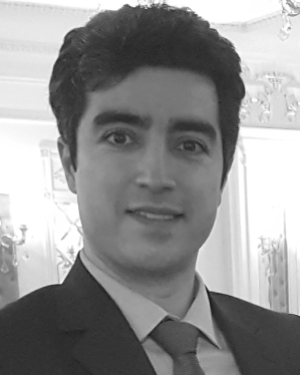 Toheed Ghandriz合作论文数Department of Mechanics and Maritime Sciences, Chalmers University of Technology4
 Bruno Augusto合作论文数3
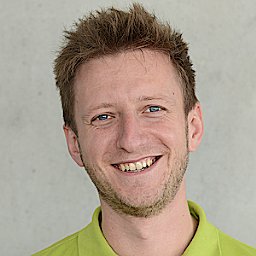 Niels van Duijkeren合作论文数Bosch Corp Res3
 Niklas Frojd合作论文数3
 Kristoffer Tagesson合作论文数2Olle Eriksson合作论文数1
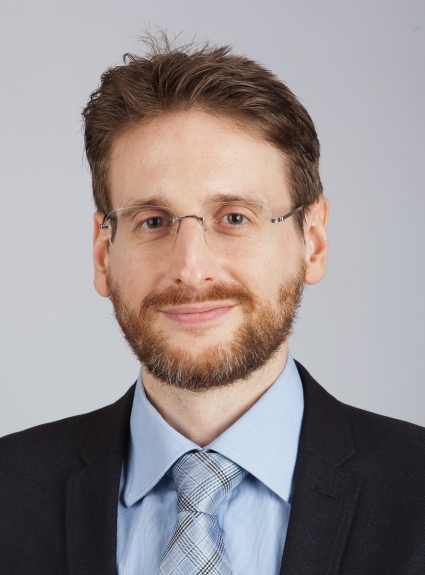 Tamás Keviczky合作论文数Delft Center for Systems and Control, Faculty of Mechanical, Maritime and Materials Engineering, Delft University of Technology1
 Mats Jonasson合作论文数1
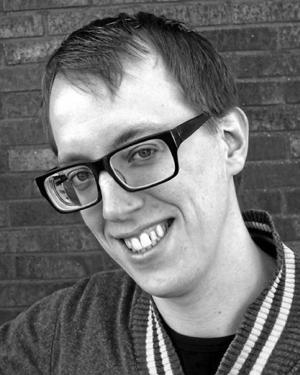 Ola Benderius合作论文数1
 Nikolce Murgovski合作论文数Chalmers University of Technology1




