This is a tribute to honor Stefan U. Egelhaaf (1963-2023), a pioneer in experimental soft condensed matter physics.
It is shown that the polycrystalline structure of self-assembled synthetic opals leads to an interplay of properties determined by order and disorder in the vicinity of the optical stop band. We analyze the balance of photon fluxes by studying angle-resolved spectra of diffracted and scattered light for all directions in space. It is shown that the shape of the stop band features in different types of optical spectra (diffraction, transmission, and scattering) is interlinked and must be studied jointly to understand optical phenomena in these materials. The principal effects are (i) angular dispersion of the photonic stop bands in diffraction spectra, (ii) inhomogeneous broadening of the stop band in zero-order transmission, and (iii) appearance of very strong peaks in the spectra of scattered light, with resonant enhancements observed with intensity up to similar to10 times greater than background scattering levels. It is shown that the resonant enhancements arise from multiple incoherent backward/forward reflections between the microcrystallites. It is shown that the spatial pattern and spectral form of the scattering spectra can be deduced from the analysis of angle-resolved zero-order transmission spectra under conditions where the attenuation length of light within the stop band is comparable to the thickness of the sample. The methodology of the studies developed in this paper is applicable to a wide class of disordered photonic crystal structures.
A new expression is given for the long time diffusion coefficient DL(k) of charged interacting colloidal spheres in suspension, as a function of the wavenumber k, near k=km, where the static structure factor has a maximum. The expression is based on a physical analogy between a mode description of the behaviour of atomic fluids (as observed in neutron scattering) and of colloids (as observed in light scattering). Use of this expression in conjunction with a hard-sphere model yields good agreement with extant data on colloids.
We have reanalyzed a selection of data obtained from laser scintillation experiments in the light of recent criticisms of analysis techniques based on the moments of the data. In agreement with those criticisms, we find that comparing the higher moments of the data with those of model distributions can produce misleading results. We therefore use a least-squares fitting method to compare directly the experimental probability distributions with the models. The conclusion of the earlier experiments, that the K distribution is generally better than the log-normal distribution in the strong-scintillation regime, however, is not changed by the new analysis.
ADVERTISEMENT RETURN TO ISSUEPREVArticleNEXTCalculation of the fourth-order correlation function of a polymer coil (as measured by cross-correlation light scattering)P. N. PuseyCite this: Macromolecules 1985, 18, 10, 1950–1962Publication Date (Print):October 1, 1985Publication History Published online1 May 2002Published inissue 1 October 1985https://pubs.acs.org/doi/10.1021/ma00152a026https://doi.org/10.1021/ma00152a026research-articleACS PublicationsRequest reuse permissionsArticle Views100Altmetric-Citations2LEARN ABOUT THESE METRICSArticle Views are the COUNTER-compliant sum of full text article downloads since November 2008 (both PDF and HTML) across all institutions and individuals. These metrics are regularly updated to reflect usage leading up to the last few days.Citations are the number of other articles citing this article, calculated by Crossref and updated daily. Find more information about Crossref citation counts.The Altmetric Attention Score is a quantitative measure of the attention that a research article has received online. Clicking on the donut icon will load a page at altmetric.com with additional details about the score and the social media presence for the given article. Find more information on the Altmetric Attention Score and how the score is calculated. Share Add toView InAdd Full Text with ReferenceAdd Description ExportRISCitationCitation and abstractCitation and referencesMore Options Share onFacebookTwitterWechatLinked InRedditEmail Other access optionsGet e-Alertsclose Get e-Alerts
Measurements are reported of the wave-vector dependent diffusion coefficient D(q) in the region of the first two peaks in the static structure factor for concentrated nonaqueous dispersions of polymethylmethacrylate spheres (diam≂0.4 μm). The particle volume fractions are taken up to the point of spontaneous crystallization. In order to minimize the effects of multiple scattering in these dynamic light scattering experiments, the particles are dispersed in solvent mixtures having refractive indexes close to those of the particles. The measured data for D(q) are compared with the results of two recent theoretical predictions, viz. the approach of Beenakker and Mazur based on a partial resummation of many-particle interactions, and the empirical effective two-particle mobility method of Snook et al.
Using the Verlet–Weis hard sphere radial distribution functions and the Monte Carlo method we calculate the short time self- and mutual-diffusion constants for a hard sphere dispersion at volume fractions up the disorder/order transition. The computations are based on two and three particle mobility tensors. The results show that the two particle mobility tensor alone is completely inadequate at high particle concentrations and considerable improvement is obtained when three particle interactions are included.
By photon correlation dynamic laser light scattering the authors have measured the time dependence of the mean-square displacement ( Delta x2(t)) of spherical particles (radius approximately 1.7 mu m) in Brownian motion. Clear evidence was found for the existence of a t1/2 term in ( Delta x2(t)) which corresponds to the expected t-3/2 'long-time tail' in the particle velocity autocorrelation function. The experimentally determined amplitude of the t1/2 term was about 74+or-3% of the value predicted theoretically. Despite detailed consideration of possible systematic errors the authors were unable to explain the magnitude of this disagreement.
This article collects together some of the main ideas and experimental results on the twinkling of stars. Statistical methods are used to characterize the features of the scintillation and to investigate the ways in which these depend on the zenith angle of the star, the bandwidth of the light and various other parameters. Some new results are included which demonstrate the advantages of using photon counting methods in experiments on stellar scintillation. Since the twinkling of stars is a consequence of the turbulence in the Earth's atmosphere then measurements can be used to deduce some features of the structure of the turbulence. We discuss some of the experiments designed to do this and report the results.
Evidence is presented which suggests that a class of modified Bessel-function distributions may have special significance in describing the statistics of radiation scattered by media characterized by a wide range of length scales. It is shown that these distributions may be obtained mathematically by applying a limit procedure to the random-walk problem with a variable number of steps. The choice of distribution for the step-number fluctuations is briefly discussed.
We report measurements of the statistical and correlation properties of laser light scattered by a random phase screen produced in the laboratory by turbulent mixing of the convective hot air flow above an electric heater and the surrounding cooler air. A phase screen is a localized region of space containing refractive index variations which cause random fluctuations in the phase of electromagnetic radiation propagating through it. On further free propagation of the emergent radiation, intensity fluctuations develop through two distinct mechanisms. Firstly, the individual refractive index inhomogeneities act as lenses which bend the light “rays” and produce a random focussing of the radiation. Secondly, further from the screen, the radiation scattered by different, independent inhomogeneities can overlap to form fringes and more complex interference patterns (e.g. speckle). Phase screens have been of interest for many years because of their role in various natural phenomena such as the fading of radio signals reflected from the ionosphere [1], the scintillation of distant radio sources due to the solar wind [2] and the twinkling of starlight caused by atmospheric fluctuations [3]. Nevertheless our measurements appear to be the first which cover a wide range of screen-detector distance, thereby providing focussing curves such as Figure 2.
We present experimental measurements of the statistics of intensity scintillations in light scattered by a random phase screen. The phase screen was produced in the laboratory by turbulent mixing of hot and cold air; the parameters of this screen were such that geometrical focussing effects could be studied near the screen and speckle effects were clearly visible in the far field. Results are given for the propagation of both laser light and white light through the turbulent region. We compare experimental results with the theory for a phase screen with a gaussian phase correlation function. New theoretical work which allows comparison for mean-square phase fluctuation φ2 å 1 is also outlined.
It is suggested that the correct processing of data in a recent experiment of Kimble, Dagenais and Mande (1977) implies that the short-time value of the correlation function of photons emitted by a single atom in resonance fluorescence is zero. This result is found by firstly correcting an apparent error in the treatment of the background radiation and secondly by taking account of Poisson fluctuations in the number of radiating atoms.
Using a mercury arc lamp as light source we have studied intensity fluctuations in light scattered by a liquid crystal sample, thus confirming that laser sources are not in principle essential in such studies. The experimental problems, particularly the relevant parameters of temporal and spatial coherence, are outlined and discussed.
We discuss the properties of enhanced non-Gaussian fluctuations that occur in radiation scattered by a moving deep random phase screen (e.g., a perfectly conducting, very rough surface) when the scattering configuration is such that the electric field at the point of observation is composed of relatively few independent randomly phased contributions. Fraunhofer and Fresnel region effects are considered both from the information-content point of view and in the context of unwanted noise in measuring and detection systems.
 E Jakeman合作论文数9
 J.G. Mcwhirter合作论文数5
 E. R. Pike合作论文数5E. Jakeman合作论文数4
 Dale W. Schaefer合作论文数Department of Chemical and Materials Engineering, College of Engineering and Applied Science, University of Cincinnati4G. Parry合作论文数2
 Wilson Poon (潘志基)合作论文数School of Physics and Astronomy, The University of Edinburgh2Gareth Parry合作论文数2
 P. N. Segre合作论文数Physics Department;Emory University2
 William Van Megen合作论文数Department of Mathematical Sciences, RMIT University2S. P. Meeker合作论文数1
 Rebecca J. Christianson合作论文数1sylvia m owens合作论文数1Rafael D. Camerini-Otero合作论文数1Richard M. Franklin合作论文数1Rh Ottewill合作论文数1Egd Cohen合作论文数1Im Deschepper合作论文数1
 M A Escobedo-Sánchez合作论文数Condensed Matter Phys Lab, Heinrich Heine Univ1
 Andrew Schofield合作论文数School of Physics and Astronomy, The University of Edinburgh1
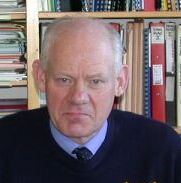 H.N.W. (Henk) Lekkerkerker合作论文数Department of Chemistry, Faculty of Science, Utrecht University1
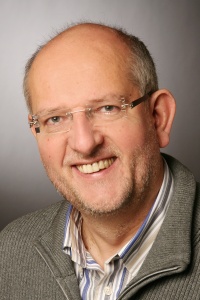 Hartmut Löwen合作论文数Institut für Theoretische Physik II - Soft Matter, Heinrich-Heine-Universität Düsseldorf1J.M. Vaughan合作论文数1C Oliver合作论文数1Ian K Snook合作论文数1
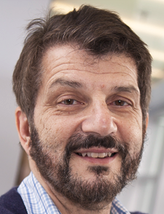 David A. Weitz合作论文数Experimental Soft Condensed Matter Group, Department of Physics, School of Engineering and Applied Sciences, Harvard University;BASF Advanced Research Initiative, Harvard University;Materials Research Science and Engineering Center, Harvard University1
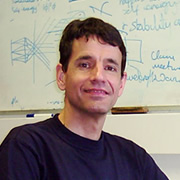 David M. Whittaker合作论文数Department of Physics and Astronomy, The University of Sheffield1Dennis E. Koppel合作论文数1
 Ali M. Adawi合作论文数Dept Phys & Astron, Univ Sheffield1
 Marco Laurati合作论文数Dept. of Physics, University of Florence and I.N.F.M.1Ical Colloids合作论文数1Andrew R. Weeks合作论文数Bio21 Institute, The University of Melbourne1Paul R. Tapster合作论文数1
 Maurice Skolnick合作论文数School of Mathematical and Physical Sciences, University of Sheffield;Low Dimensional Structures and Devices, Department of Physics and Astronomy, The University of Sheffield1E.R. Pike合作论文数1
 Vasily N. Astratov合作论文数Department of Physics and Optical Science, College of Liberal Arts & Sciences, The University of North Carolina, Charlotte1G. L. Paul合作论文数1




