We develop a suitably general version of quantum mechanics that can handle nonassociative algebras of observables and which reduces to standard quantum theory in the traditional associative setting. Our algebraic approach is naturally probabilistic and is based on the universal enveloping algebra of a general nonassociative algebra. We formulate properties of states together with notions of trace, and use them to develop GNS constructions. We describe Heisenberg and Schrodinger pictures of completely positive dynamics, and we illustrate our formalism on the explicit examples of finite-dimensional matrix Jordan algebras as well as the octonion algebra.
Noncommutative geometry has opened exciting new avenues in mathematics and physics.It has brought together mathematicians and physicists in fruitful interdisciplinary interaction.
Multipole vectors and pseudoentropies provide powerful tools for a numerically fast and vivid investigation of possible statistically anisotropic, respectively non-Gaussian signs in CMB temperature fluctuations. After reviewing and linking these two conceptions we compare their application to data analysis using the Planck 2015 NILC full sky map.
We investigate physical implications of a gravitational analog of axion electrodynamics with a parity-violating gravitoelectromagnetic theta term. This is related to the Nieh-Yan topological invariant in gravity with torsion, in contrast to the well-studied gravitational Chern-Simons term quadratic in curvature, coupled via a dynamical axionlike scalar field. Axion gravitodynamics is the corresponding linearized theory. We find that potentially observable effects are over 80 orders of magnitude stronger than for its Chern-Simons counterpart and could be in reach for detection by experiments in the near future. For a near-Earth scenario, we derive corrections to the Lense-Thirring effect and compare them to data from satellite-based experiments (Gravity Probe B). For gravitational waves, we find modified dispersion relations, derive the corresponding polarization-dependent modified group and phase velocities, and compare them to data from neutron star mergers (GW170817) to derive even stronger bounds.
We review Wehrl's definition of a semiclassical entropy in terms of coherent states and give an introductory overview of Lieb's conjecture, its proof (including earlier results), generalizations, and the role of covariant quantum channels in this context. These structures motivate an alternative definition of coherent states and have interesting physical applications and implications.
We study a deformation of a $2$-graded Poisson algebra where the functions of the phase space variables are complemented by linear functions of parity odd velocities. The deformation is carried by a $2$-form $B$-field and a bivector $\Pi$, that we consider as gauge fields of the geometric and non-geometric fluxes $H$, $f$, $Q$ and $R$ arising in the context of string theory compactification. The technique used to deform the Poisson brackets is widely known for the point particle interacting with a $U(1)$ gauge field, but not in the case of non-abelian or higher spin fields. The construction is closely related to Generalized Geometry: With an element of the algebra that squares to zero, the graded symplectic picture is equivalent to an exact Courant algebroid over the generalized tangent bundle $E \cong TM \oplus T^{*}M$, and to its higher gauge theory. A particular idempotent graded canonical transformation is equivalent to the generalized metric. Focusing on the generalized differential geometry side we construct an action functional with the Ricci tensor of a connection on covectors, encoding the dynamics of a gravitational theory for a contravariant metric tensor and $Q$ and $R$ fluxes. We also extract a connection on vector fields and determine a non-symmetric metric gravity theory involving a metric and $H$-flux.
Gauge theories can often be formulated in different but physically equivalent ways, a concept referred to as duality. Using a formalism based on graded geometry, we provide a unified treatment of all parent theories for different types of standard and exotic dualizations. Our approach is based on treating tensor fields as functions of a certain degree on graded supermanifolds equipped with a suitable number of odd coordinates. We present a universal two-parameter first order action for standard and exotic electric/magnetic dualizations and prove in full generality that it yields two dual second order theories with the desired field content and dynamics. Upon choice of parameters, the parent theory reproduces (i) the standard and exotic duals for p-forms and (ii) the standard and double duals for (p, 1) bipartite tensor fields, such as the linearized graviton and the Curtright field. Moreover, we discuss how deformations related to codimension-1 branes are included in the parent theory.
We review the construction of Lagrangians for higher spin fields of mixed symmetry in the framework of graded geometry. The main advantage of the graded formalism in this context is that it provides universal expressions, in the sense that a given Lagrangian describes the dynamics of any type of bosonic tensor field even though the corresponding explicit expressions in terms of local field components and their derivatives look rather different. Aside from free fields and their kinetic terms, we also consider higher derivative interaction terms that lead to second order field equations. For scalars, differential forms and bipartite tensors, these are identified with Galileon theories, written in a simple yet elegant form as a generalised kinetic term, and are gauge invariant by construction. For fields of spin higher than 2, we illustrate the candidate Galileon-like interactions and argue that full gauge invariance and locality cannot be simultaneously maintained.
We suggest a new action for a ``dual'' gravity in a stringy $R$, $Q$ flux background. The construction is based on degree-$2$ graded symplectic geometry with a homological vector field. The structure we consider is non-canonical and features a curvature-free connection. It is known that the data of Poisson structures of degree $2$ with a Hamiltonian correspond to a Courant algebroid on $TM \oplus T^{*}M$, the bundle of generalized geometry. With the bracket for the Courant algebroid and a further bracket which resembles the Lie bracket of vector fields, we get a connection with non-zero curvature for the bundle of generalized geometry. The action is the (almost) Hilbert-Einstein action for that connection.
We review some fundamental aspects of mixed symmetry tensor gauge theories using a formulation based on graded geometry. In particular, we are able to construct kinetic, mass and Galileon-type higher derivative interaction terms for such fields. The resulting elegant geometric formulas allow for shared features of these theories to be highlighted and for possible interaction terms to be classified. In addition, we argue that this formalism is very useful in studying dualities. In particular, we construct a universal first order Lagrangian that may serve as the starting point for the off shell dualizations of differential form gauge theories and generalized gravitons.
In recent years, a close connection between supergravity, string effective actions and generalized geometry has been discovered that typically involves a doubling of geometric structures. We investigate this relation from the point of view of graded geometry, introducing an approach based on deformations of graded Poisson structures and derive the corresponding gravity actions. We consider in particular natural deformations of the 2-graded symplectic manifold T*[2]T[1]M that are based on a metric g, a closed Neveu-Schwarz 3-form H (locally expressed in terms of a Kalb-Ramond 2-form B) and a scalar dilaton ϕ. The derived bracket formalism relates this structure to the generalized differential geometry of a Courant algebroid, which has the appropriate stringy symmetries, and yields a connection with non-trivial curvature and torsion on the generalized “doubled” tangent bundle E ≅ TM ⊕ T*M. Projecting onto TM with the help of a natural non-isotropic splitting of E, we obtain a connection and curvature invariants that reproduce the NS-NS sector of supergravity in 10 dimensions. Further results include a fully generalized Dorfman bracket, a generalized Lie bracket and new formulas for torsion and curvature tensors associated to generalized tangent bundles. A byproduct is a unique Koszul-type formula for the torsionful connection naturally associated to a non-symmetric metric, which resolves ambiguity problems and inconsistencies of traditional approaches to non-symmetric gravity theories.
Motivated by the analogy between a weak field expansion of general relativity and Maxwell’s laws of electrodynamics, we explore physical consequences of a parity violating θ term in gravitoelectromagnetism. This is distinct from the common gravitational θ term formed as a square of the Riemann tensor. Instead it appears as a product of the gravitoelectric and gravitomagnetic fields in the Lagrangian, similar to the Maxwellian θ term. We show that this sector can arise from a quadratic torsion term in nonlinear gravity. In analogy to the physics of topological insulators, the torsion-induced θ parameter can lead to excess mass density at the interface of regions where θ varies and consequently it generates a correction to Newton’s law of gravity. We discuss also an analogue of the Witten effect for gravitational dyons.
In recent years, high-resolution cosmic microwave background (CMB) measurements have opened up the possibility to explore statistical features of the temperature fluctuations down to very small angular scales. One method that has been used is the Wehrl entropy, which is, however, extremely costly in terms of computational time. Here, we propose several different pseudoentropy measures (projection, angular, and quadratic) that agree well with the Wehrl entropy, but are significantly faster to compute. All of the presented alternatives are rotationally invariant measures of entanglement after identifying each multipole l of temperature fluctuations with a spin-l quantum state and are very sensitive to non-Gaussianity, anisotropy, and statistical dependence of spherical harmonic coefficients in the data. We provide a simple proof that the projection pseudoentropy converges to the Wehrl entropy with increasing dimensionality of the ancilla projection space. Furthermore, for l = 2, we show that both the Wehrl entropy and the angular pseudoentropy can be expressed as one-dimensional functions of the squared chordal distance of multipole vectors, giving a tight connection between the two measures. We also show that the angular pseudoentropy can clearly distinguish between Gaussian and non-Gaussian temperature fluctuations at large multipoles and henceforth provides a non-brute-force method for identifying non-Gaussianities. This allows us to study possible hints of statistical anisotropy and non-Gaussianity in the CMB up to multipole l = 1000 using Planck 2015, Planck 2018, and WMAP 7-yr full sky data. We find that l = 5 and l = 28 have a large entropy at 2-3 sigma significance and a slight hint towards a connection of this with the cosmic dipole. On a wider range of large angular scales we do not find indications of violation of isotropy or Gaussianity. We also fmd a small-scale range, l is an element of [895; 905], that is incompatible with the assumptions at about 3 sigma level, although how much this significance can be reduced by taking into account the selection effect, i.e., how likely it is to find ranges of a certain size with the observed features, and inhomogeneous noise is left as an open question. Furthermore, we find overall similar results in our analysis of the 2015 and the 2018 data. Finally, we also demonstrate how a range of angular momenta can be studied with the range angular pseudoentropy, which measures averages and correlations of different multipoles. Our main purpose in this work is to introduce the methods, analyze their mathematical background, and demonstrate their usage for providing researchers in this field with an additional tool. We believe that the formalism developed here can underpin future studies of the Gaussianity and isotropy of the CMB and help to identify deviations, especially at small angular scales.
The particular structure of Galileon interactions allows for higher-derivative terms while retaining second order field equations for scalar fields and Abelian p-forms. In this work we introduce an index-free formulation of these interactions in terms of two sets of Grassmannian variables. We employ this to construct Galileon interactions for mixed-symmetry tensor fields and coupled systems thereof. We argue that these tensors are the natural generalization of scalars with Galileon symmetry, similar to p-forms and scalars with a shift-symmetry. The simplest case corresponds to linearised gravity with Lovelock invariants, relating the Galileon symmetry to diffeomorphisms. Finally, we examine the coupling of a mixed-symmetry tensor to gravity, and demonstrate in an explicit example that the inclusion of appropriate counterterms retains second order field equations.
Generalized geometry provides the framework for a systematic approach to non‐symmetric metric gravity theory and naturally leads to an Einstein‐Kalb‐Ramond gravity theory with totally anti‐symmetric contortion.
Starting from the Nambu-Goto bosonic membrane action, we develop a geometric description suitable for p-brane backgrounds. With tools of generalized geometry we derive the pertinent generalization of the string open-closed relations to the p-brane case. Nambu-Poisson structures are used in this context to generalize the concept of semi-classical noncommutativity of D-branes governed by a Poisson tensor. We find a natural description of the correspondence of recently proposed commutative and noncommutative versions of an effective action for p-branes ending on a p ′-brane. We calculate the power series expansion of the action in background independent gauge. Leading terms in the double scaling limit are given by a generalization of a (semi-classical) matrix model.
We describe nonassociative deformations of geometry probed by closed strings in non-geometric flux compactifications of string theory. We show that these non-geometric backgrounds can be geometrised through the dynamics of open membranes whose boundaries propagate in the phase space of the target space compactification, equiped with a twisted Poisson structure. The effective membrane target space is determined by the standard Courant algebroid over the target space twisted by an abelian gerbe in momentum space. Quantization of the membrane sigma-model leads to a proper quantization of the non-geometric background, which we relate to Kontsevich's formalism of global deformation quantization that constructs a noncommutative nonassociative star product on phase space. We construct Seiberg-Witten type maps between associative and nonassociative backgrounds, and show how they may realise a nonassociative deformation of gravity. We also explain how this approach is related to the quantization of certain Lie 2-algebras canonically associated to the twisted Courant algebroid, and cochain twist quantization using suitable quasi-Hopf algebras of symmetries in the phase space description of R-space which constructs a Drinfel'd twist with non-trivial 3-cocycle. We illustrate and apply our formalism to present a consistent phase space formulation of nonassociative quantum mechanics.
We generalize noncommutative gauge theory using Nambu-Poisson structures to obtain a new type of gauge theory with higher brackets and gauge fields. The approach is based on covariant coordinates and higher versions of the Seiberg-Witten map. We construct a covariant Nambu-Poisson gauge theory action, give its first order expansion in the Nambu-Poisson tensor and relate it to a Nambu-Poisson matrix model.
We analyse the symmetries underlying nonassociative deformations of geometry in non-geometric R-flux compactifications which arise via T-duality from closed strings with constant geometric fluxes. Starting from the non-abelian Lie algebra of translations and Bopp shifts in phase space, together with a suitable cochain twist, we construct the quasi-Hopf algebra of symmetries that deforms the algebra of functions and the exterior differential calculus in the phase space description of nonassociative R-space. In this setting, nonassociativity is characterised by the associator 3-cocycle which controls non-coassociativity of the quasi-Hopf algebra. We use abelian 2-cocycle twists to construct maps between the dynamical nonassociative star product and a family of associative star products parametrized by constant momentum surfaces in phase space. We define a suitable integration on these nonassociative spaces and find that the usual cyclicity of associative noncommutative deformations is replaced by weaker notions of 2-cyclicity and 3-cyclicity. Using this star product quantization on phase space together with 3-cyclicity, we formulate a consistent version of nonassociative quantum mechanics, in which we calculate the expectation values of area and volume operators, and find coarse-graining of the string background due to the R-flux.
We discuss noncommutative gauge theory from the generalized geometry point of view. We argue that the equivalence between the commutative and semiclassically noncommutative DBI actions is naturally encoded in the generalized geometry of D-branes.
 Julius Wess合作论文数17
 Branislav Jurco合作论文数Mathematical Institute, Charles University15Josip Trampetic合作论文数14
 Paul Watts合作论文数7
 Jan Vysoky合作论文数Faculty of Nuclear Sciences and Physical Engineering;Czech Technical University in Prague;Faculty of Nuclear Sciences and Physical Engineering, Czech Technical University in Prague7Athanasios Chatzistavrakidis合作论文数Institute of Nuclear Physics6
 Bruno Zumino合作论文数Department of Physics, University of California, Berkeley6
 Georgios Karagiannis合作论文数Div Theoret Phys, Rudjer Boskovic Inst5Stefan Schraml合作论文数5Paolo Aschieri合作论文数Dipartimento di Scienze e Tecnologie Avanzate, Universita del Piemonte5goran duplancic合作论文数4
 Richard Joseph Szabo合作论文数Department of Mathematics, School of Mathematical & Computer Sciences, Heriot-Watt University, Edinburgh/Higgs Centre for Theoretical Physics, The University of Edinburgh4Jiangyang You合作论文数4
 Michael Wohlgenannt合作论文数4dionysios mylonas合作论文数3
 Eugenia Boffo合作论文数3Raul Horvat合作论文数3Chryssomalis Chryssomalakos合作论文数3Fech Scen Khoo合作论文数Division of Theoretical Physics, Rudjer Bošković Institute2B. L. Cerchiai合作论文数Arnold Regge Ctr2Marvin Pinkwart合作论文数Jacobs University Bremen gGmbH2
 Georg G. Raffelt合作论文数Max Planck Institute For Physics/Werner Heisenberg Institute2
 Nilendra Deshpande合作论文数Department of Physics, University of Oregon2
 Elliott H. Lieb合作论文数Princeton University2
 Gaetano Fiore合作论文数Dip . di Matematica e Applicazioni;Universita di Napoli;Dip . di Matematica e Applicazioni, Universita di Napoli2Amon Ilakovac合作论文数Department of Theoretical Physics;University of Zagreb;Department of Theoretical Physics, University of Zagreb2
 Christian Blohmann合作论文数Max-Planck-Institut fur Physik2Blazenka Melic合作论文数Theoretical Physics Division;Rudjer Boÿskovic Institute;Theoretical Physics Division, Rudjer Boÿskovic Institute2
 Peter Minkowski合作论文数Institute for Theoretical Physics, Department of Physics, Faculty of Natural Science, University of Bern2
 Xavier Calmet合作论文数School of Mathematical and Physical Sciences, University of Sussex2B. Zumino合作论文数1M. Kossow合作论文数1L. Möller合作论文数1G. Manolakos合作论文数1N. G. Deshpande合作论文数1
 Sergey N. Solodukhin合作论文数Department of Physics, University of Tours1
 Dominik J. Schwarz合作论文数Fakultät für Physik, Universität Bielefeld1George Zoupanos合作论文数Physics Department;National Technical University;Physics Department, National Technical University1
 John Madore合作论文数Laboratoire de Physique Théorique d'Orsay, Université Paris-Sud 111Frank Meyer合作论文数1Robert C. Helling合作论文数1
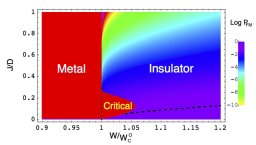 Stefan Kettemann合作论文数Max - Planck;Institut fur Physik Komplexer Systeme Nothnitzerstr;Max - Planck|Institut fur Physik Komplexer Systeme Nothnitzerstr1
 Tiberiu Tesileanu合作论文数Joseph Henry Laboratories;Center for Theoretical Science;Princeton University;Center for Theoretical Science, Princeton University1
 Konstantinos N Anagnostopoulos合作论文数Niels Bohr Institute1
 D. (Diederik) Roest合作论文数Van Swinderen Institute for Particle Physics and Gravity, Faculty of Science and Engineering, University of Groningen1
 Kresimir Kumericki合作论文数1Ludwig-Maximiliams-Universitat Munchen合作论文数1W. Behr合作论文数1




