In this article we study domino tilings of a family of finite regions called Aztec diamonds. Every such tiling determines a partition of the Aztec diamond into five sub-regions; in the four outer sub-regions, every tile lines up with nearby tiles, while in the fifth, central sub-region, differently-oriented tiles co-exist side by side. We show that when n is sufficiently large, the shape of the central sub-region becomes arbitrarily close to a perfect circle of radius n/sqrt(2) for all but a negligible proportion of the tilings. Our proof uses techniques from the theory of interacting particle systems. In particular, we prove and make use of a classification of the stationary behaviors of a totally asymmetric one-dimensional exclusion process in discrete time.
Random classical codes have good error correcting properties, and yet they are notoriously hard to decode in practice. Despite many decades of extensive study, the fastest known algorithms still run in exponential time. The Learning Parity with Noise (LPN) problem, which can be seen as the task of decoding a random linear code in the presence of noise, has thus emerged as a prominent hardness assumption with numerous applications in both cryptography and learning theory. Is there a natural quantum analog of the LPN problem? In this work, we introduce the Learning Stabilizers with Noise (LSN) problem, the task of decoding a random stabilizer code in the presence of local depolarizing noise. We give both polynomial-time and exponential-time quantum algorithms for solving LSN in various depolarizing noise regimes, ranging from extremely low noise, to low constant noise rates, and even higher noise rates up to a threshold. Next, we provide concrete evidence that LSN is hard. First, we show that LSN includes LPN as a special case, which suggests that it is at least as hard as its classical counterpart. Second, we prove a worst-case to average-case reduction for variants of LSN. We then ask: what is the computational complexity of solving LSN? Because the task features quantum inputs, its complexity cannot be characterized by traditional complexity classes. Instead, we show that the LSN problem lies in a recently introduced (distributional and oracle) unitary synthesis class. Finally, we identify several applications of our LSN assumption, ranging from the construction of quantum bit commitment schemes to the computational limitations of learning from quantum data.
Maximizing the amount of work harvested from an environment is important for a wide variety of biological and technological processes, from energy-harvesting processes such as photosynthesis to energy storage systems such as fuels and batteries. Here, we consider the maximization of free energy-and by extension, the maximum extractable work-that can be gained by a classical or quantum system that undergoes driving by its environment. We consider how the free energy gain depends on the initial state of the system while also accounting for the cost of preparing the system. We provide simple necessary and sufficient conditions for increasing the gain of free energy by varying the initial state. We also derive simple formulae that relate the free energy gained using the optimal initial state rather than another suboptimal initial state. Finally, we demonstrate that the problem of finding the optimal initial state may have two distinct regimes, one easy and one difficult, depending on the temperatures used for preparation and work extraction. We illustrate our results on a simple model of an information engine.
We introduce a representation of [[n, k]] stabilizer codes as semi-bipartite graphs wherein k “input” nodes map to n “output” nodes, such that output nodes may connect to each other but input nodes may not. We prove that this graph representation is in bijection with tableaus and give an efficient compilation algorithm that transforms tableaus into graphs. We then show that this map is efficiently invertible, which gives a new universal recipe for code construction by way of finding graphs with sufficiently nice properties. The graph representation gives insight into both code construction and algorithms. To the former, we argue that graphs provide a flexible platform for building codes particularly at smaller (non-asymptotic) scales. We construct as examples constant-size codes, e.g. a [[54, 6, 5]] code and a family of roughly [[n, n/log n, log n]] codes. We also leverage graphs in a probabilistic analysis to extend the quantum Gilbert-Varshamov bound into a three-way distance-rate-weight tradeoff. To the latter, we show that key coding algorithms – distance approximation, weight reduction, and decoding – are unified as instances of a single optimization game on a graph. Moreover, key code properties such as distance, weight, and encoding circuit depth, are all controlled by the graph degree. We give efficient algorithms for producing simple encoding circuits whose depths scale as twice the degree and for implementing logical diagonal and certain Clifford gates with non-constant but reduced depth. Finally, we construct a simple efficient decoding algorithm and prove a performance guarantee for a certain class of graphs, including the roughly [[n, n/log n, log n]] code. These results give evidence that graphs are generically useful for the study of stabilizer codes and their practical implementations.
We introduce a new class of algorithms for finding a short vector in lattices defined by codes of co-dimension $k$ over $\mathbb{Z}_P^d$, where $P$ is prime. The co-dimension $1$ case is solved by exploiting the packing properties of the projections mod $P$ of an initial set of non-lattice vectors onto a single dual codeword. The technical tools we introduce are sorting of the projections followed by single-step pairwise Euclidean reduction of the projections, resulting in monotonic convergence of the positive-valued projections to zero. The length of vectors grows by a geometric factor each iteration. For fixed $P$ and $d$, and large enough user-defined input sets, we show that it is possible to minimize the number of iterations, and thus the overall length expansion factor, to obtain a short lattice vector. Thus we obtain a novel approach for controlling the output length, which resolves an open problem posed by Noah Stephens-Davidowitz (the possibility of an approximation scheme for the shortest-vector problem (SVP) which does not reduce to near-exact SVP). In our approach, one may obtain short vectors even when the lattice dimension is quite large, e.g., 8000. For fixed $P$, the algorithm yields shorter vectors for larger $d$. We additionally present a number of extensions and generalizations of our fundamental co-dimension $1$ method. These include a method for obtaining many different lattice vectors by multiplying the dual codeword by an integer and then modding by $P$; a co-dimension $k$ generalization; a large input set generalization; and finally, a "block" generalization, which involves the replacement of pairwise (Euclidean) reduction by a $k$-party (non-Euclidean) reduction. The $k$-block generalization of our algorithm constitutes a class of polynomial-time algorithms indexed by $k\geq 2$, which yield successively improved approximations for the short vector problem.
We introduce various measures of forward classical communication for bipartite quantum channels. Since a point-to-point channel is a special case of a bipartite channel, the measures reduce to measures of classical communication for point-to-point channels. As it turns out, these reduced measures have been reported in prior work of Wang et al. on bounding the classical capacity of a quantum channel. As applications, we show that the measures are upper bounds on the forward classical capacity of a bipartite channel. The reduced measures are upper bounds on the classical capacity of a point-to-point quantum channel assisted by a classical feedback channel. Some of the various measures can be computed by semi-definite programming.
We present a quantum compilation algorithm that maps Clifford encoders, encoding maps for stabilizer quantum codes, to a unique graphical representation in the ZX calculus. Specifically, we develop a canonical form in the ZX calculus and prove canonicity as well as efficient reducibility of any Clifford encoder into the canonical form. The diagrams produced by our compiler visualize information propagation and entanglement structure of the encoder, revealing properties that may be obscured in the circuit or stabilizer-tableau representation. Consequently, our canonical representation may be an informative technique for the design of new stabilizer quantum codes via graph theory analysis.
In this paper, we explore topological quantum computation augmented by subphases and phase transitions. We commence by investigating the anyon tunneling map, denoted as $\varphi$, between subphases of the quantum double model $\mathcal{D}(G)$ for any arbitrary finite group $G$. Subsequently, we delve into the relationship between $\varphi$ and the Floquet code, and extend the Abelian Floquet code to encompass non-abelian cases. We conclude by demonstrating how phase transitions in both the temporal and spatial directions can enhance the diversity of topological gates for general topological orders described by modular tensor categories.
In this paper, we explore topological quantum computation augmented by subphases and phase transitions. We commence by investigating the anyon tunneling map, denoted as $\varphi$, between subphases of the quantum double model $\mathcal{D}(G)$ for any arbitrary finite group $G$. Subsequently, we delve into the relationship between $\varphi$ and the Floquet code, and extend the Abelian Floquet code to encompass non-abelian cases. We conclude by demonstrating how phase transitions in both the temporal and spatial directions can enhance the diversity of topological gates for general topological orders described by modular tensor categories.
Publicly verifiable quantum money is a protocol for the preparation of quantum states that can be efficiently verified by any party for authenticity but is computationally infeasible to counterfeit. We develop a cryptographic scheme for publicly verifiable quantum money based on Gaussian superpositions over random lattices. We introduce a verification-of-authenticity procedure based on the lattice discrete Fourier transform, and subsequently prove the unforgeability of our quantum money under the hardness of the short vector problem from lattice-based cryptography.
We study scenarios which arise when two spatially-separated observers, Alice and Bob, are try to identify a quantum state sampled from several possibilities. In particular, we examine their strategies for maximizing both the probability of guessing their state correctly as well as their information gain about it. It is known that there are scenarios where allowing Alice and Bob to use LOCC offers an improvement over the case where they must make their measurements simultaneously. Similarly, Alice and Bob can sometimes improve their outcomes if they have access to a Bell pair. We show how LOCC allows Alice and Bob to distinguish between two product states optimally and find that a LOCC is almost always more helpful than a Bell pair for distinguishing product states.
I recount some of my memories of the early development of quantum computation, including the discovery of the factoring algorithm, of error correcting codes, and of fault tolerance.
The out-of-time-ordered correlation (OTOC) and entanglement are two physically motivated and widely used probes of the"scrambling"of quantum information, a phenomenon that has drawn great interest recently in quantum gravity and many-body physics. We argue that the corresponding notions of scrambling can be fundamentally different, by proving an asymptotic separation between the time scales of the saturation of OTOC and that of entanglement entropy in a random quantum circuit model defined on graphs with a tight bottleneck, such as tree graphs. Our result counters the intuition that a random quantum circuit mixes in time proportional to the diameter of the underlying graph of interactions. It also provides a more rigorous justification for an argument in our previous work arXiv:1807.04363, that black holes may be slow information scramblers, which in turn relates to the black hole information problem. The bounds we obtained for OTOC are interesting in their own right in that they generalize previous studies of OTOC on lattices to the geometries on graphs in a rigorous and general fashion.
We prove that the classical capacity of an arbitrary quantum channel assisted by a free classical feedback channel is bounded from above by the maximum average output entropy of the quantum channel. As a consequence of this bound, we conclude that a classical feedback channel does not improve the classical capacity of a quantum erasure channel, and by taking into account energy constraints, we conclude the same for a pure-loss bosonic channel. The method for establishing the aforementioned entropy bound involves identifying an information measure having two key properties: 1) it does not increase under a one-way local operations and classical communication channel from the receiver to the sender and 2) a quantum channel from sender to receiver cannot increase the information measure by more than the maximum output entropy of the channel. This information measure can be understood as the sum of two terms, with one corresponding to classical correlation and the other to entanglement.
We provide polylog sparse quantum codes for correcting the Erasure channel arbitrarily close to the capacity. Specifically, we provide the $[[n, k, d]]$ quantum stabilizer codes that correct for the erasure channel arbitrarily close to the capacity if the erasure probability is at least 0.33 and with a generating set $\langle S_{1}, S_{2}, \cdots {} S_{n-k} \rangle $ such that $|S_{i}|\leq {\mathrm{ log}} ^{2+\zeta }(n)$ for all $i$ and for any $\zeta > 0$ with high probability. In this paper, we show that the result of Delfosse et al. is tight: one can construct capacity approaching codes with weight almost $O(1)$ .
We investigate the additivity phenomenon in the dynamic capacity of a quantum channel for trading the resources of classical communication, quantum communication, and entanglement. Understanding such an additivity property is important if we want to optimally use a quantum channel for general communication purposes. However, in a lot of cases, the channel one will be using only has an additive single or double resource capacity, and it is largely unknown if this could lead to an superadditive double or triple resource capacity, respectively. For example, if a channel has an additive classical and quantum capacity, can the classical-quantum capacity be superadditive? In this work, we answer such questions affirmatively. We give proof-of-principle requirements for these channels to exist. In most cases, we can provide an explicit construction of these quantum channels. The existence of these superadditive phenomena is surprising in contrast to the result that the additivity of both classical-entanglement and classical-quantum capacity regions imply the additivity of the triple resource capacity region.
Free energy is energy that is available to do work. Maximizing the free energy gain and the gain in work that can be extracted from a system is important for a wide variety of physical and technological processes, from energy harvesting processes such as photosynthesis to energy storage systems such as fuels and batteries. This paper extends recent results from non-equilibrium thermodynamics [1-20] and quantum resource theory [21-24] to derive closedform solutions for the maximum possible gain in free energy and extractable work that can be obtained by varying the initial states of classical and quantum stochastic processes. Simple formulae allow the comparison the free energy increase for the optimal procedure with that for a sub-optimal procedure. The problem of finding the optimal free-energy harvesting procedure is shown to be convex and solvable via gradient descent. Consider a green plant: when the sun rises in the morning, the plant begins to perform photosynthesis and to harvest energy. When the sun sets in the evening the plant stops photosynthesizing. Free energy is energy that is available to do work: it is energy that is unencumbered by entropy, and so is ‘free.’ A plant that has managed to harvest more energy during the course of the day, and to increase its free energy by a larger amount
Non-Gaussian states and operations are crucial for various continuous-variable quantum information processing tasks. To quantitatively understand non-Gaussianity beyond states, we establish a resource theory for non-Gaussian operations. In our framework, we consider Gaussian operations as free operations, and non-Gaussian operations as resources. We define entanglement-assisted non-Gaussianity generating power and show that it is a monotone that is nonincreasing under the set of free superoperations, i.e., concatenation and tensoring with Gaussian channels. For conditional unitary maps, this monotone can be analytically calculated. As examples, we show that the non-Gaussianity of ideal photon-number subtraction and photon-number addition equal the non-Gaussianity of the single-photon Fock state. Based on our non-Gaussianity monotone, we divide non-Gaussian operations into two classes: (i) the finite non-Gaussianity class, e.g., photon-number subtraction, photon-number addition, and all Gaussian-dilatable non-Gaussian channels; and (ii) the diverging non-Gaussianity class, e.g., the binary phase-shift channel and the Kerr nonlinearity. This classification also implies that not all non-Gaussian channels are exactly Gaussian dilatable. Our resource theory enables a quantitative characterization and a first classification of non-Gaussian operations, paving the way towards the full understanding of non-Gaussianity.
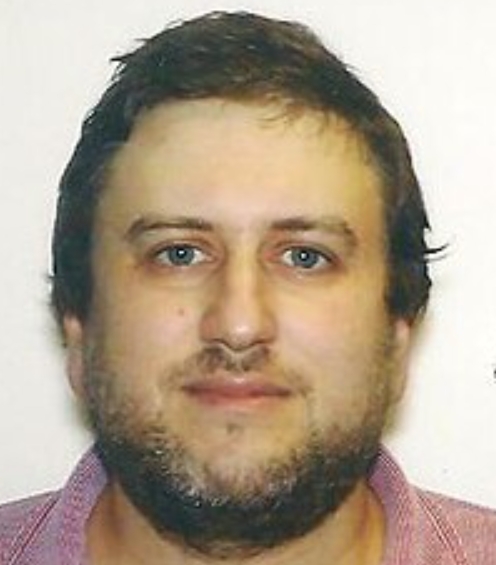 John A. Smolin合作论文数IBM's Thomas J. Watson Research Center20
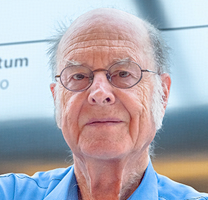 Charles H. Bennett合作论文数Thomas J. Watson Research Center, IBM Research18
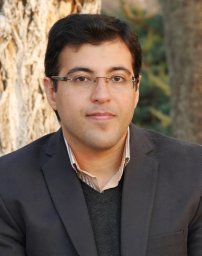 Salman Beigi合作论文数Institute for Quantum Information, California Institute of Technology12
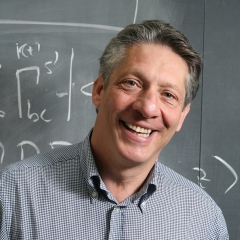 Edward Farhi合作论文数Department of Physics, Massachusetts Institute of Technology11
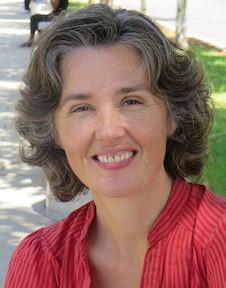 Barbara Terhal合作论文数Quantum Computing Division, QuTech;Perimeter Institute10
 David DiVincenzo合作论文数Institute for Quantum Information, RWTH Aachen University;Institute of Theoretical Nanoelectronics, Forschungszentrum Jülich;TU Delft9
 Bonnie Berger合作论文数Computer Science & Artificial Intelligence Laboratory, Massachusetts Institute of Technology;Department of Mathematics, Massachusetts Institute of Technology8
 Seth Lloyd合作论文数Department of Mechanical Engineering, Massachusetts Institute of Technology7
 Edward G. Coffman合作论文数Department of Electrical Engineering, Columbia University in the City of New York;Department of Computer Science, Columbia University in the City of New York7
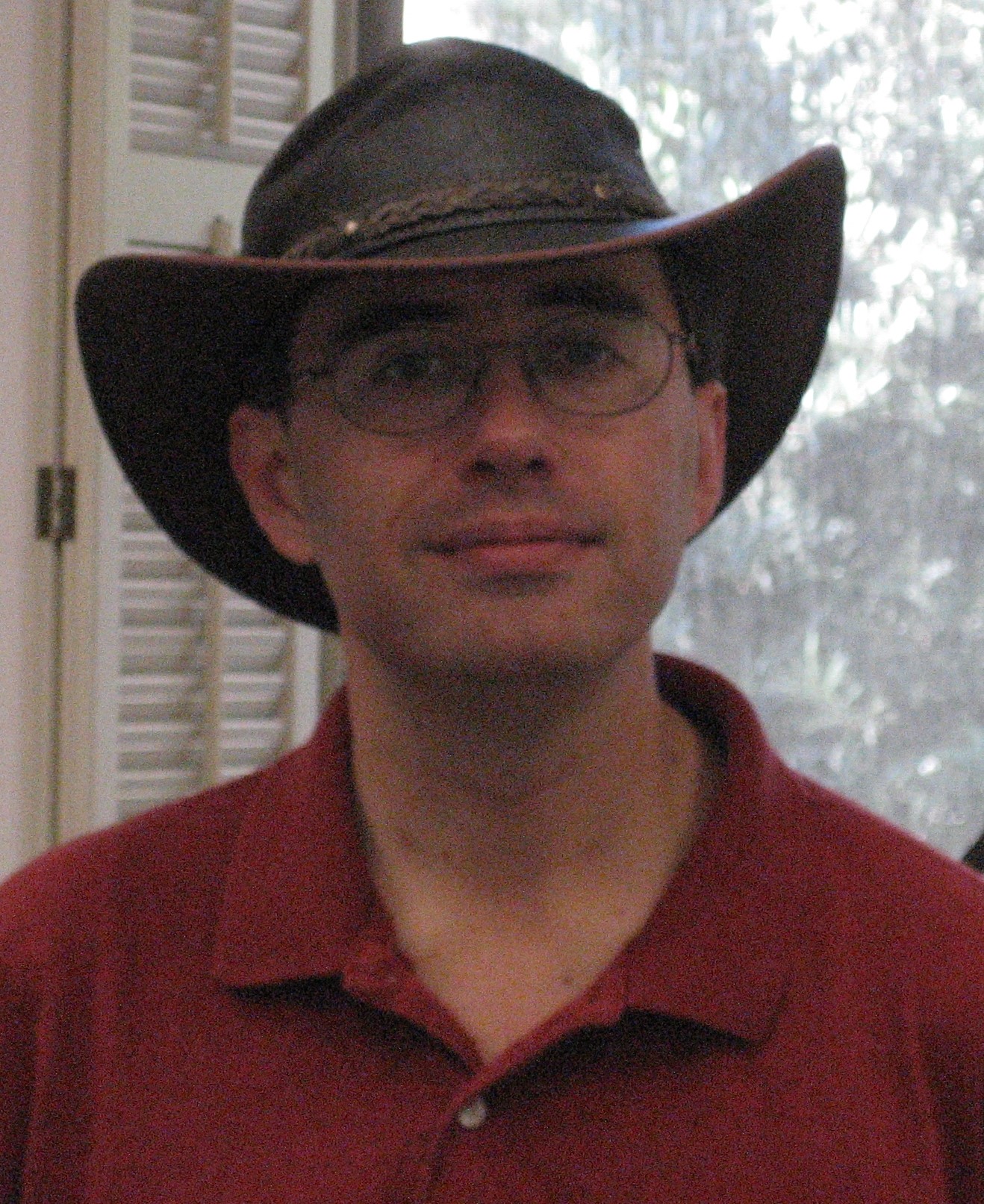 Eric M. Rains合作论文数The Division of Physics, Mathematics and Astronomy, California Institute of Technology7
 Kevin Thompson合作论文数6
 David Gosset合作论文数Center for Theoretical Physics, Massachusetts Institute of Technology6can gokler合作论文数5
 Quntao Zhuang (庄群韬)合作论文数Ming Hsieh Department of Electrical and Computer Engineering, University of Southern California;QiWi Photography5
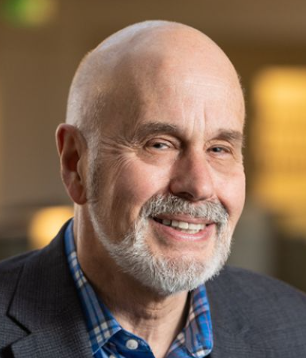 Robert Calderbank合作论文数Pierre R. Lamond Department of Electrical & Computer Engineering, Pratt School of Engineering, Duke University;Trinity College of Arts & Sciences, Duke University5
 Joan Feigenbaum合作论文数School of Engineering & Applied Science, Yale University;Amazon Web Services5
 Andreas Winter合作论文数Department of Maths/CS, Mathematisch-Naturwissenschaftliche Fakultät, Universität zu Köln5
 David S. Johnson合作论文数Department of Computer Science, Columbia University5
 Debbie Leung合作论文数Institute for Quantum Computing, University of Waterloo5Ashish V. Thapliyal合作论文数Google Research5
 Jeffrey Goldstone合作论文数Department of Physics, Massachusetts Institute of Technology5
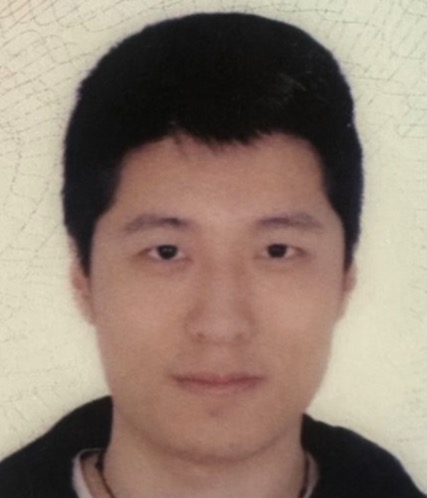 Zi-Wen Liu (刘子文)合作论文数Yau Mathematical Sciences Center, Tsinghua University4
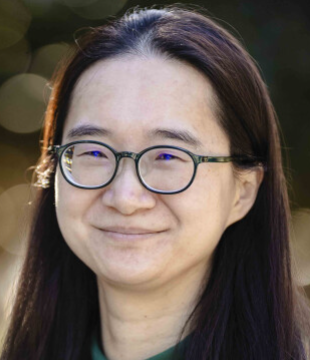 Bei Zeng合作论文数School of Natural Sciences and Mathematics, The University of Texas at Dallas4
 Tal Mor合作论文数Computer Science Department, Technion4Daniel Whalen合作论文数4
 Russell Schwartz合作论文数Department of Biological Sciences, Carnegie Mellon University;Computational Biology Department, Carnegie Mellon University;Ray and Stephanie Lane Computational Biology Department, School of Computer Science, Carnegie Mellon University4Andrew S. Fletcher合作论文数4
 William K. Wootters合作论文数Department of Physics, Williams College4
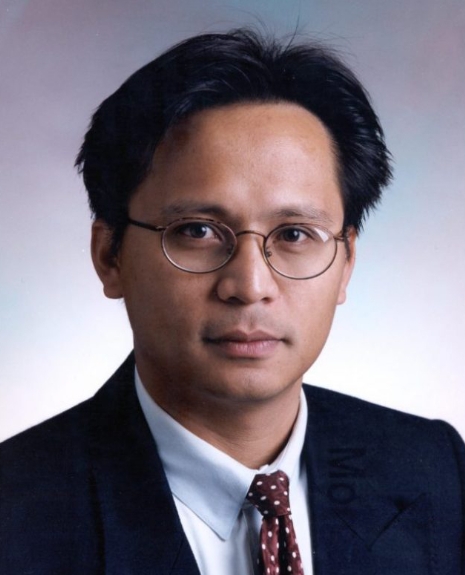 Moe Win合作论文数Wireless Information and Network Sciences Laboratory, Massachusetts Institute of Technology;Institute for Data, Systems, and Society, Schwarzman College of Computing, Massachusetts Institute of Technology4
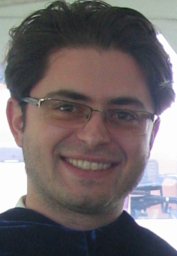 Ramis Movassagh合作论文数ETH and Collegium Helveticum4
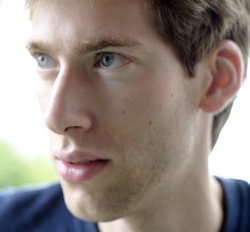 Aram Harrow合作论文数Center for Theoretical Physics, Massachusetts Institute of Technology4
 Neil J. A. Sloane合作论文数The OEIS Foundation Inc.4Andrey Boris Khesin合作论文数3Jonathan Z. Lu合作论文数3Rr Weber合作论文数3oles shtanko合作论文数MIT, Dept Phys, Cambridge, MA 02139 USA3
 Elton Yechao Zhu合作论文数MIT, Dept Phys, Cambridge, MA 02139 USA3
 Yihui Quek合作论文数Stanford Univ, Informat Syst Lab, Stanford, CA 94305 USA3
 Iman Marvian合作论文数Physics Department, Trinity College of Arts & Sciences, Duke University3
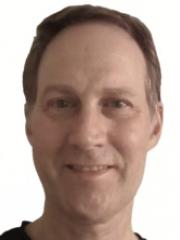 Graeme Smith合作论文数School of Information Technology and Electrical Engineering, Faculty of Engineering, Architecture and Information Technology, The University of Queensland3
 Bill Fefferman合作论文数Department of Computer Science, The University of Chicago3
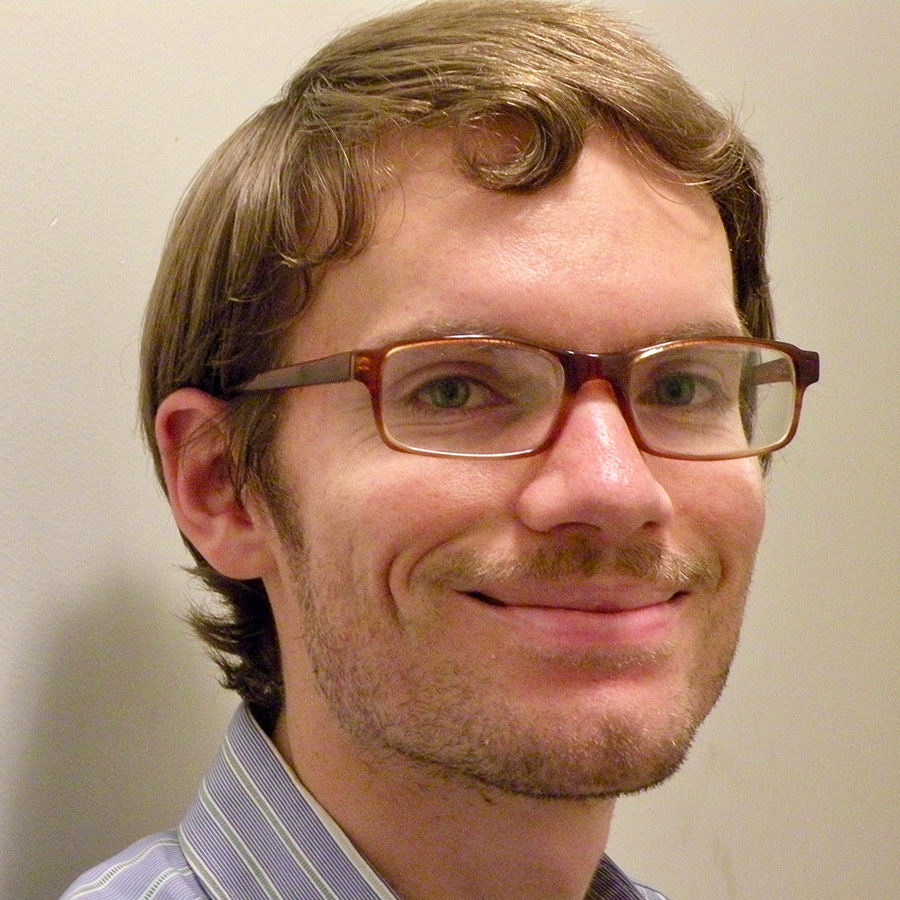 Andrew Drucker合作论文数Department of Computer Science, University of Chicago;School of Informatics, University of Edinburgh3
 Patrick Hayden合作论文数Department of Physics, Stanford University;Perimeter Institute for Theoretical Physics3
 Carsten Lund合作论文数AT&T Inc3
 Markus Grassl合作论文数International Centre for Theory of Quantum Technologies, University of Gdansk3
 Jeffrey C Lagarias合作论文数Department of Mathematics, University of Michigan3
 Artemy Kolchinsky合作论文数Indiana University3
 Richard Weber合作论文数Statistical Laboratory, in the Department of Pure Mathematics and Mathematical Statistics,Centre for Mathematical Sciences in the University of Cambridge3
 Lior Eldar合作论文数School of Computer Science, Tel-Aviv University3