We construct families of graphs from linear groups SL(2, q), GL(2, q) and GU(2, q), where q is an odd prime power, with the property that the continuous-time quantum walks on the associated networks of qubits admit perfect state transfer.
The Smith normal forms of the Hadamard matrices arising from Paley's second construction are computed and found to be of the standard type.
We study perfect state transfer and multiple state transfer in oriented normal Cayley graphs. We construct examples in a variety of groups, ranging from abelian to nonsolvable, and establish some general restrictions and nonexistence results.
A family of oriented, normal, nonabelian Cayley graphs is presented, whose continuous-time quantum walks exhibit uniform mixing.
In a continuous-time quantum walk on a network of qubits, pretty good state transfer is the phenomenon of state transfer between two vertices with fidelity arbitrarily close to 1. We construct families of graphs to demonstrate that there is no bound on the size of a set of vertices that admit pretty good state transfer between any two vertices of the set.
Strong cospectrality is an equivalence relation on the set of vertices of a graph that is of importance in the study of quantum state transfer in graphs. We construct families of abelian Cayley graphs in which the number of mutually strongly cospectral vertices can be arbitrarily large.
We study continuous-time quantum walks on normal Cayley graphs of certain nonabelian groups called extraspecial groups. By applying general results for graphs in association schemes we determine the precise conditions for perfect state transfer and fractional revival. Using partial spreads, we construct Cayley graphs on extraspecial 2-groups that admit these phenomena. We also show that there is no normal Cayley graph of an extraspecial group that admits instantaneous uniform mixing.
We prove that every 2-transitive group has a property called the EKR-module property. This property gives a characterization of the maximum intersecting sets of permutations in the group. Specifically, the characteristic vector of any maximum intersecting set in a 2-transitive group is a linear combination of the characteristic vectors of the stabilizers of points and their cosets. We also consider when the derangement graph of a 2-transitive group is connected and when a maximum intersecting set is a subgroup or a coset of a subgroup.
The linear representation of a subset of a finite projective space is an incidence system of affine points and lines determined by the subset. In this paper we use character theory to show that the rank of the incidence matrix has a direct geometric interpretation in terms of certain hyperplanes. We consider the LDPC codes defined by taking the incidence matrix and its transpose as parity-check matrices, and in the former case prove a conjecture of Vandendriessche that the code is generated by words of minimum weight called plane words. In the latter case we compute the minimum weight in several cases and provide explicit constructions of minimum weight codewords.
We compute the elementary divisors of the adjacency and Laplacian matrices of families of polar graphs. These graphs have as vertices the isotropic one-dimensional subspaces of finite vector spaces with respect to non-degenerate forms, with adjacency given by orthogonality.
In this paper we compute the critical group of the Kneser graph KG(n,2). This is equivalent to computing the Smith normal form of a Laplacian matrix of this graph.
We consider the action of the 2-dimensional projective special linear group P S L ( 2 , q ) on the projective line P G ( 1 , q ) over the finite field F q , where q is an odd prime power. A subset S of P S L ( 2 , q ) is said to be an intersecting family if for any g 1 , g 2 ∈ S , there exists an element x ∈ P G ( 1 , q ) such that x g 1 = x g 2 . It is known that the maximum size of an intersecting family in P S L ( 2 , q ) is q ( q − 1 ) / 2 . We prove that all intersecting families of maximum size are cosets of point stabilizers for all odd prime powers q > 3 .
The critical group of a finite graph is an abelian group defined by the Smith normal form of the Laplacian. We determine the the critical groups of the Peisert graphs, a certain family of strongly regular graphs similar to, but different from, the Paley graphs. It is further shown thatthe adjacency matrices of the two graphs defined over a field of order $p^2$ with $p\equiv 3\pmod 4$ are similar over the $\ell$-local integers for every prime $\ell$. Consequently, each such pair of graphs provides an example where all the corresponding generalized adjacency matrices are both cospectral and equivalent in the sense of Smith normal form.
We compute the elementary divisors of the adjacency and Laplacian matrices of the Grassmann graph on $2$-dimensional subspaces in a finite vector space. We also compute the corresponding invariants of the complementary graphs.
Two results are obtained that give upper bounds on partial spreads and partial ovoids respectively.The first result is that the size of a partial spread of the Hermitian polar space H(3, q(2)) is at most ((2p(3) + p)/3)(t) + 1, where q = p(t), p is a prime. For fixed p this bound is in o(q(3)), which is asymptotically better than the previous best known bound of (q(3)+q+ 2)/2. Similar bounds for partial spreads of H(2d-1, q(2)), d even, are given.The second result is that the size of a partial ovoid of the Ree Tits octagon O(2(t)) is at most 26(t) + 1. This bound, in particular, shows that the Ree Tits octagon 0(2(t)) does not have an ovoid. (C) 2017 Elsevier Inc. All rights reserved.
The n-cube graph is the graph on the vertex set of n-tuples of 0s and 1s, with two vertices joined by an edge if and only if the n-tuples differ in exactly one component. We compute the Smith group of this graph, or, equivalently, the elementary divisors of an adjacency matrix of the graph.
We study sharp permutation groups of type {0, k} and observe that, once the isomorphism type of a point stabilizer is fixed, there are only finitely many possibilities for such a permutation group. We then show that a sharp permutation group of type {0, k} in which a point stabilizer is isomorphic to the alternating group on 5 letters must be a geometric group. There is, up to permutation isomorphism, one such permutation group.
There is a Paley graph for each prime power $q$ such that $q\equiv 1\pmod 4$. The vertex set is the field $\mathbb Fq$ and two vertices $x$ and $y$ are joined by an edge if and only if $x-y$ is a nonzero square of $\mathbb Fq$. We compute the Smith normal forms of the adjacency matrix and Laplacian matrix of a Paley graph.
We answer a question raised in a recent paper by I. Cardinali and A. Pasini.Over an algebraically closed field of characteristic 2, we show that a certain projection of P 9 to P 8 induces an isomorphism of algebraic varieties from the quadratic Veronese embedding of P 3 to the standard embedding of the orthogonal Grassmanian of lines of a quadric in P 4 .
Let \(G\) be a simple algebraic group of type \(E_6\) over an algebraically closed field of characteristic \(p>0\). We determine the submodule structure of the Weyl modules with highest weight \(r\omega _1\) for \(0\le r\le p-1\), where \(\omega _1\) is the fundamental weight of the standard \(27\)-dimensional module. In the process, the structures of other Weyl modules with highest weights linked to \(r\omega _1\) are also found.
 Qing Xiang (向青)合作论文数Department of Mathematics, College of Science, Southern University of Science and Technology5
 David B. Chandler合作论文数5Venkata Raghu Tej Pantangi合作论文数3Joshua E. Ducey合作论文数3
 Matthew Bardoe合作论文数3
 Narasimha N.S. Sastry合作论文数3Julien Sorci合作论文数2Ada Chan合作论文数Department of Mathematics and Statistics;York University2
 Pham Huu Tiep合作论文数Department of Mathematics, University of Florida2
 Wolfgang Willems合作论文数Institut fur Algebra und Geometrie2
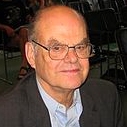 John G. Thompson合作论文数University of Florida;University of Cambridge2Ogul Arslan合作论文数2Rafael Plaza合作论文数1Michael F. Dowd合作论文数1Ling Long合作论文数Louisiana State University1Junhua Wu合作论文数1Geoffrey R. Robinson合作论文数1Douglas P. Brozovic合作论文数1
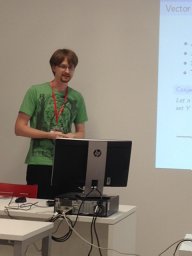 Ferdinand Ihringer合作论文数1J Lataille合作论文数1
 Janice E. Carrillo合作论文数University of Florida USA1Karen Meagher合作论文数Department of Combinatorics and Optimization;University of Waterloo;Department of Combinatorics and Optimization, University of Waterloo1Andries Brouwer合作论文数Dept. of Math.
Techn. Univ. Eindhoven1Asoo J. Vakharia合作论文数Warrington College of Business Administration, University of Florida1
Janice E. Carrillo合作论文数University of Florida USA1Karen Meagher合作论文数Department of Combinatorics and Optimization;University of Waterloo;Department of Combinatorics and Optimization, University of Waterloo1Andries Brouwer合作论文数Dept. of Math.
Techn. Univ. Eindhoven1Asoo J. Vakharia合作论文数Warrington College of Business Administration, University of Florida1




