We describe a novel way to implement subword language models in speech recognition systems based on weighted finite state transducers, hidden Markov models, and deep neural networks. The acoustic models are built on graphemes in a way that no pronunciation dictionaries are needed, and they can be used together with any type of subword language model, including character models. The advantages of short subword units are good lexical coverage, reduced data sparsity, and avoiding vocabulary mismatches in adaptation. Moreover, constructing neural network language models (NNLMs) is more practical, because the input and output layers are small. We also propose methods for combining the benefits of different types of language model units by reconstructing and combining the recognition lattices. We present an extensive evaluation of various subword units on speech datasets of four languages: Finnish, Swedish, Arabic, and English. The results show that the benefits of short subwords are even more consistent with NNLMs than with traditional n-gram language models. Combination across different acoustic models and language models with various units improve the results further. For all the four datasets we obtain the best results published so far. Our approach performs well even for English, where the phoneme-based acoustic models and word-based language models typically dominate: The phoneme-based baseline performance can be reached and improved by 4% using graphemes only when several grapheme-based models are combined. Furthermore, combining both grapheme and phoneme models yields the state-of-the-art error rate of 15.9% for the MGB 2018 dev17b test. For all four languages we also show that the language models perform reasonably well when only limited training data is available. (C) 2020 The Authors. Published by Elsevier Ltd.
Character-based Neural Network Language Models (NNLM) have the advantage of smaller vocabulary and thus faster training times in comparison to NNLMs based on multi-character units. However, in low-resource scenarios, both the character and multi-character NNLMs suffer from data sparsity. In such scenarios, cross-lingual transfer has improved multi-character NNLM performance by allowing information transfer from a source to the target language. In the same vein, we propose to use cross-lingual transfer for character NNLMs applied to low-resource Automatic Speech Recognition (ASR). However, applying cross-lingual transfer to character NNLMs is not as straightforward. We observe that relatedness of the source language plays an important role in cross-lingual pretraining of character NNLMs. We evaluate this aspect on ASR tasks for two target languages: Finnish (with English and Estonian as source) and Swedish (with Danish, Norwegian, and English as source). Prior work has observed no difference between using the related or unrelated language for multi-character NNLMs. We, however, show that for character-based NNLMs, only pretraining with a related language improves the ASR performance, and using an unrelated language may deteriorate it. We also observe that the benefits are larger when there is much lesser target data than source data.
In spoken Keyword Search, the query may contain out-of-vocabulary (OOV) words not observed when training the speech recognition system. Using subword language models (LMs) in the first-pass recognition makes it possible to recognize the OOV words, but even the subword n-gram LMs suffer from data sparsity. Recurrent Neural Network (RNN) LMs alleviate the sparsity problems but are not suitable for first-pass recognition as such. One way to solve this is to approximate the RNNLMs by back-off n-gram models. In this paper, we propose to interpolate the conventional n-gram models and the RNNLM approximation for better OOV recognition. Furthermore, we develop a new RNNLM approximation method suitable for subword units: It produces variable-order n-grams to include long-span approximations and considers also n-grams that were not originally observed in the training corpus. To evaluate these models on OOVs, we setup Arabic and Finnish Keyword Search tasks concentrating only on OOV words. On these tasks, interpolating the baseline RNNLM approximation and a conventional LM outperforms the conventional LM in terms of the Maximum Term Weighted Value for single-character subwords. Moreover, replacing the baseline approximation with the proposed method achieves the best performance on both multi- and single-character subwords.
We demonstrate Captaina, computer assisted pronunciation training portal. It is aimed at university students, who read passages aloud and receive automatic feedback based on speech recognition and phoneme classification. Later their teacher can provide more accurate feedback and comments through the portal. The system enables better independent practice. It also acts as a data collection method. We aim to gather both good quality second language speech data with segmentations, and the teacher given evaluations of pronunciation.
Automatic speech recognition has gone throughmany changes in recent years. Advances both in computer hardware andmachine learning havemade it possible to develop systems far more capable and complex than the previous state-of-theart. However, almost all of these improvements have been tested in major wellresourced languages. In this paper, we show that these techniques are capable of yielding improvements even in a small data scenario. We experiment with different deep neural network architectures for acoustic modeling for Northern Sámi and report up to 50% relative error rate reductions. We also run experiments to compare the performance of subwords as language modeling units in Northern Sámi.
In this paper, we presented a neural network system for DCASE 2018 task 2, general purpose audio tagging. We fine-tuned the Google AudioSet feature generation model with different settings for the given 41 classes on top of a fully connected layer with 100 units. Then we used the fine-tuned models to generate 128 dimensional features for each 0.960s audio. We tried different neural network structures including LSTM and multi-level attention models. In our experiments, the multi-level attention model has shown its superiority over others. Truncating the silence parts, repeating and splitting the audio into the fixed length, pitch shifting augmentation, and mixup techniques are all used in our experiments. The proposed system achieved a result with MAP@3 score at 0.936, which out-performs the baseline result of 0.704 and achieves top 8% in the public leaderboard.
Speech technology applications for major languages are becoming widely available, but for many other languages there is no commercial interest in developing speech technology. As the lack of technology and applications will threaten the existence of these languages, it is important to study how to create speech recognizers with minimal effort and low resources. As a test case, we have developed a Large Vocabulary Continuous Speech Recognizer for Northern Sámi, an Finno-Ugric language that has little resources for speech technology available. Using only limited audio data, 2.5 hours, and the Northern Sámi Wikipedia for the language model we achieved 7.6% Letter Error Rate (LER). With a language model based on a higher quality language corpus we achieved 4.2% LER. To put this in perspective we also trained systems in other, better-resourced, Finno-Ugric languages (Finnish and Estonian) with the same amount of data and compared those to state-of-the-art systems in those languages.
Because in agglutinative languages the number of observed word forms is very high, subword units are often utilized in speech recognition. However, the proper use of subword units requires careful consideration of details such as silence modeling, position-dependent phones, and combination of the units. In this paper, we implement subword modeling in the Kaldi toolkit by creating modified lexicon by finite-state transducers to represent the subword units correctly. We experiment with multiple types of word boundary markers and achieve the best results by adding a marker to the left or right side of a subword unit whenever it is not preceded or followed by a word boundary, respectively. We also compare three different toolkits that provide data-driven subword segmentations. In our experiments on a variety of Finnish and Estonian datasets, the best subword models do outperform word-based models and naive subword implementations. The largest relative reduction in WER is a 23% over word-based models for a Finnish read speech dataset. The results are also better than any previously published ones for the same datasets, and the improvement on all datasets is more than 5%.
We study character-based language models in the state-of-the-art speech recognition framework. This approach has advantages over both word-based systems and so-called end-to-end ASR systems that do not have separate acoustic and language models. We describe the necessary modifications needed to build an effective character-based ASR system using the Kaldi toolkit and evaluate the models based on words, statistical morphs, and characters for both Finnish and Arabic. The morph-based models yield the best recognition results for both well-resourced and lower-resourced tasks, but the character-based models are close to their performance in the lower-resource tasks, outperforming the word-based models. Character-based models are especially good at predicting novel word forms that were not seen in the training data. Using character-based neural network language models is both computationally efficient and provides a larger gain compared to the morph and word-based systems.
We describe the speech recognition systems we have created for MGB-3, the 3rd Multi Genre Broadcast challenge, which this year consisted of a task of building a system for transcribing Egyptian Dialect Arabic speech, using a big audio corpus of primarily Modern Standard Arabic speech and only a small amount (5 hours) of Egyptian adaptation data. Our system, which was a combination of different acoustic models, language models and lexical units, achieved a Multi-Reference Word Error Rate of 29.25%, which was the lowest in the competition. Also on the old MGB-2 task, which was run again to indicate progress, we achieved the lowest error rate: 13.2%. The result is a combination of the application of state-of-the-art speech recognition methods such as simple dialect adaptation for a Time-Delay Neural Network (TDNN) acoustic model (−27% errors compared to the baseline), Recurrent Neural Network Language Model (RNNLM) rescoring (an additional −5%), and system combination with Minimum Bayes Risk (MBR) decoding (yet another −10%). We also explored the use of morph and character language models, which was particularly beneficial in providing a rich pool of systems for the MBR decoding.
Automatic speech recognition (ASR) systems require large amounts of transcribed speech data, for training state-of-the-art deep neural network (DNN) acoustic models. Transcribed speech is a scarce and expensive resource, and ASR systems are prone to underperform in domains where there is not a lot of training data available. In this work, we open up a vast and previously unused resource of transcribed speech for Finnish, by retrieving and aligning all the recordings and meeting transcripts from the web portal of the Parliament of Finland. Short speech-text segment pairs are retrieved from the audio and text material, by using the Levenshtein algorithm to align the first-pass ASR hypotheses with the corresponding meeting transcripts. DNN acoustic models are trained on the automatically constructed corpus, and performance is compared to other models trained on a commercially available speech corpus. Model performance is evaluated on Finnish parliament speech. by dividing the testing set into seen and unseen speakers. Performance is also evaluated on broadcast speech to test the general applicability of the parliament speech corpus. We also study the use of meeting transcripts in language model adaptation, to achieve additional gains in speech recognition accuracy of Finnish parliament speech.
We describe a recognition, validation and segmentation system as an intelligent preprocessor for automatic pronunciation evaluation. The system is developed for large-scale high stake foreign language tests, where it is necessary to reduce human workload and ensure fair evaluation.
Today, the vocabulary size for language models in large vocabulary speech recognition is typically several hundreds of thousands ofwords. While this is already sufficient in some applications, the out-of-vocabulary words are still limiting the usability in others. In agglutinative languages the vocabulary for conversational speech should include millions of word forms to cover the spelling variations due to colloquial pronunciations, in addition to the word compounding and inflections. Very large vocabularies are also needed, for example, when the recognition of rare proper names is important. Previously, very large vocabularies have been efficiently modeled in conventional n-gram language models either by splitting words into subword units or by clustering words into classes. While vocabulary size is not as critical anymore in modern speech recognition systems, training time and memory consumption become an issue when state-of-the-art neural network language models are used. In this paper, we investigate techniques that address the vocabulary size issue by reducing the effective vocabulary size and by processing large vocabulariesmore efficiently. The experimental results in conversational Finnish and Estonian speech recognition indicate that properly defined word classes improve recognition accuracy. Subword n-gram models are not better on evaluation data than word n-gram models constructed from a vocabulary that includes all the words in the training corpus. However, when recurrent neural network (RNN) language models are used, their ability to utilize long contexts gives a larger gain to subword-basedmodeling. Our best results are fromRNN language models that are based on statistical morphs. We show that the suitable size for a subword vocabulary depends on the language. Using time delay neural network acoustic models, we were able to achieve new state of the art in Finnish and Estonian conversational speech recognition, 27.1% word error rate in the Finnish task and 21.9% in the Estonian task.
Many Uralic languages have a rich morphological structure, but lack morphological analysis tools needed for efficient language processing. While creating a high-quality morphological analyzer requires a significant amount of expert labor, data-driven approaches may provide sufficient quality for many applications. We study how to create a statistical model for morphological segmentation with a large unannotated corpus and a small amount of annotated word forms selected using an active learning approach. We apply the procedure to two Finno-Ugric languages: Finnish and North Sámi. The semi-supervised Morfessor FlatCat method is used for statistical learning. For Finnish, we set up a simulated scenario to test various active learning query strategies. The best performance is provided by a coverage-based strategy on word initial and final substrings. For North Sámi we collect a set of humanannotated data. With 300 words annotated with our active learning setup, we see a relative improvement in morph boundary F1-score of 19% compared to unsupervised learning and 7.8% compared to random selection.
Speech technology applications for major languages are becoming widely available, but for many other languages there is no commercial interest in developing speech technology. As the lack of technology and applications will threaten the existence of these languages, it is important to study how to create speech recognizers with minimal effort and low resources. As a test case, we have developed a Large Vocabulary Continuous Speech Recognizer for Northern Sámi, an Finno-Ugric language that has little resources for speech technology available. Using only limited audio data, 2.5 hours, and the Northern Sámi Wikipedia for the language model we achieved 7.6% Letter Error Rate (LER). With a language model based on a higher quality language corpus we achieved 4.2% LER. To put this in perspective we also trained systems in other, better-resourced, Finno-Ugric languages (Finnish and Estonian) with the same amount of data and compared those to state-of-the-art systems in those languages.
This paper introduces the first prototype for a computerised examination procedure of spoken foreign languages in Finland, intended for national scale upper secondary school final examinations. Speech technology and profiling of reviewers are used to minimise the otherwise massive reviewing effort.
We describe our work towards developing SamiTalk , a robot application for the North Sami language. With SamiTalk, users will hold spoken dialogues with a humanoid robot that speaks and recognizes North Sami. The robot will access information from the Sami Wikipedia, talk about requested topics using the Wikipedia texts, and make smooth topic shifts to related topics using the Wikipedia links. SamiTalk will be based on the existing WikiTalk system for Wikipedia-based spoken dialogues, with newly developed speech components for North Sami.
Morfessor is a family of probabilistic machine learning methods for finding the morphological segmentation from raw text data.Recent developments include the development of semi-supervised methods for utilizing annotated data.Morfessor 2.0 is a rewrite of the original, widely-used Morfessor 1.0 software, with well documented command-line tools and library interface.It includes new features such as semi-supervised learning, online training, and integrated evaluation code.
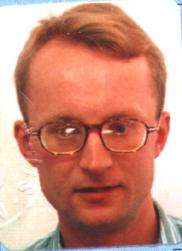 Mikko Kurimo合作论文数Aalto University26
 Sami Virpioja合作论文数Department of Digital Humanities, Faculty of Humanities, University of Helsinki;Utopia Analytics14
 Stig-Arne Gronroos合作论文数6
 Reima Karhila合作论文数Adaptive Informatics Research Centre, Aalto University5
 Juho Leinonen合作论文数University of Helsinki, Helsinki, Finland4
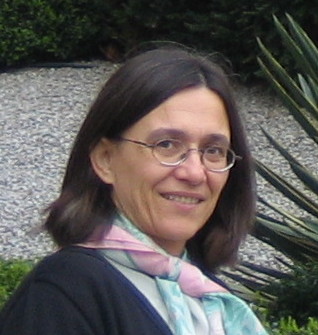 Kristiina Jokinen合作论文数Institute of Behavioural Sciences,University of Helsinki4
 Seppo Enarvi合作论文数Aalto Univ, Dept Signal Proc & Acoust, Espoo, Finland3
 Aku Rouhe合作论文数Aalto University3
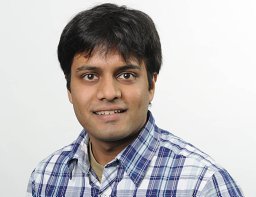 Mittul Singh合作论文数Department of Mathematics, IIT Delhi3
 Siva Reddy Gangireddy合作论文数2
 André Mansikkaniemi合作论文数2Heini Kallio合作论文数1
 Katri Hiovain合作论文数1Ilona Rauhala合作论文数1Aija Elg合作论文数1Niklas Laxström合作论文数Univ Helsinki1
 mayank khandelwal合作论文数Aalto University1
 Anna-Riikka Smolander合作论文数Univ Helsinki, Helsinki, Finland1
 Raili Hilden合作论文数1
 Rama Doddipatla合作论文数Toshiba1
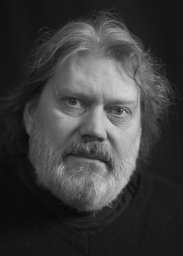 Martti Vainio合作论文数Department of Phonetics1
 Minnaleena Toivola合作论文数1D. Rama Sanand合作论文数1Graham Wilcock合作论文数Lecturer in Language Technology
Docent of Language Technology
Department of General Linguistics
University of Helsinki1
Minnaleena Toivola合作论文数1D. Rama Sanand合作论文数1Graham Wilcock合作论文数Lecturer in Language Technology
Docent of Language Technology
Department of General Linguistics
University of Helsinki1




