Torture - a brief overview, P.Suedfeld psychological consequences of torture - a need to formulate new strategies of research, B.Melamed et al the effects of torture and other captivity maltreatment - implications for psychology, B.E.Enghdal and R.E.Eberly the psychology of torture and torturers, E.Staub psychologists as victims, administrators and designers of torture, P.Suedfeld the Hooded men - victims of psychological research? S.Kennedy treating victims of torture - psychology's challenge, J.Bouhoutsos.
Ideas about positive change following a stressful experience have been of interest to researchers for some time (Antonovsky, 1987; Tedeschi & Calhoun, 1996). A few areas of study have been developed, some with a focus on successful coping such as research on resilience, sense of coherence and hardiness, stress inoculation, posttraumatic growth, and toughening (Tedeschi, Park, and Calhoun, 1998). Suedfeld (2001) has encouraged researchers to focus on the positive effects of work in extreme and unusual environments however, only a few have done so with astronauts, cosmonauts (Ihle et al., 2006: Suedfeld et al., 2012), and high-altitude mountaineers (Smith et al., 2017).To understand the full deployment experience and growth possibilities and to identify the situational impact on the personnel in extreme and unusual environments, a study of stress perception and coping strategies is essential. Work in this domain of stress and coping has been plentiful across many extreme and unusual environments (Leon et al., 2011b; Nicolas et al., 2013; Suedfeld et al., 2009; Suedfeld et al., 2012; Suedfeld, 2015).The current study addresses an additional extreme workplace environment with a combination of stress and outcome variables. Crew members working and living at the Eureka Weather Station (Nunavut, Canada), located on Ellesmere Island at a latitude of 80° North, responded to questionnaires about coping (prior to the mission and postmission), personality (prior to mission), and psychological growth (postmission). Members spent two to four months working in the Canadian High Arctic and faced many environmental and social challenges. Data suggest that the extreme workplace is not as stressful as commonly assumed; further, members use a variety of appropriate coping mechanisms, and postexpedition growth is experienced by all.
This study investigated the dynamics of stress and recovery responses and their relationships with perceived environmental mastery during one-year of polar winter-over expeditioners in distinct environmental conditions of sub-Antarctic and Antarctic polar station. The findings of multilevel analysis suggested that the several stress and recovery responses experienced by the winterers were characterized by diverse dynamics according to the severity of the environment. Furthermore, perceived environmental mastery impacted differently the dynamics of these responses. This multidimensional study highlights the complex evolution of stress and recovery in these extreme situations and the central role of environmental mastery on the temporal patterns of these psychological dimensions with potential salutogenic effects. Practical recommendations for improving environmental mastery at the different stages of the mission including psychoeducation, monitoring and psychological preparation are proposed.
PALINKAS, L.A., and P. SUEDFELD. Psychosocial Issues in Isolated and Confined Extreme Environments. NEUROSCI BIOBEHAV REV (1) XXX-XXX, 2020. Psychosocial elements of behavior and performance will significantly impact the outcomes of long duration missions in space, ranging from individual and team decrements to positive benefits associated with successful adaptation. This paper reviews our current understanding of the individual, interpersonal and organizational issues related to living and working in isolated and confined extreme (ICE) environments. Individual issues include changes in emotions and cognitive performance; seasonal syndromes linked to changes in the physical environment; and positive effects of adapting to ICE environments. Interpersonal issues include processes of crew cohesion, tension and conflict; interpersonal relations and social support; the impact of group diversity and leadership styles on small group dynamics; and crew-mission control interactions. Organizational issues include the influence of organizational culture and mission duration on individual and group performance, crew autonomy, and managerial requirements for long duration missions. Improved screening and selection, leadership, coping and interpersonal skills training, and organizational change are key elements to optimizing adjustment to the environment and preventing decrements during and after long duration missions.
•Antarctic stations have often been studied as psychosocial analogues of space habitats.•Psychosocial effects may not really be equivalent.•Assessment requires same measures used in both environments.•Adequate tests of effects must use the same measures in both environments.
Despite physical and mental stressors in space capsule environments, almost all astronauts cope successfully with the demands of their careers (Suedfeld, Brcic, & Legkaia, 2009; Suedfeld, Brcic, Johnson, & Gushin, 2015). This study assessed astronauts' and cosmonauts' use of humor as a strategy for coping with the stressors encountered in training and in space. The Humor Coping Scale (HCS) was devised to assess five categories of humor: Affiliative (designed to enhance interpersonal cohesiveness and liking), Enhancing (expression of a humorous outlook on life), Aggressive (tendency to express critical or sarcastic humor that may have negative impact on others), Self-defeating (excessive use of self-disparaging humor), and Problem-oriented (humor used to cope with specific stressful events). We used thematic content analysis to identify the above-mentioned five categories of humor in retrospective narratives (memoirs, debriefs, interviews, etc.) of two samples of spacefarers. Sample One consisted of an international group of 46 active astronauts and cosmonauts, while Sample Two consisted of 20 retired long-duration male cosmonauts. Results for Sample One showed that astronauts employed Coping humor more in long-duration flights than short-duration flights. Astronauts who flew as members of the national majority in a crew mentioned Aggressive humor more frequently than did national minority astronauts; cosmonauts mentioned less Affiliative humor than astronauts from NASA or other space agencies. Retired cosmonauts when describing their active space career mentioned Positive and Coping humor more than during other career phases. In addition, the use of Self-defeating humor increased significantly throughout their careers with most mentions occurring after retirement. Additional results, implications, and comparisons of both samples will be further discussed.
Motivational patterns have been shown to be related to outcomes such as occupational success and satisfaction, innovation, aggressiveness, cooperation, and conformity. They are likely to be important in adaptation to the demands of flying in a space crew. Autobiographical interviews with 20 retired long-duration male cosmonauts were scored for references to three core motives: the needs for Achievement, Power, and Affiliation. Overall, the cosmonauts mentioned need for Affiliation most often, followed by need for Achievement, with need for Power the least frequently mentioned. However, need for Power increased between reminiscences of one's pre-flight career to those concerning the in-flight and post-flight periods. Imagery related to both other needs decreased. Cosmonauts who had spent less than a year in space mentioned need for Achievement significantly more frequently than those who had spent more than a year. Other space-experience and demographic variables, and changes across pairs of career phases, were not significant. The high scores for need for Affiliation indicate the importance of selecting compatible teams and fostering friendship and cooperation during training and deployment. A relatively flat hierarchical organization would be harmonious with low Power motivation; but the increase during missions indicates a desire for autonomy. After retirement from spaceflight, former space crews should be afforded opportunities for leadership and decision-making to satisfy continuing need for Power. Comparison is made to the same measures applied to a sample of ISS crewmembers, and to the ISS vs. veteran data for 8 cosmonauts who were included in both sets of data.
The space career requires numerous absences from the cosmonaut's family during training and spaceflight. Such absences mean missing important milestones, events, and celebrations in the lives of their children. This study assesses retired cosmonauts' views of actual and desired involvement with their children during their spaceflight career. The Father Involvement Scale (adapted from Finley & Schwartz, 2004; Hawkins et al., 2002), translated into Russian, was answered by 17 retired cosmonauts. The 20 domains in the scale included 10 Expressive (e.g., intellectual, emotional, social, and spiritual development; sharing activities and interests) and 10 Instrumental (e.g., providing income, being protective, discipline, school/homework, and developing responsibility, independence, and competence). The cosmonauts' ratings of actual involvement with their children's lives was between Sometimes involved and Often involved (M = 3.66, SD = 0.42). None of the cosmonauts indicated Never involved for any of the Expressive domains or for seven of the ten Instrumental domains. Within the Expressive domains, the majority of cosmonauts said they were "often" involved in their child's spiritual development and in sharing activities/interests. Within the Instrumental domains, they were "often" involved in discipline and "always" involved in providing income. The areas in which they wished they had been "much more involved" than they had been were Expressive, rather than Instrumental: intellectual, spiritual, and physical development; sharing activities/interests, and companionship. This is the first study to measure retrospective assessments of father involvement during spaceflight careers. Space agencies should consider how Family Support personnel can enhance the parental involvement of future spacefarers.
Psychology has a long history of basing its research on a restricted sample of human beings (to say nothing of other species); a recent examination of this tendency refers to our database as primarily drawn from people living in WEIRD societies (Western, educated, industrialized, rich, and democratic). In consequence, psychology's position as a universal science is impugned by many critics, jeopardizing its scientific bona fides and costing us the support and respect ascribed to STEM disciplines (Science, Technology, Engineering, and Mathematics). Although with the development of new research methods, it appears that the discipline is gaining some ground toward such recognition, doubts about replicability and the burgeoning of "identity psychologies" supposedly relevant only, or especially, to particular demographic groups, may retard psychology's further progress in that direction.
Political PsychologyVolume 36, Issue 2 p. 263-265 BOOK REVIEW ESSAY The Ambivalent Partisan: How Critical Loyalty Promotes Democracy. By Lavine, Howard G., Johnston, Christopher D., & Steenbergen, Marco R.. Oxford and New York: Oxford University Press, 2012. ISBN 978-0-19-977275-9. Pp. xviii+298. $69.99 Peter Suedfeld, Peter Suedfeld University of British ColumbiaSearch for more papers by this author Peter Suedfeld, Peter Suedfeld University of British ColumbiaSearch for more papers by this author First published: 24 April 2015 https://doi.org/10.1111/pops.12263Read the full textAboutPDF ToolsRequest permissionExport citationAdd to favoritesTrack citation ShareShare Give accessShare full text accessShare full-text accessPlease review our Terms and Conditions of Use and check box below to share full-text version of article.I have read and accept the Wiley Online Library Terms and Conditions of UseShareable LinkUse the link below to share a full-text version of this article with your friends and colleagues. Learn more.Copy URL Share a linkShare onFacebookTwitterLinked InRedditWechat No abstract is available for this article. Volume36, Issue2Special Issue: NARRATIVES OF (IN)SECURITY: NATIONHOOD, CULTURE, RELIGION, AND GENDERApril 2015Pages 263-265 RelatedInformation
Coping is a dynamic physiological and psychological process in response to perceived environmental stress that functions to restore physiological homeostasis and reduce negative affect [1]. Thematic content analysis was employed for references to 13 well-established coping strategies in interviews with 20 retired long-duration male cosmonauts. As in previous research with other space samples [2], [3] the retired cosmonauts mentioned Problem-Oriented strategies more frequently than Emotion-Oriented ones. In the present sample, Seeking Social Support, Planful Problem Solving and Endurance/Obedience/Effort were the top three most mentioned coping strategies. Cosmonauts who had spent more than a year in space, compared to those who had spent less than a year, mentioned using Planful Problem Solving more as they recalled their career and retirement. Examining changes over time, spaceflight had a positive effect on Accepting Responsibility. Endurance/Obedience/Effort steadily decreased over time, while we found an inverted-U pattern for Distancing and Self-Control. Additional results in relation to other astronaut samples and the relationship between coping and post-flight growth are discussed.
Anecdotal evidence and qualitative research attest to the importance of work–family interactions pre-, during and post-missions. This study uses thematic content analysis to quantify characteristics of work–family interactions and how these changed by stage of cosmonauts' career, identifying the effect of space career variables (e.g., time in space and station) on such interactions during and post-career. Using a thematic scoring scheme developed for this study, we coded work–family interactions identified from interviews with 20 retired male cosmonauts. The majority of work–family interactions were ones in which work overlapped into family life and work hindered or interfered with the family situation. The most common resolution was that family adjusted to work, and the mood or tone about this outcome was almost equally divided among negative, positive and neutral. Changes in work–family interactions and their resolution over the cosmonaut's life showed that the significant interactions were most evident during the cosmonaut career. Although the cosmonaut career has high work demands, it did adjust for family when the need arose. The Russian Space Agency (RKS) eased the impact of the periodic absences, especially through regular communication sessions. Positive work–family interactions, i.e., work or family helping the opposite role, were more likely for those who had been on ISS, not Mir, and for those whose last flight was after 2000. Our data reflect retired cosmonauts' recollections of work–family interactions during their career. Examples of work overlapping into family life and work viewed as interfering with family life were possibly more salient or better remembered than work or family helping the other role.
In 1996, 1 gave a CPA presentation in connection with receiving the Donald O. Hebb Award. The paper was entitled Homo Invictus: The Indomitable Species, and the topic was something that relatively few psychologists were studying: human toughness and the ability to benefit from stressful experiences. I used examples from my own research, which for decades has focused on how people react to extreme, unusual, challenging, dangerous, and traumatic environments and experiences. In the current paper, I consider societal and historical developments since 1996, examine data related to a different set of difficult situations, and conclude tentatively that indomitability continues to be a prominent human characteristic. In the past 15 years, psychologists have increasingly recognized this fact but it should be incorporated as a matter of course in studies dealing with stressful experiences if we want to understand the full scope of human reactions.
 Jelena Brcic合作论文数10
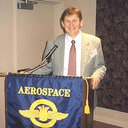 Vadim Gushin合作论文数7
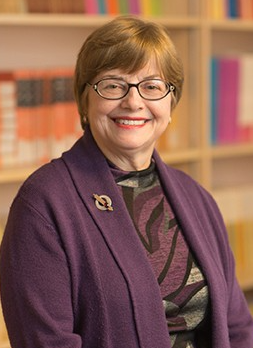 Phyllis J. Johnson合作论文数Department of Sociology, Faculty of Arts, The University of British Columbia7
 Rajiv Jhangiani合作论文数6
 Ryan Wayne Cross合作论文数5
 Michel Nicolas合作论文数Faculty of Sport Sciences in Dijon, Université de Bourgogne3
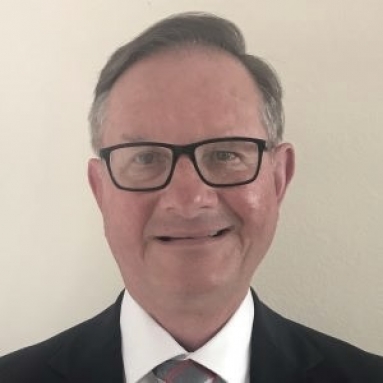 Lawrence A. Palinkas合作论文数Department of Population and Public Health Sciences, Keck School of Medicine, University of Southern California;Suzanne Dworak-Peck School of Social Work, University of Southern California3
 Katya Legkaia合作论文数3elizabeth j ballard合作论文数2Marvin Gaudino合作论文数2Karine Weiss合作论文数2
 Helen Paterson合作论文数School of Psychology, Faculty of Science, The University of Sydney2
 Philip Tetlock合作论文数Department of Management, The Wharton School, University of Pennsylvania2Robert Krell合作论文数2G Daniel Steel合作论文数2
 Guillaume Martinent合作论文数2Erin Soriano合作论文数2YM EPSTEIN合作论文数1Jon Rask合作论文数1drew e collier合作论文数1Paul R. Herink合作论文数1
 Janet E. Halliwell合作论文数J.E. Halliwell Associates, Inc.1
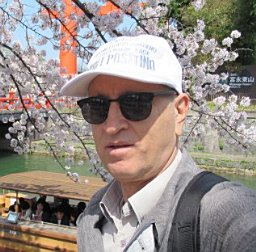 Ofer Feldman合作论文数Fac Policy Studies, Doshisha Univ1Callaway M合作论文数1
 Lawrence Ward合作论文数Department of Psychology, The University of British Columbia1
 Liht Jose合作论文数1Asmaro Deyar合作论文数1Jorge P. Bernadelz合作论文数1Stephen Bochner合作论文数1Michael D. Wallace合作论文数1P. Bruce Landon合作论文数1
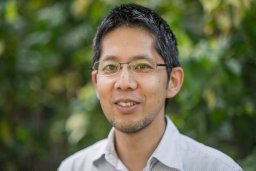 Takeshi Hamamura合作论文数Department of Psychology, University of British Columbia1Matthew Allner合作论文数1
 Nicole Buckley合作论文数1
 A.D. Rank合作论文数1Samantha M. Zuvic合作论文数1
 Vadim Rygalov合作论文数1Lindi Cassel合作论文数1




