Dielectric loss arising from two-level systems (TLS) at surfaces and interfaces remains a primary limitation to coherence in superconducting transmon qubits. Niobium (Nb), a widely used material in superconducting quantum circuits, readily forms native oxides under ambient conditions, leading to lossy dielectric interfaces that degrade device performance. Here, a robust and scalable fabrication strategy is demonstrated for chemically stabilizing Nb surfaces and mitigating further oxidation, including protection of both surface and sidewall regions. High-purity Nb films were fabricated with bulk-like superconducting transition temperatures (T_c = 9.30±0.10) K. We demonstrate that a thin Pt encapsulation layer, deposited after native oxide formation, can be transformed via thermal annealing into a Nb-Pt alloy at the surface. Spectroscopic and microscopic analyses confirm the formation of a chemically stable metallic alloy layer and its ability to suppress further oxide growth. Ab initio simulations elucidate the atomic-scale rearrangement and electronic structure evolution associated with Pt incorporation on native niobium oxide, providing insight into the stabilization mechanism of the alloyed surface. This approach offers a materials pathway for engineering chemically robust Nb interfaces, including sidewalls, toward higher-coherence superconducting qubit architectures."
Surface oxides contribute to losses in superconducting transmon devices resulting in degraded performance. We explore the use of the damascene process to replace the sidewall native oxide of a device with a metal/substrate interface. We simulate sidewall oxidation by burying an oxide layer during fabrication. We observe a modest improvement between the two types of devices, which is suggestive of a reduction in the surface participation ratio.
The predictive design of novel Pd-based nanoscale materials for hydrogen sensing, storage, and purification necessitates a better understanding of the interplay between the adsorption of H and the evolution of the local structural environment on the atomic scale, as well as the ability to characterize this interplay under reaction conditions. We present a theoretical analysis of the interaction of H with atomistic nanostructured Pd models, quantifying the energetics of H-Pd interactions and predicting infrared (IR) absorption lines for such systems. The effects of local atomic structure, charge density distribution, and the presence of coadsorbed H and H2O on the IR properties are also considered. We show that the IR absorption frequency and intensity reflect the local environment of the adsorbed H, with the number of neighboring Pd atoms being the most consequential factor in determining the vibrational characteristics and electronic structure changes induced by the adsorbed H. These correlations facilitate the interpretation of the experimentally observed IR spectra by providing a basis for the spectral decomposition into contributions associated with undercoordinated surface sites, ultimately allowing for the identification of the most likely H adsorption sites through nondestructive approaches to probing the bonding environment of H, such as in situ IR spectral monitoring.
We demonstrate that assigning formal charges to transition metal (TM) cations based on core-level (CL) x-ray photoemission binding energies in oxides leads to physically inconsistent pictures of electronic structure. O 2p–TM 3d hybridization is well known to result in significant covalency in TM–O bonds, thereby reducing TM cation charges from their fully ionic values. However, the ionic bonding model remains the working paradigm for assigning TM CL features, and the resulting cation charges are often taken to be representative of the material under study. Here, we show that a more physically meaningful way to assign charges is to extract information about charge distributions utilizing Dirac–Hartree–Fock theory to calculate CL spectra from first principles and then use the resulting wave functions to determine charges based on orbital occupancies. TM cation charges can also be determined using density functional theory and Bader population analysis. We illustrate these two methods using the Ti 2p spectrum for SrTiO3(001) and show that the agreement between them is excellent. Significantly, the resulting Ti charge is considerably lower than the formal charge. The high degree of similarity between the Ti 2p spectrum for SrTiO3 and those for the rutile and anatase polymorphs of TiO2 suggests that the charge densities surrounding Ti in the latter materials are similar to that in SrTiO3. Taking a broader perspective, oxides containing other first-row transition metals also exhibit covalent character, leading to TM cation charges lower than the analogous fully ionic values in these materials as well.
We have investigated the structural and electronic properties of 3 at. % Yb-doped SrTiO3/Si(001) grown by molecular beam epitaxy. Other rare-earth dopants that result in n-type conductivity typically substitute for Sr at the A sites in the ABO3 perovskite lattice. In contrast, Yb is shown to substitute predominantly for Ti at the perovskite B sites based on data from atomically resolved scanning transmission electron microscopy and energy dispersive spectroscopy, as well as extended x-ray absorption fine structure measurements. An atom beam flux (O) mismatch was present during film growth because it was assumed that Yb would occupy A sites. As a result of this assumption, the fluxes were set such that OYb + OSr = OTi. The formation of YbTi rather than YbSr results in Sr vacancies and extraneous (i.e., nonlattice) Ti atoms in the films. Yb exhibits two distinct charge states as determined by x-ray absorption spectroscopy and associated theoretical modeling, +2.7 and +2.1. These aliovalent dopants are compensated by donor electrons from oxygen vacancies that form during film growth. The defect complexes resulting from the flux mismatch, together with oxygen vacancies, lead to deep-level electron traps that were detected by resonant photoemission and predicted to be stable by ab initio theory, as well as much higher sheet resistance than that associated with, for instance, La-doped SrTiO3 (STO) films. Ab initio calculations show that the preference for B-site occupancy is driven by low oxygen chemical potential at the growth front as required to deposit STO on Si without SiO2 formation.
Understanding how water vapor interacts with transition metal oxides (TMOs) is critical for tailoring material properties to improve performance and enable new technologies. Despite extensive research efforts, atomic-scale mechanisms underpinning dynamic reactions and reaction-induced phase transitions remain elusive. Here, we use in situ environmental transmission electron microscopy to investigate how water vapor oxidizes vacancy-ordered SrCoO2.5 at moderately elevated temperatures, demonstrating that water molecules can initiate oxidation more effectively than oxygen under comparable conditions. We discover a distinct "staging" behavior during the oxidation process: A fully ordered intermediate phase, SrCoO2.75, forms before transitioning into a near-perovskite SrCoO3-δ. In addition, antiphase boundaries, originating at step terraces of SrTiO3, alleviate strain by creating reversible nanoscale "gaps" during lattice contraction under oxidation, providing a pathway for preserving structural integrity throughout redox cycling. This work provides atomic-level guidance for engineering TMOs by leveraging water vapor to control their redox behavior and tailor functional properties.
Elucidating the factors limiting quantum coherence in real materials is essential to the development of quantum technologies. Here we report a strategic approach to determine the effect of lattice dynamics on spin coherence lifetimes using oxygen deficient double perovskites as host materials. In addition to obtaining millisecond T_1 spin-lattice lifetimes at T 10 K, measurable quantum superpositions were observed up to room temperature. We determine that T_2 enhancement in Sr_2CaWO_6-δ over previously studied Ba_2CaWO_6-δ is caused by a dynamically-driven increase in effective site symmetry around the dominant paramagnetic site, assigned as W^5+ via electron paramagnetic resonance spectroscopy. Further, a combination of experimental and computational techniques enabled quantification of the relative strength of spin-phonon coupling of each phonon mode. This analysis demonstrates the effect of thermodynamics and site symmetry on the spin lifetimes of W^5+ paramagnetic defects, an important step in the process of reducing decoherence to produce longer-lived qubits.
Rare-earth nickelates, such as LaNiO3 (LNO), exhibit complex electronic properties, with ordered oxygen vacancies (OOV) influencing conductivity and magnetic behavior. We investigate the structural stability of strain-induced OOV phases in LNO thin films grown on SrTiO3 substrates and the impact of Ruddlesden-Popper (RP) faults. Using high-angle annular dark-field scanning transmission electron microscopy (HAADF-STEM) and integrated differential phase contrast (iDPC) STEM imaging, we conducted atomic-scale structural and compositional analyses of OOV. Geometric phase analysis (GPA) was employed to measure the strain in fault-free and RP fault regions, while density functional theory (DFT) calculations explored different OOV arrangements in the LNO phase. Simulated iDPC-STEM imaging of energy-stabilized structures was performed to correlate with experimental results. Our findings reveal superstructure modulation in the chemical composition and atomic-scale lattice structure in LNO, primarily due to the formation of the OOV in Ni-O layers of the LaNiO2.5 phase. The out-of-plane compressive strain of about 2% stabilizes this phase, reducing the strain, diminishing OOV, and transforming them into LNO.
Control of crystal orientations in thin films of functional materials allowsedictive tuning of their strain states, electronic properties, and surface chemical reactivity. Here, conditions for orientation control in epitaxial PdO films are investigated. Due to its tetragonal structure, PdO can form two orientational relationships with the MgO (001). It is shown that, under an oxygen-rich environment provided by oxygen-plasma-assisted molecular beam epitaxy, both (00l)- and (100)-oriented PdO domains form on MgO (001). Subsequent thermal annealing in a vacuum promotes film restructuring to a predominantly (100)-oriented PdO with improved crystallinity. Ab initio calculations reveal that the (001) orientation has lower strain energy but weaker interfacial interactions and serves as an oxygen vacancy sink, whereas the (100) orientation benefits from significantly stronger MgO & horbar;PdO bonding. Consequently (100)-oriented domains become favored under oxygen-poor conditions. A mechanism is proposed whereby vacuum annealing drives orientation transformation by generating oxygen vacancies that destabilize the (001) domains and promote (100) ordering. These findings deepen the understanding of how oxygen content impacts interfacial stability and reorganization, thereby offering a route to tune domain orientations in oxide thin films.
The modification of surface oxide layers formed on niobium (Nb) thin films via chemical mechanical planarization (CMP) and accelerated neutral atom beam (ANAB) processing provides a promising route toward tailoring their emergent properties and performance when used as superconducting qubits. Here we show that CMP- and ANAB-formed Nb oxides are significantly thinner and smoother than the native oxide, as revealed by transmission electron microscopy (TEM) and atomic force microscopy. Scanning TEM and energy-dispersive X-ray spectroscopy along with X-ray photoelectron spectroscopy identified an oxidation gradient within the native and surface-engineered oxides. The topside layer is dominated by Nb5+ (Nb2O5), with various Nb suboxides present closer to the oxide/metal interface. Time-of-flight secondary ion mass spectrometry (ToF-SIMS) depth profiling confirmed the presence of an oxygen content gradient and demonstrated the enhanced resistance of the CMP- and ANAB-formed oxides to oxygen surface exchange and subsequent diffusion via 18O2 isotopic labeling experiments. ToF-SIMS also identified an interfacial layer containing trapped hydrogen (H)-containing species at the Nb oxide/metal interface. In situ ToF-SIMS and TEM revealed migration of the H/OH interfacial layer coinciding with decomposition of the surface oxide. Furthermore, our density functional theory calculations indicated that both H from moisture present in ambient air and bulk H in Nb films tend to segregate at the interface. These findings underscore the importance of understanding surface oxidation mechanisms, hydrogen incorporation, and their impact on the designed functionalities of Nb-based devices.
Grain boundaries (GBs) are frequently implicated as key defect structures facilitating metal hydride formation, yet their specific role remains poorly understood due to their structural complexity. Here, we investigate hydrogen insertion in Pd nanostructures enriched with well-defined Σ3(111) GBs (PdGB) synthesized via electrolysis-driven nanoparticle assembly. In situ synchrotron X-ray diffraction reveals that PdGB exhibits dramatically accelerated hydriding and dehydriding kinetics compared with ligand-free and ligand-capped Pd nanoparticles with similar crystallite sizes. Strain mapping using environmental transmission electron microscopy shows that strain is highly localized at GBs and intensifies upon hydrogen exposure, indicating preferential hydrogen insertion along GB sites. Density functional theory calculations provide mechanistic insight supporting these findings, showing that hydrogen insertion near Σ3(111) GBs is energetically more favorable and that tensile strain lowers insertion barriers. These results provide atomic-level insights into the role of GBs in hydride formation and suggest new design strategies for GB-engineered Pd-based functional materials.
Despite constituting a smaller fraction of the qubit's electromagnetic mode, surfaces and interfaces can exert significant influence as sources of high-loss tangents, which brings forward the need to reveal properties of these extended defects and identify routes to their control. Here, we examine the structure and composition of the metal-substrate interfacial layer that exists in Ta/sapphire-based superconducting films. Synchrotron-based X-ray reflectivity measurements of Ta films, commonly used in these qubits, reveal an unexplored interface layer at the metal-substrate interface. Scanning transmission electron microscopy and core-level electron energy loss spectroscopy identified an intermixing layer (≈0.65 ± 0.05 nm) at the metal-substrate interface containing Al, O, and Ta atoms. Density functional theory modeling reveals that the structure and properties of the Ta/sapphire heterojunctions are determined by the oxygen content on the sapphire surface prior to Ta deposition for two atomic terminations of sapphire. Using a multimodal approach, we gained deeper insights into the interface layer between the metal and substrate, which suggests that the orientation of deposited Ta films depend on the surface termination of sapphire. The observed elemental intermixing at the metal-substrate interface influences the thermodynamic stability and electronic behavior of the film, which may also affect qubit performance.
Here, we report a novel approach to reduce the channel resistance by inducing a phase transition behavior from 2H to 1T in a monolayer MoS2 (1L-MoS2) by a synchrotron X-ray monochromatic beam (mono-beam) radiation. The effects of the biphase structure by the mono-beam on the 1L-MoS2 film were investigated using Raman spectra, photoluminescence (PL) spectra, scanning tunneling microscopy, and scanning tunneling spectroscopy, respectively. Through material characterization, we identified that the lateral sliding of S-vacancies along the S-plane in the 1L-MoS2 is the key reason for the origin of unidirectional phase transition. The precise phase engineering triggered by the mono- beam radiation process allows the realization of field-effect transistors (FET) with 2X improvement in mobility toward a high on/off ratio ( similar to 108 ) and a near-ideal subthreshold swing of similar to 88 mV per decade. The validity of the phase engineering could be further extended for its application as a memory device, exhibiting a gate tunable conduction modulation behavior and a high resistance ratio of similar to 102 at a gate bias of 5 V with endurance of similar to 100 cycles. Furthermore, an artificial neural network using the synaptic weight update with accuracy of similar to 93 % was achieved.
Tantalum (Ta) has emerged as a promising low-loss material, enabling record coherence times in superconducting qubits. This enhanced performance is largely attributed to its stable native oxide, which may host fewer two-level system (TLS) defects, which are the key contributors to decoherence in superconducting circuits. Nevertheless, aluminum oxide remains the predominant choice for Josephson junction (JJ) barriers in most qubit architectures. Here, we investigate techniques for forming high-quality oxide layers on α-phase tantalum films to develop tantalum-oxide JJ barriers. We explore thermal oxidation in a tube furnace, rapid thermal annealing, and plasma oxidation of both room-temperature and heated Ta films, characterize the resulting structures using X-ray techniques and electron microscopy, and propose a mechanistic picture of the oxidation pathways. We find that plasma oxidation provides the smoothest Ta_2O_5 layers, is compatible with in situ Ta deposition, and offers thickness control through the annealing temperature, advantageous for JJ fabrication. Lastly, we evaluate methods for growing Ta/TaO_x/Ta trilayers. All trilayers showed c-axis-oriented columnar growth of the bottom Ta layer, with sapphire substrates producing larger, better-aligned grains yet higher dislocation densities than silicon. Nucleation of c-axis-oriented α-Ta on tantalum-oxide required an Nb seed layer, as direct Ta deposition yielded amorphous Ta. These results demonstrate the feasibility of α-Ta/Nb/TaO_x/α-Ta stacks for JJs with clean interfaces.
Metastable states, in which the coupling between long-range lattice deformations and electronic properties can be controlled, provide a pathway to tailoring the behavior of photocatalytic materials by directing the flow of photoinduced charge carriers. Brookite is a metastable polymorph of earth-abundant TiO2 that exhibits photocatalytic function and, due to its high energy relative to the anatase and rutile polymorphs, may serve as a precursor for the formation of transitional metastable structures. In this work, facile thermal annealing is employed to promote the formation of predominantly brookite-phase films, regulate the brookite lattice distortions, and determine the effect of these distortions on charge separation, ultimately directed at enhancing photocatalytic activity. Profile fitting of X-ray diffraction patterns and peak shifts in Raman spectra revealed structural distortions of the brookite lattice. Structural defects, including lattice gliding, dislocations, stacking faults, and twin boundaries, were observed using scanning transmission electron microscopy. First-principles simulations reveal how the lattice distortions associated with stacking faults induce band bending, thus increasing the photocatalytic activity of brookite. This study provides insight into the microstructural tuning of metastable phases to enhance their unique functionalities.
Oxygen vacancies (VO), even in the dilute regime, can significantly impact the physical and chemical properties of complex oxides. It is however challenging to reliably detect and adequately quantify such defects in thin film samples where the VO concentration and distribution may further vary in response to interfacial strain. Here, we present a method to quantify VO concentrations in SrFe0.5Cr0.5O3-delta (SFCO) epitaxial thin films. Through coherent Bragg rod analysis, X-ray absorption spectroscopy, and theoretical modeling, we systematically correlate the c-axis lattice expansion detected in SFCO films with a VO concentration gradient. Our results reveal a nearly linear relationship between oxygen off-stoichiometry and out-of-plane lattice expansion in coherently strained SFCO films, with delta increasing from 0.32 to 0.52 and the lattice expanding by similar to 1.0%. Moreover, a significant decrease in Cr oxidation state (from Cr5+ to Cr3+) is observed as the VO concentration increases, while the Fe oxidation state remains fixed at Fe3+. Our findings provide a reliable way to quantify oxygen stoichiometry in complex oxides, offering a pathway to design materials with precisely tailored structure-property relationships.
The unique ability of palladium (Pd) to absorb hydrogen and form a bulk hydride is vital for chemical transformations that involve hydrogenation reactions. Nano-structured Pd catalysts offer a promise of tuning these reaction rates by exploiting variations of reactant binding energies depending on the surface structure and morphological constraints that result in inhomogeneous strain. However, the interplay between the nano-structure of Pd and the ability of Pd to adsorb (and absorb) hydrogen as well as other reactive species needs to be better understood for a rational understanding of competitive chemical transformations at Pd surfaces. We consider the effects of the surface corrugation, strain, and subsurface Pd hydride on the reduction of benzaldehyde to benzyl alcohol in two qualitatively different samples - Pd nanoparticles and Pd gels formed by quasi-one-dimensional chains of these nanoparticles. Our electrochemical measurements and computational modelling suggest that surface concave sites, inherent to Pd gels, facilitate hydrogen transfer to the Pd subsurface region, thus weakening benzaldehyde binding to the surface. This effect is further modulated by the strain, depending on the local coordination environment on the corrugated surface. These findings demonstrate how structurally complex samples in the form of gels provide degrees of freedom for controlling the behavior of metal catalysts that are not available in isolated nanoparticles, which paves the way for new approaches in the design of catalytic materials and synthesis of metal hydrides.
Charge transfer or redistribution at oxide heterointerfaces is a critical phenomenon, often leading to remarkable properties such as two-dimensional electron gas and interfacial ferromagnetism. Despite studies on LaNiO 3 /LaFeO 3 superlattices and heterostructures, the direction and magnitude of the charge transfer remain debated, with some suggesting no charge transfer due to the high stability of Fe 3+ (3d 5 ). Here, we synthesized a series of epitaxial LaNiO 3 /LaFeO 3 superlattices and demonstrated partial (up to ~0.5 e − /interface unit cell) charge transfer from Fe to Ni near the interface, supported by density functional theory simulations and spectroscopic evidence of changes in Ni and Fe oxidation states. The electron transfer from LaFeO 3 to LaNiO 3 and the subsequent rearrangement of the Fe 3d band create an unexpected metallic ground state within the LaFeO 3 layer, strongly influencing the in-plane transport properties across the superlattice. Moreover, we establish a direct correlation between interfacial charge transfer and in-plane electrical transport properties, providing insights for designing functional oxide heterostructures with emerging properties.
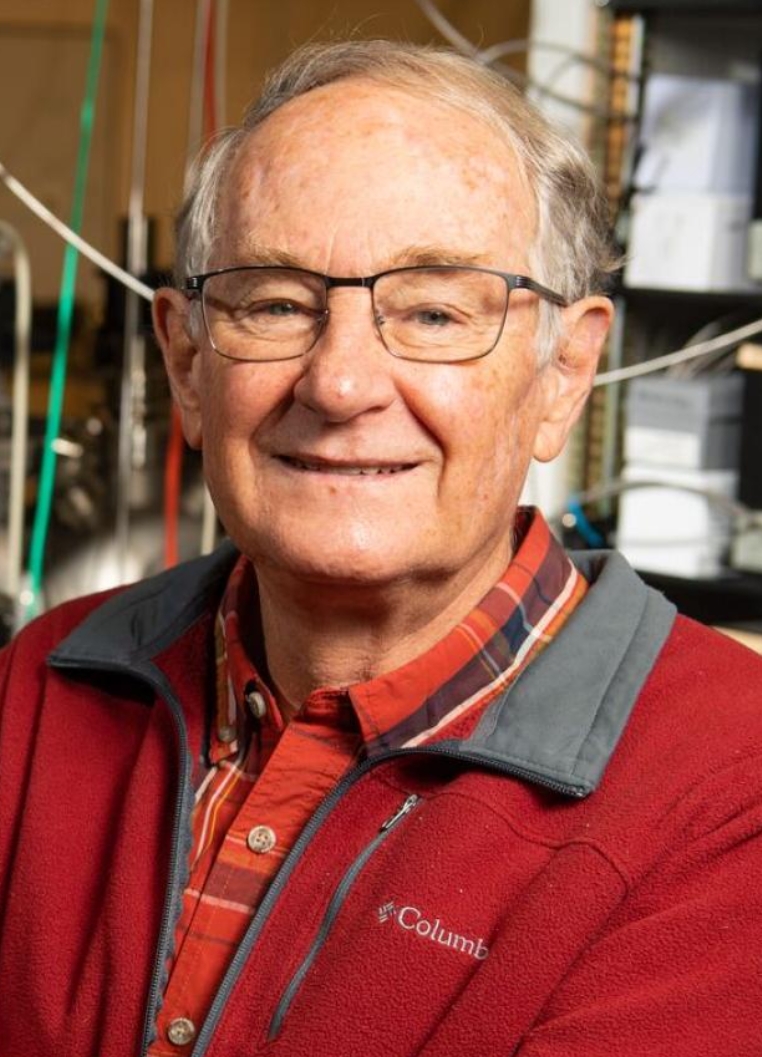 Scott Chambers合作论文数Pacific Northwest National Laboratory81
 Alexander Shluger合作论文数London Centre for Nanotechnology;Dept of Physics & Astronomy, Faculty of Maths & Physical Sciences, University College London70
 Mark E. Bowden合作论文数Environmental Molecular Sciences Division, Pacific Northwest National Laboratory49
 Yingge Du合作论文数40
 Steven Richard Spurgeon合作论文数Department of Materials Science and Engineering, Drexel University33
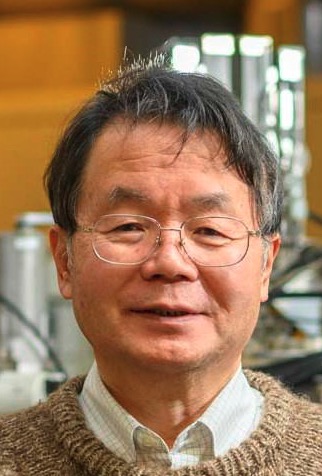 Hideo Hosono (細野秀雄)合作论文数Materials Research Center for Element Strategy, Tokyo Institute of Technology;National Institute for Materials Science;Interdisciplinary Graduate School of Science and Engineering, Tokyo Institute of Technology29
 Tiffany Kaspar合作论文数Physical Metallurgy Materials Group, Pacific Northwest National Laboratory27
 Timothy Droubay合作论文数20
 Wayne P. Hess合作论文数Physical Sciences Divison, Pacific Northwest National Laboratory20
 P. V. Ong合作论文数Dept Phys & Astron, Calif State Univ Northridge19Alan G. Joly合作论文数19
 Arun Devaraj合作论文数Phys & Computat Sci Directorate, Pacific Northwest Natl Lab18
 Chongmin Wang (王崇民)合作论文数Environmental Molecular Sciences Division, Pacific Northwest National Laboratory;Environmental Molecular Sciences Laboratory, Pacific Northwest National Laboratory17
 Le Wang (王乐)合作论文数School of Physics, Renmin University of China15
 Kenneth M. Beck合作论文数Pacific Northwest National Laboratory15
 Ryan Comes合作论文数Films, Interfaces, and Nanostructures of Oxides and Chalcogenides Lab, Department of Materials Science and Engineering, College of Engineering, University of Delaware15Alexander L. Shluger合作论文数14Masahiro Hirano合作论文数Tokyo Institute of Technology Interdisciplinary Graduate School of Science and Engineering13
 Steve M. Heald合作论文数Argonne National Laboratory12
 Niri Govind合作论文数Pacific Northwest National Laboratory12
 Joseph H Ngai合作论文数Department of Physics, The University of Texas at Arlington11
 Zihua Zhu (朱子华)合作论文数Environmental Molecular Sciences Laboratory, Pacific Northwest National Laboratory;Environmental Molecular Sciences Division, Pacific Northwest National Laboratory11
 James M. LeBeau合作论文数Department of Materials Science and Engineering, Massachusetts Institute of Technology11Bharat Gwalani合作论文数10
 Paolo E.Trevisanutto合作论文数ETSF;UKRI Science and Technology Facilities Council10
 Suveen N. Mathaudhu合作论文数Weapons and Materials Research Directorate, United States Army Research Laboratory10
 Bharat Jalan合作论文数Materials Department, University of California10
 Miao Song (宋淼)合作论文数Powder Metallurgy Research Institute, Central South University9Dongsheng Li (李东升)合作论文数9
 Anna V. Kimmel合作论文数9
 Nayyar Iffat合作论文数8
 Hua Zhou合作论文数Argonne National Laboratory8
 Quentin Ramasse合作论文数School of Chemical and Process Engineering, Faculty of Engineering and Physical Sciences, University of Leeds;School of Physics and Astronomy, , Faculty of Engineering and Physical Sciences, University of Leeds;SuperSTEM Laboratory, EPSRC National Research Facility for Advanced Electron Microscopy8
 Oliver Diwald合作论文数Surface Science Center, University of Pittsburgh8Bethany E. Matthews合作论文数Energy & Environm Directorate, Pacific Northwest Natl Lab7Sara E Chamberlin合作论文数7
 Vaithiyalingam Shutthanandan合作论文数Environmental Molecular Sciences Division, Pacific Northwest National Laboratory;Environmental Molecular Sciences Laboratory7
 Karol Kalna合作论文数Device Modelling Group;Department of Electronics & Electrical Engineering;University of Glasgow;Device Modelling Group, University of Glasgow7Mingzhao Liu合作论文数Ctr Funct Nanomat, Brookhaven Natl Lab7
 Mark Engelhard合作论文数Pacific Northwest National Laboratory7Matthias Henyk合作论文数7
 Maria L. Sushko合作论文数Phys & Computat Sci Directorate, Pacific Northwest Natl Lab7
 Zhenzhong Yang (杨振中)合作论文数School of Information and Electronic Engineering, East China Normal University6
 Zexi Lu合作论文数6
 manuel aldegunde合作论文数Synopsys Northern Europe Ltd.6
 Nigel Browning合作论文数Department of Mechanical, Materials and Aerospace Engineering, School of Engineering, University of Liverpool;Pacific Northwest National Laboratory6
 Katsuro Hayashi (林克郎)合作论文数Department of Applied Chemistry, Faculty of Engineering, Kyushu University6
 Jun Liu合作论文数Pacific Northwest National Laboratory;Department of Chemical Engineering, College of Engineering, University of Washington6
 S. Hepplestone合作论文数Sch Phys, Univ Exeter6




